
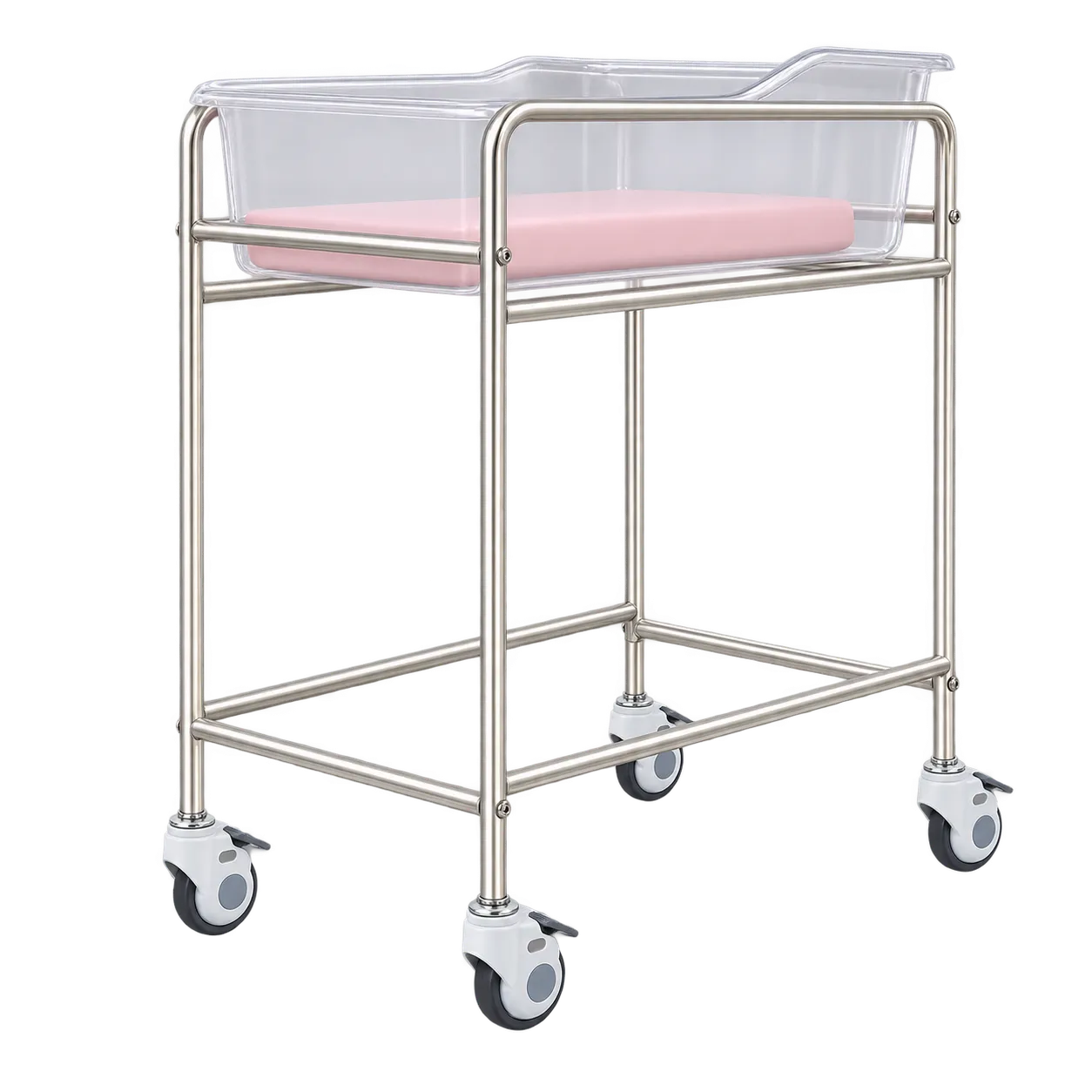





The D-3 suits maternity and postnatal wards, well-baby nurseries, district hospitals, health centres and relief programmes that need many cots for healthy newborns. Its case is whole-life cost. With four parts and no mechanism, most of what the cot costs after purchase is cleaning time and a short list of replaceable items.
Cleaning is the daily cost. A tub with smooth walls takes minutes to wash between babies, and an open tubular frame has few surfaces to hold dirt. Repairs are the occasional cost. Castors pick up lint and lose their brakes, mattress covers split and tubs scratch, and each can be replaced on its own if Vanry supplies it as a spare. Nothing on the cot needs electrical testing, calibration or a service contract. A buyer equipping a whole ward can keep a few spare tubs, mattresses, and castors on hand and keep every cot in use.
A plain cot has limits that the care plan must respect. The cot gives no tilt, warming or monitoring, so it suits healthy babies only. Its mattress must be firm, flat and close-fitting, in line with NHS safer sleep advice. Staff should check that the tub sits securely in the frame, that the castors are locked when parked, and withdraw any tub that is cracked. BS EN 50637:2017 covers medical beds and cots for children, and NatPSA/2023/010/MHRA expects such equipment to meet it unless a reason is documented.
District procurement teams, NHS procurement routes and aid agencies will ask for the device status, the standards applied and a declaration of conformity. The conformity documentation those procurement routes require is issued by the manufacturer and shared by the enquiry team.