
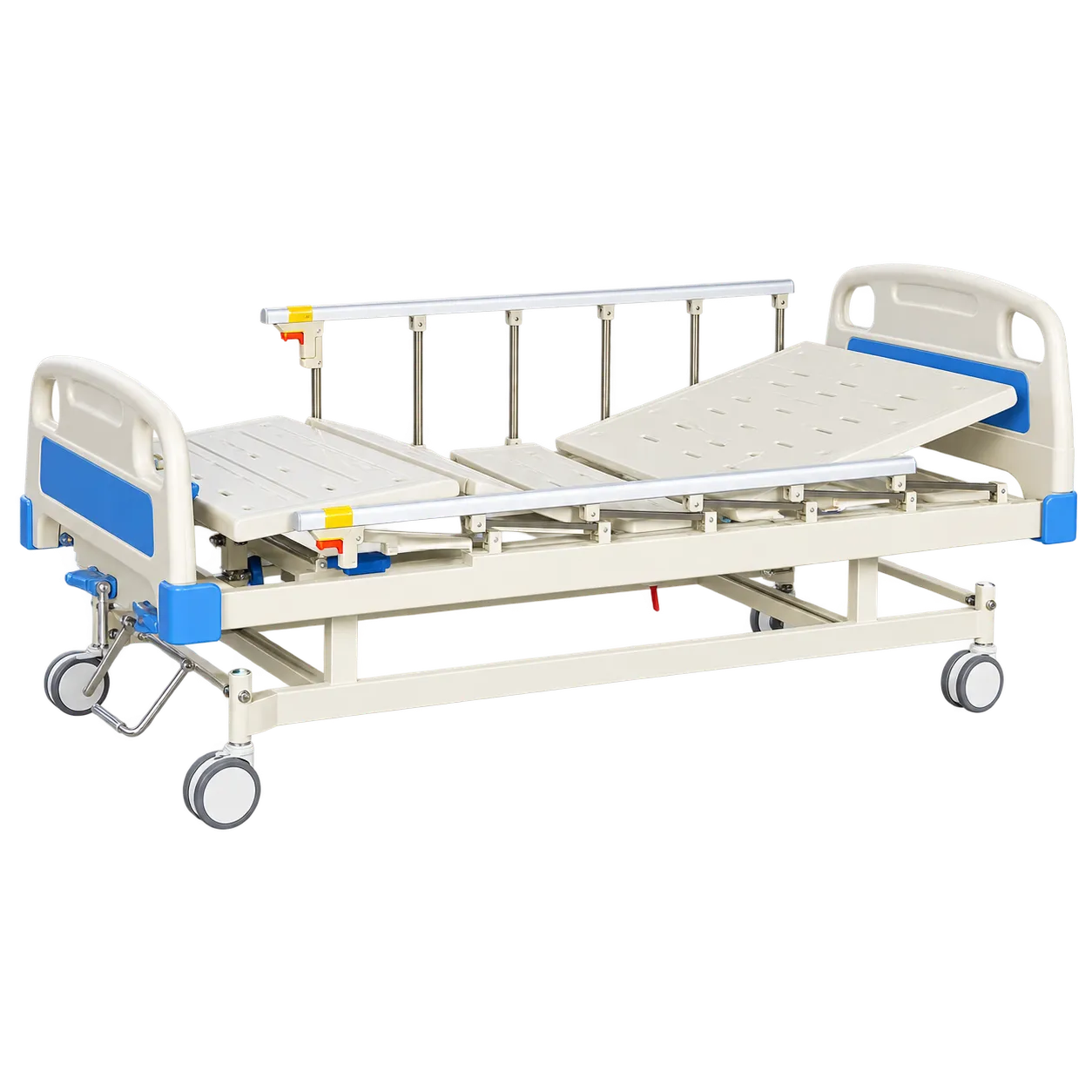
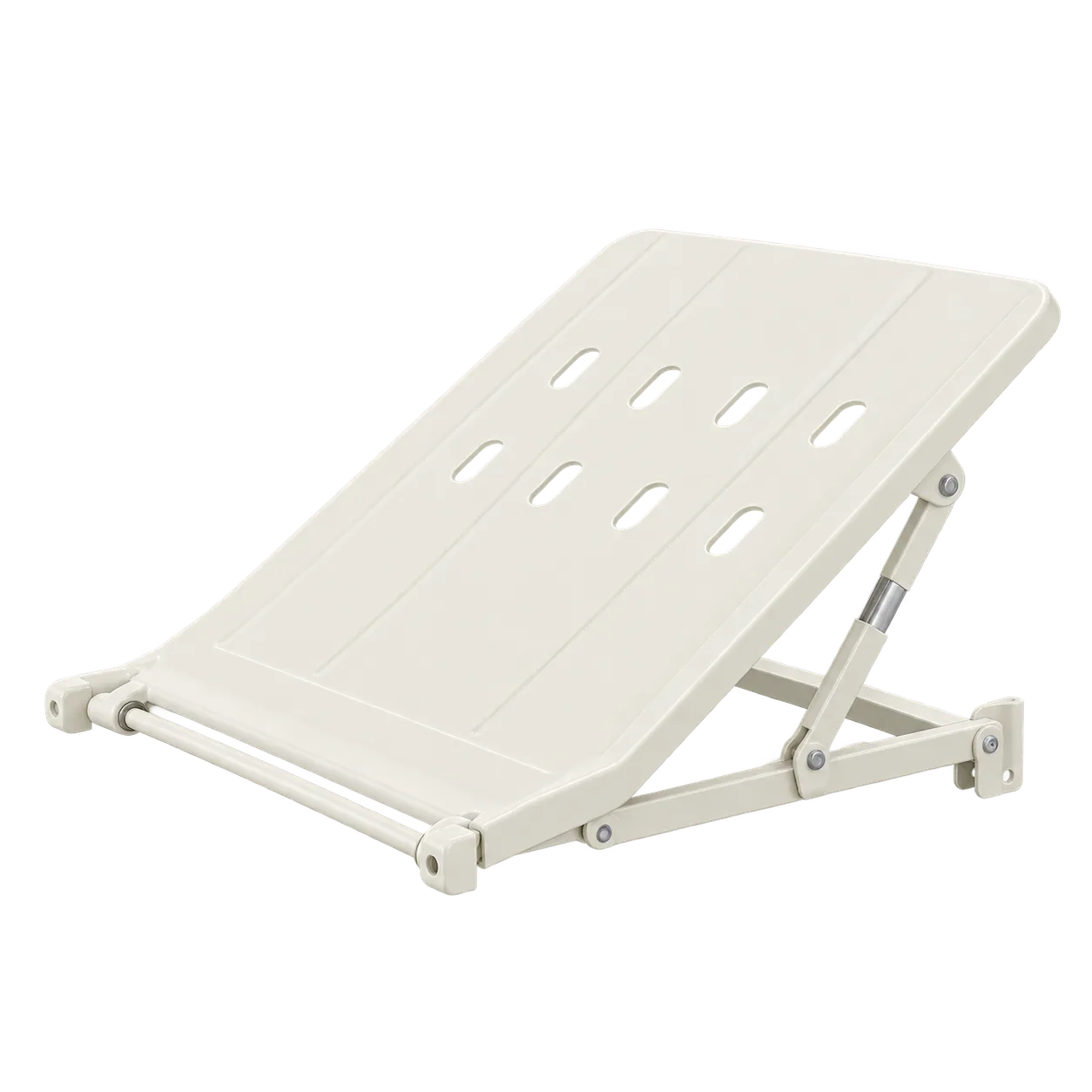


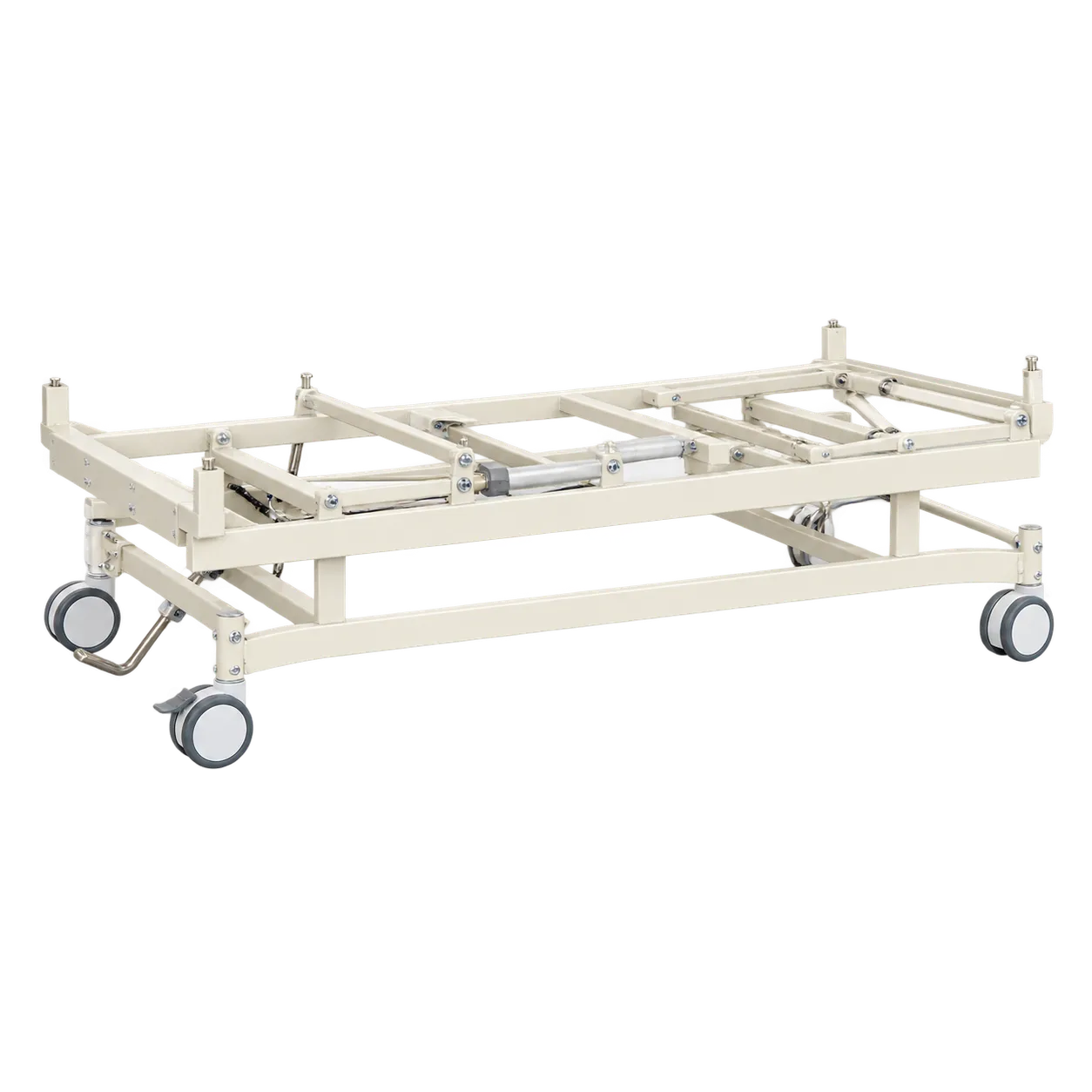
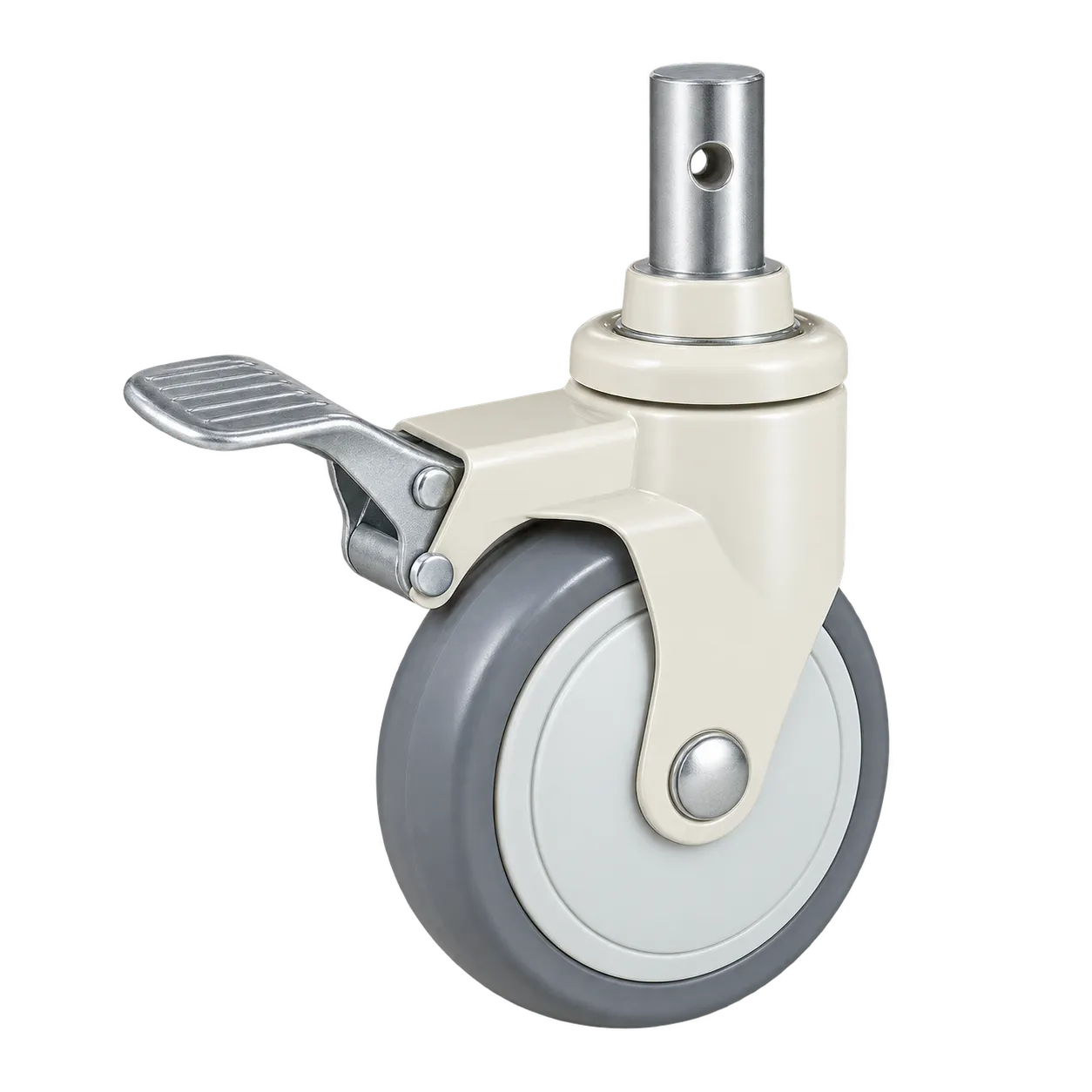
Small rooms, older buildings and busy bays are the clearest fit for the B-7. A 950 mm frame leaves generous space around the bed for staff, chairs and equipment, and cranks that fold away under the footboard keep the foot end clear in walkways that carry people and trolleys all day.
Medical and older people's wards can use it for patients who sit up for meals, breathing and conversation. Raising the knee section before the backrest keeps them seated securely, supporting pressure care plans and reducing how often staff have to move them back up the bed.
Care and nursing homes suit it for residents' rooms, where space is often tight, and visitors sit close to the bed. The fold-away cranks and compact frame keep the room open and easy to move around.
Community hospitals and settings with intermittent power gain a bed that needs no socket and keeps both functions available through outages.
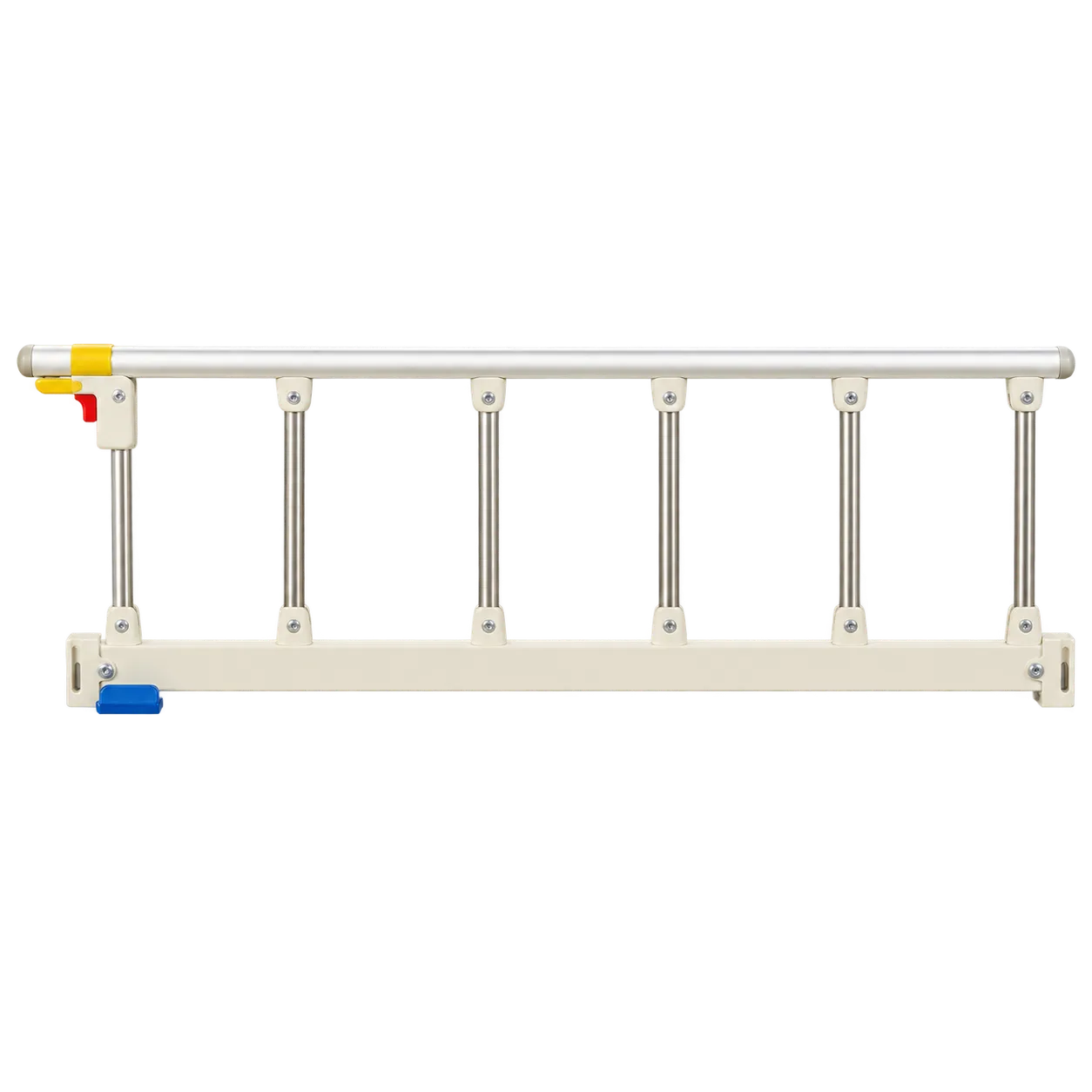
Where rails are fitted, MHRA guidance and the 2023 National Patient Safety Alert govern their assessment, fitting and maintenance, with an individual assessment covering the mattress in use.
The B-7 is a poor fit for dependent patients needing frequent bedside care or assisted transfers, for children, for bariatric patients until the safe working load is confirmed, for patients at high risk of falling from bed, and for care requiring head-down tilt.
Public procurement routes, including NHS frameworks and equivalent tenders elsewhere, ask for the declaration of conformity, the standard edition tested, and the device class. The conformity documentation those procurement routes require is issued by the manufacturer and provided by the seller.