
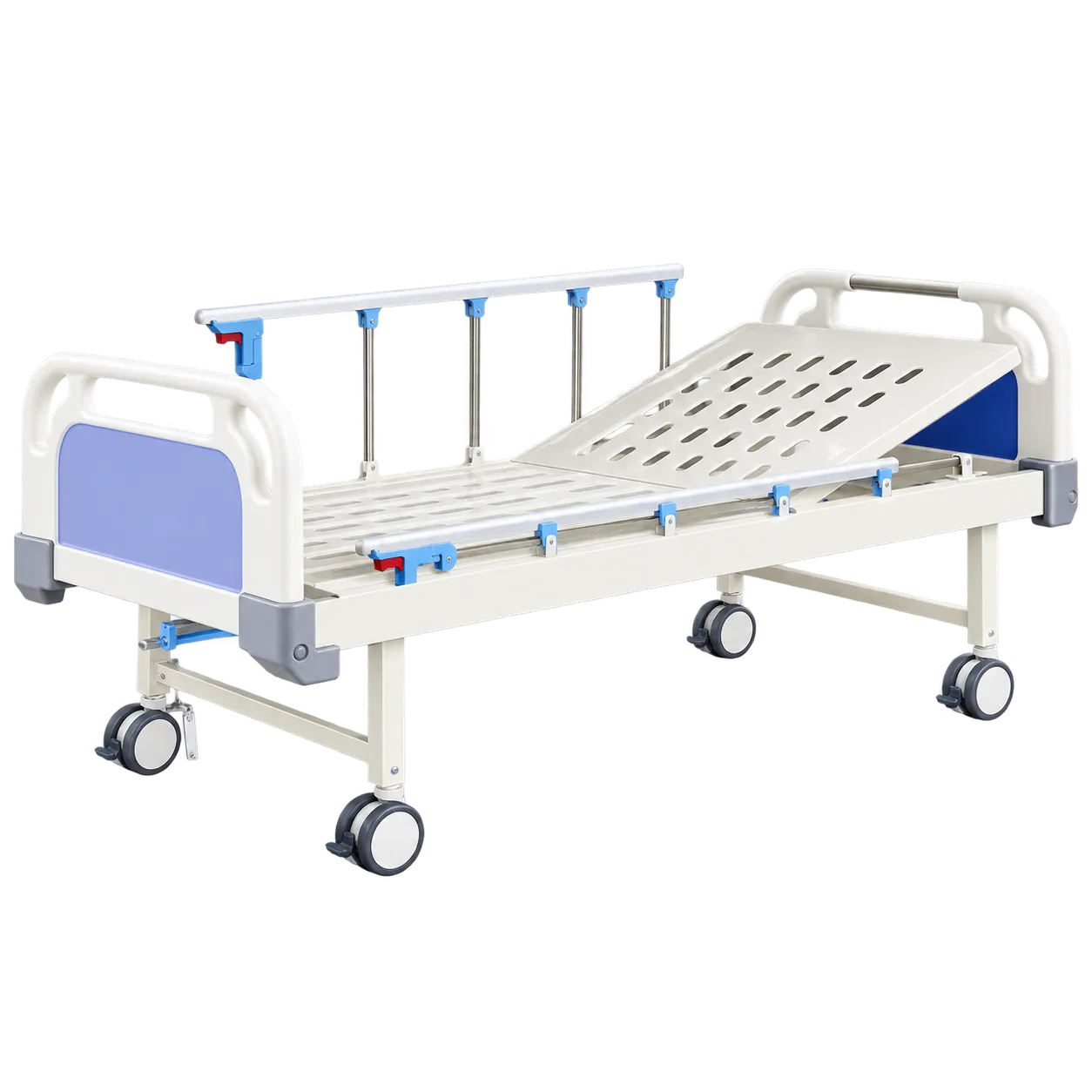

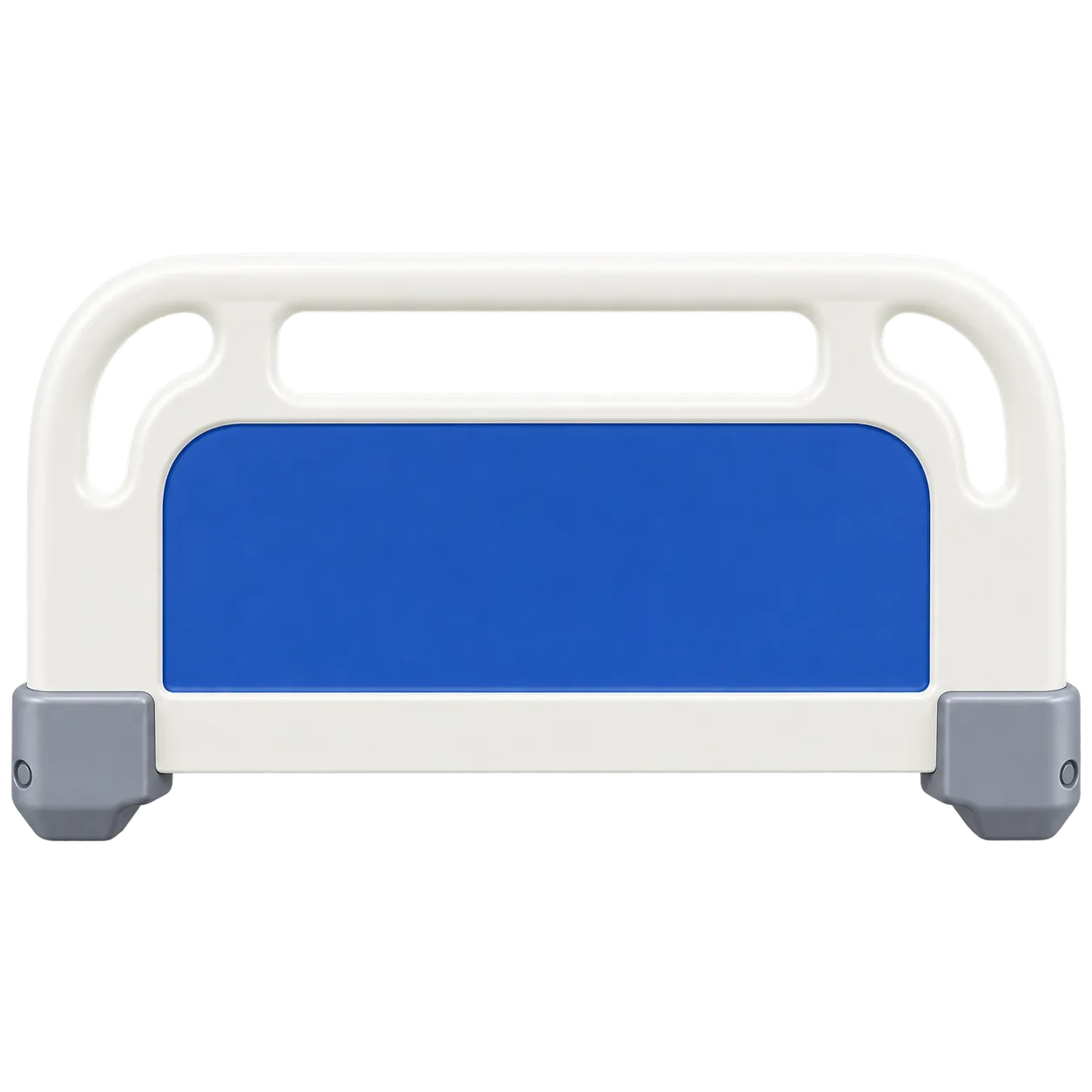

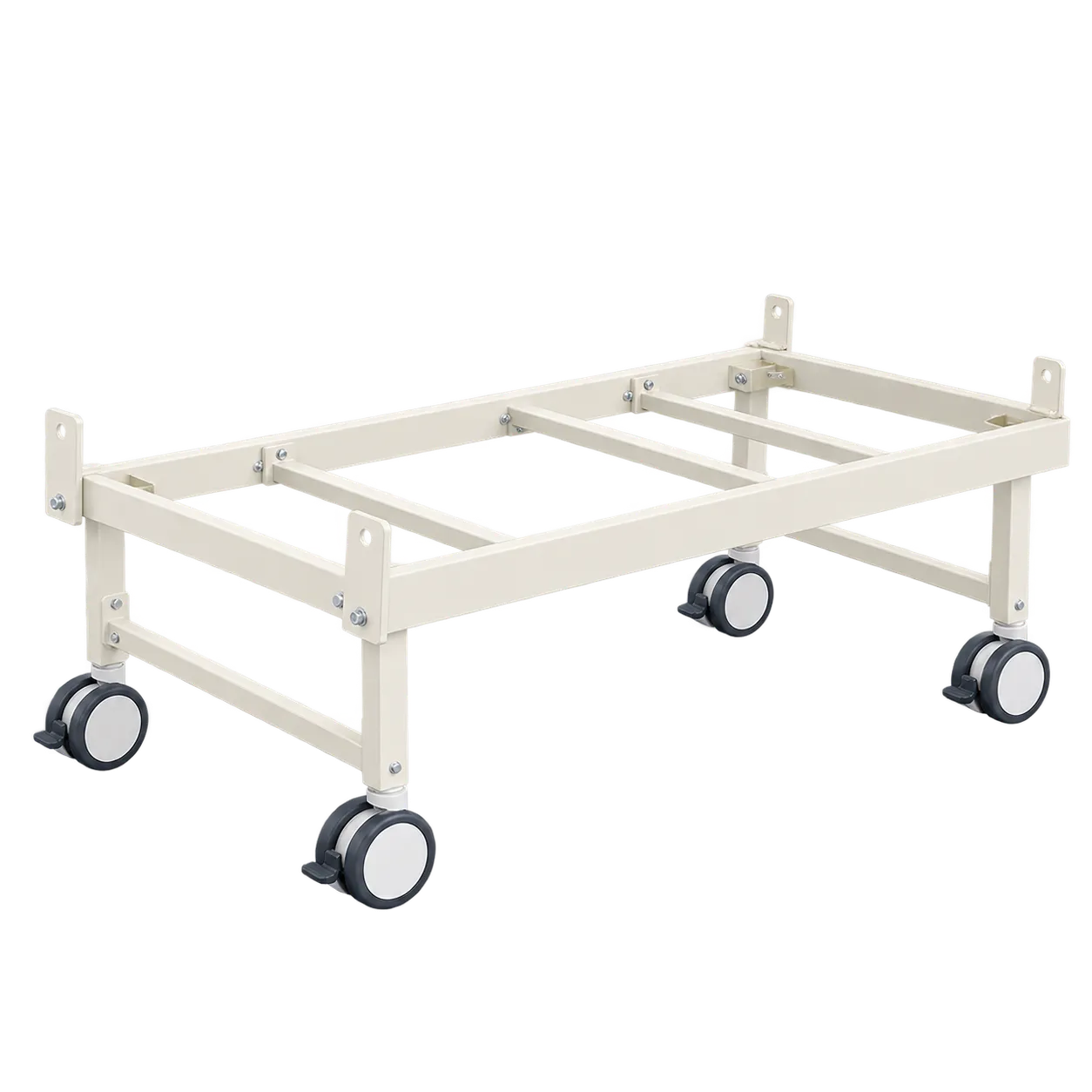

The B-14 suits patients who spend most of their time lying flat and sit up only briefly. Short-stay and day wards, observation and recovery bays, clinics, emergency overflow, and field or surge facilities buying on a limited budget all fit. Its case is absence honesty. The bed omits the knee break that keeps a sitting patient in place, and it is placed well only where that omission costs little.
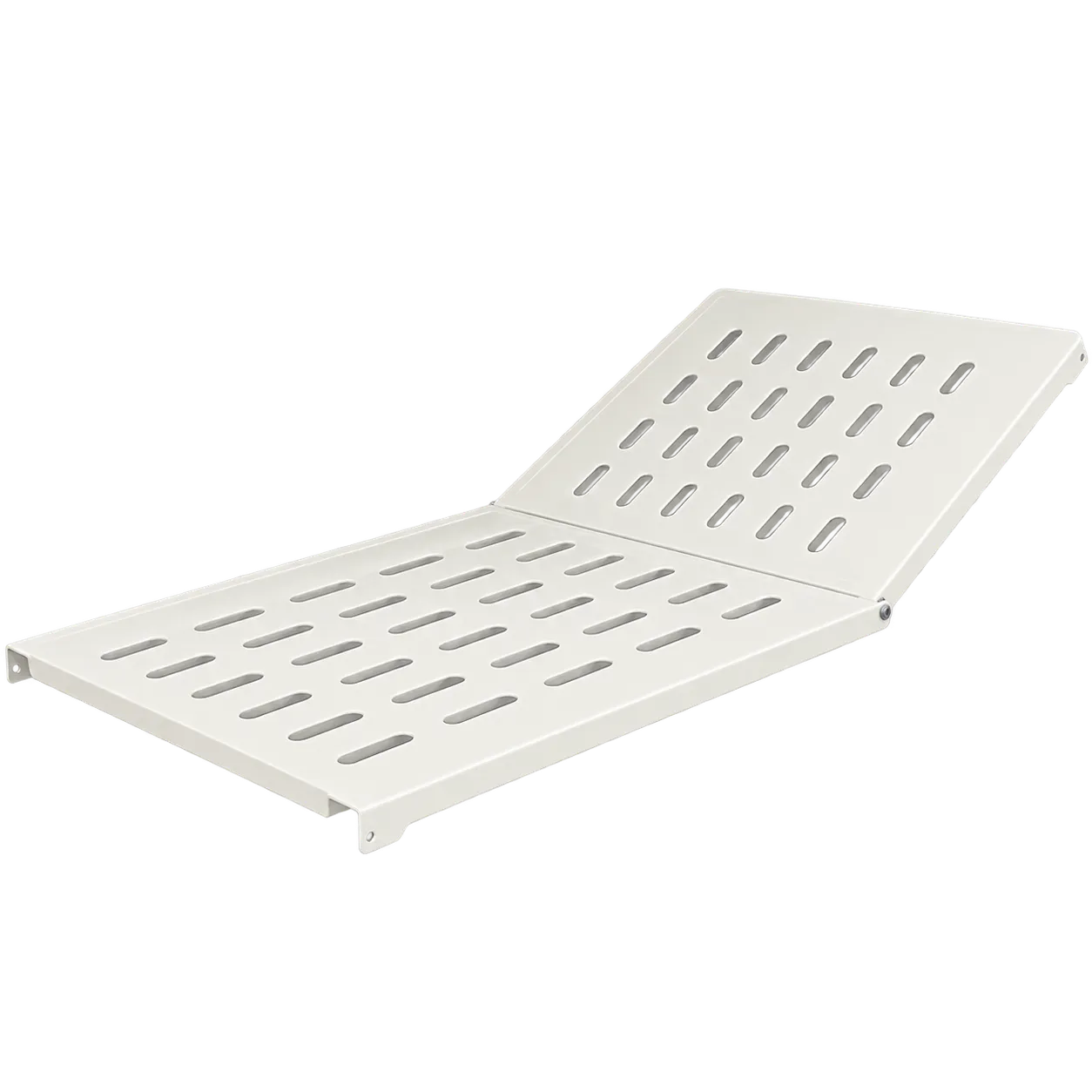
The cost is shear. Raising the head end without supporting the thighs lets the body slide toward the foot, and the skin over the sacrum is dragged against the mattress as it goes. A study of ten healthy women at 30° head-up over two hours found that a 10° leg elevation significantly reduced this displacement, though it left sacral pressure unchanged. The 2026 Cochrane review of ventilated adults found that higher head-of-bed angles probably increase pressure ulcers. Neither study tested this bed, but together they point the same way. Long periods sitting up on a semi-Fowler frame belong in a pressure ulcer risk assessment, with repositioning planned around them.
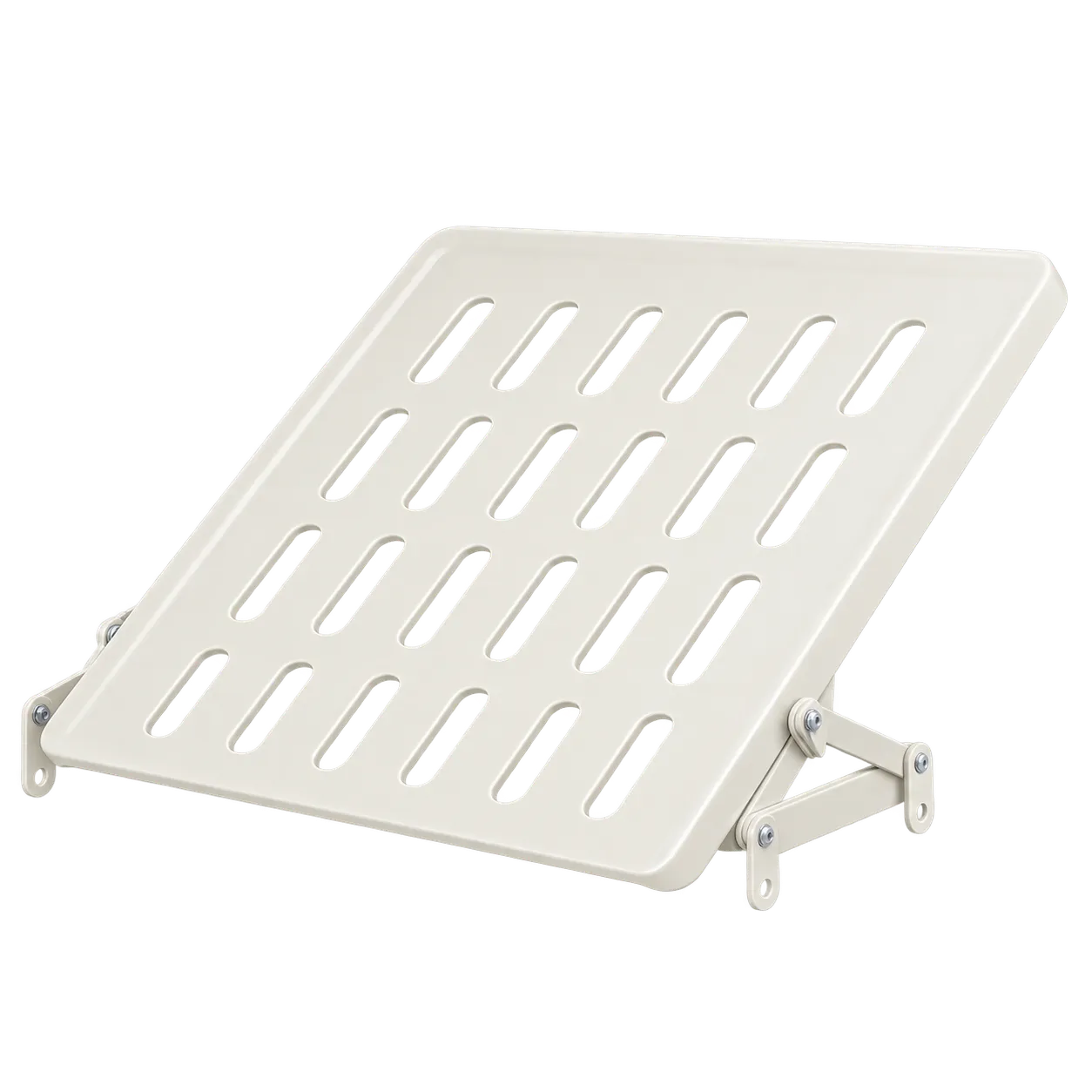
Within those limits, the B-14 is easy to use and maintain. One crank, one moving section and no electrical parts mean one thing to teach new staff and one mechanism to service. The 500 mm height does not change, so carers doing long tasks at the bedside should factor that into their manual handling assessment. Falls pathways needing a low bed will need something else.
Purchasers on NHS procurement routes, and public buyers in other countries, expect a stated device class and a declaration of conformity. The conformity documentation those procurement routes require is issued by the manufacturer and shared by the enquiry team.