
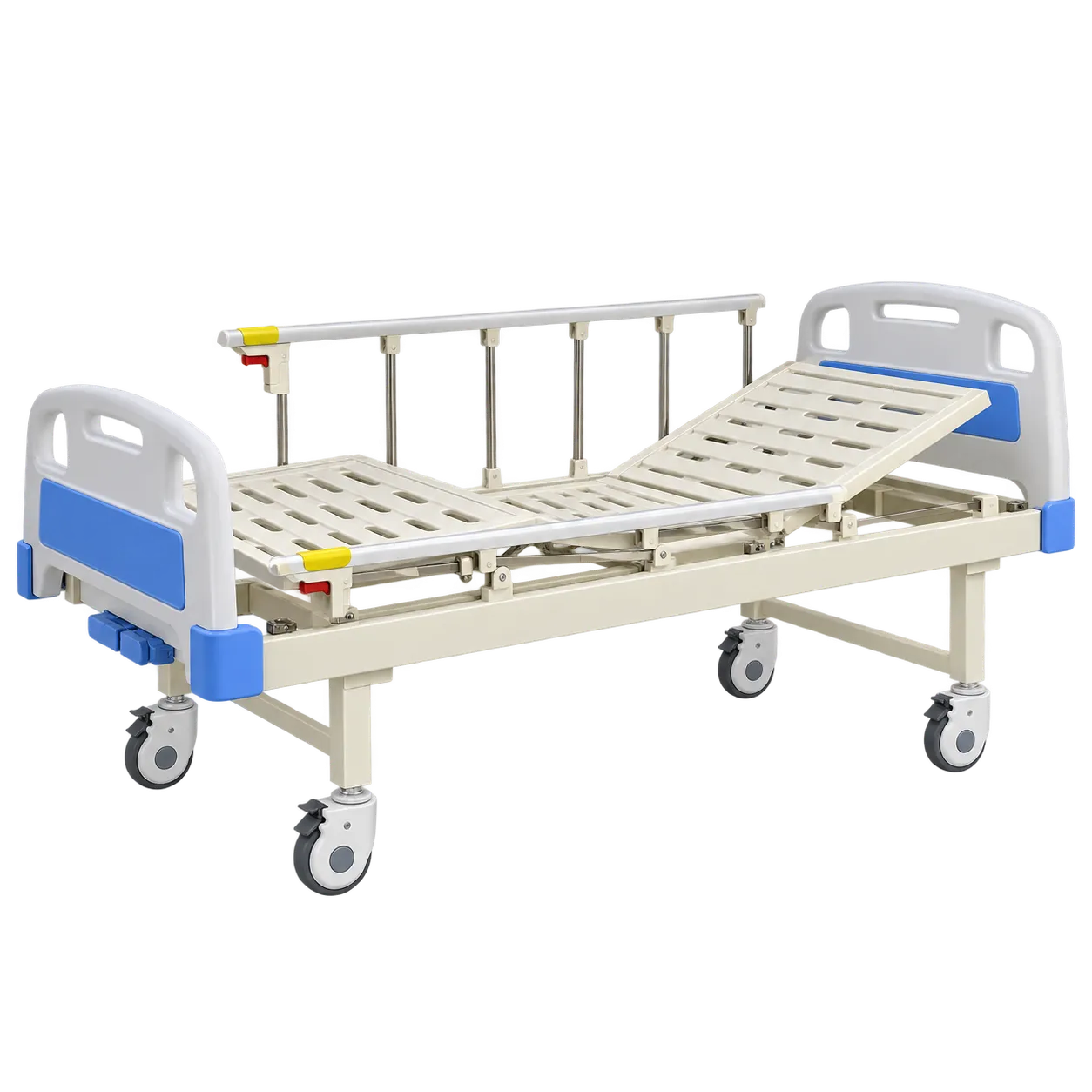
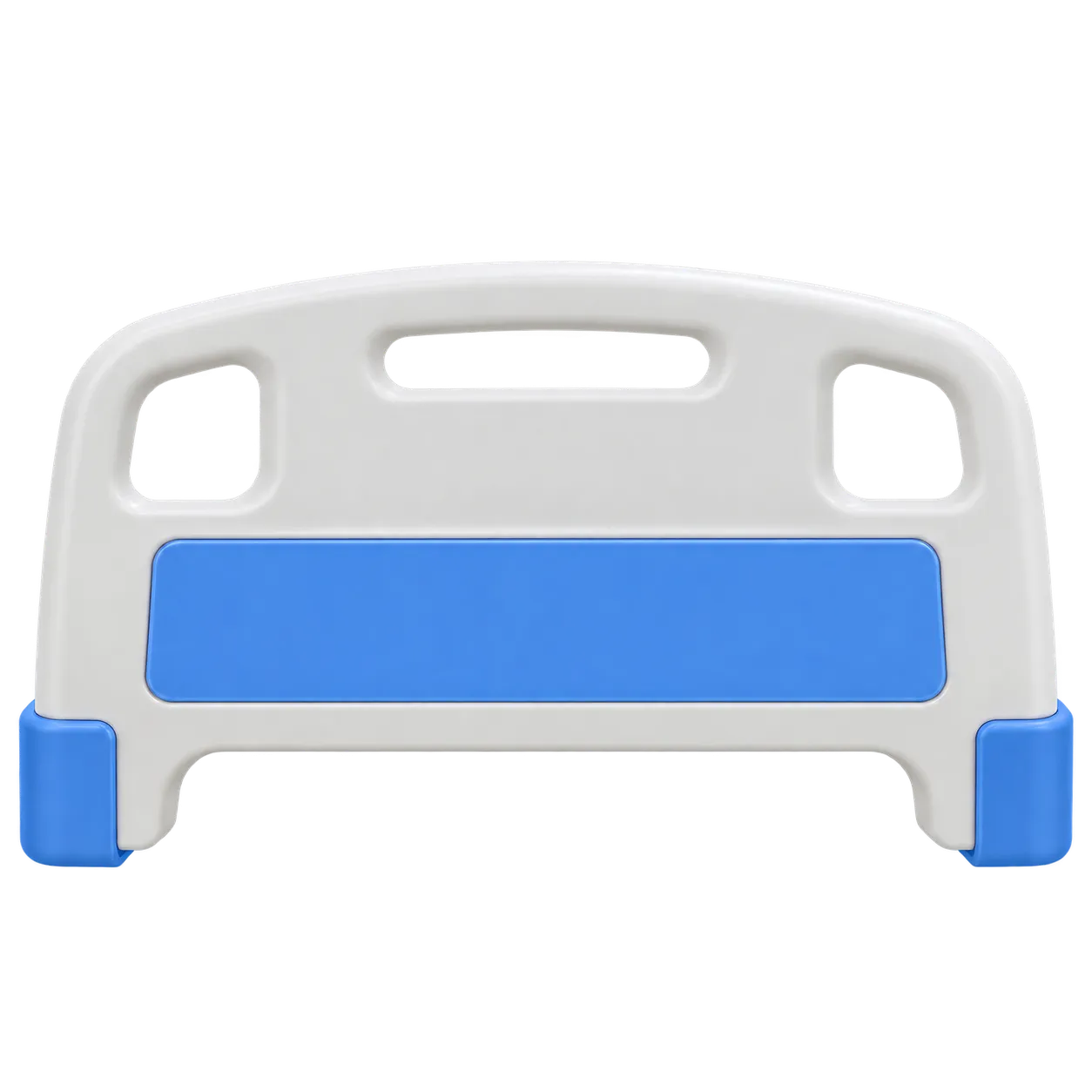


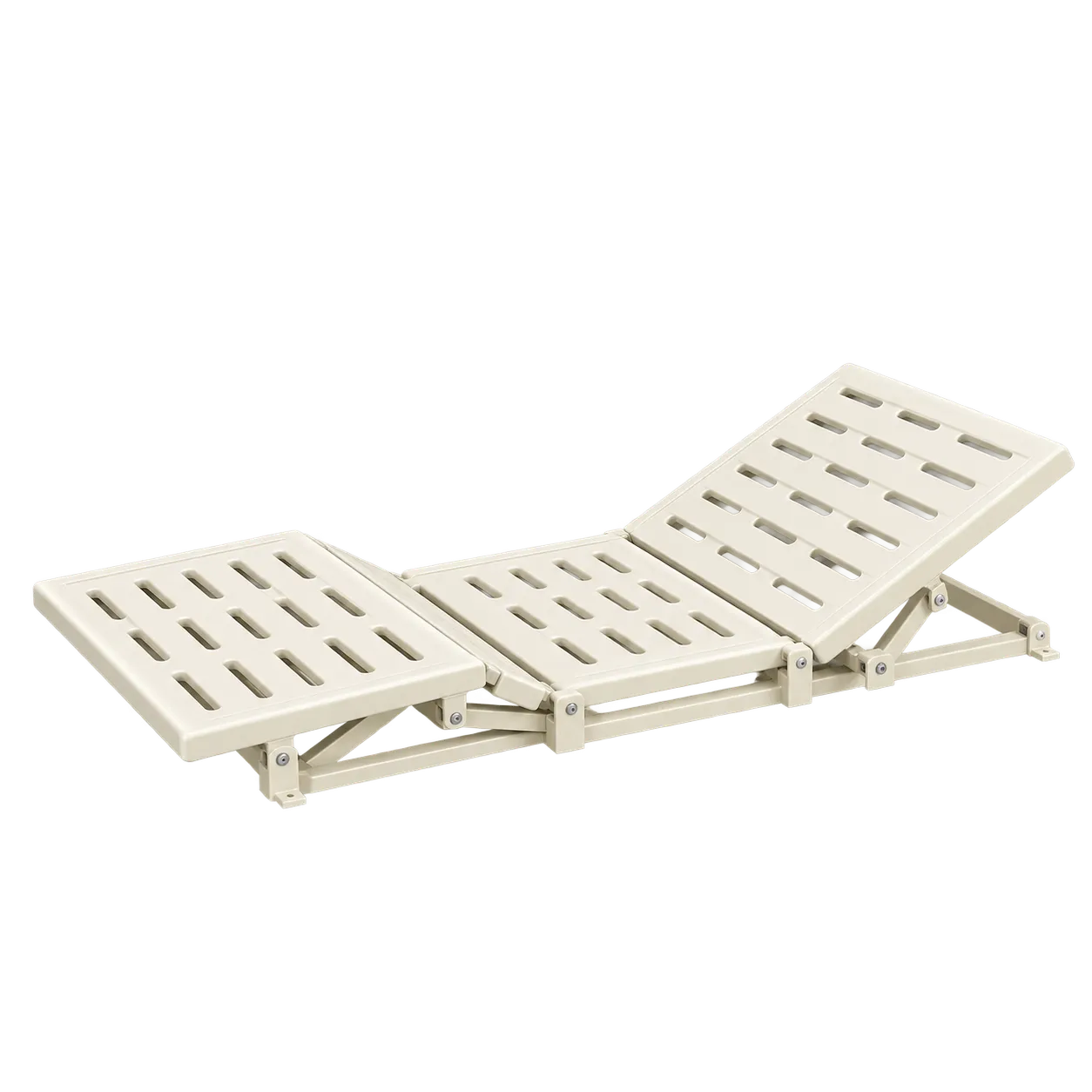

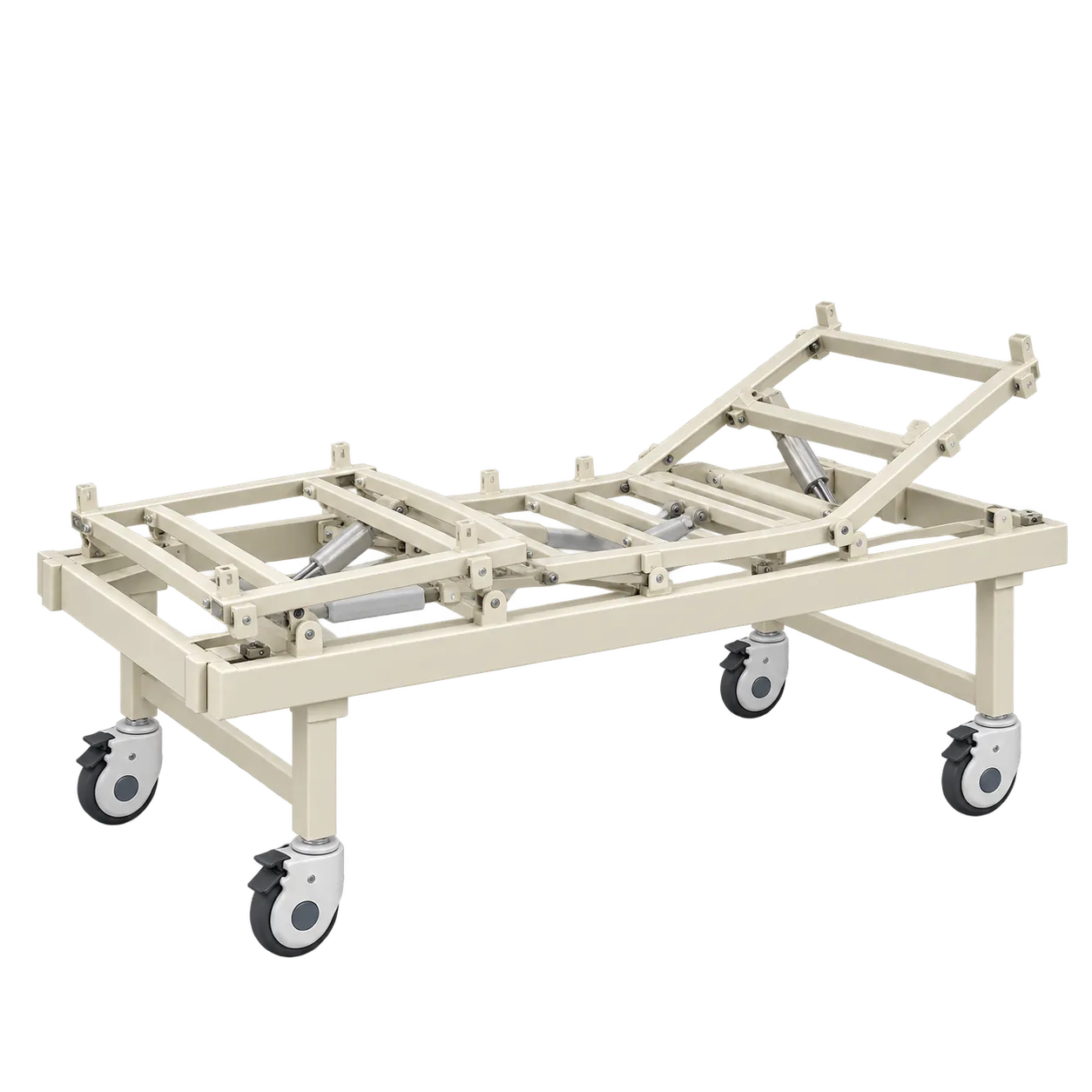

The B-13 suits settings where beds turn over often, and staff inspect and clean each base between occupants. General and short-stay wards, care homes, rehabilitation units and community hospitals fit, as do facilities in warm, humid climates where damp under a mattress keeps recurring. Its argument is mechanism and effect. An open steel deck changes what happens underneath the mattress, and the page is exact about how far that reaches.
The international guideline on preventing pressure injuries defines microclimate as a support surface's effect on temperature and humidity at the body interface. It advises clinicians to select surfaces using standardised performance data on pressure redistribution and microclimate, and not on design features or marketing terms. For this bed, that means the mattress and cover determine what the patient's skin experiences, while the ventilated deck keeps the underside of that mattress dry and visible.
That underside matters for hygiene. Fluid that reaches a solid platform can pool unseen beneath a mattress, while an open deck lets it drain and dry and shows it at the next inspection. The trade-off is more edges to clean, and a mattress that must be approved for slatted bases so foam does not wear where it spans the gaps. The clinical positions are familiar. A 70° backrest and 35° knee break give supported sitting, the calf section supports the lower legs, and the fixed 500 mm height rules out a low position for falls.
Buyers on NHS procurement routes, and public purchasers in other markets, will ask for the device class and a declaration of conformity. The manufacturer issues the conformity documentation those procurement routes require, and the enquiry team shares it.