
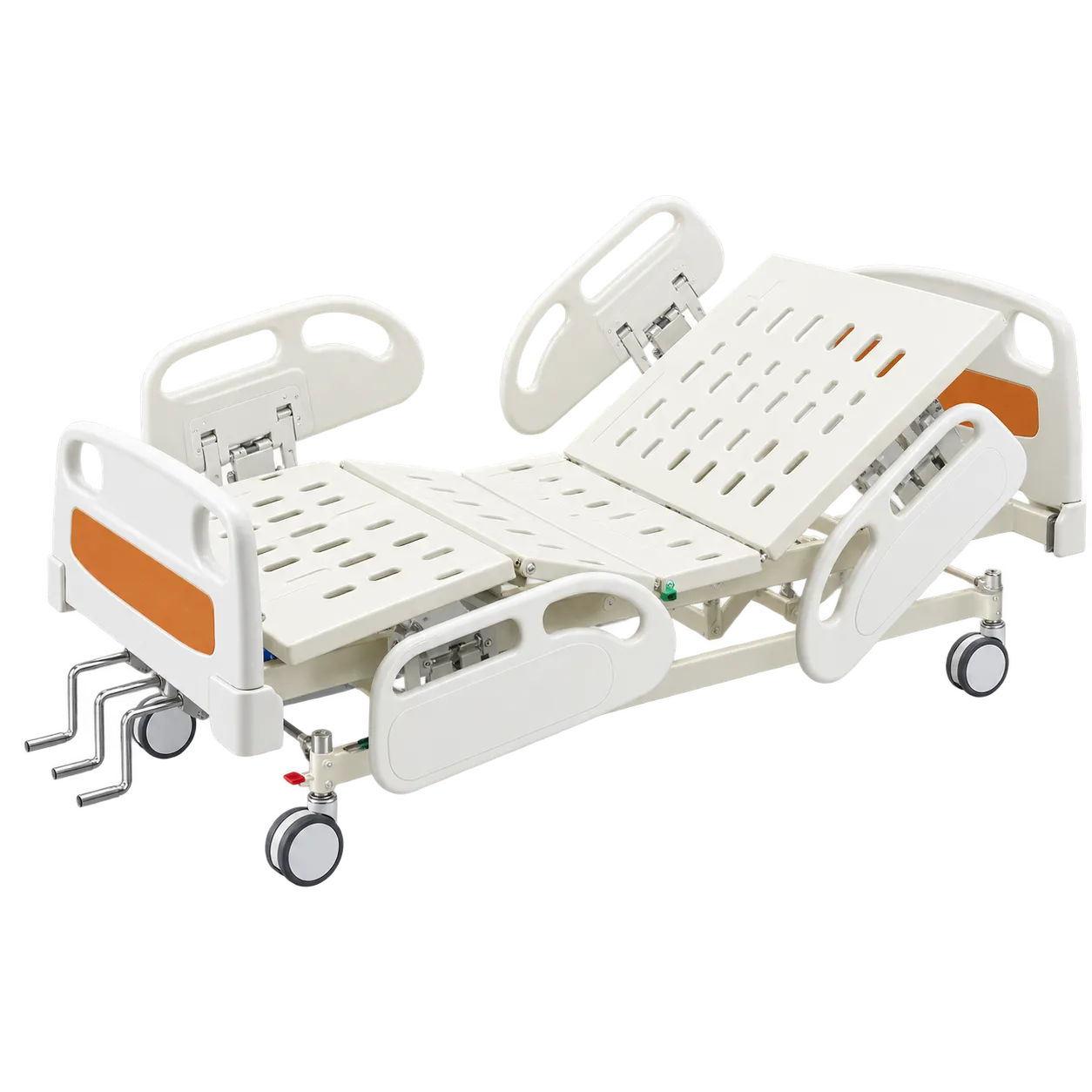

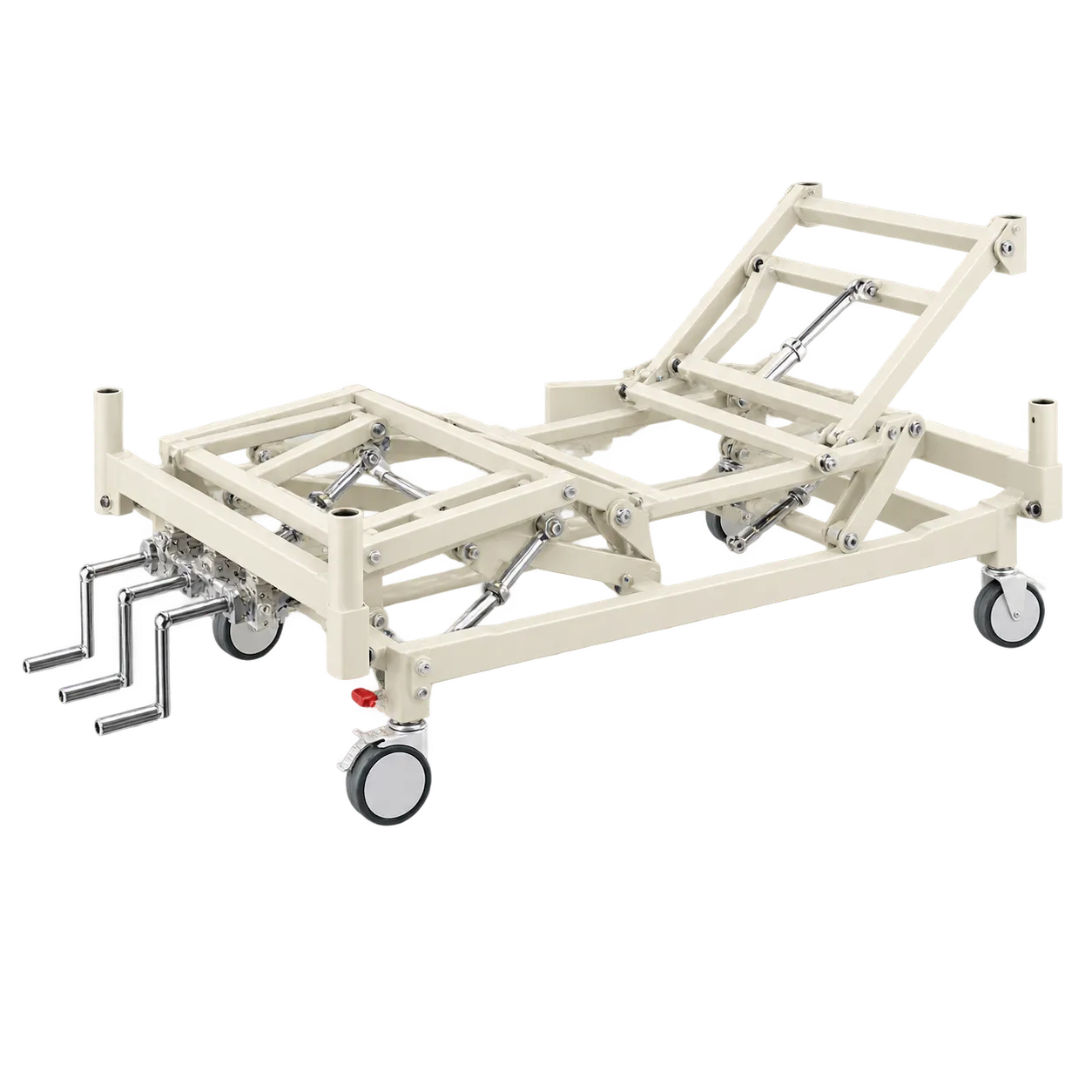
General medical and surgical wards are the natural home for the A-4, because that is where staff spend most of a shift washing, dressing, checking skin and changing linen at the bedside. Raising the bed for those tasks and lowering it for transfers is the routine the height range is built around, and it needs no electrical supply to do so.
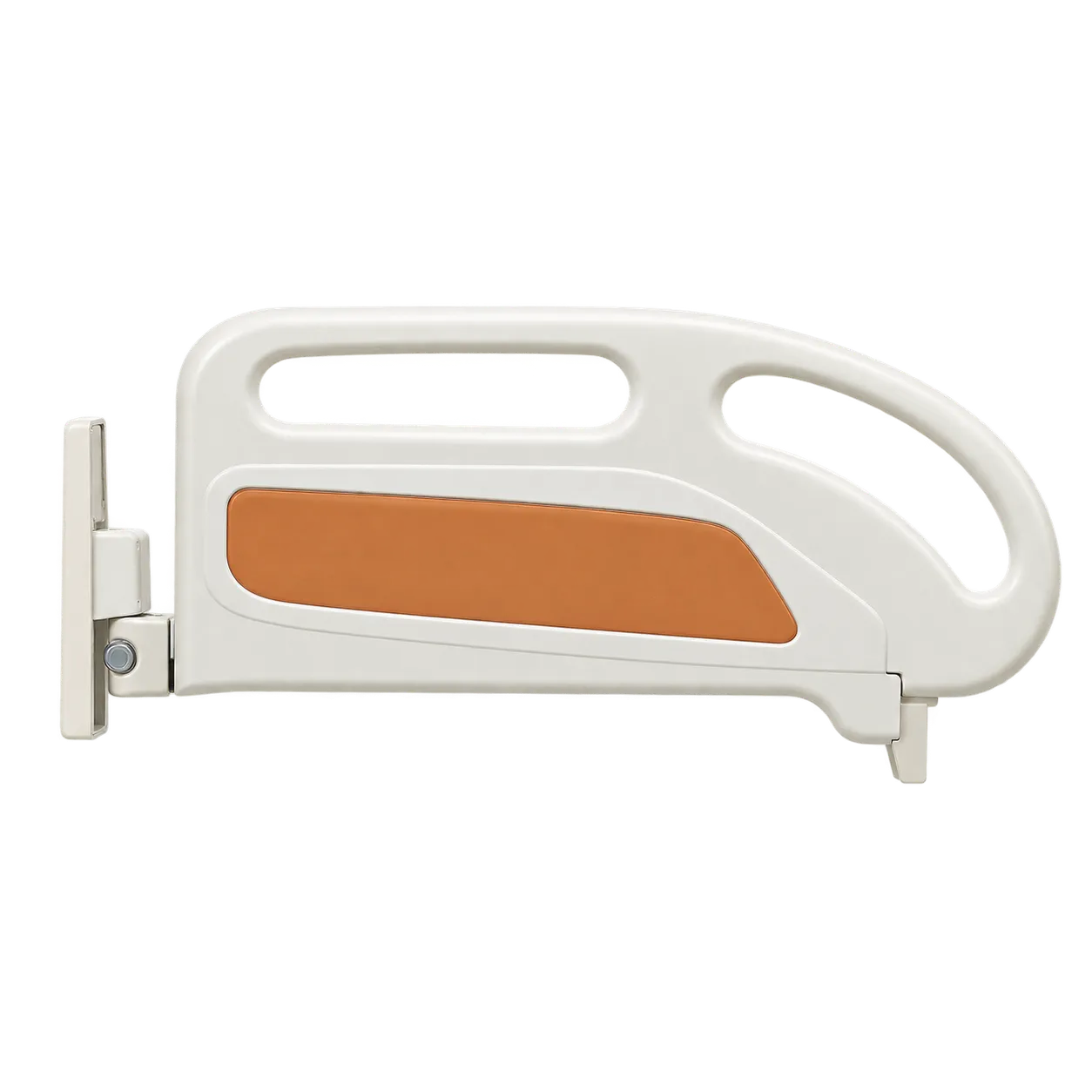
Care homes and nursing homes can use it for residents who need help with personal care in bed. The backrest supports sitting up for meals, medication and conversation, and the leg section helps limit sliding toward the foot of the mattress. Where rails are fitted, MHRA guidance governs their prescription, fitting and maintenance, and each resident needs an individual rail risk assessment covering the mattress in use.
Rehabilitation and convalescent units suit it for patients who are regaining independence but still need staff help with some care tasks. District hospitals and field facilities where power is limited can deploy it without adding load to a stretched supply.
It is a weaker fit where patients are repositioned in bed many times a shift, since each height change is a crank task. HSE guidance states that where patients need to be handled in bed, providing electric profiling beds must be considered under the Manual Handling Operations Regulations 1992, and that consideration should be recorded before choosing a crank-operated bed. It also does not suit children, bariatric patients without a published load rating, or care needing head-down tilt.
Public procurement routes, including NHS frameworks, and equivalent tenders elsewhere ask for the declaration of conformity, the standard edition tested and the device class. The conformity documentation those procurement routes require is issued by the manufacturer and provided by the seller.