
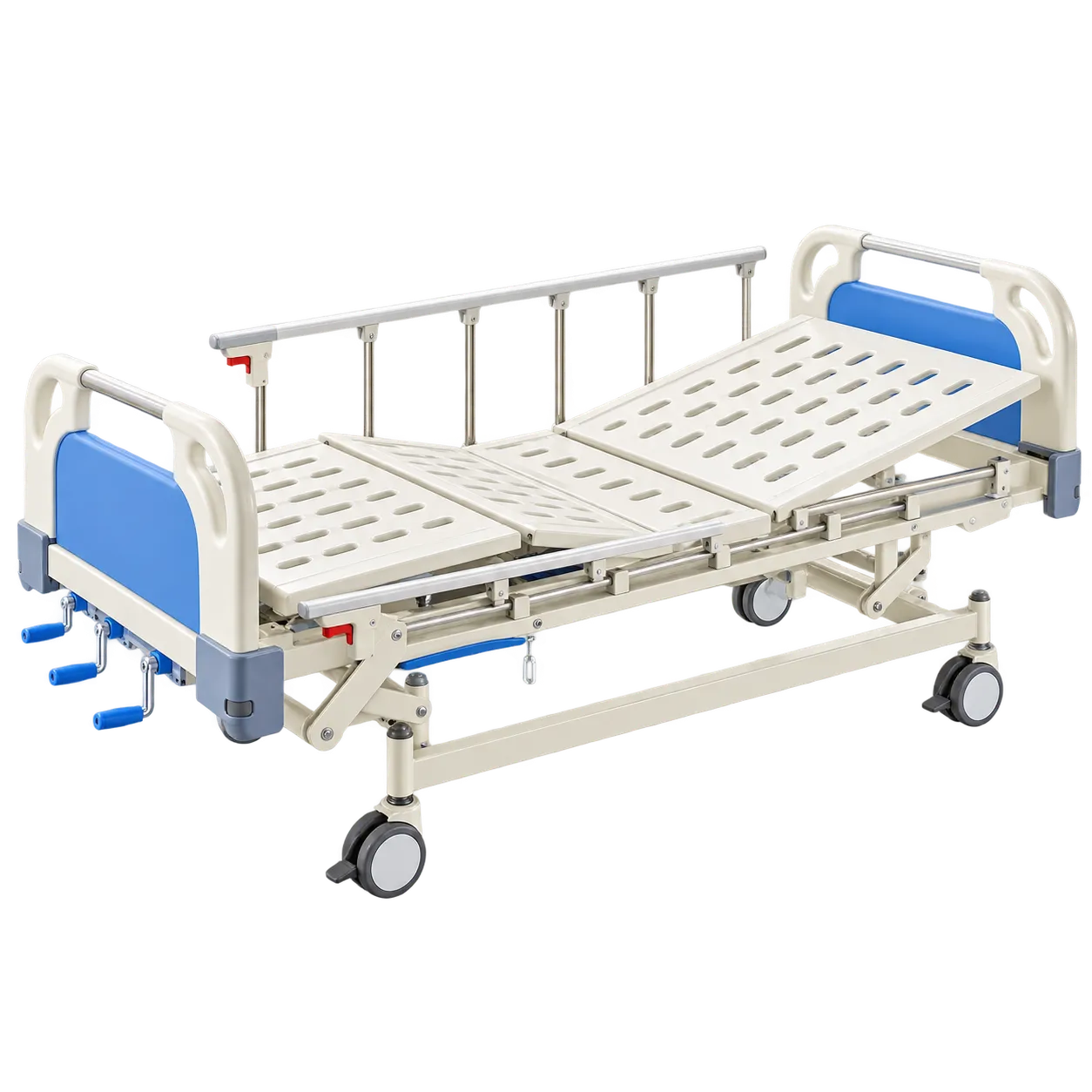
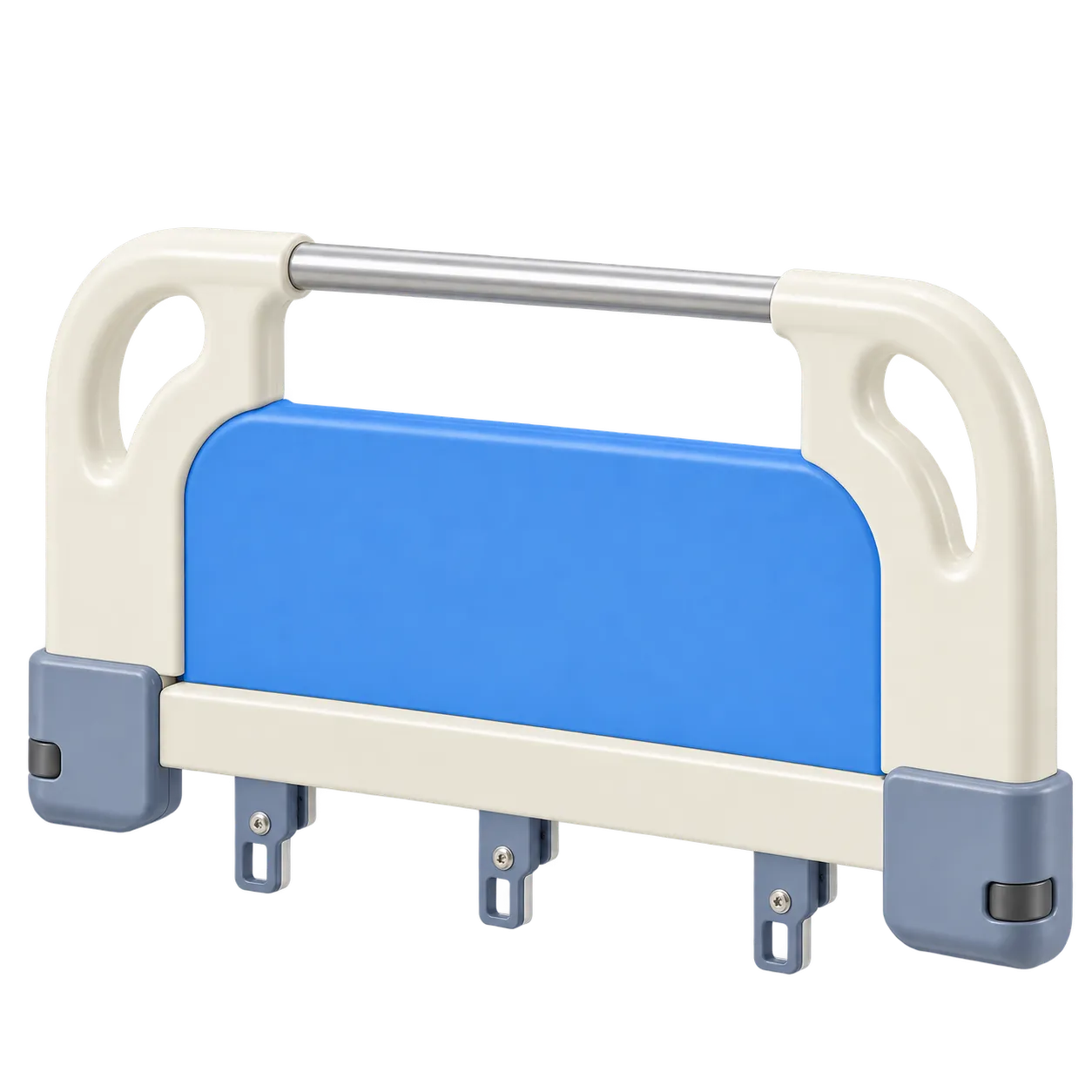
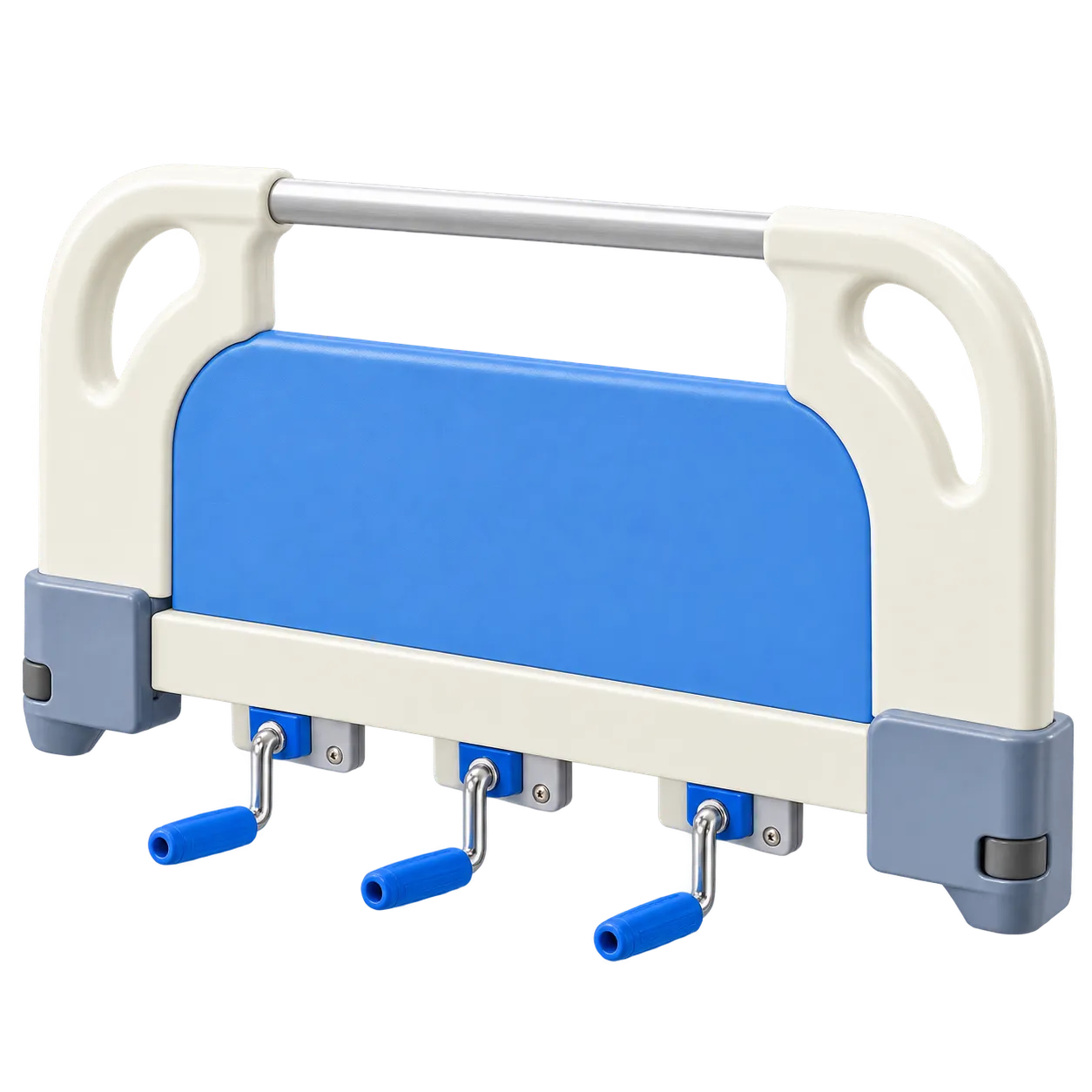
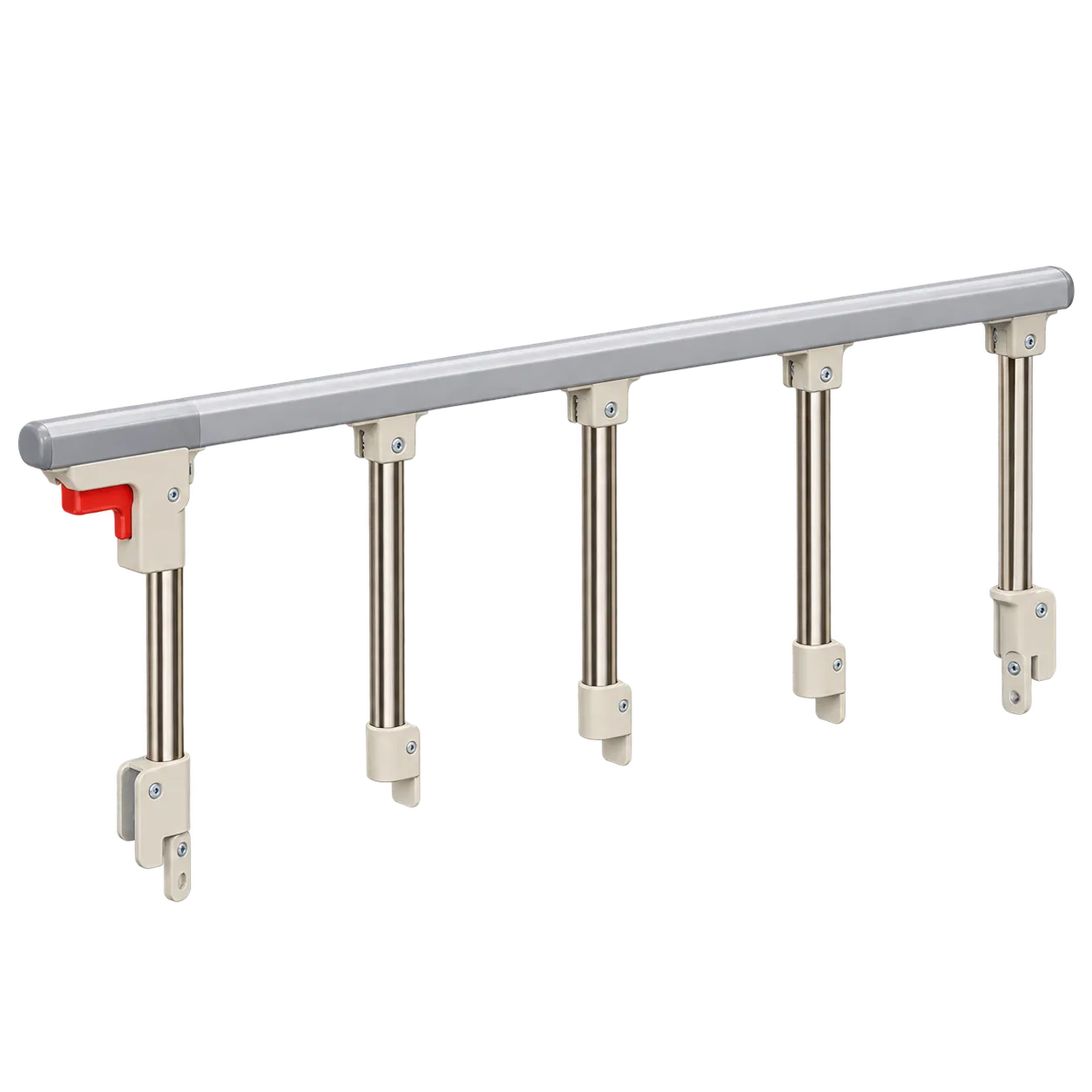

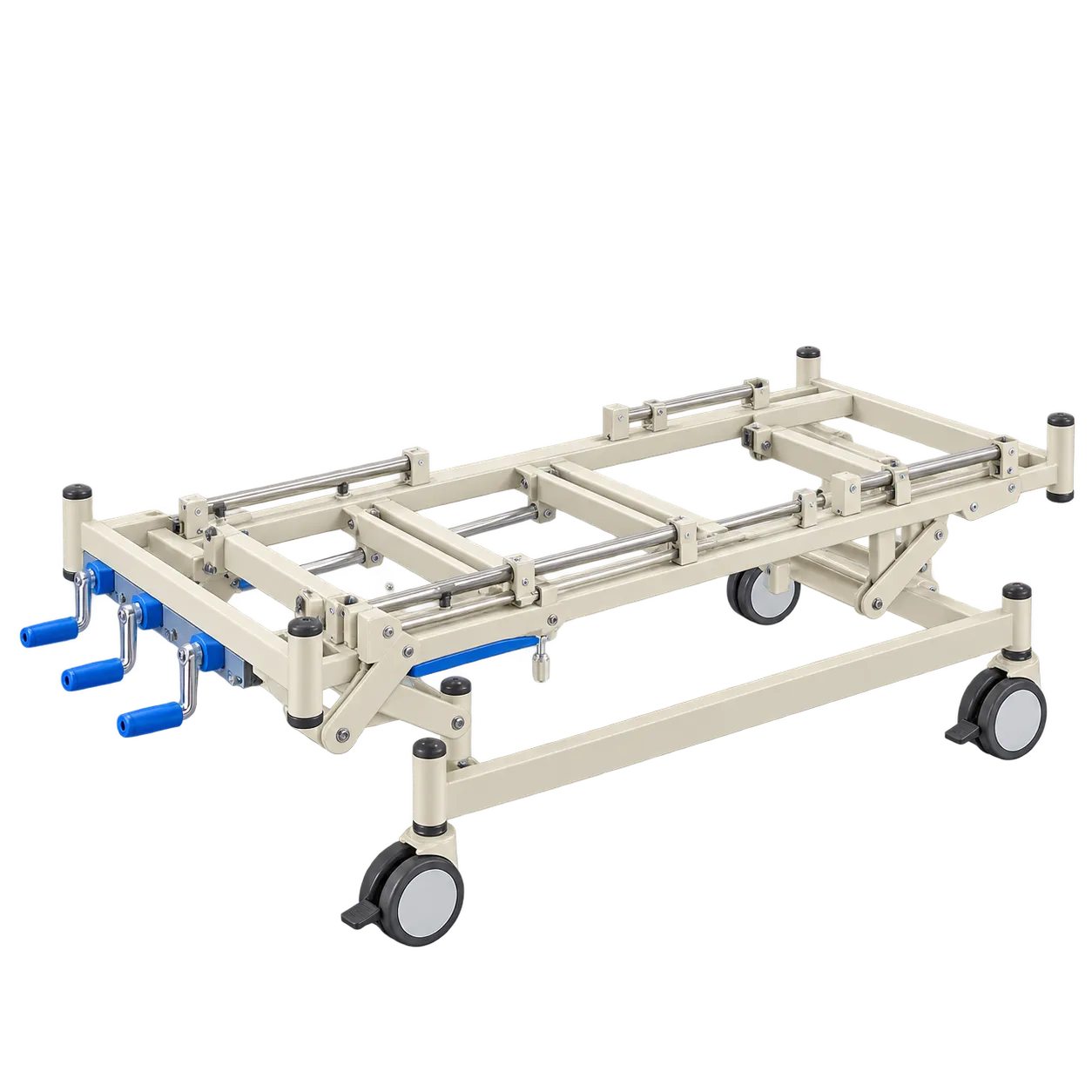
Rural and district hospitals are the clearest fit for the A-3. Where the grid is unreliable and engineering support is far away, a bed whose every movement is mechanical keeps working through outages, and its moving parts can be understood, serviced and replaced by local estates staff.
On general medical and surgical wards, the three movements cover the routine of care. Staff raise the bed for washing and dressings, lower it for transfers, and set the backrest and leg section for meals and rest. Because the bed moves only while someone turns a crank, every change is deliberate and controlled.
Care homes and long-stay settings benefit from the absence of handsets. Residents cannot move the bed unexpectedly, and staff position them at a pace that suits the person in the bed.
Wards using the A-3 should build two mechanical steps into their routines. Planned maintenance should cover the drives, linkage and pivots, since worn parts are a recognised cause of falls. Resuscitation drills should include winding the backrest flat, because no CPR release is listed.
Where rails are fitted, MHRA guidance and the 2023 National Patient Safety Alert govern their assessment, fitting and maintenance, with an individual assessment covering the mattress in use.
The A-3 is a poor fit for wards where dependent patients are repositioned many times a shift, for areas with frequent cardiac arrests, for care needing head-down tilt, for children, for bariatric patients without a published load rating, and for patients at high risk of falling from bed.
Public procurement routes, including NHS frameworks, and equivalent tenders elsewhere ask for the declaration of conformity, the standard edition tested and the device class. The conformity documentation those procurement routes require is issued by the manufacturer and provided by the seller.