
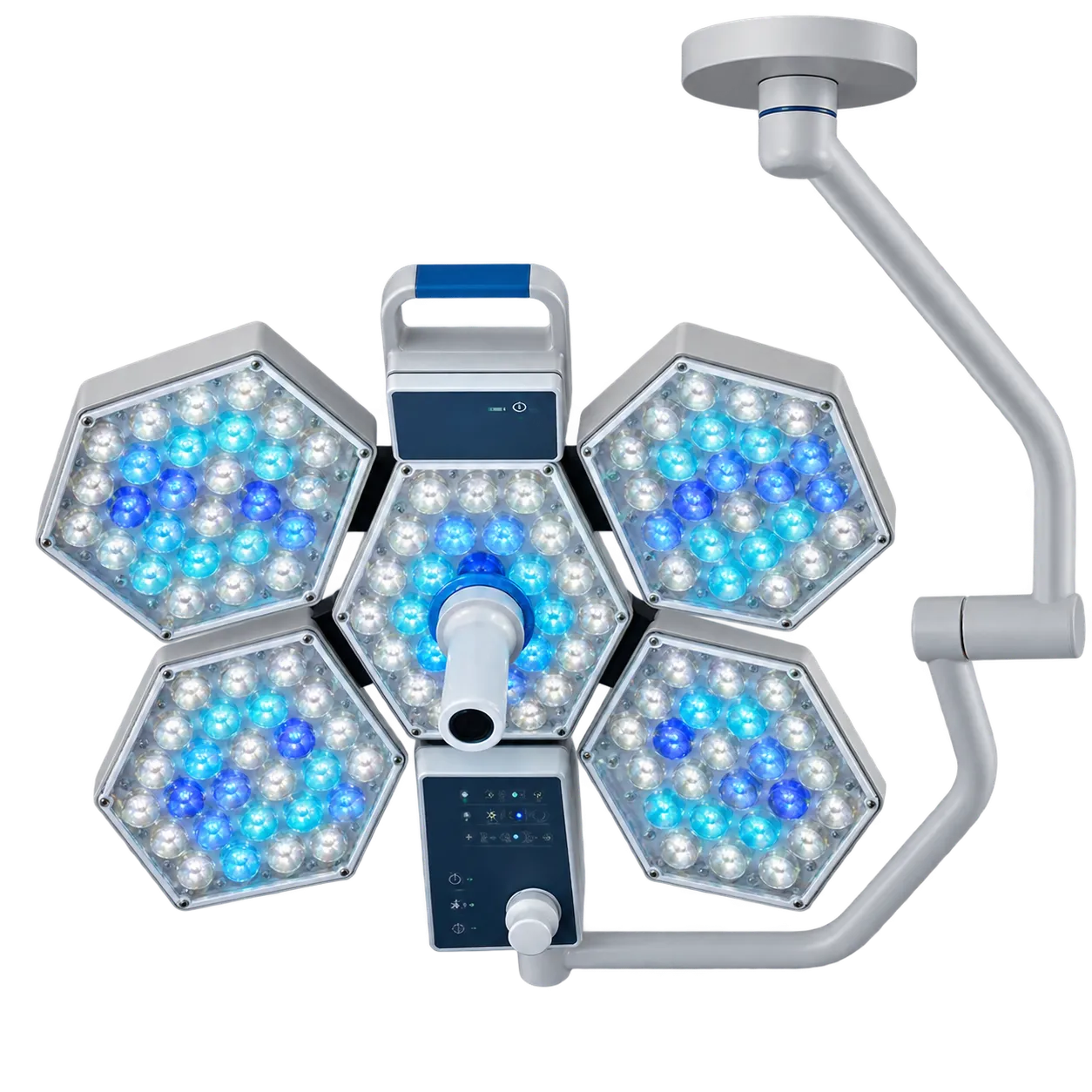
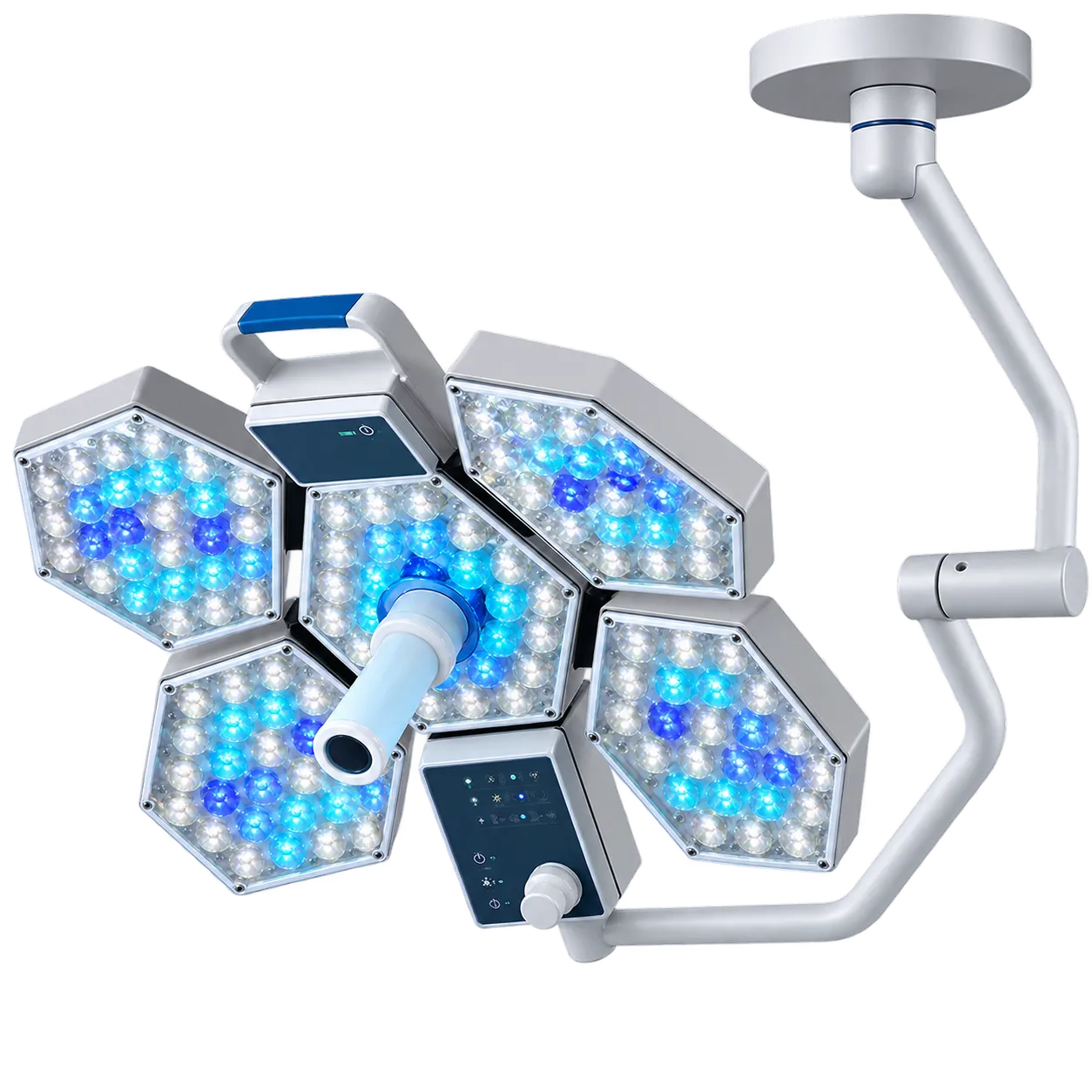
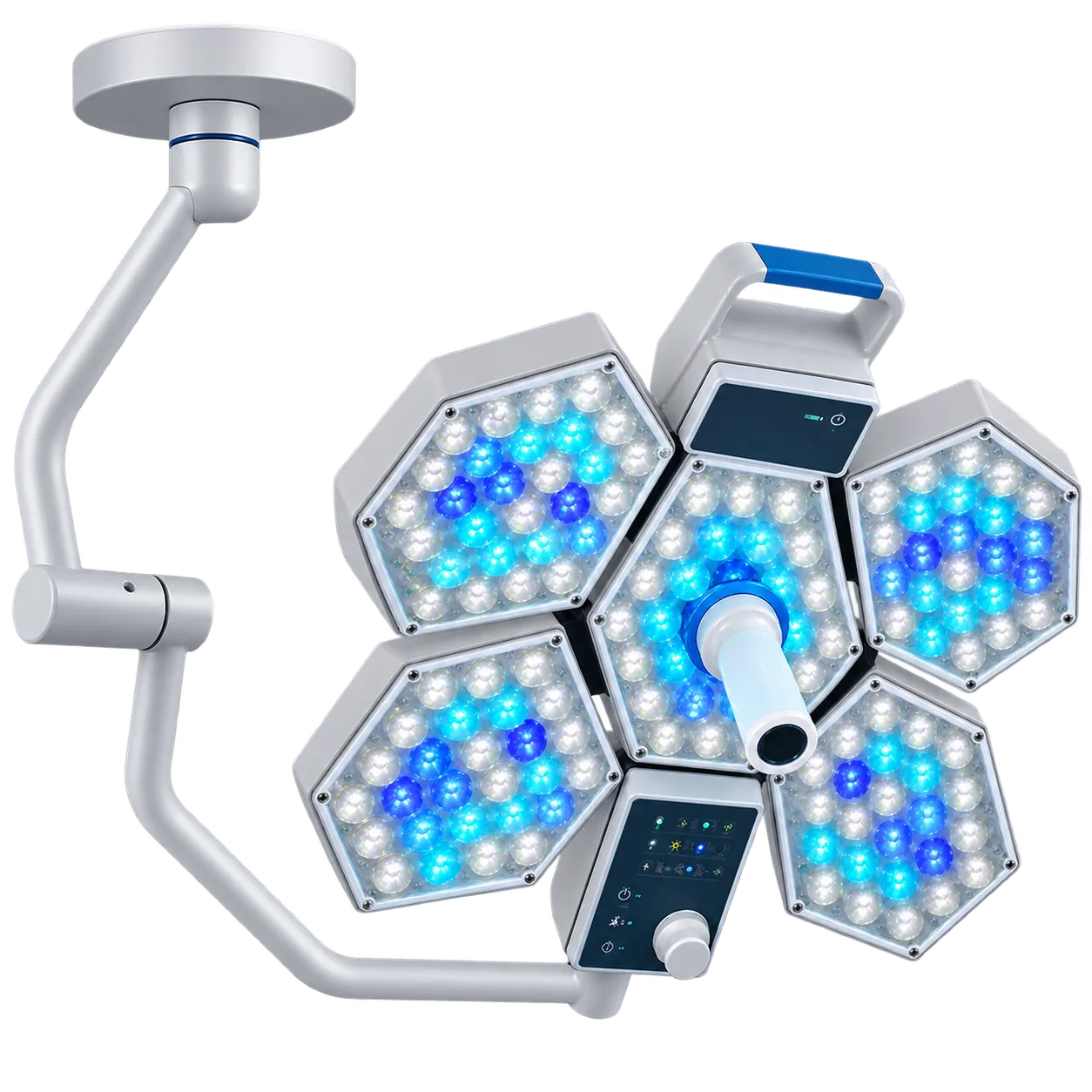
General and abdominal surgery is served by illumination that reaches into a cavity, since a multi-lens matrix lights the field from many angles at once.
Deep and narrow wound access benefits most from the shadow figures, as the light arriving around an obstruction is what remains usable when a head and hands are over the field.
Orthopaedic and trauma work is supported by cooler colour settings towards 5,000 K, which several surgeons report as suiting deeper structures and long procedures.
Soft tissue and plastic surgery is supported at the warmer end near 3,500 K, where skin and lighter tissue hold contrast rather than reflecting strongly.
Long and overnight operating lists are helped by a colour temperature that can be raised to reduce eye fatigue, and by a temperature increase at the surgeon's head that stays below one degree Celsius.
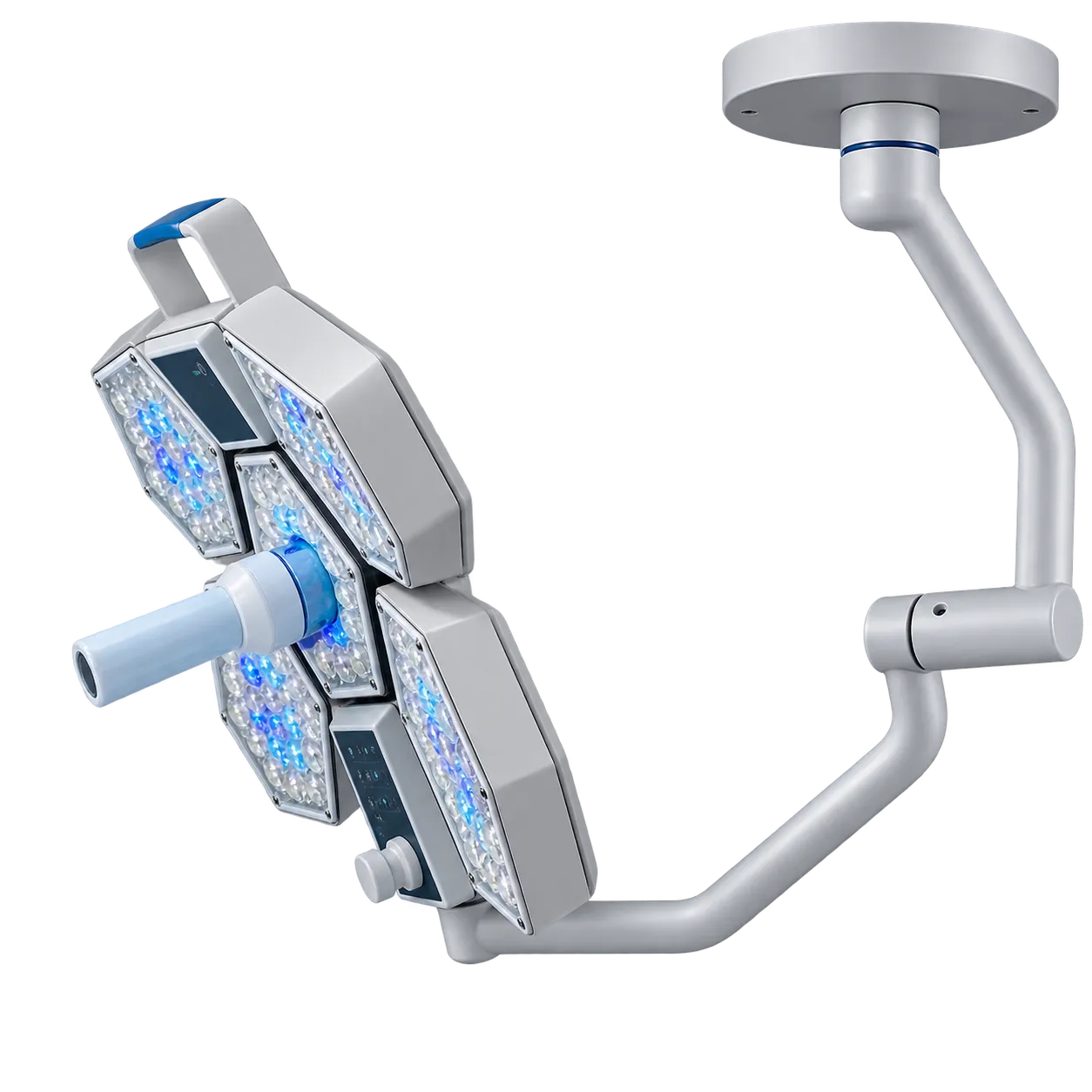
Hybrid and imaging-adjacent theatres are served by ceiling suspension that places the head clear of the working area, with the arm configuration set at quotation to the room.
Theatre refurbishment programmes are supported by an LED service life beyond 40,000 hours, which sets the replacement horizon a capital plan works to.