
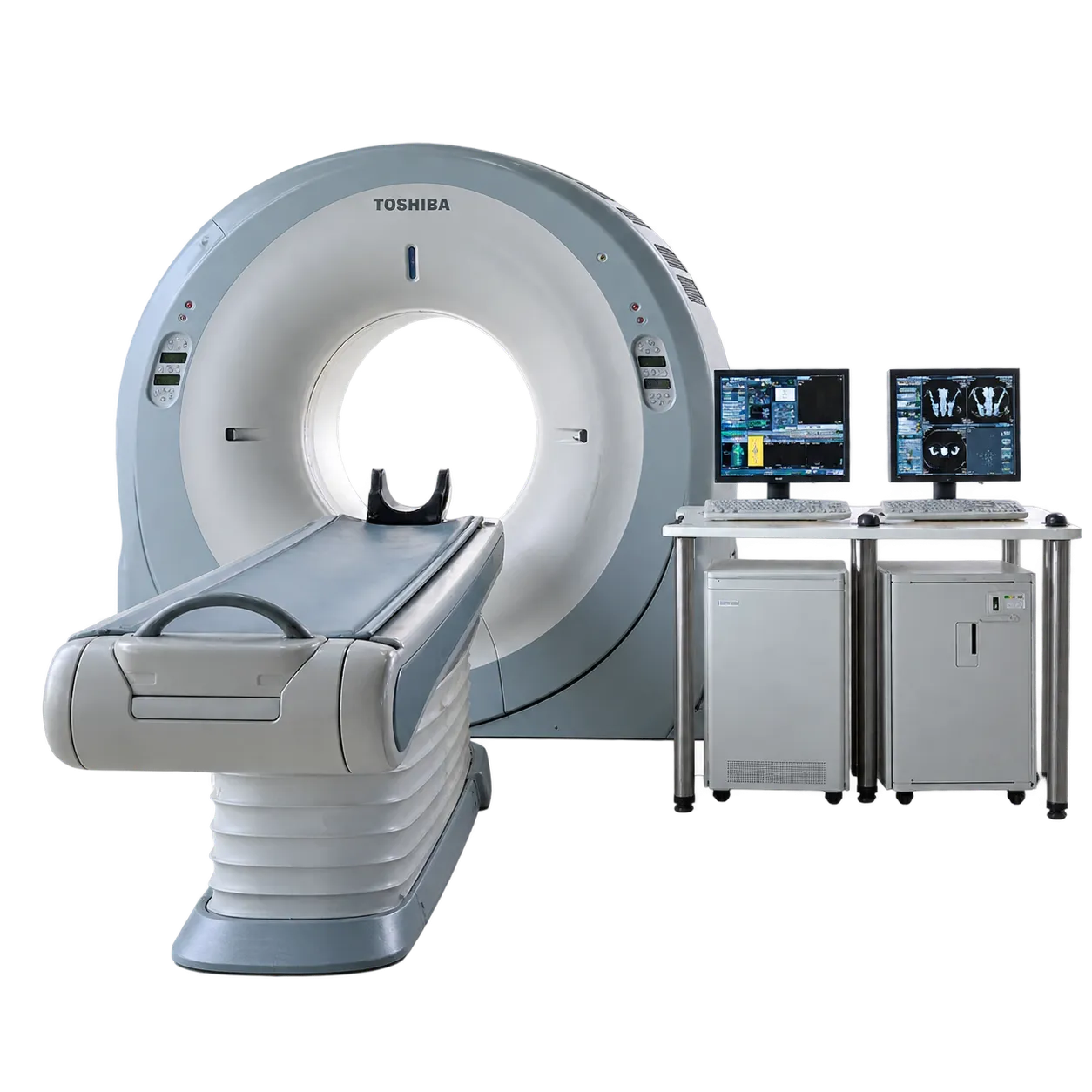
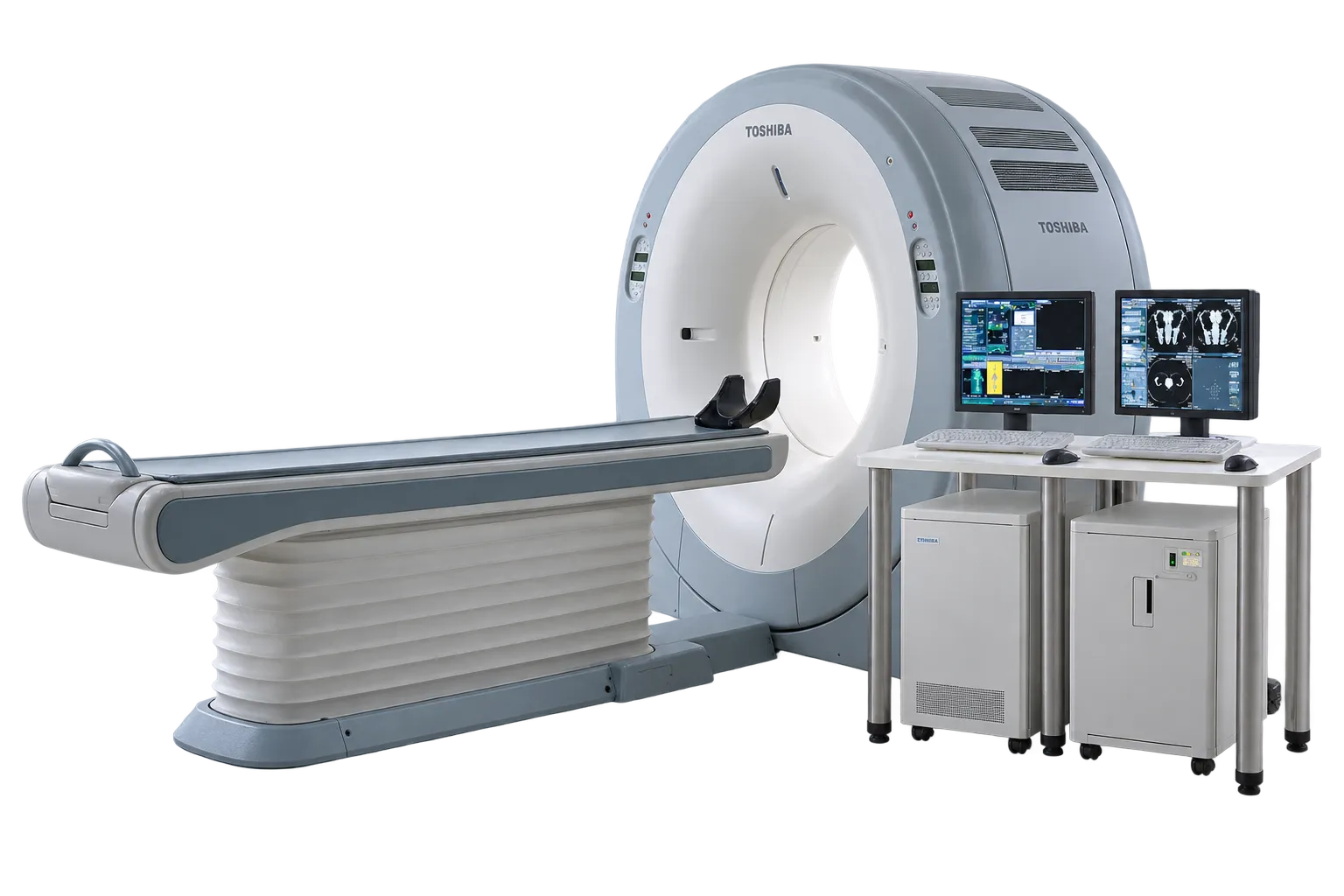
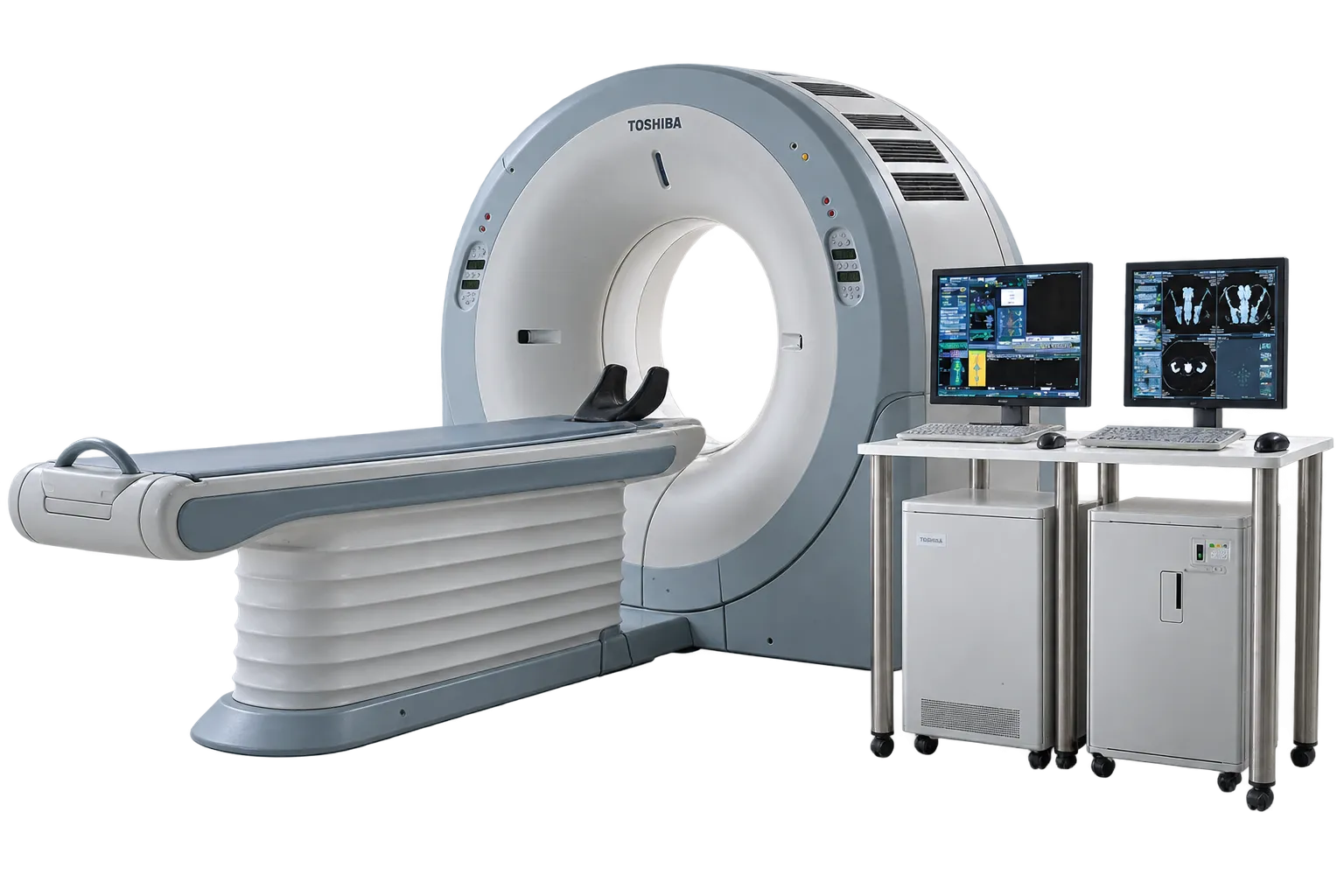
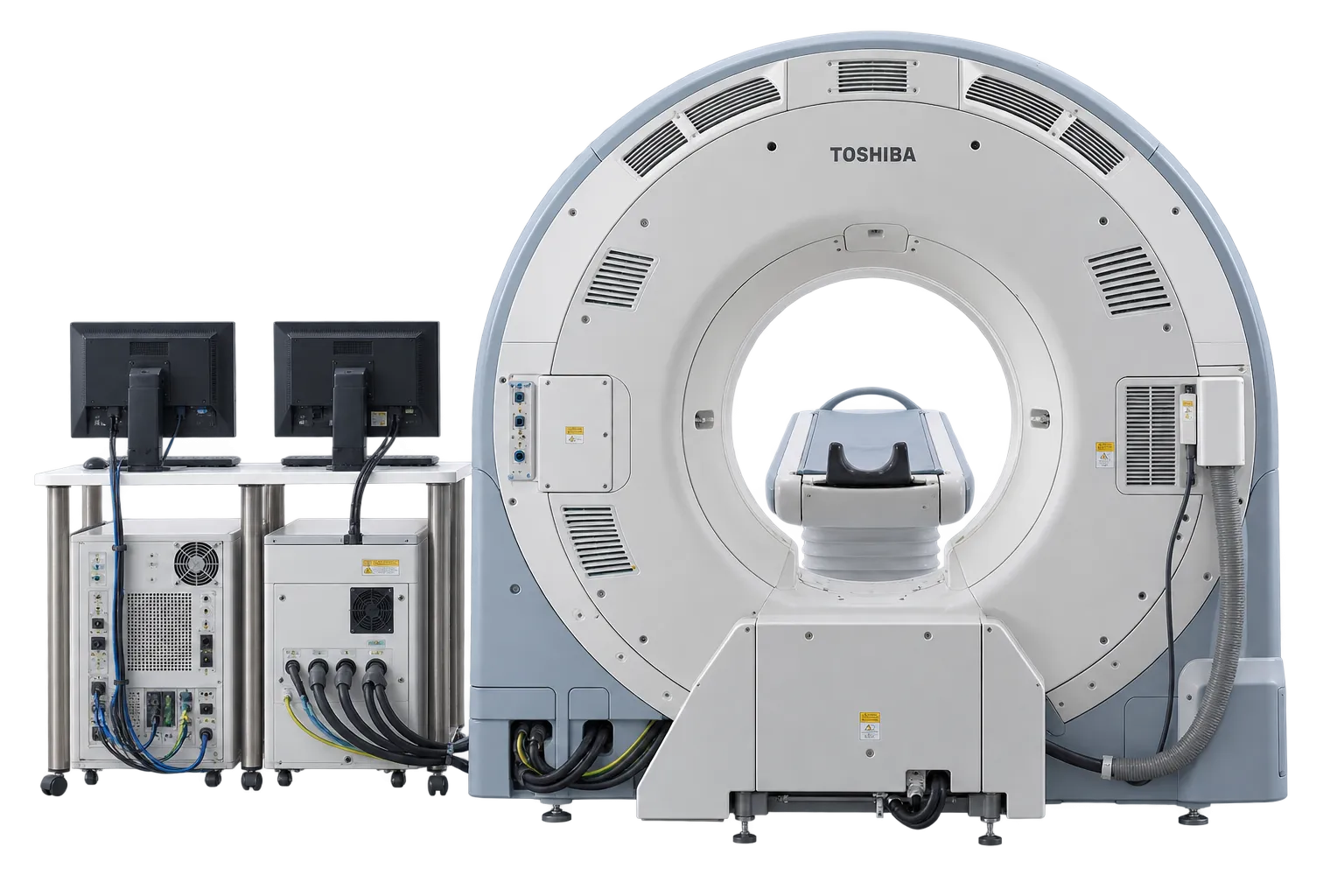
Radiotherapy treatment planning is what this platform exists for. Planning data must correspond to how the patient will lie on the treatment couch, which means breast boards, immobilisation shells, vac bags and arm supports inside the bore alongside the patient, and a 90 cm aperture is what accommodates that where a standard 70 cm diagnostic bore cannot. Toshiba states the aperture permits breast board tilt up to 25 degrees. All clinical judgement, including treatment planning decisions, remains with the oncology team, and Medigear.uk supplies configuration and condition detail rather than clinical guidance.
Dose calculation accuracy depends on the acquired field of view rather than the bore alone. A true 70 cm acquired field without extrapolation means more anatomy is measured rather than estimated, and estimated tissue density carries through into the dose calculation. That distinction is why bore width and field of view need reading together rather than separately, and why a wide bore quoted without an acquired field figure tells only half the story.
Thoracic and upper abdominal planning benefits from 4D respiratory gated acquisition, which images target motion through the breathing cycle rather than requiring it to be estimated when setting margins.
Bariatric diagnostic imaging is a legitimate secondary application, since the same 90 cm aperture and high capacity couch accommodate patients other scanners cannot. Departments considering it for routine diagnostic throughput should note it is a 16 slice platform rather than a high slice count system, and Medigear.uk will say plainly where a different scanner suits the requirement better.