
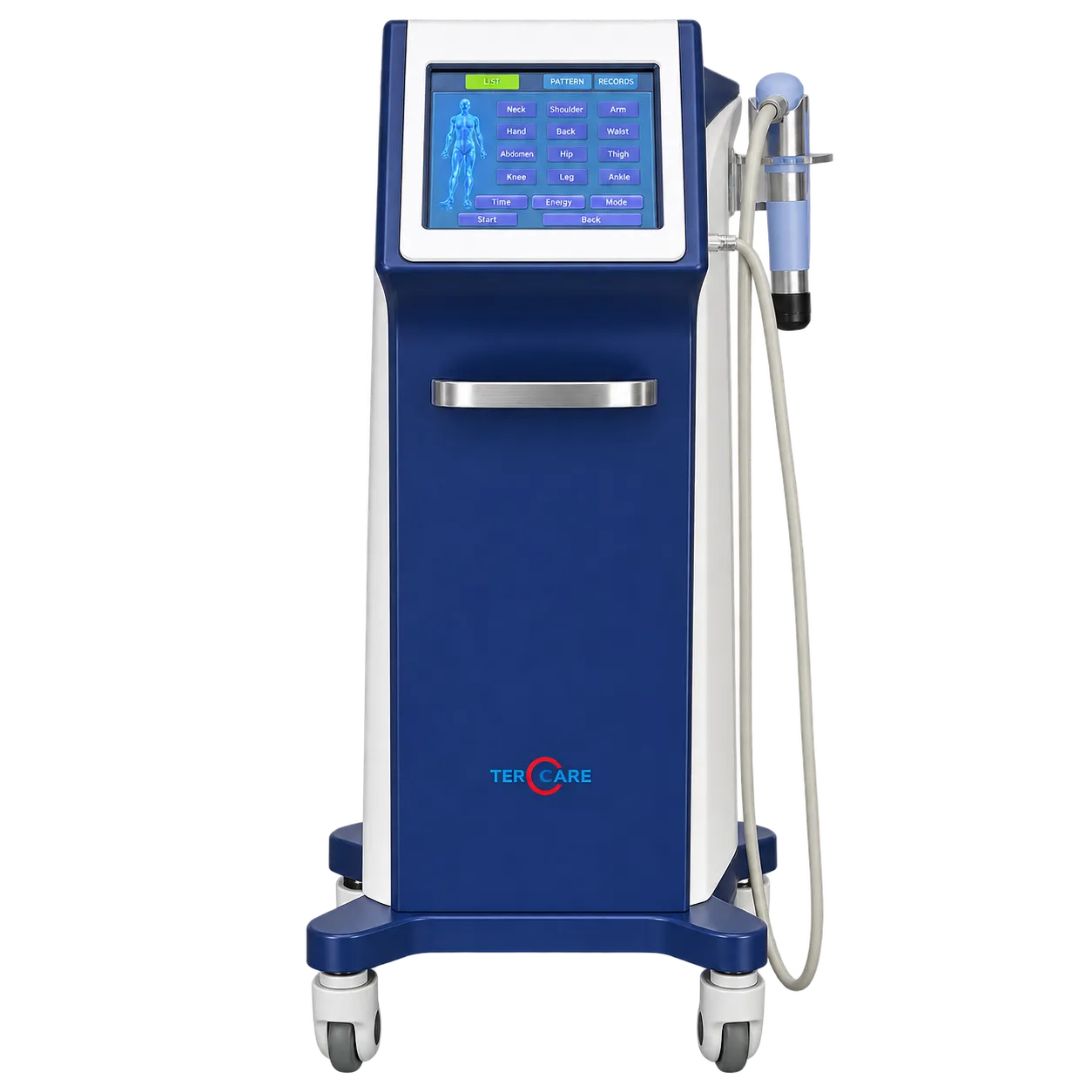
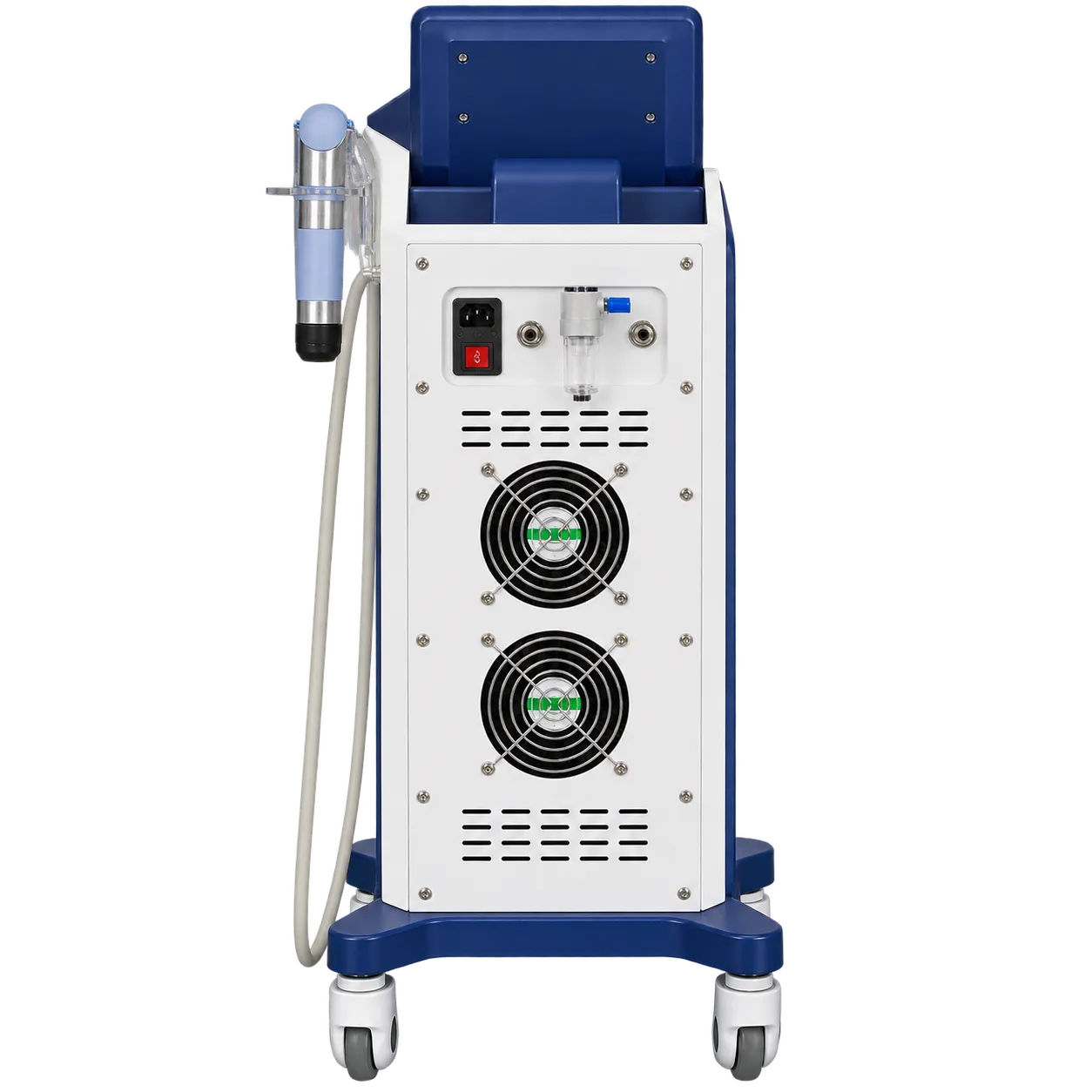
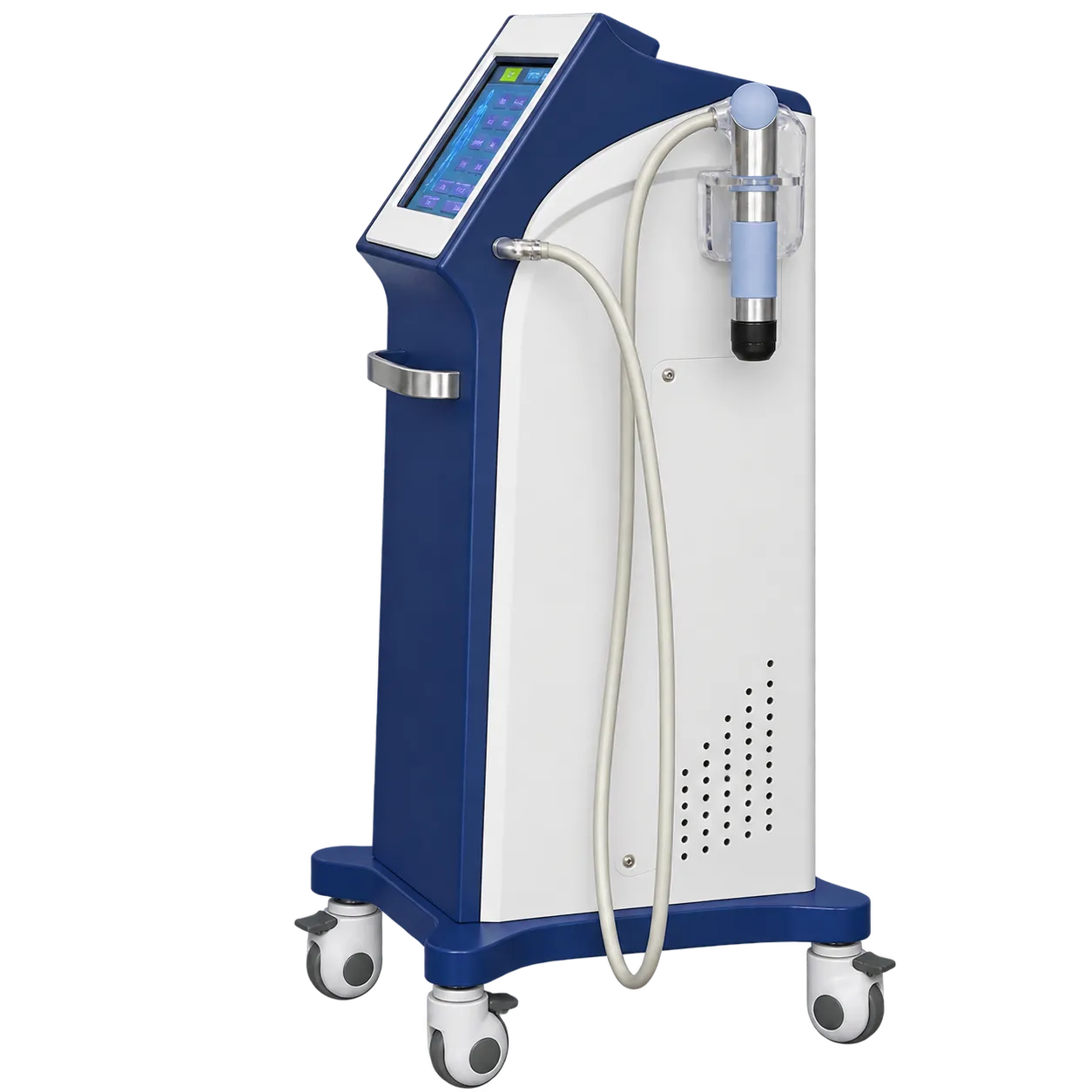
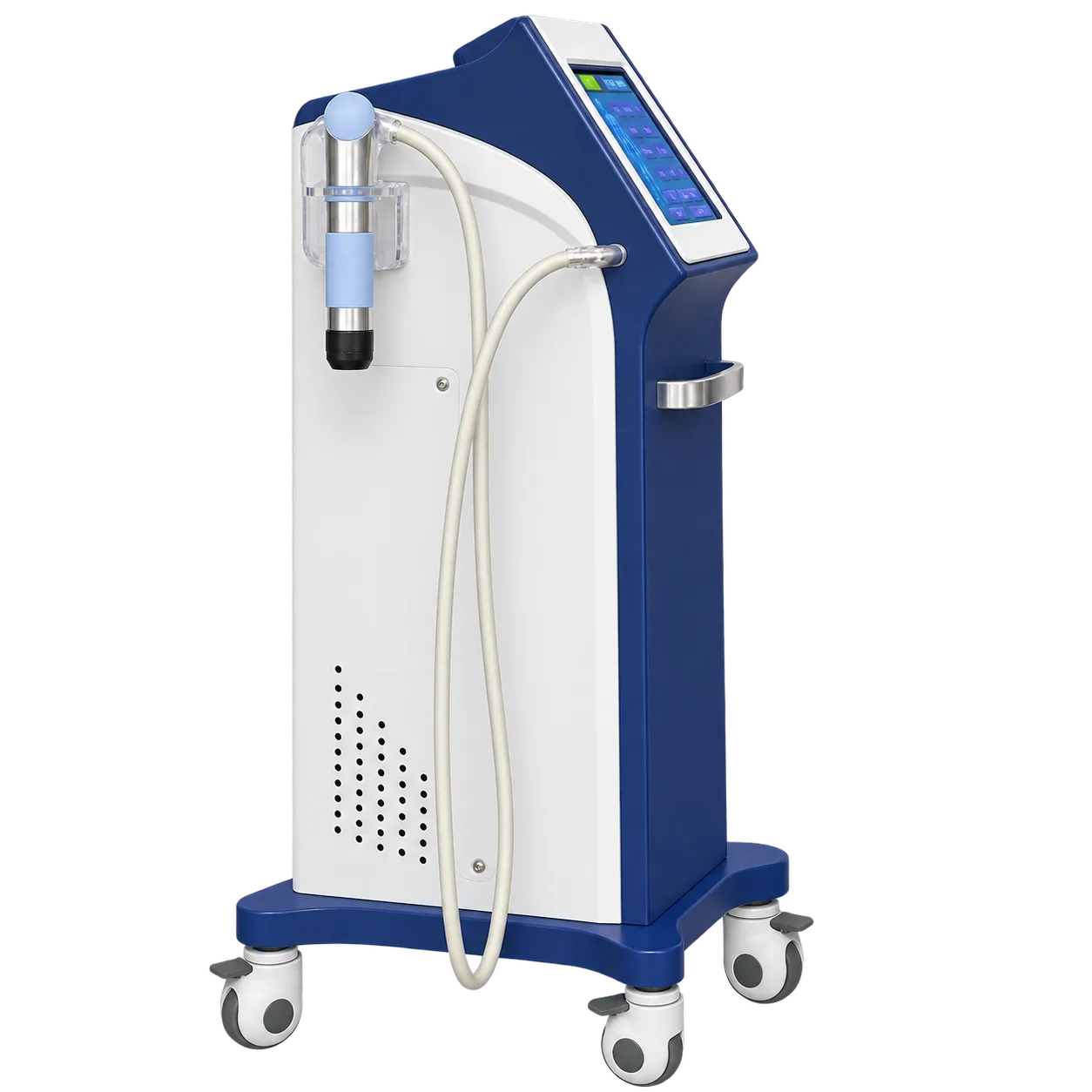
The TB08 is designed for hospital musculoskeletal outpatient departments, orthopaedic and sports medicine clinics, and larger physiotherapy services with a steady weekly shock wave list. Its most relevant indications are refractory Achilles tendinopathy and greater trochanteric pain syndrome, the lateral hip pain usually linked to gluteal tendinopathy, with plantar heel pain and lateral elbow pain as further uses.
NICE's position differs by indication, and a hospital buyer should know each. For greater trochanteric pain syndrome, NICE describes the evidence on both efficacy and safety as limited in quality and quantity, restricts use to special arrangements, and asks clinicians to warn patients that treatment can be painful during and after sessions and that symptoms may worsen. For Achilles tendinopathy, plantar fasciitis and tennis elbow, NICE raises no major safety concerns but calls the efficacy evidence inconsistent, again under special arrangements for governance, consent and audit or research. Each guidance document asks clinicians to notify their Trust's clinical governance leads. Randomised trials in plantar fasciitis have produced both positive and null results, which reinforces the case for local audit.
For a hospital department, this points to a specific role: a governed shock wave pathway for patients whose Achilles or lateral hip pain has failed a structured course of loading and education, with written consent, outcome measures recorded at each visit and results reviewed by the governance lead. The station's fixed-bay design and stepped, recordable settings fit that model, and its single handle means the service plan should include cover for rebuild periods.
The conformity documentation required for those procurement routes is issued by the manufacturer and provided by the seller.