
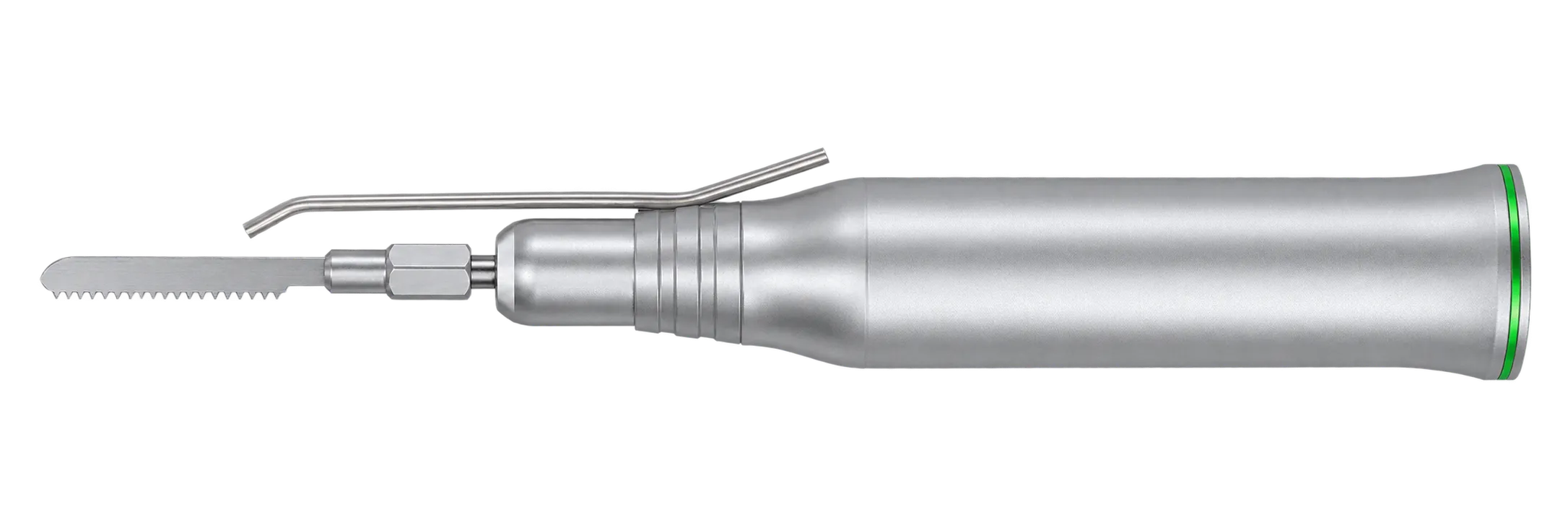
The D29-R1 gives an oral surgeon a reciprocating blade for cutting bone in dental surgery. The handpiece determines the stroke direction. During one cycle, the blade travels forwards and then returns along the same path. Its narrow, flat profile places the teeth along a straight edge, and the surgeon holds the grip behind that edge. The cutting part projects beyond the nose of the instrument, where its full toothed length is visible before it meets the bone.
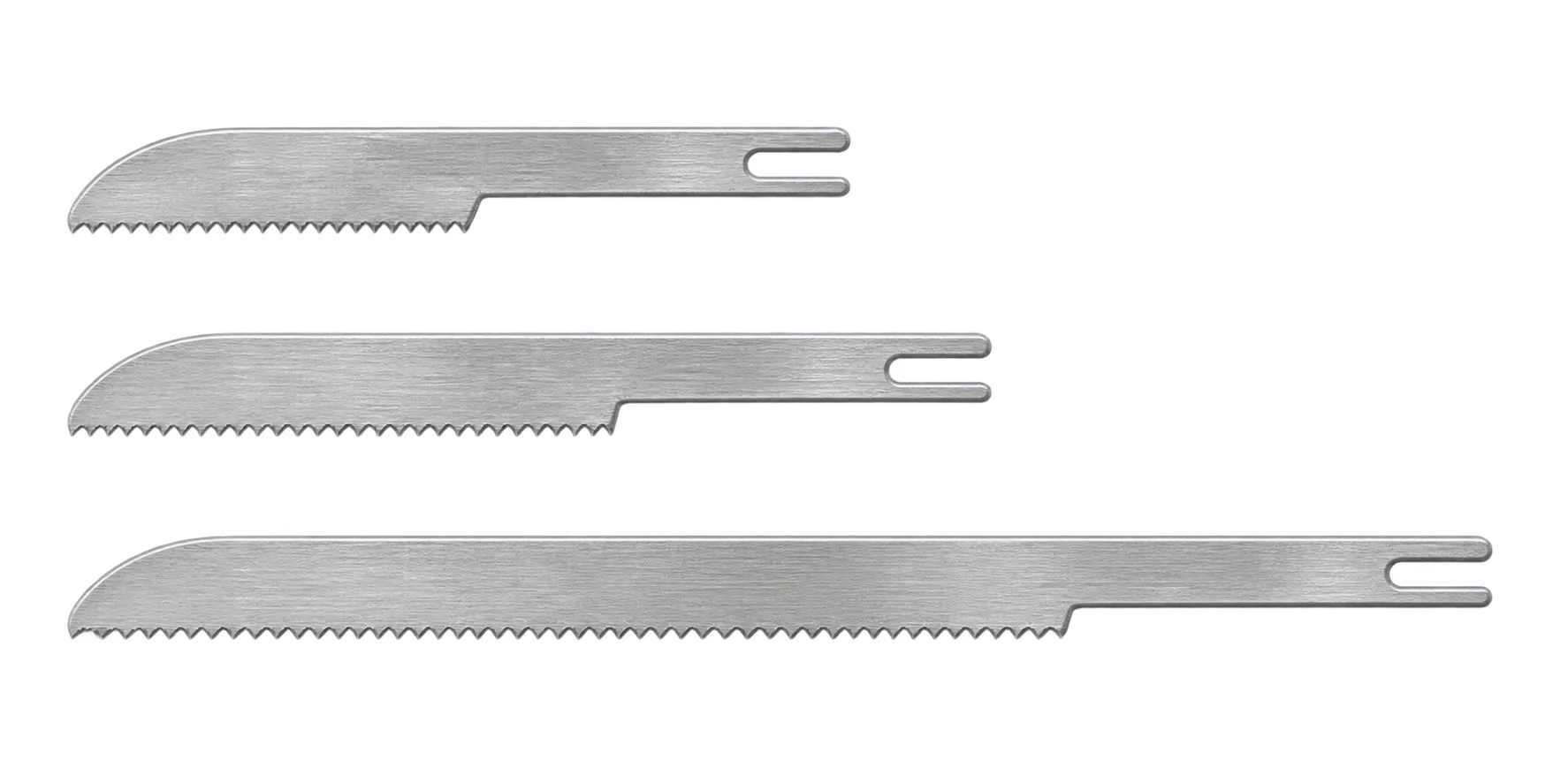
When a surgical tray calls for a short cutting edge, the R-15T provides 15 mm of teeth. The size refers to the working portion of the blade and excludes the mounting tail from the measurement. That distinction matters when identifying a loose blade on a tray, since the full piece of metal extends farther than the assigned dimension. The code and the toothed length identify the same option in two ways.
For a setup that calls for a longer toothed section, the R-20T and R-30T place 20 mm and 30 mm of cutting edge on the same handpiece. An instrument nurse preparing both lengths can distinguish them by the number in the blade reference. Across all three choices, the working end retains the same relationship to the grip and the same forward and return movement.
The external irrigation tube follows the body towards the cutting end. Its bent outlet directs fluid towards the blade, while the hand that guides the saw sits farther back on the wider part of the housing.