
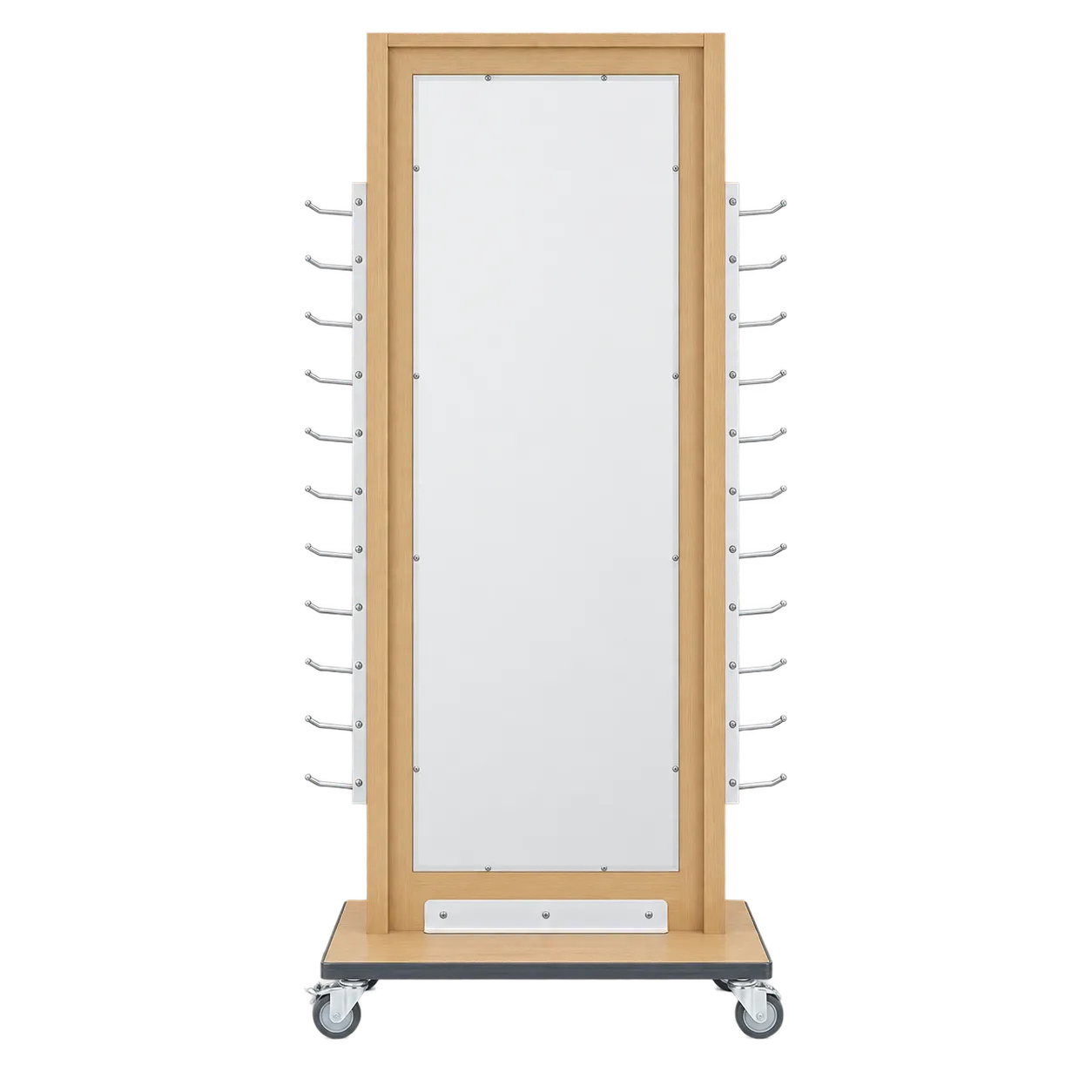
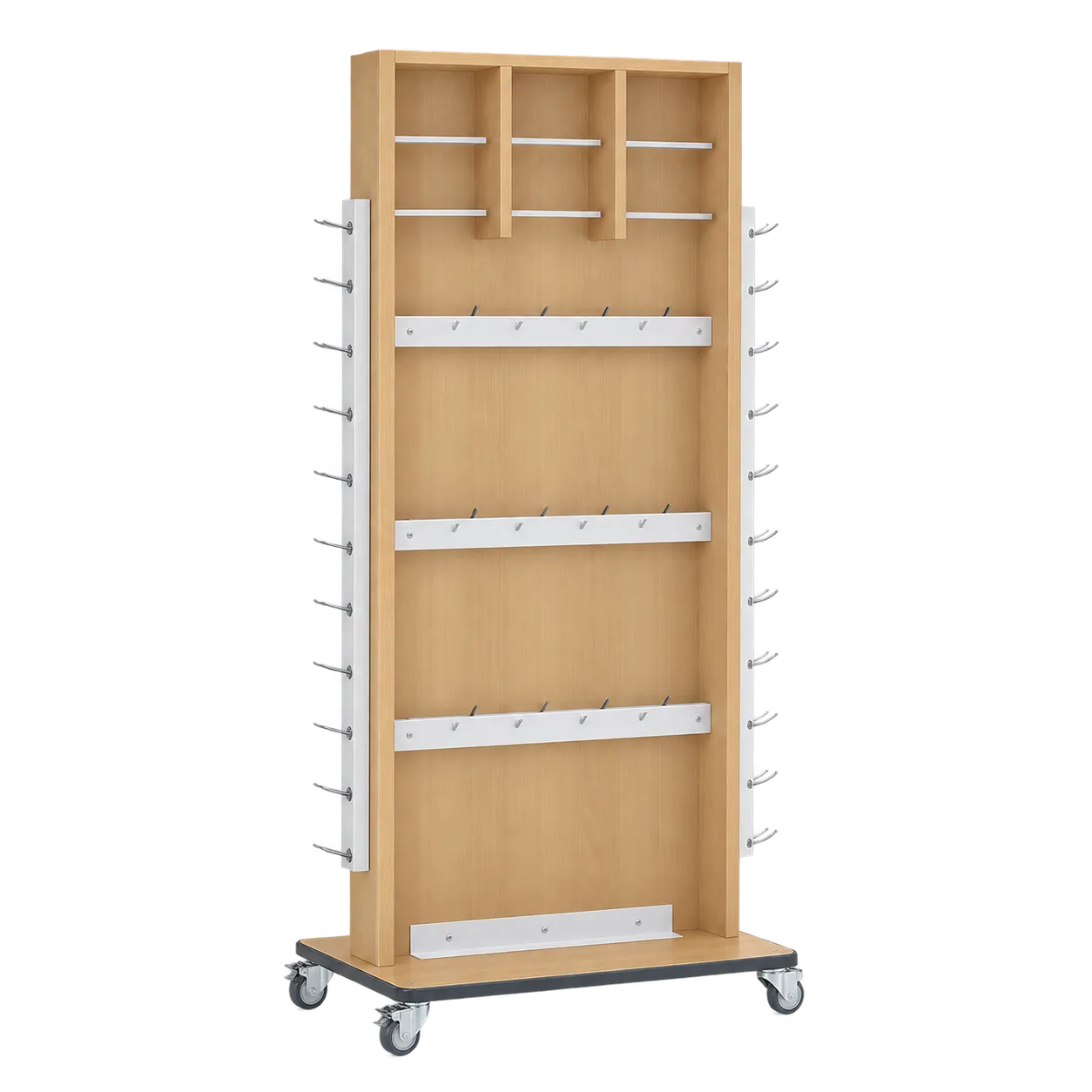
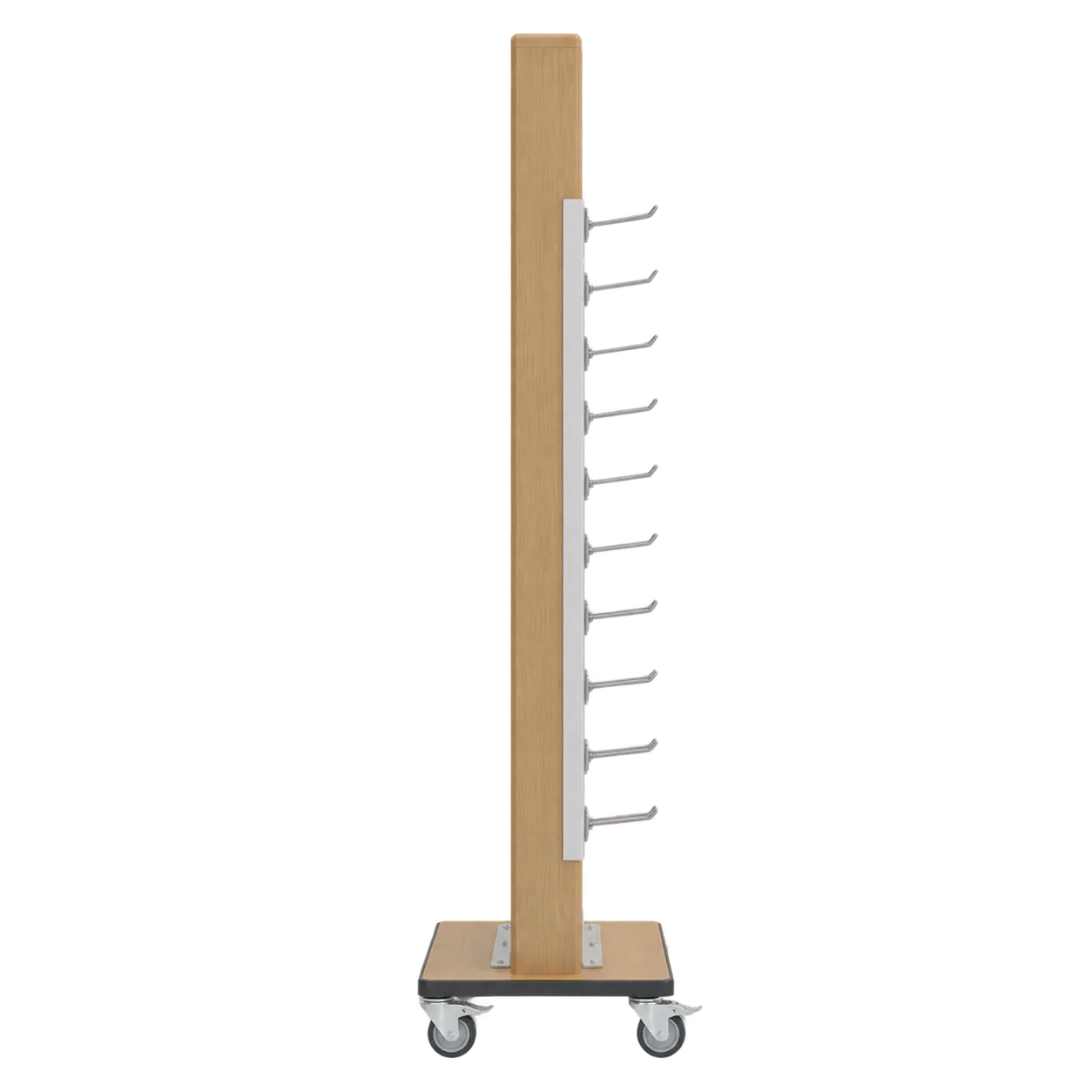
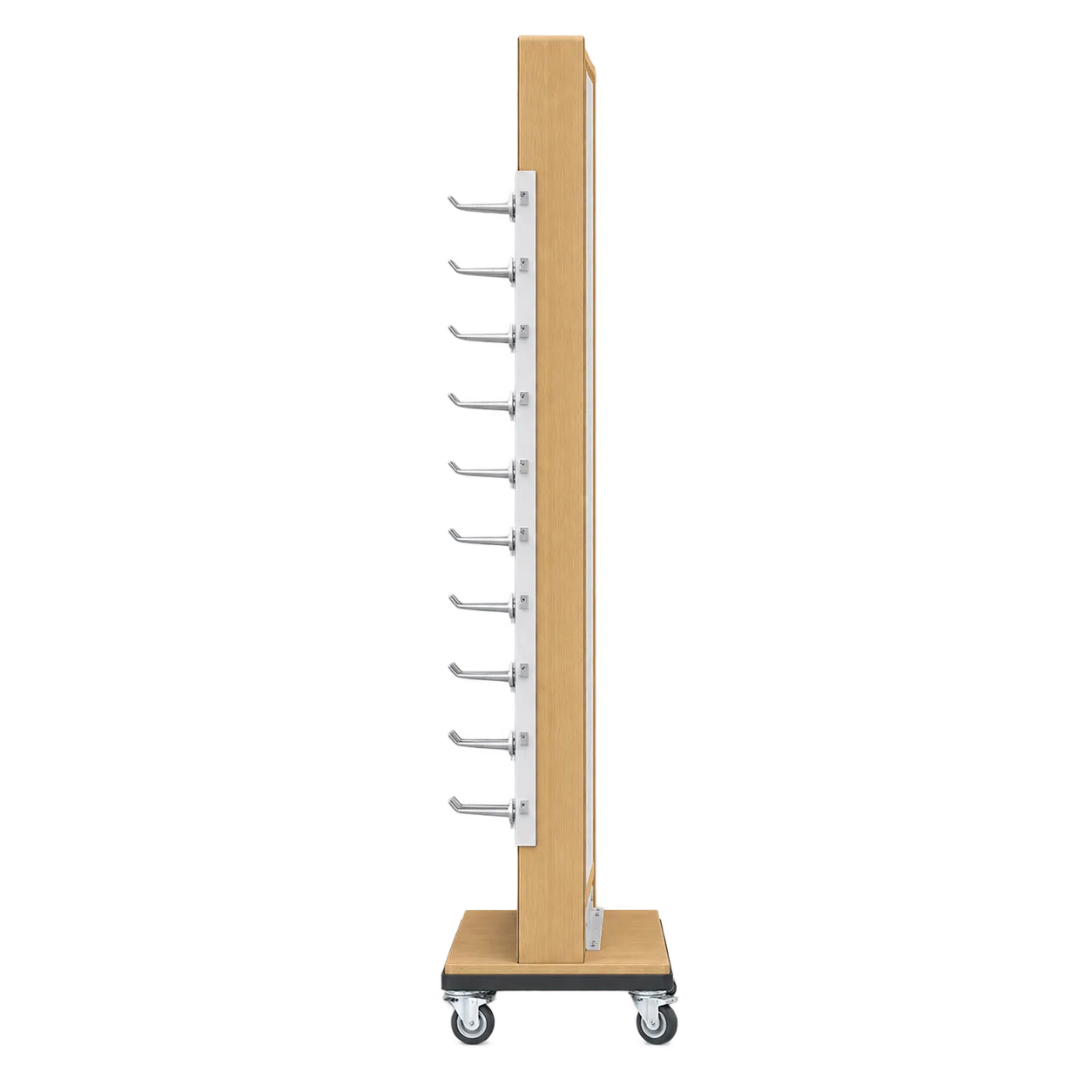
Outpatient physiotherapy gyms, sports medicine clinics, orthopaedic and cardiac rehabilitation, community rehabilitation centres and occupational health gyms are where the WRM earns its place. In a busy gym, it parks beside a group class or a treatment bay so the therapist can swap a patient from a band to a cuff weight to a dumbbell without walking away. The mirror on the front turns the same spot into a place to check alignment through each set. In cardiac and pulmonary rehabilitation classes, it keeps a graded set of light weights beside the exercise circuit.
Bands and free weights earn their room on the rack side by side. A 2019 meta-analysis of eight randomised trials found that training with elastic resistance produced strength gains similar to training with dumbbells and weight machines, in both the upper and lower limbs. That pooled evidence is modest in size, and it compares types of resistance, not storage. The rack changes how quickly the chosen resistance reaches the patient, and how easily a therapist can move up or down a grade between sets.
In the UK, physiotherapists who prescribe strengthening programmes are registered with the HCPC. Providers of treatment in England come under the CQC, while Scotland, Wales and Northern Ireland each run their own regulator. NHS procurement routes ask for conformity paperwork and a stated load rating on gym equipment, and equivalent public procurement elsewhere asks the same. The conformity documentation those procurement routes require is issued by the manufacturer and shared by the enquiry team.