
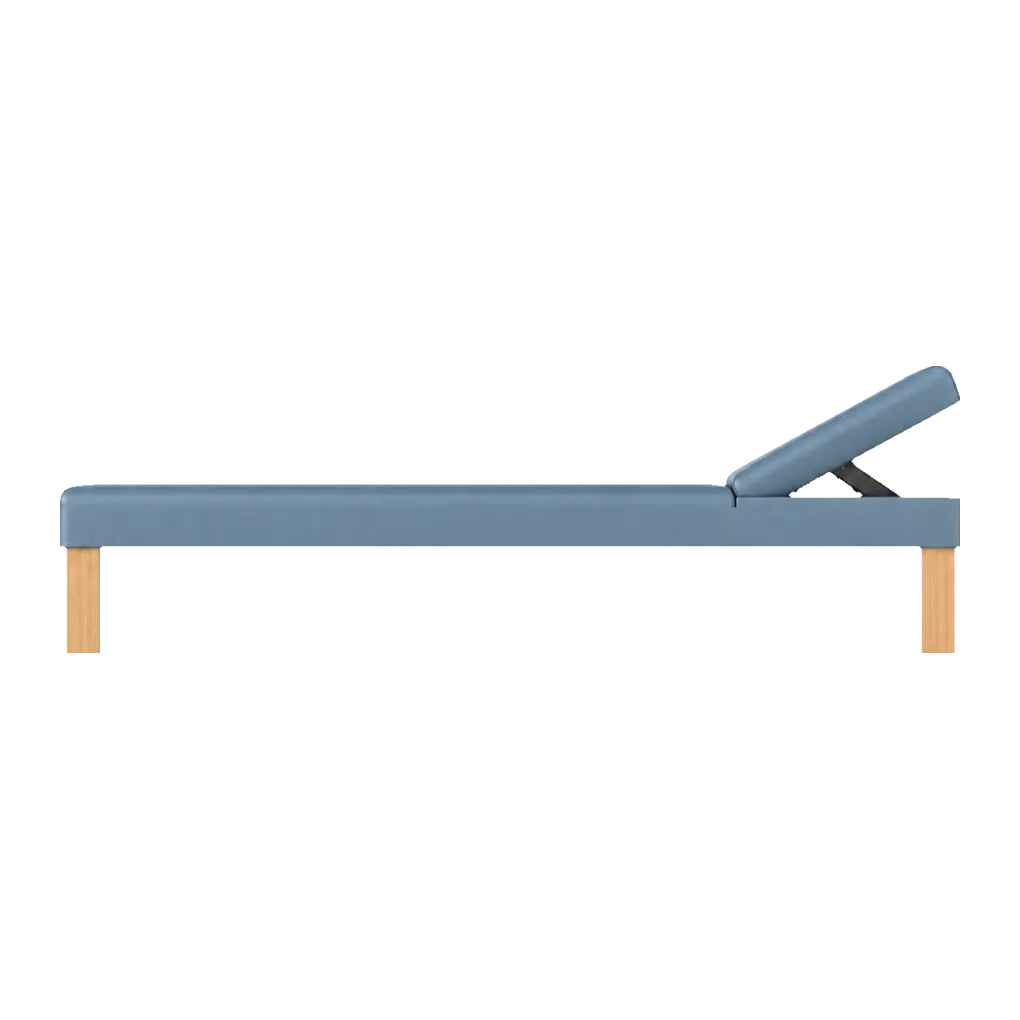
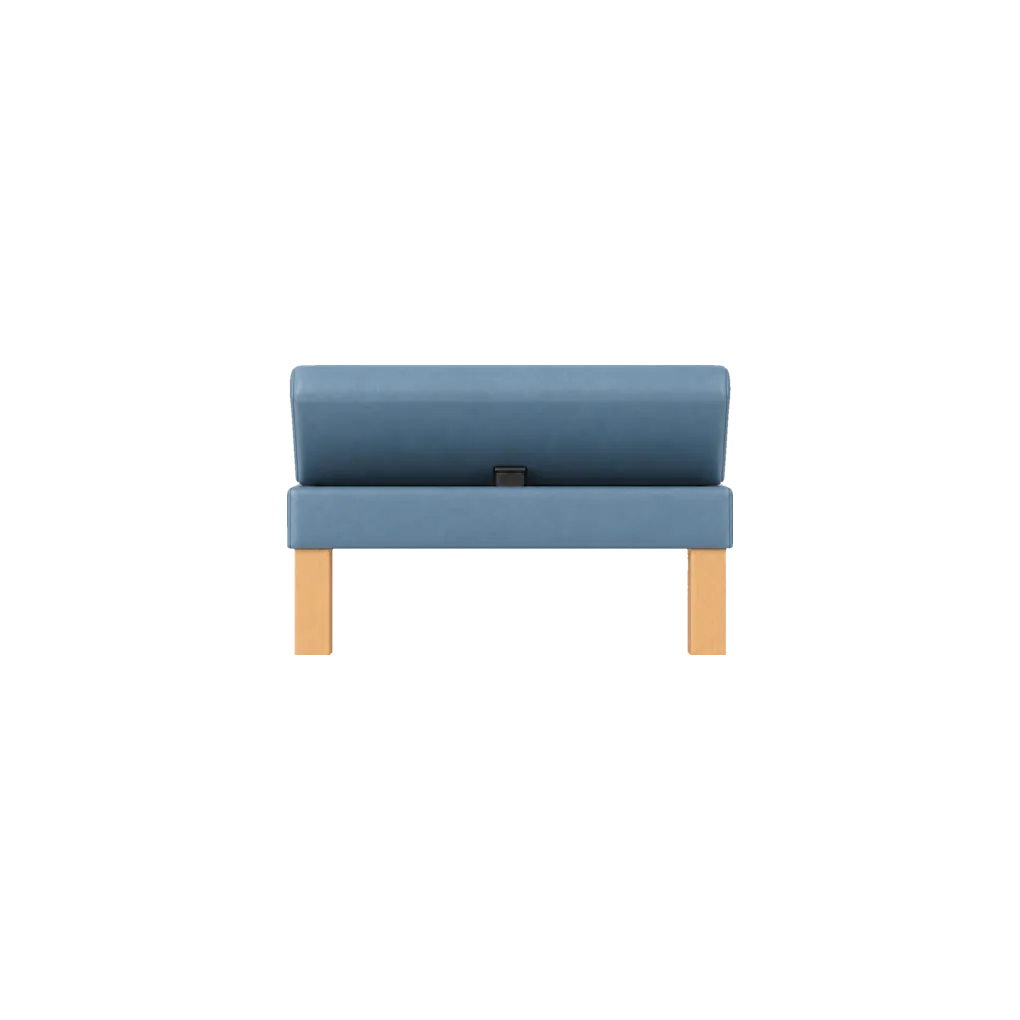
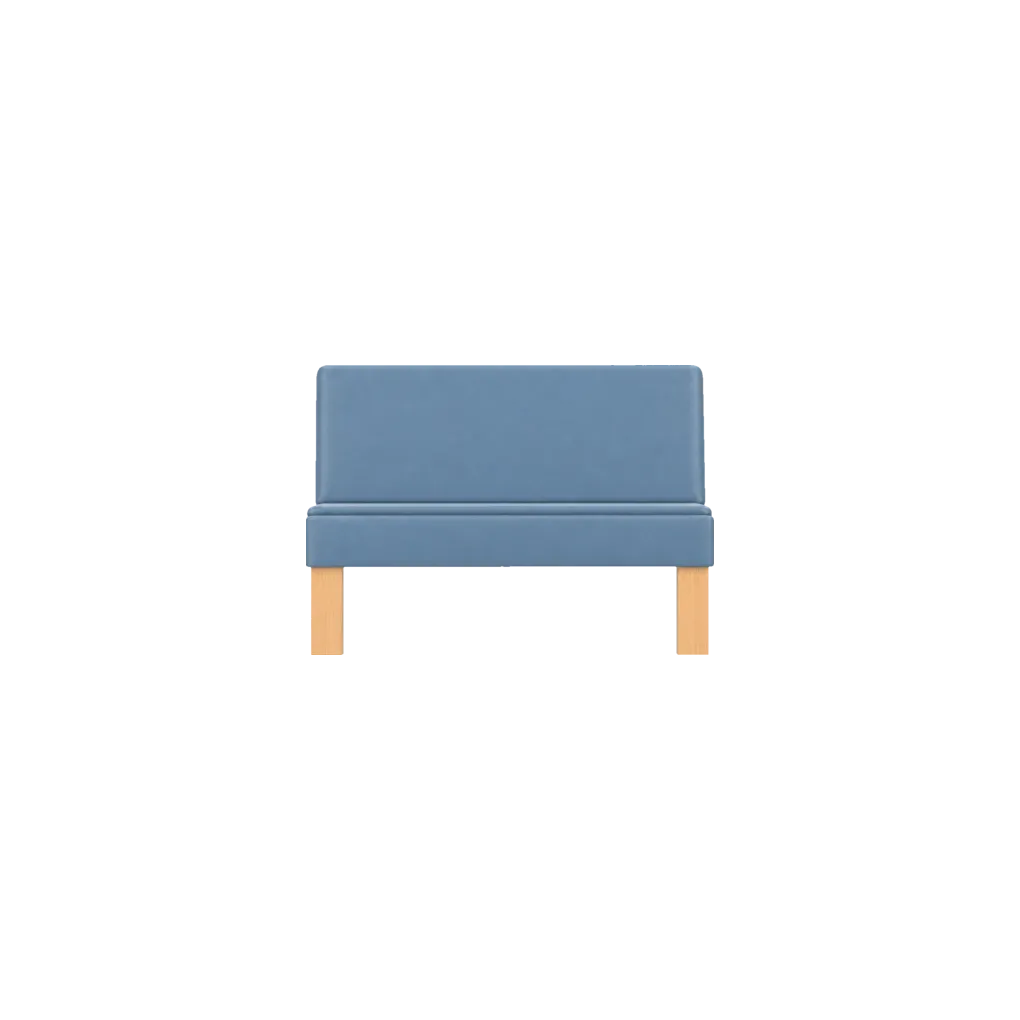
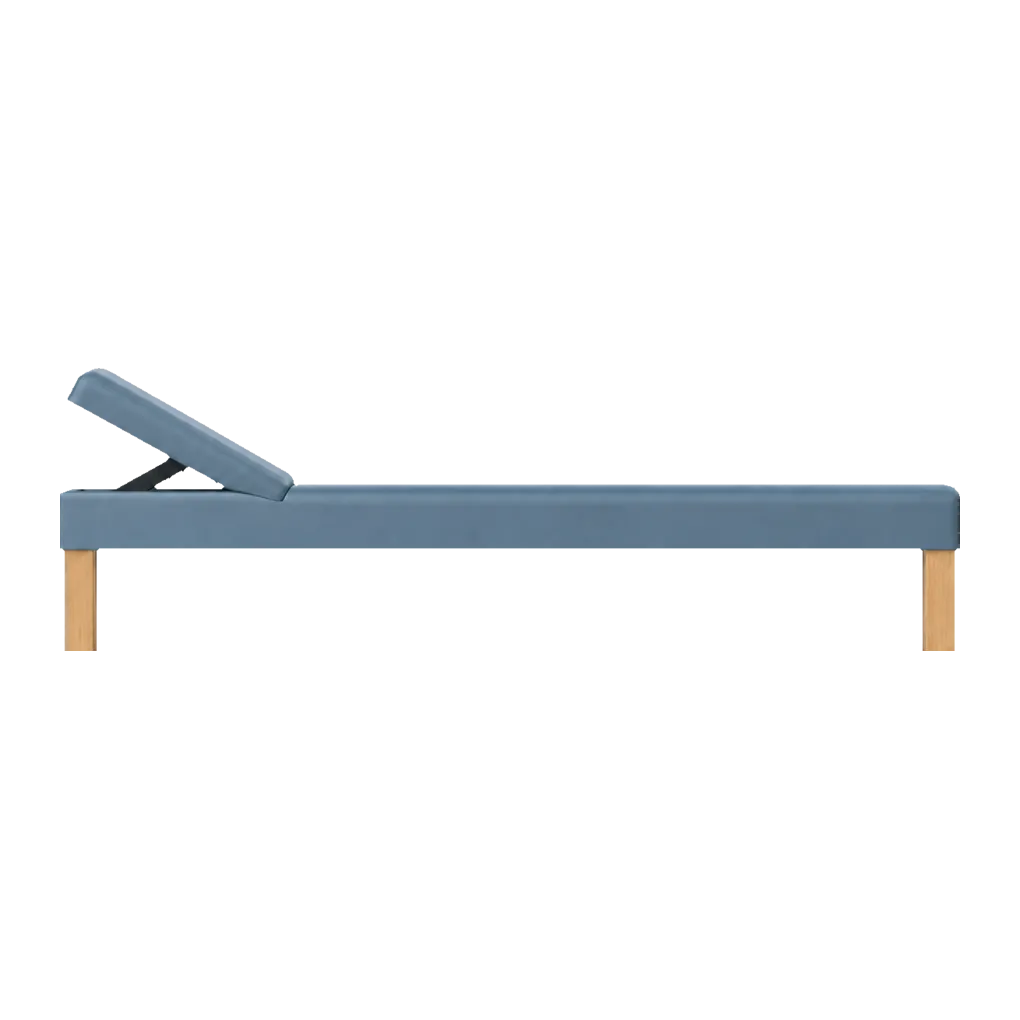
Counselling and talking therapy rooms are the obvious home. A service that spends its first session settling someone's nerves does not want the furniture arguing back, and a padded top on timber legs reads as a piece of furniture, not a piece of equipment. The backrest gives a half-reclined position for breathing or relaxation work, and the low top means nobody has to be helped up onto anything.
Wellbeing and private health screening share that logic in a different register. Screening appointments run in hotel-style suites and high street clinics where the fit-out matters to the client, yet the couch still has to take an examination, an ECG or a blood pressure check at a workable height.
Residential and care settings use it for visiting clinicians. A room in a care home doubles as a treatment space when the GP or the district nurse calls, and furniture that suits a lounge the rest of the week earns its place.
Sensory and quiet rooms in special schools and learning disability services want the same softness, with a surface that wipes down and a frame that does not crowd the floor. Timber legs need a thought about flooring too: on vinyl or soft-backed carpet, ask whether protectors are fitted under each foot.
Across all four, the open frame helps the cleaning round and, subject to the clearance figure, a mobile hoist. The missing piece is storage: plan a trolley or a wall unit for everything the couch does not hold. Where a room is being fitted out, Medigear.uk can arrange a site survey covering the couch, the seating and the storage that has to go somewhere.