

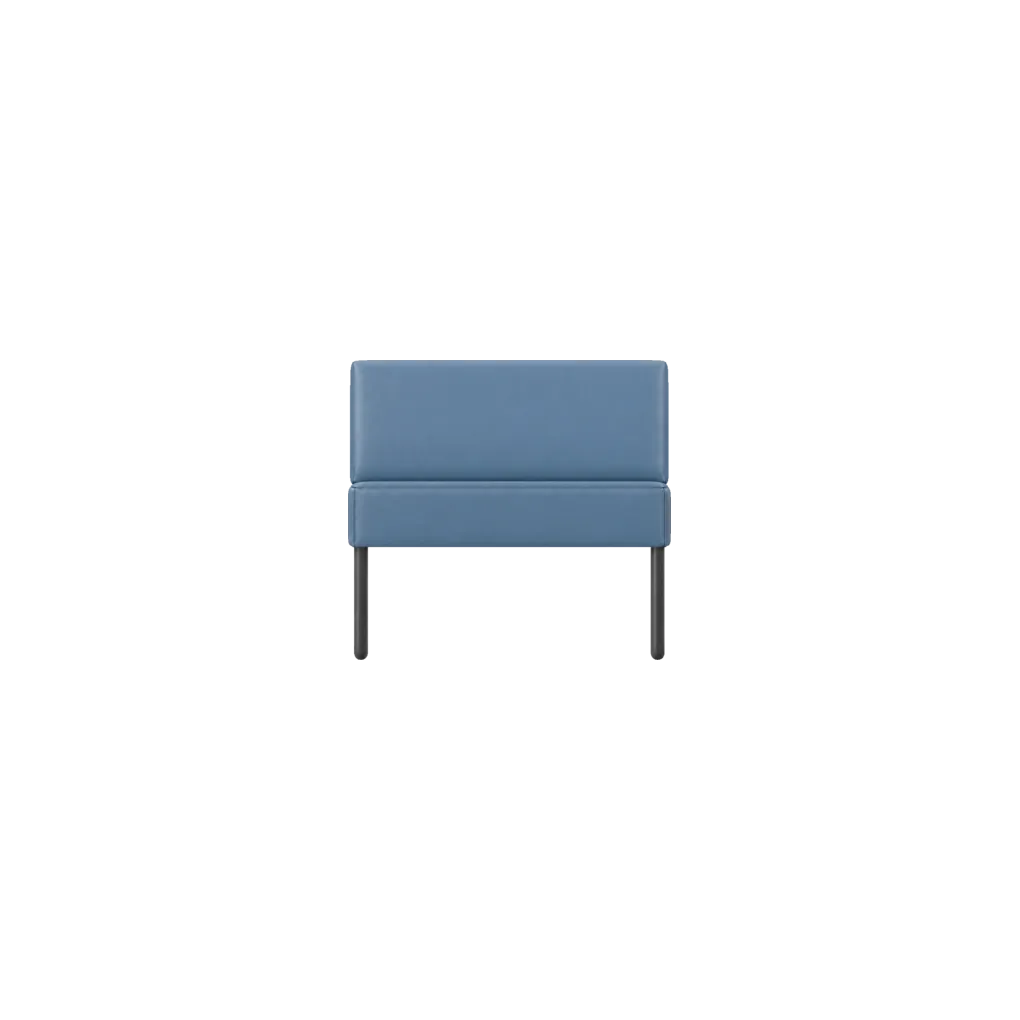
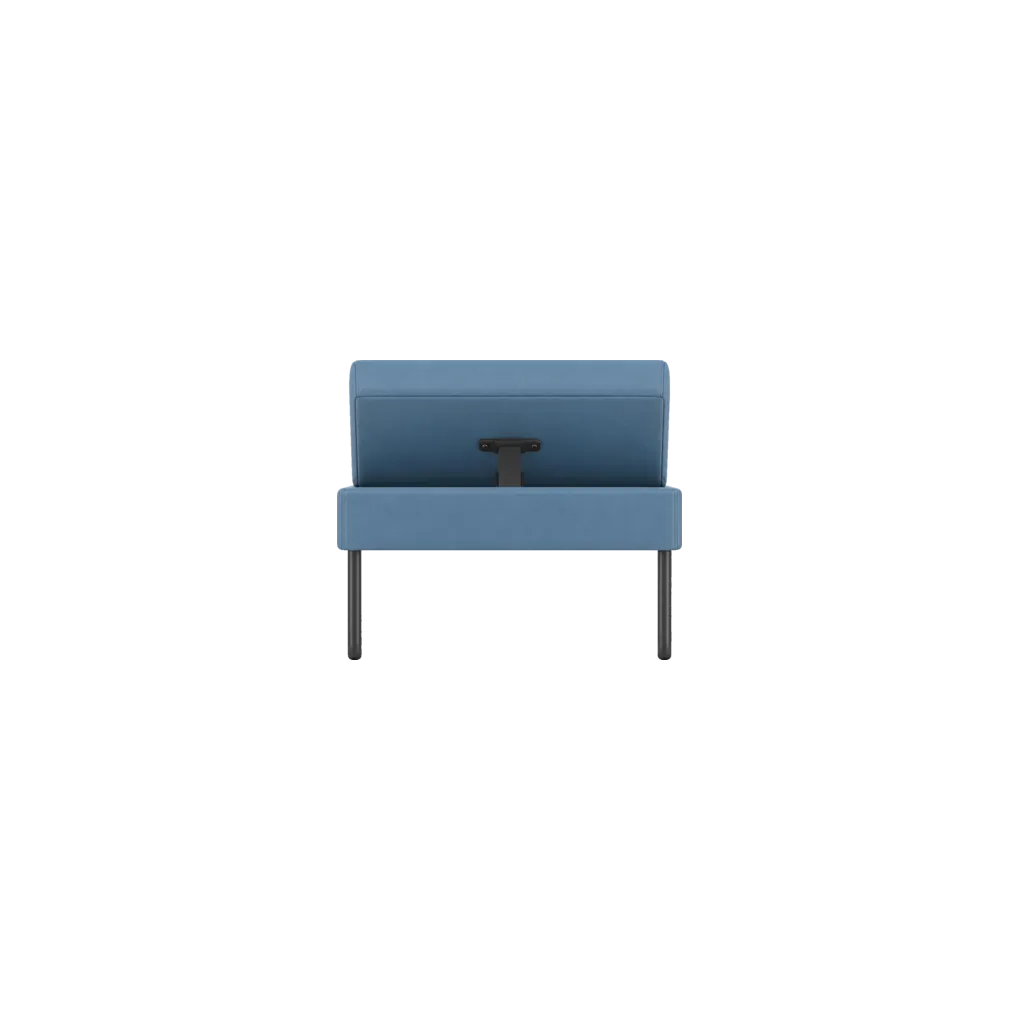
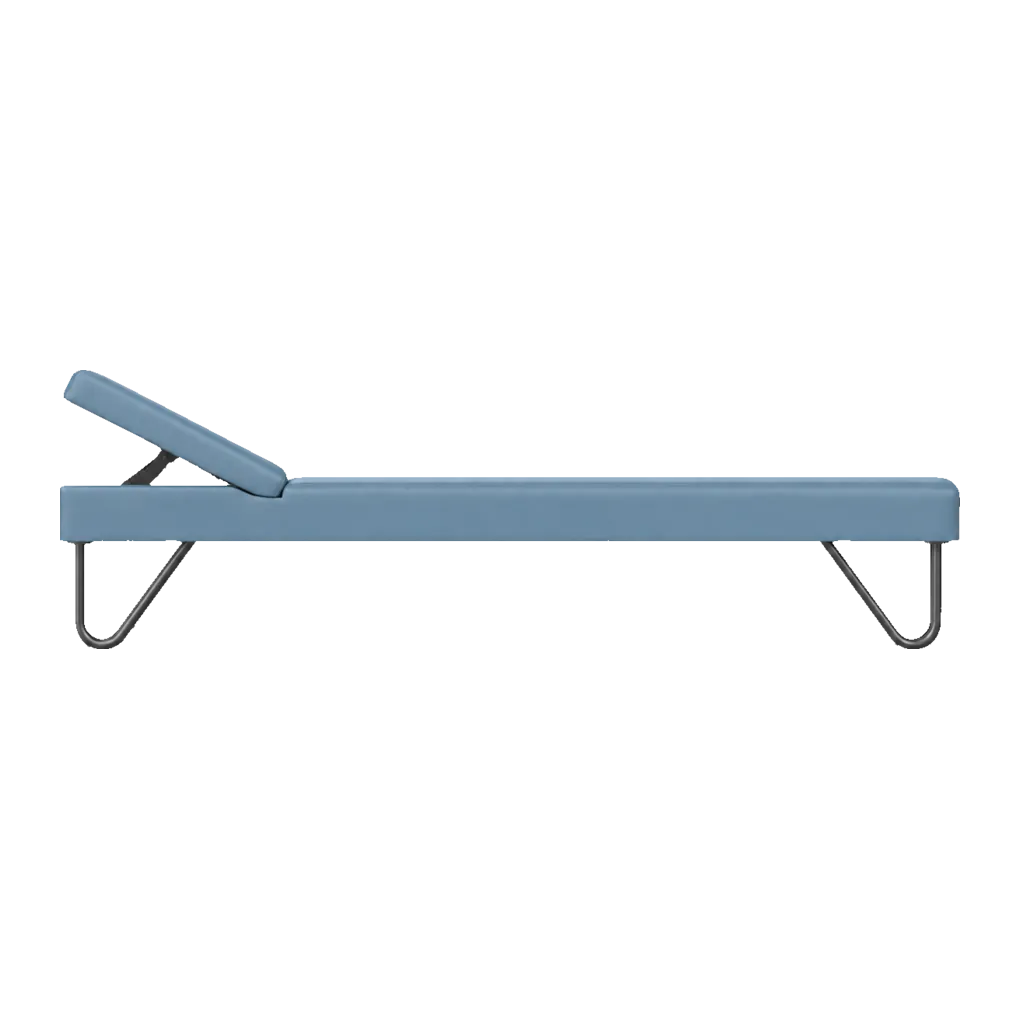
Hoist-assisted transfers come first. In learning disability services and neurological rehabilitation and care settings, a patient may need a mobile hoist for every transfer, and the hoist's base legs need floor to travel across. A couch that stands on four slim legs offers that floor, subject to the clearance figure and the position of the legs themselves, which is why the page asks for both in writing. With a transfer board, the same clear floor gives staff room to stand on both sides.
Cleaning is the quieter case. Floors under fixed furniture are hard to reach, and dust and spills gather where a mop cannot follow. With nothing beneath the top, a cleaner can pass under the couch in one stroke and the housekeeping round finishes on time. That matters most in rooms turned over between patients all day.
Outreach work uses the knock-down package. Screening sessions, occupational health visits and community events all need furniture that goes into a van, comes out again and sets up without a workshop. A couch that splits into a top and four legs suits that kind of trip.
Aesthetics and skin clinics take it for different reasons: a low top, a clean line and chromed legs suit a room that patients see as much as use, while the wipeable platform handles gels and cleansers.
The trade-off runs through all four. There is no storage, so the room needs a trolley or a wall unit, and I don't see a couch roll holder listed. For a room still on paper, Medigear.uk can set up a site survey taking in the couch, the trolley and the hoist route.