

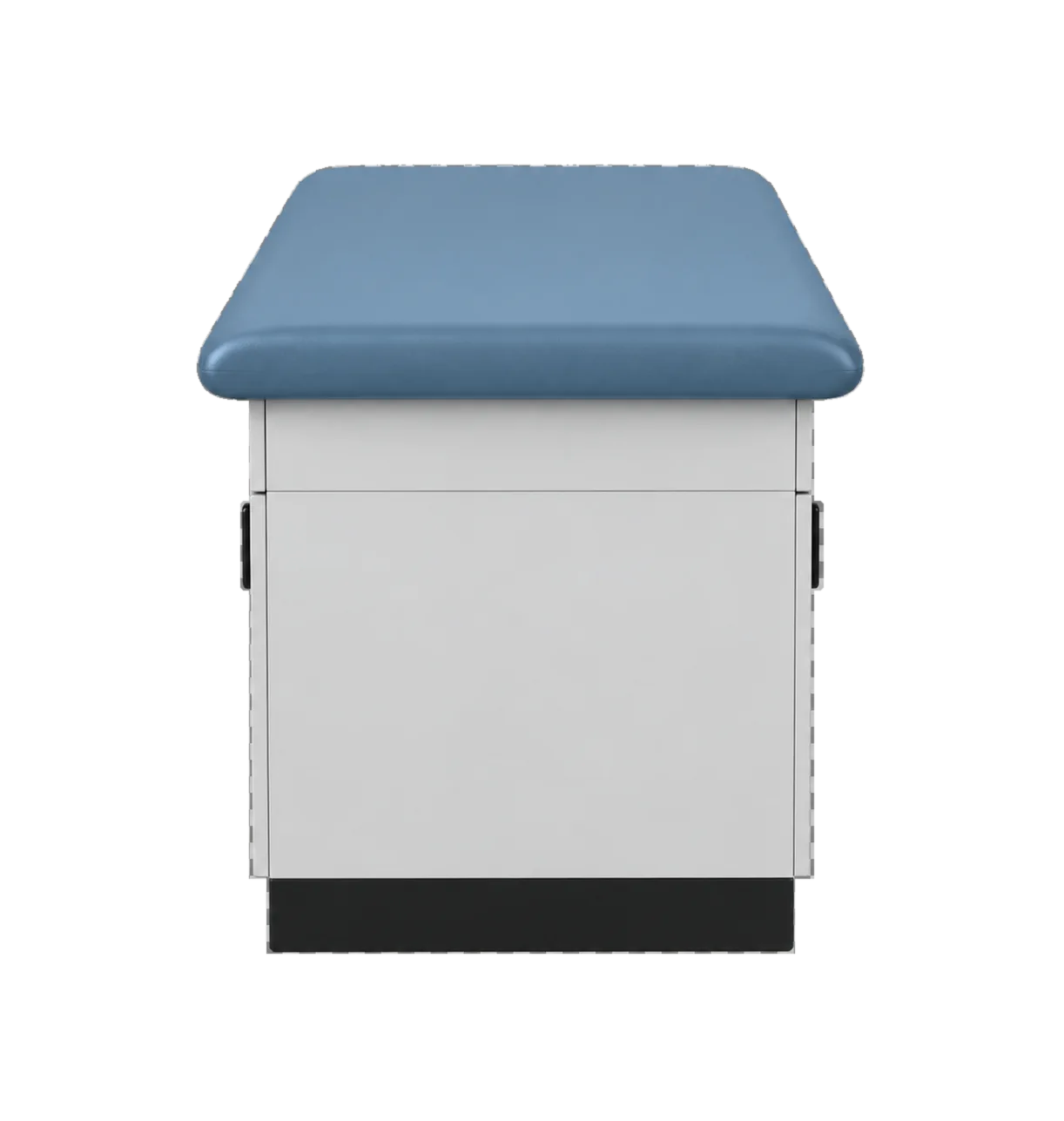
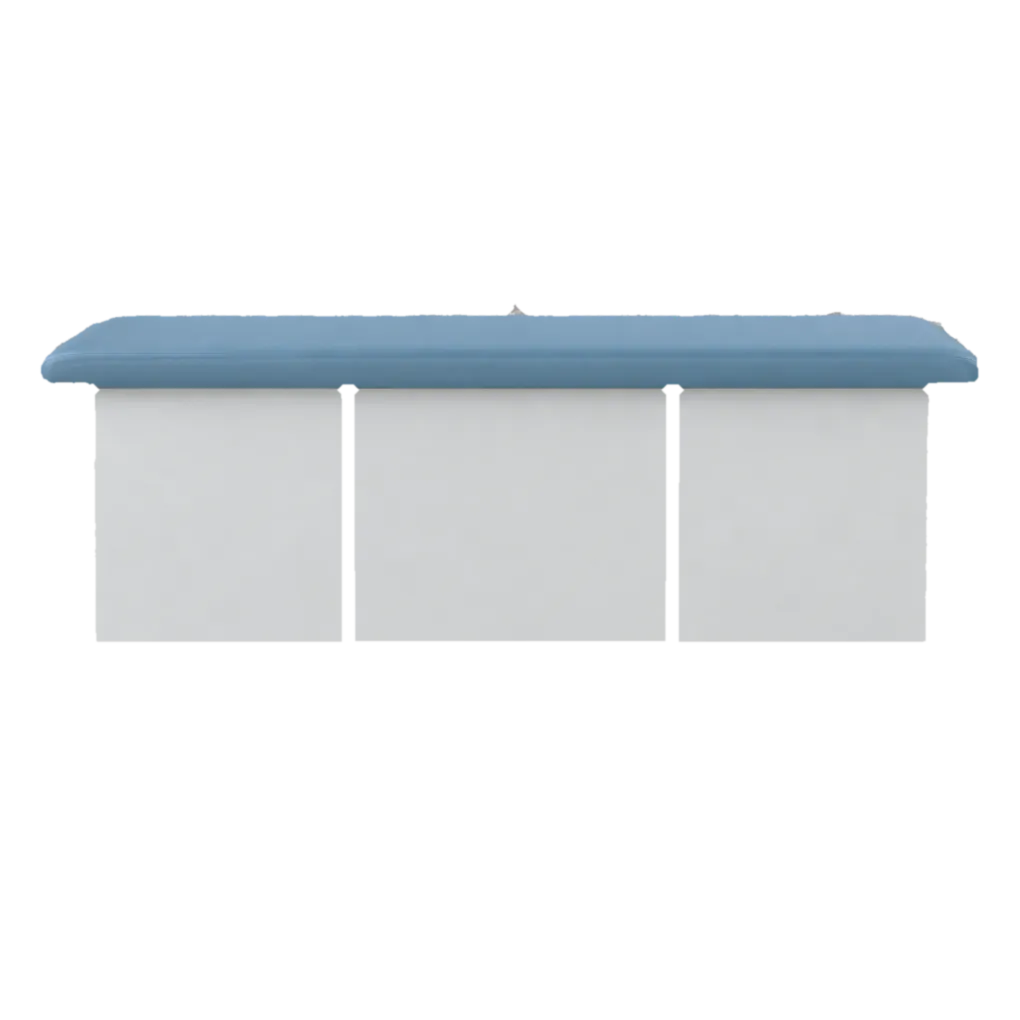
Treatment and examination couches carry the routine work of a clinic, and a balanced cabinet table is aimed at rooms holding a moderate mix of small consumables and bulkier stock. Typical use covers general examination, minor procedures, injections and dressings, phlebotomy, consulting room assessment, and treatment of taller patients.
Three drawers and two compartments sit between the drawer-led and cupboard-led arrangements available in this series. A service with a handful of small categories to keep separate, alongside a few larger items that would swallow a drawer, gets more from this balance than from either extreme.
The open centre section is the part that could change how the room works, and it is the part the specification does not describe. If it provides knee space, a clinician gains a seated position at the couch — which supports note-taking without turning away, longer consultations conducted sitting down, and procedures such as phlebotomy that many clinicians perform seated. It would also make the table usable through a full list by a clinician who cannot stand comfortably for extended periods.
If instead it is open storage, it serves equipment in active use rather than clean stock, and needs to be included in the cleaning schedule as an exposed surface.
The length serves patients rather than storage. At 1980 mm, the surface accommodates taller patients lying fully extended, which matters for comfort through longer appointments and for work performed at the foot end.