

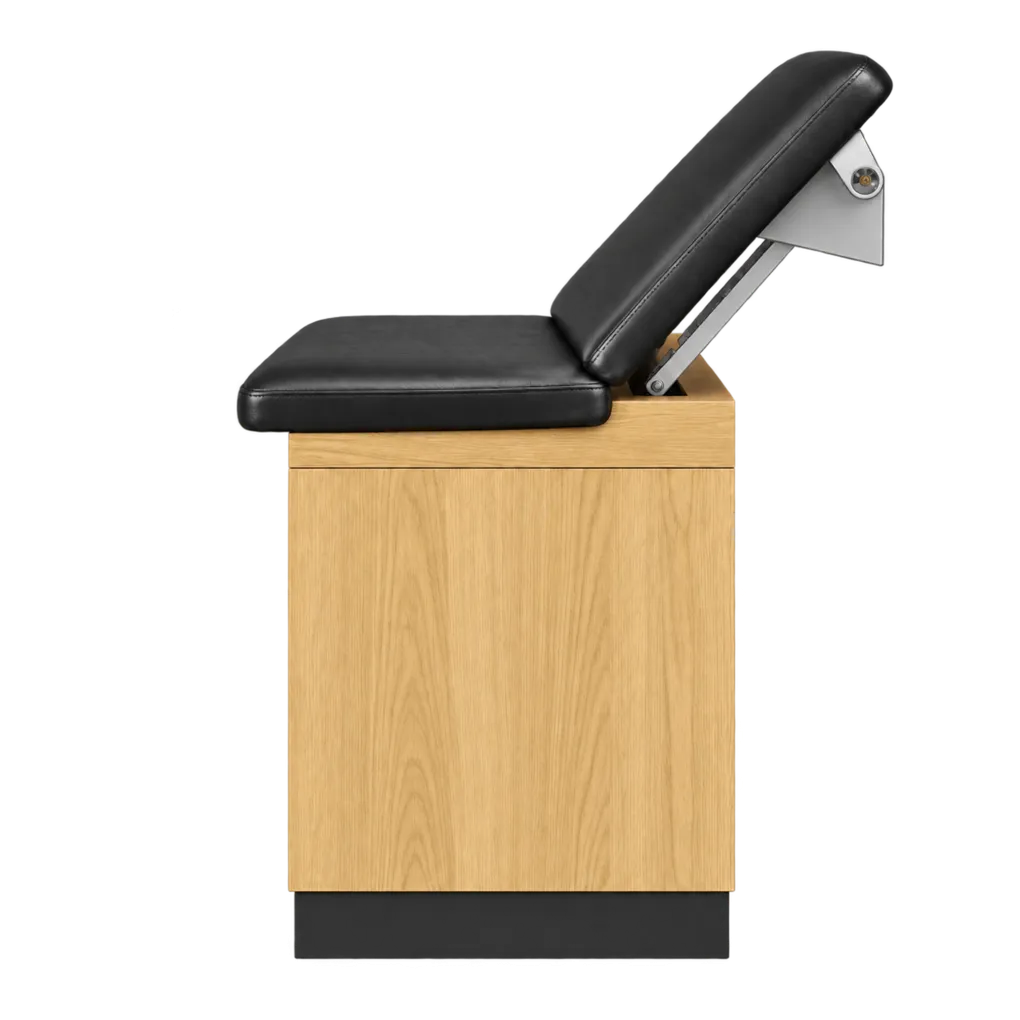
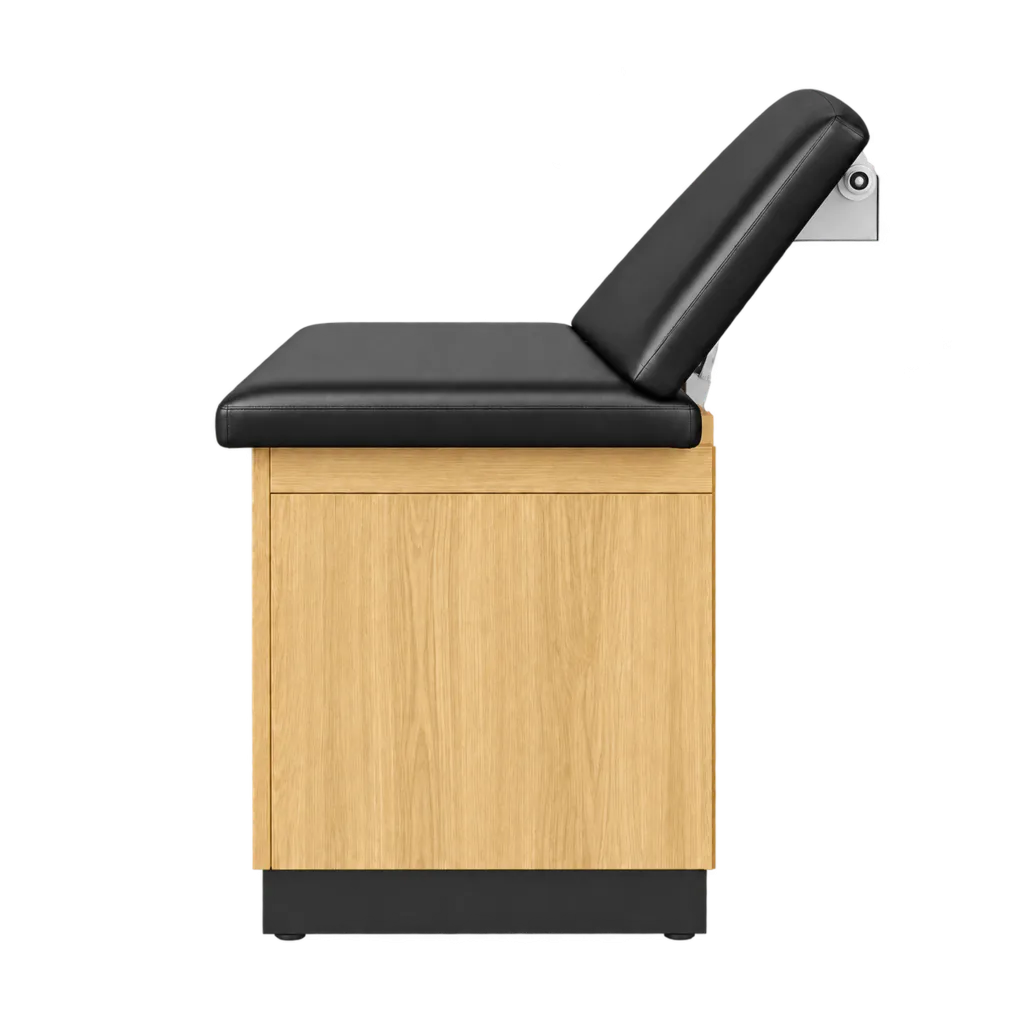
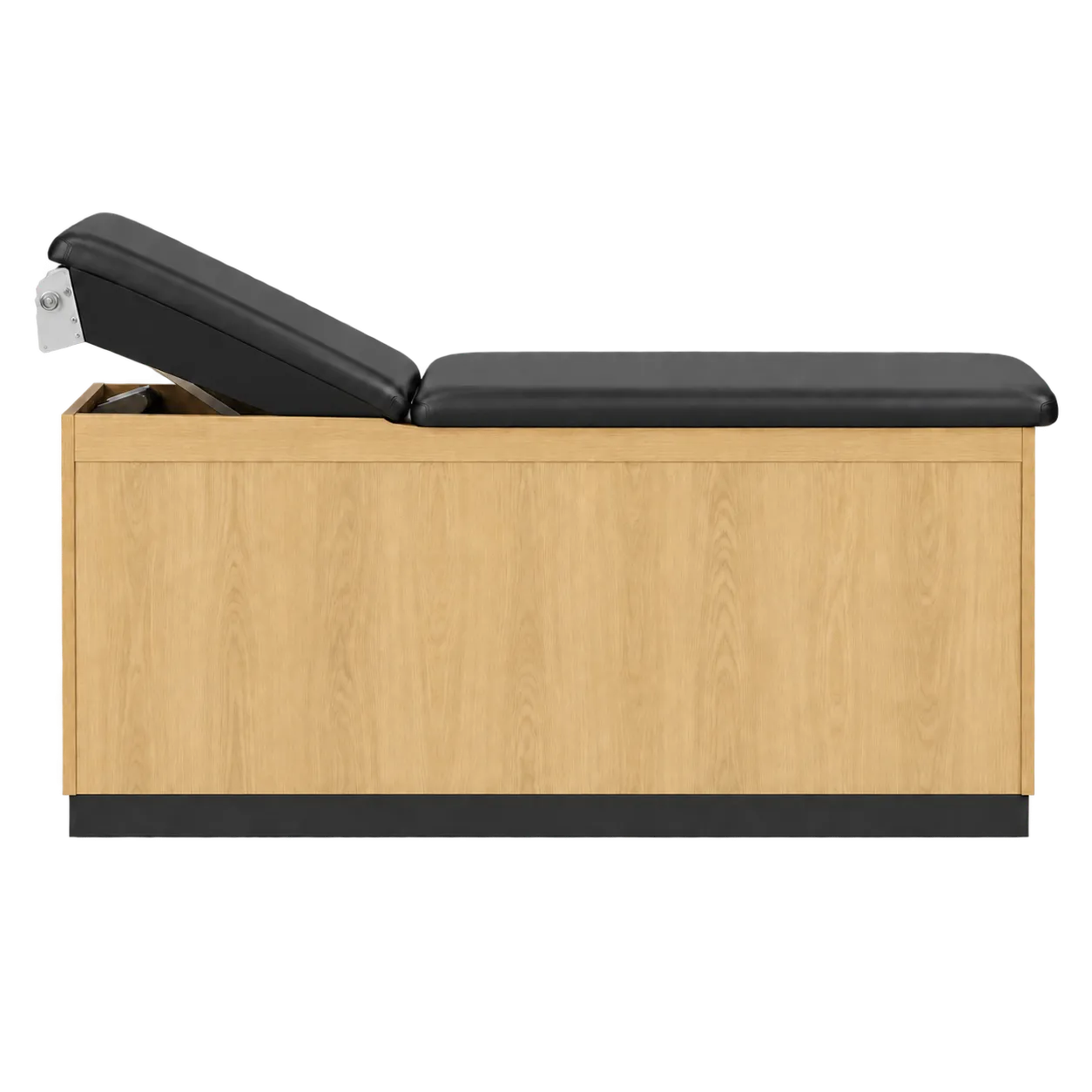
Treatment and examination couches carry out the routine work of a clinic, and a cabinet table with a raising back suits rooms that need enclosed storage and must also accommodate patients who cannot lie flat. Typical use covers general examination, respiratory assessment, minor procedures, injections and dressings, phlebotomy, consultation and counselling, and post-procedure observation.
The backrest is the reason to choose this arrangement over a flat cabinet table. Orthopnoea associated with heart failure or advanced respiratory disease, late pregnancy, significant reflux, high body mass and anxiety about being supine all make lying flat difficult, and a raising back keeps those consultations in the room they were booked into. Respiratory examination benefits directly, since auscultation of the posterior chest requires the patient sitting forward.
Storage is the trade-off. Three drawers cover small categorised consumables well, but a single compartment is limited for bulk provision — measure your largest regularly stored item against the internal dimensions first. Working position also deserves a moment at the planning stage: a raised back brings the clinician to the head end, and both doors and drawers extend into the space beside the cabinet, so their position relative to that end decides whether storage is reachable during a consultation or only between patients. At 1980 mm, the surface itself accommodates taller patients lying fully extended.