
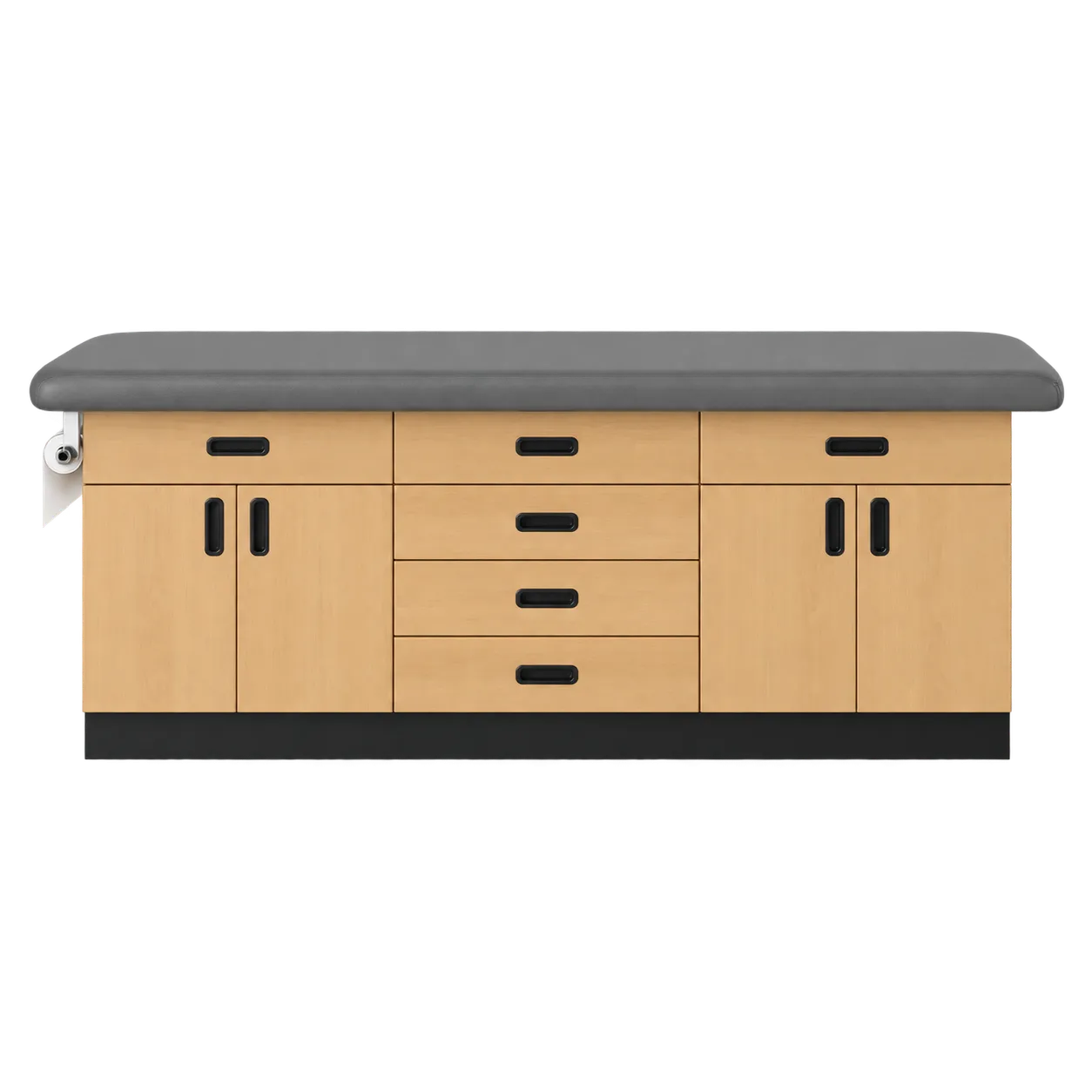
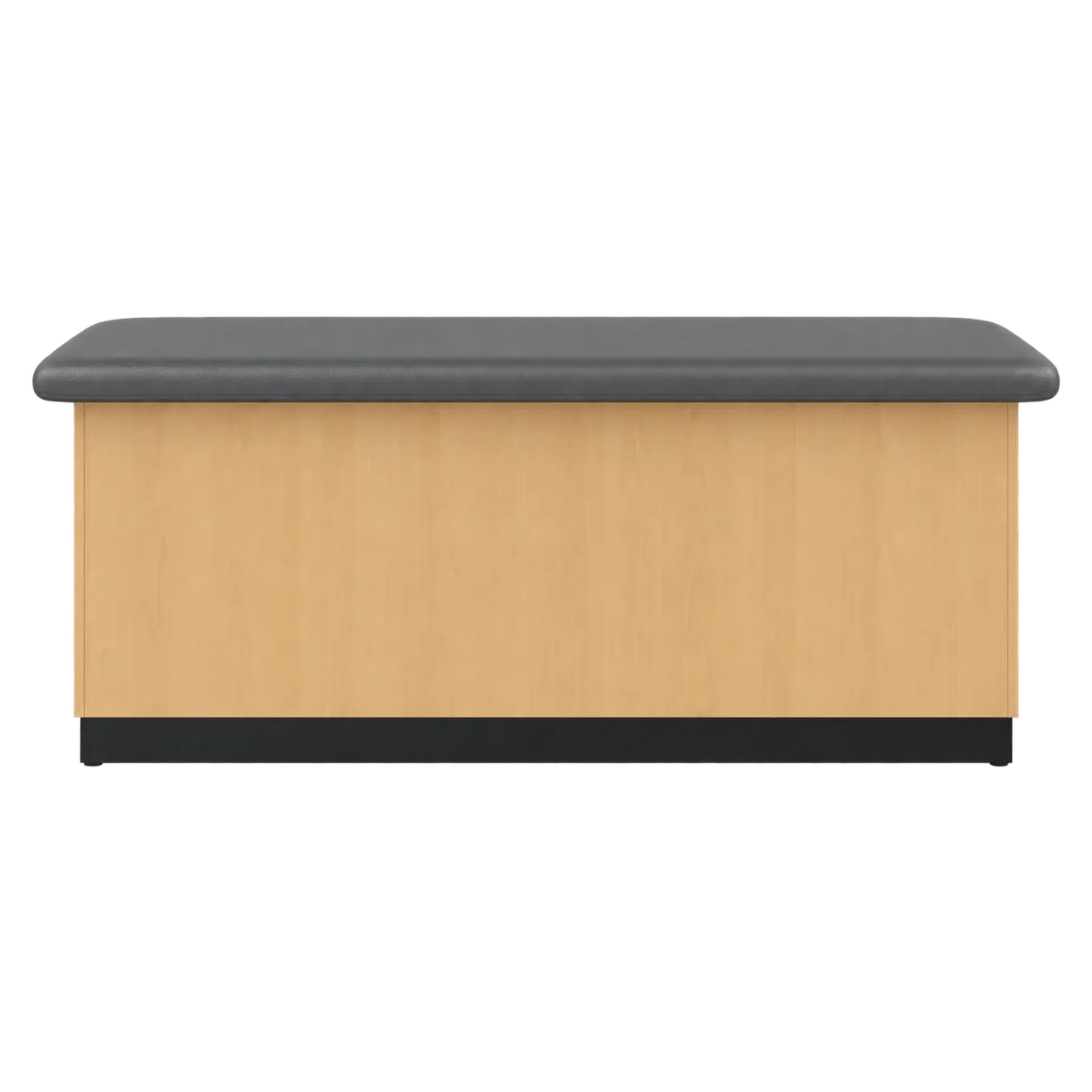
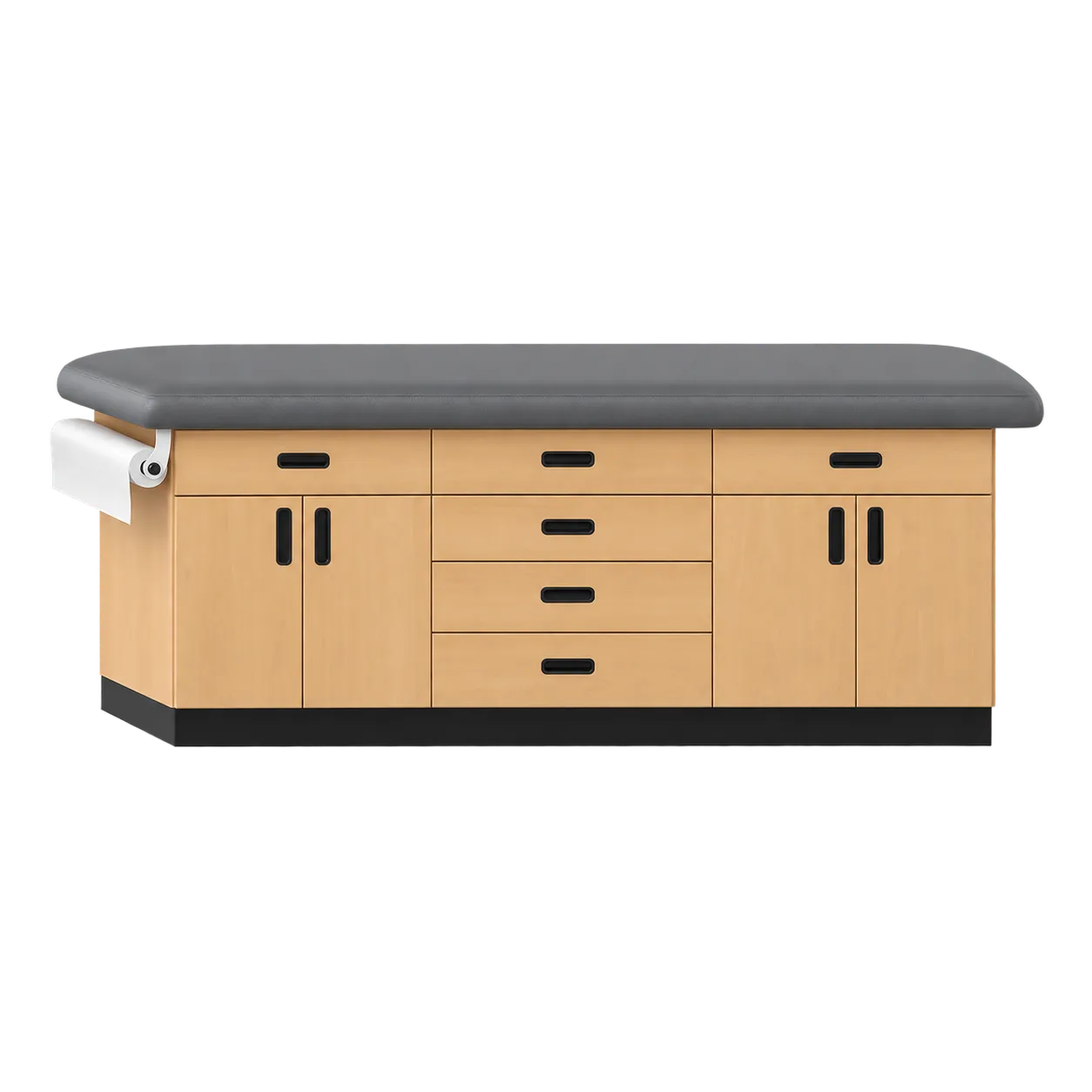
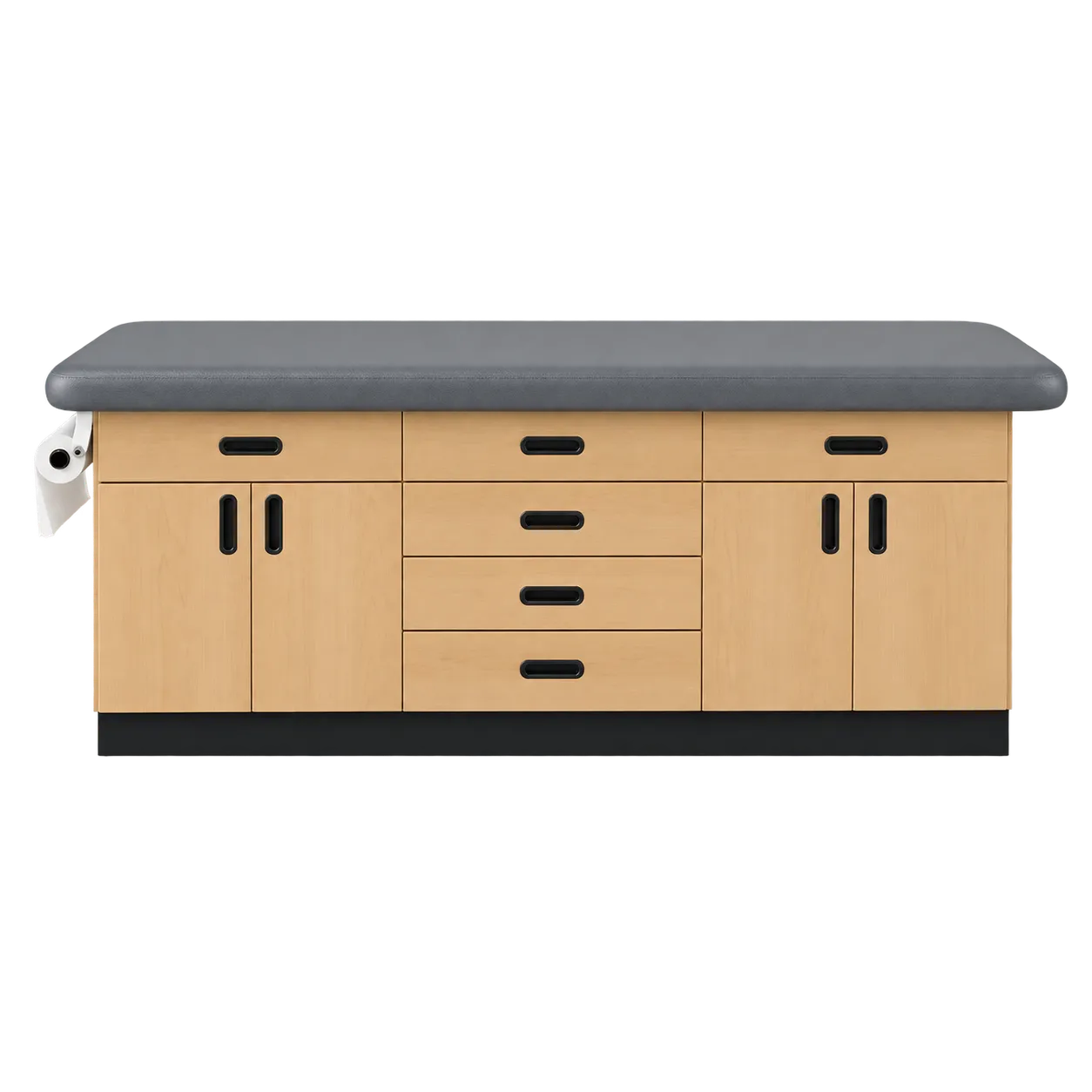
Treatment and examination couches carry out the routine work of a clinic, and a drawer-led cabinet table is aimed at rooms holding many small categories of consumables at the couch. Typical use covers general examination, minor procedures, injections and dressings, phlebotomy, consulting room assessment, and treatment of taller patients.
Drawer storage suits the way a clinician actually works through a procedure. A drawer opens to show its whole contents at once, is reached one-handed, and keeps one category separate from the next — which matters when gloves, dressings, swabs and sharps disposal are all needed in sequence, and the clinician's attention should stay with the patient rather than the cupboard.
Six drawers give six such categories. A service running a wide range of minor procedures, or one where several clinicians share a room and need stock in predictable places, gets more from that than from additional cupboard volume.
Two compartments still cover bulk, but they are the limiting factor in this arrangement. Measure the largest item regularly stored before ordering, since a service holding several bulky items may find two compartments tighter than expected.
The length serves patients rather than storage. At 1980 mm, the surface accommodates taller patients lying fully extended, and gives a clinician working at the foot end a supported surface rather than air.
Ergonomics deserve a moment at installation. A stacked drawer column puts its lowest drawer near the floor, so loading the upper drawers with the most frequently reached items is worth deciding on day one.