
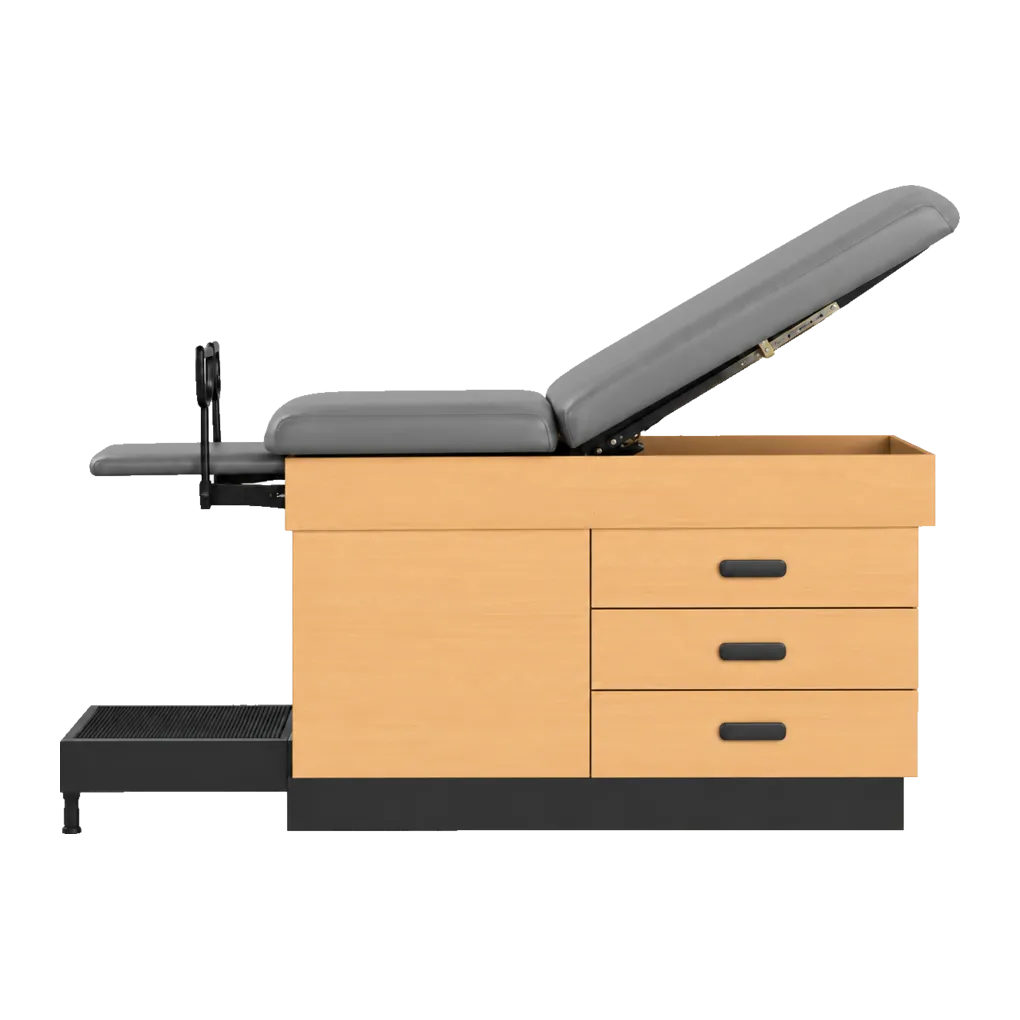
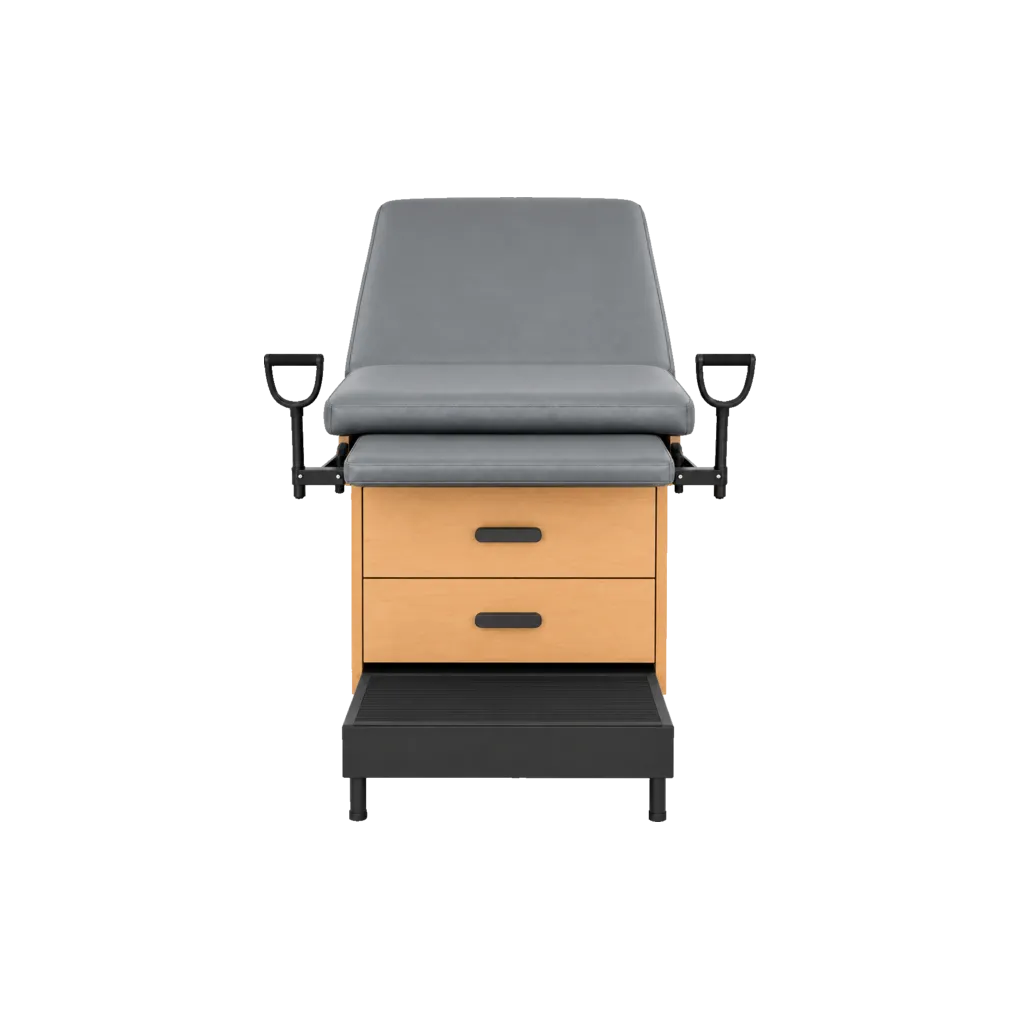
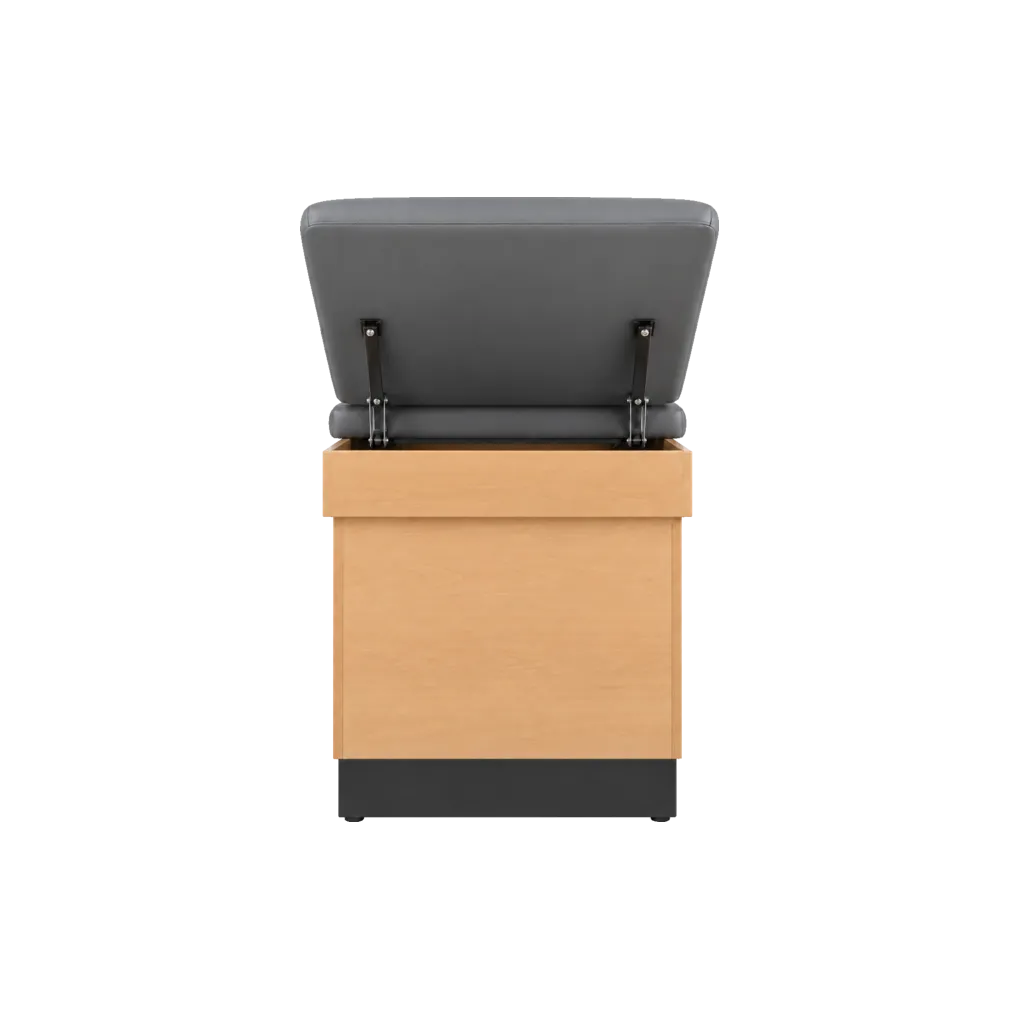
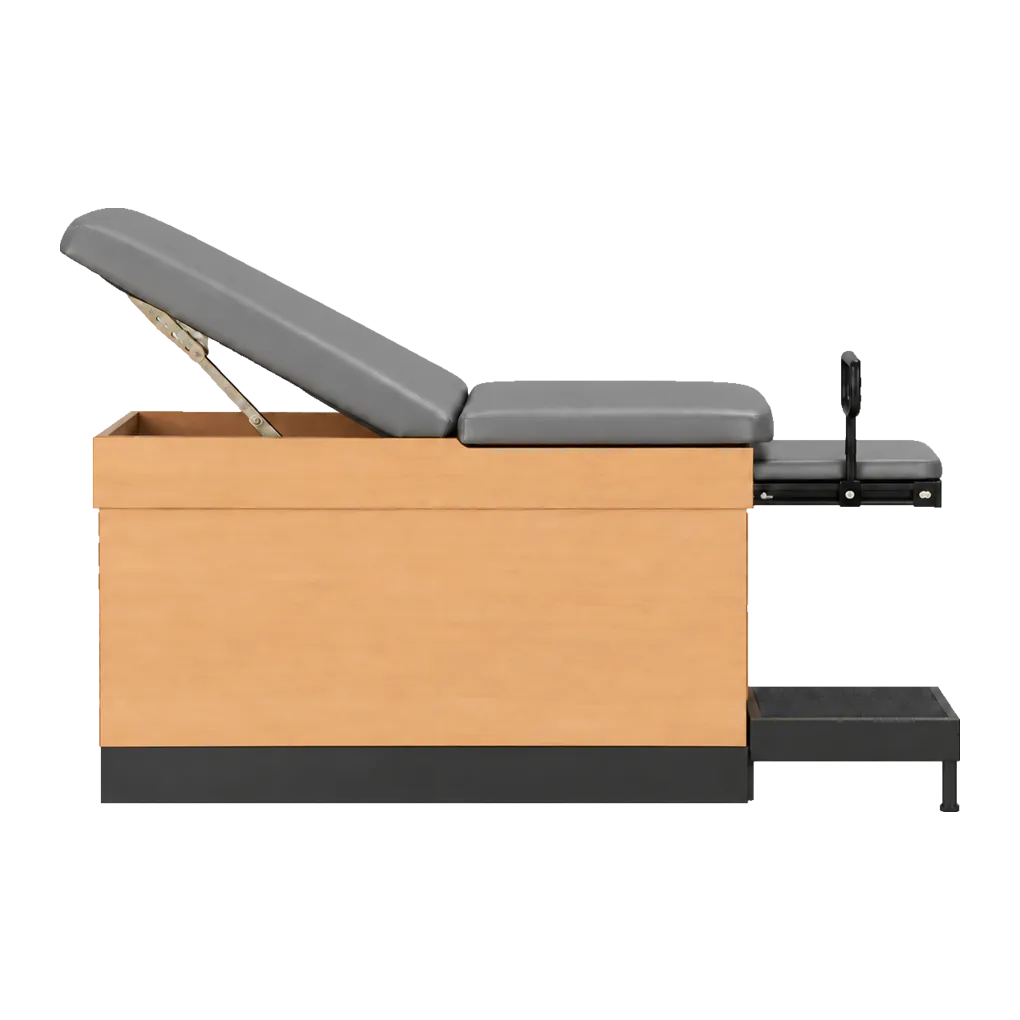
Many GP surgeries and health centres run one treatment room like a timetable, with a different visiting service each session. The 5005 suits that rhythm. Community midwives, continence nurses and urology nurse specialists can each claim a drawer, so every clinic starts with its own kit in place and ends with a wipe-down, ready for the next.
Antenatal care leans on the backrest. NICE guidance asks for symphysis-fundal height to be measured and recorded at each appointment from 24 weeks, a check usually made with the woman semi-recumbent and her legs straight, alongside abdominal palpation. Late in pregnancy, lying flat on the back can leave some women feeling faint as the womb presses on major blood vessels, so a partly raised back makes a sensible default. Postnatal checks draw on the same positions.
Continence and urology work leans on the stirrups. NICE guidance on urinary incontinence in women recommends a digital assessment of pelvic floor contraction before supervised pelvic floor muscle training begins, and supported legs help many patients relax for it. The same support helps with vaginal pessary fitting and review, and with urethral catheter changes, where good positioning keeps the procedure quick and clean.
Intimate examinations in any of these clinics call for a chaperone offer and a room planned for dignity. Turn the foot end away from the door, add a curtain line, and keep standing room along the open side.
The fixed 790 mm height puts weight on the step stool, and heavily pregnant or frail patients will use it at their least steady. Find out whether it locks, and keep a height-adjustable couch available elsewhere for patients who cannot climb. Medigear.uk can arrange a site survey where a room layout is still undecided.