
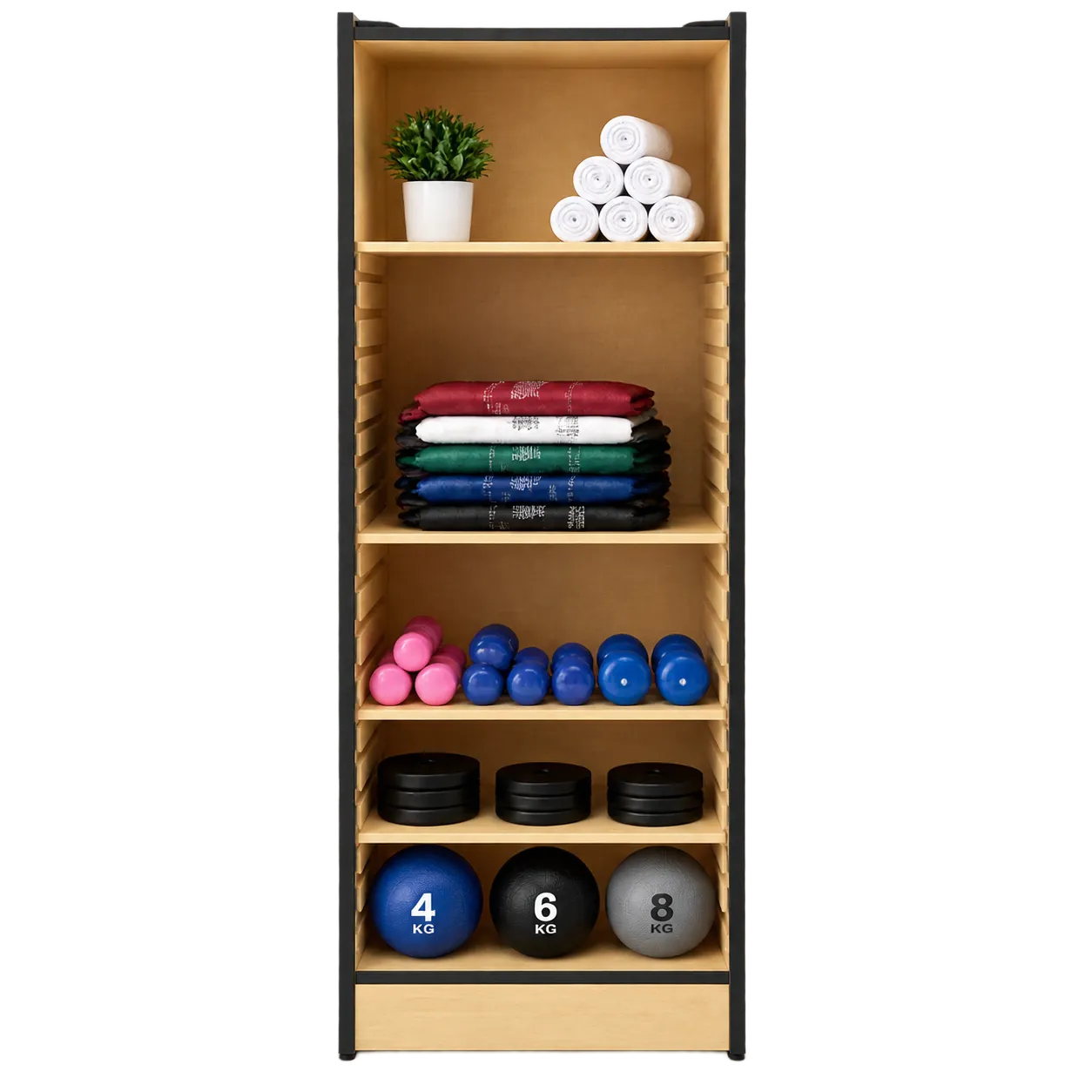
A rehabilitation gym runs on small heavy objects. Dumbbells, medicine balls, ankle weights, therapy bags, resistance kit and folded linen all have to live somewhere between sessions, and in a room where patients are walking, stepping and practising balance, the floor is the wrong place. Vertical storage against a wall converts a scattered collection into one organised elevation and gives back the floor.
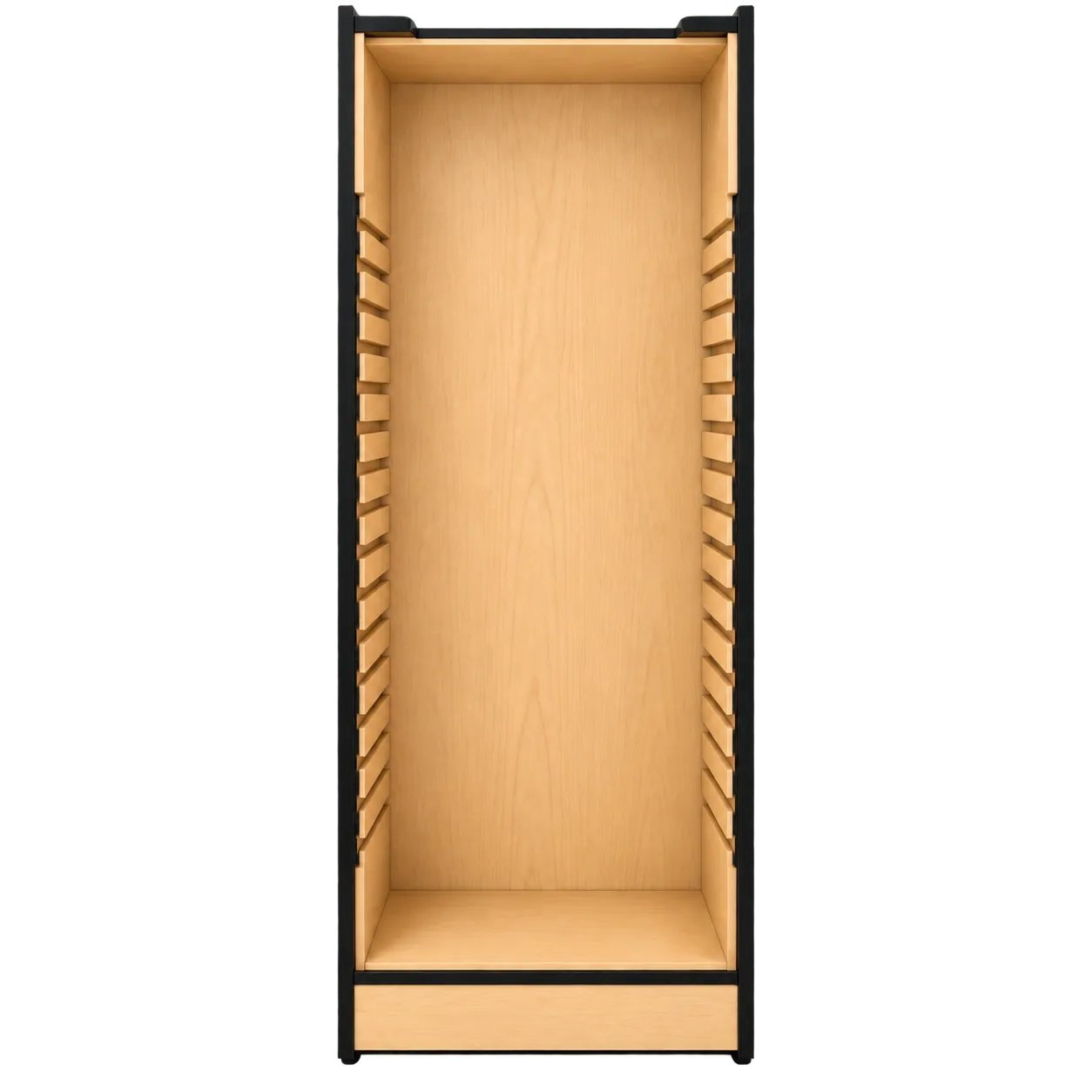
That puts the LS3018 in musculoskeletal physiotherapy gyms, occupational therapy departments, sports rehabilitation rooms, work conditioning spaces and community therapy units. The fifteen adjustable positions matter more in these rooms than they might elsewhere, because the mix changes: a service that adds medicine balls this year and therapy bags the next can respace the levels rather than replace the unit.
Loading discipline is where the clinical setting bites. The top adjustable position sits at 1,499 mm, above shoulder height for most staff, and the shelf will hold far more than the handling guidance suggests anyone should lift. A service should decide what goes where when the station is first filled, and write it down: heavy iron low, light and bulky high, and nothing on the top positions that a single member of staff has to hoist.
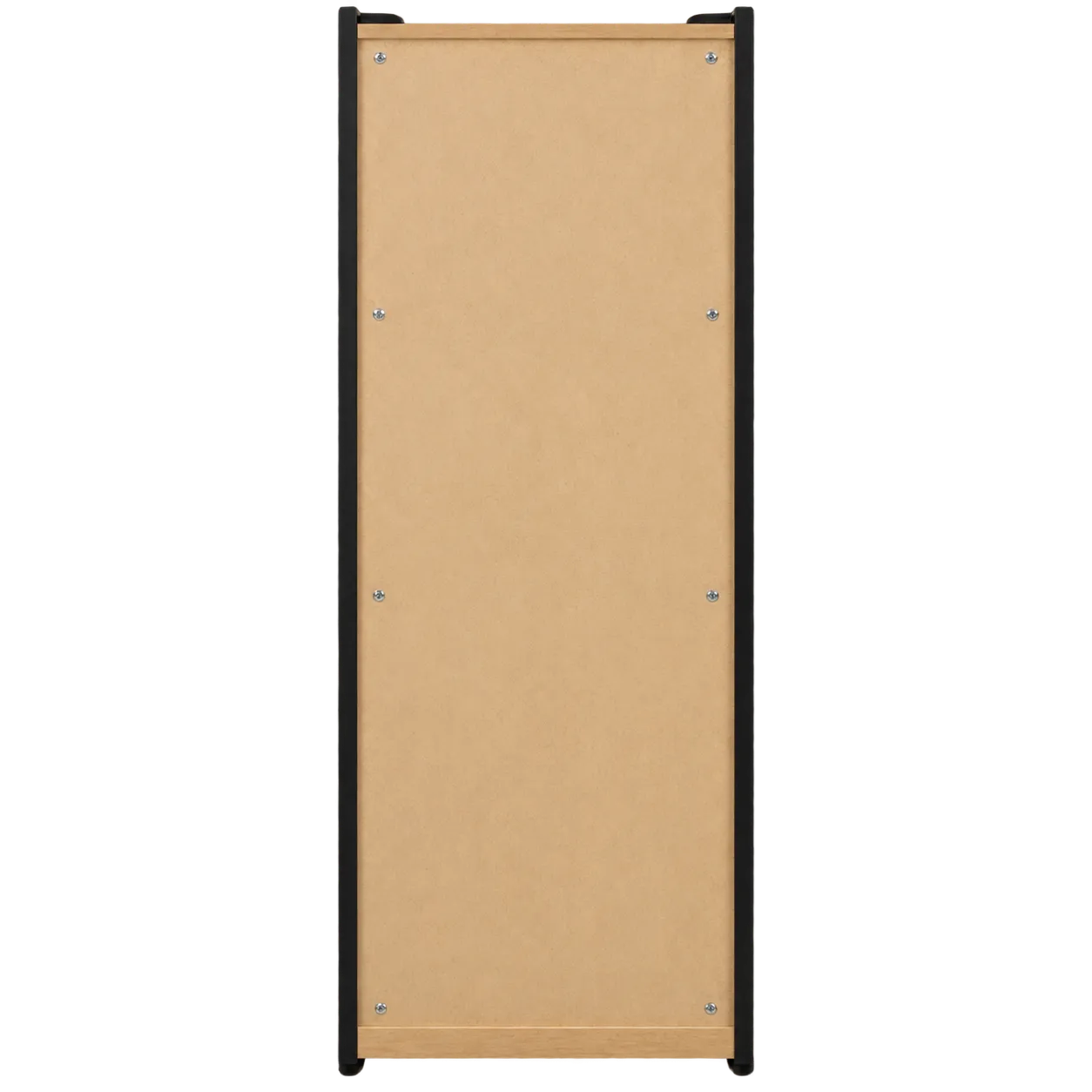
Buying runs through the usual routes. NHS therapy services, private rehabilitation clinics, occupational health providers, and sports facilities each apply their own rules, and equipment like this clears estates and health and safety alongside finance, because it involves fixing something permanent to a wall. Estates will want the fixing details before they agree to a date.