
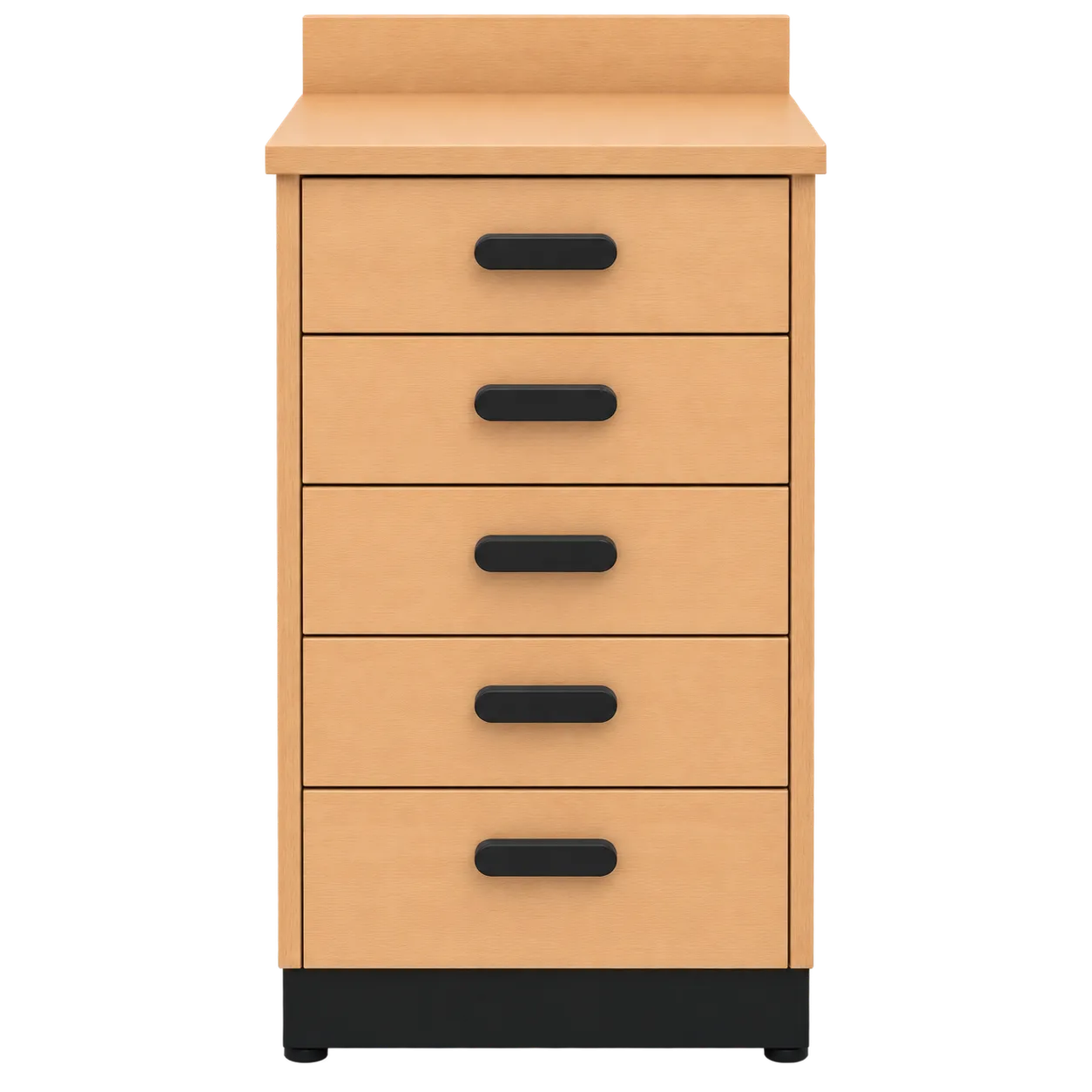
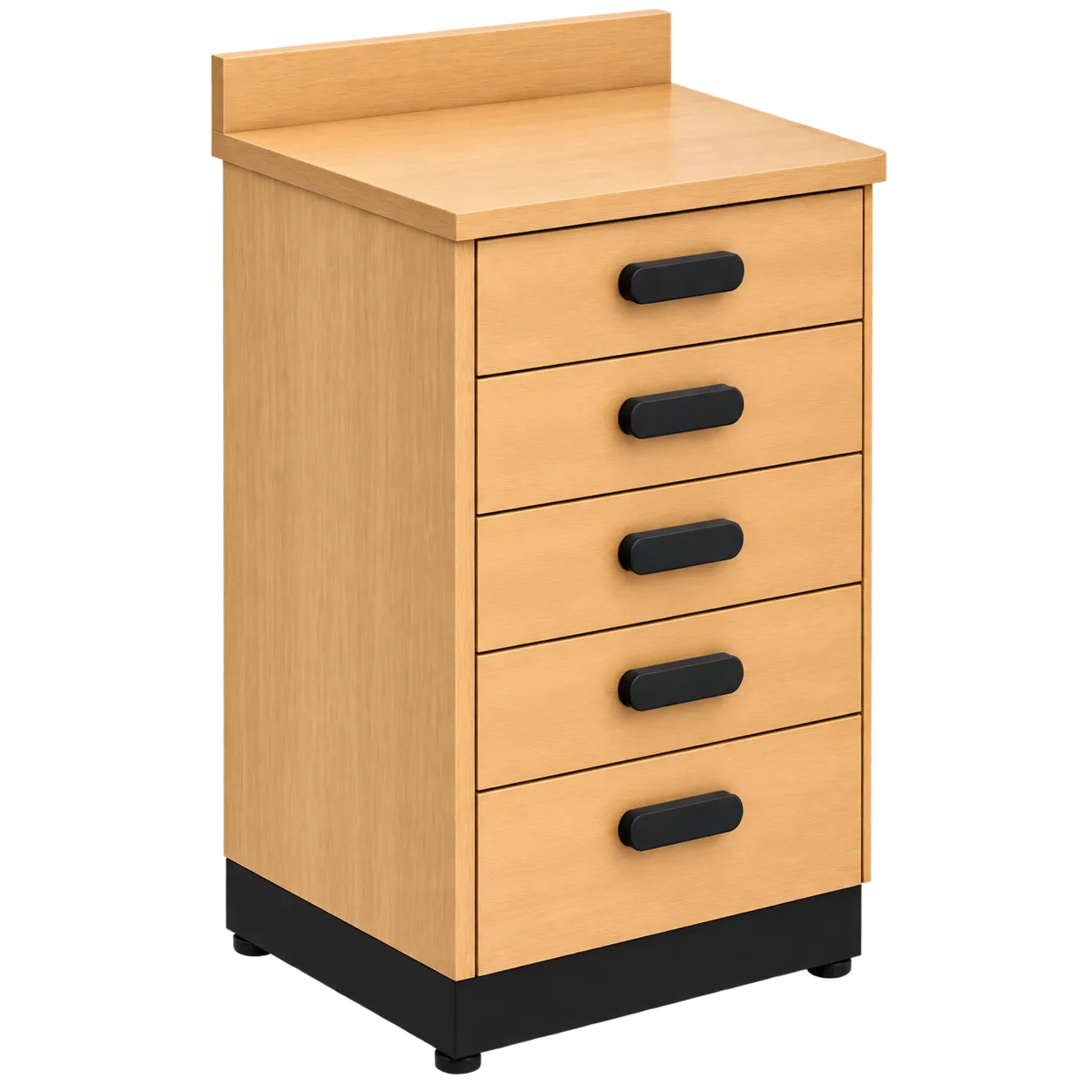
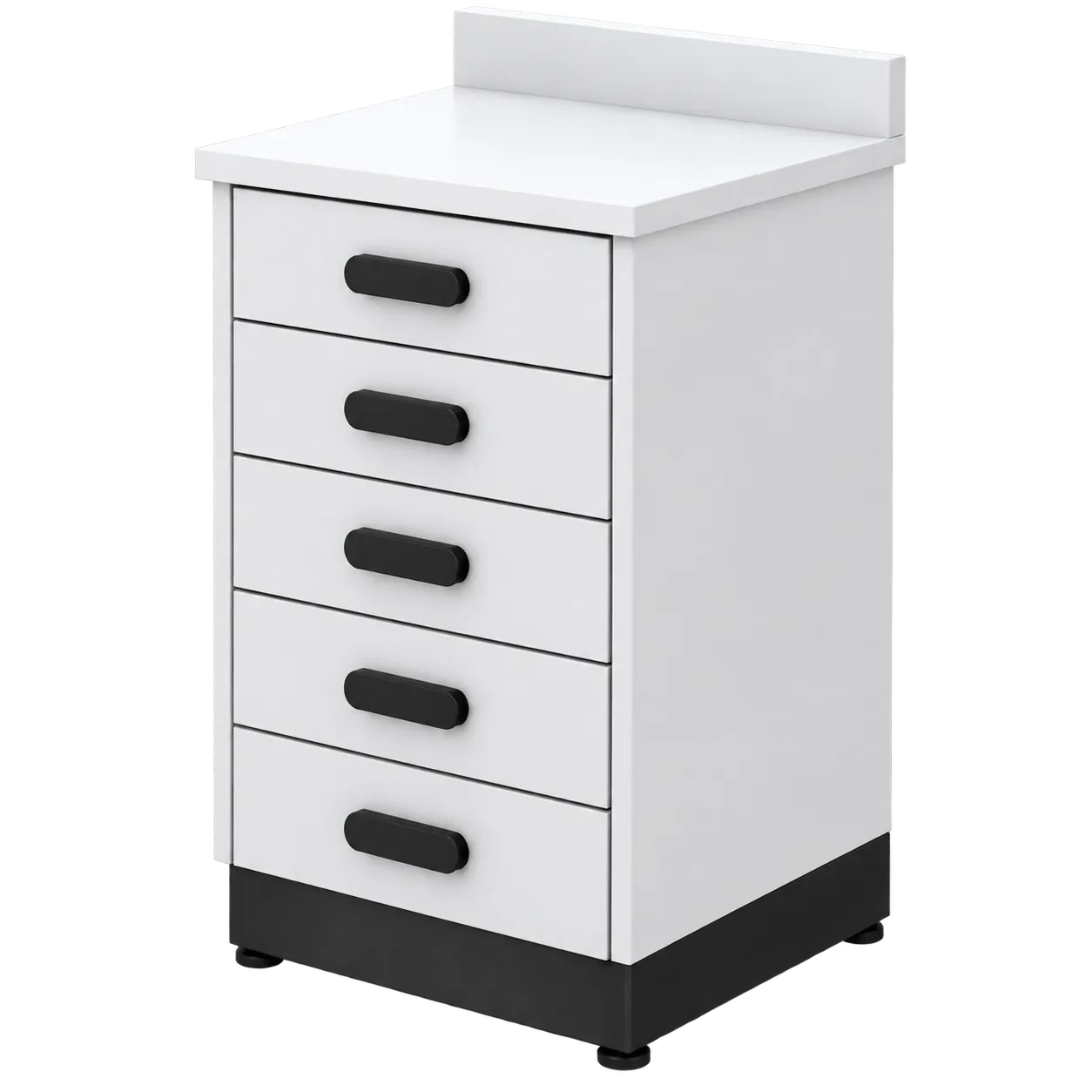
Consultation rooms, examination rooms, minor injury and treatment rooms, practice nurse rooms, phlebotomy bays and outpatient clinics are where the Clinic5-5000 fits, along with physiotherapy, podiatry and dental practices. It keeps small, frequently used clinical items close to where they are needed.
A practice nurse room shows how five drawers work in practice. One drawer holds gloves and aprons; another holds swabs and dressings; a third holds tape and bandages; a fourth holds specimen pots and request bags; and the lowest drawer holds heavier items. A nurse restocking the room sees at a glance which drawer is running low, and a locum finds items without hunting.
Phlebotomy and wound care benefit in the same way. Needles in sealed packs, tourniquets, plasters and dressing packs sit flat and visible when a drawer opens, and the worktop gives a surface for laying out a tray. Sharps bins and clinical waste stay separate, in their own holders.
The line to hold is medicines. Professional guidance and local medicines policies expect medicines in clinical areas to be locked away, and this listing shows no lock, so medicines belong in dedicated locked storage alongside.
Stability matters with drawers. Several loaded drawers pulled out together shift the cabinet's balance forward, so where the listing gives no interlock or fixing detail, a wall fixing chosen by estates is sensible in rooms used by children or unsteady patients.
Infection prevention requires smooth, intact surfaces that withstand local disinfectants, and the cabinet's materials are not published. The conformity documentation required for those procurement routes is issued by the manufacturer and provided by the seller.