

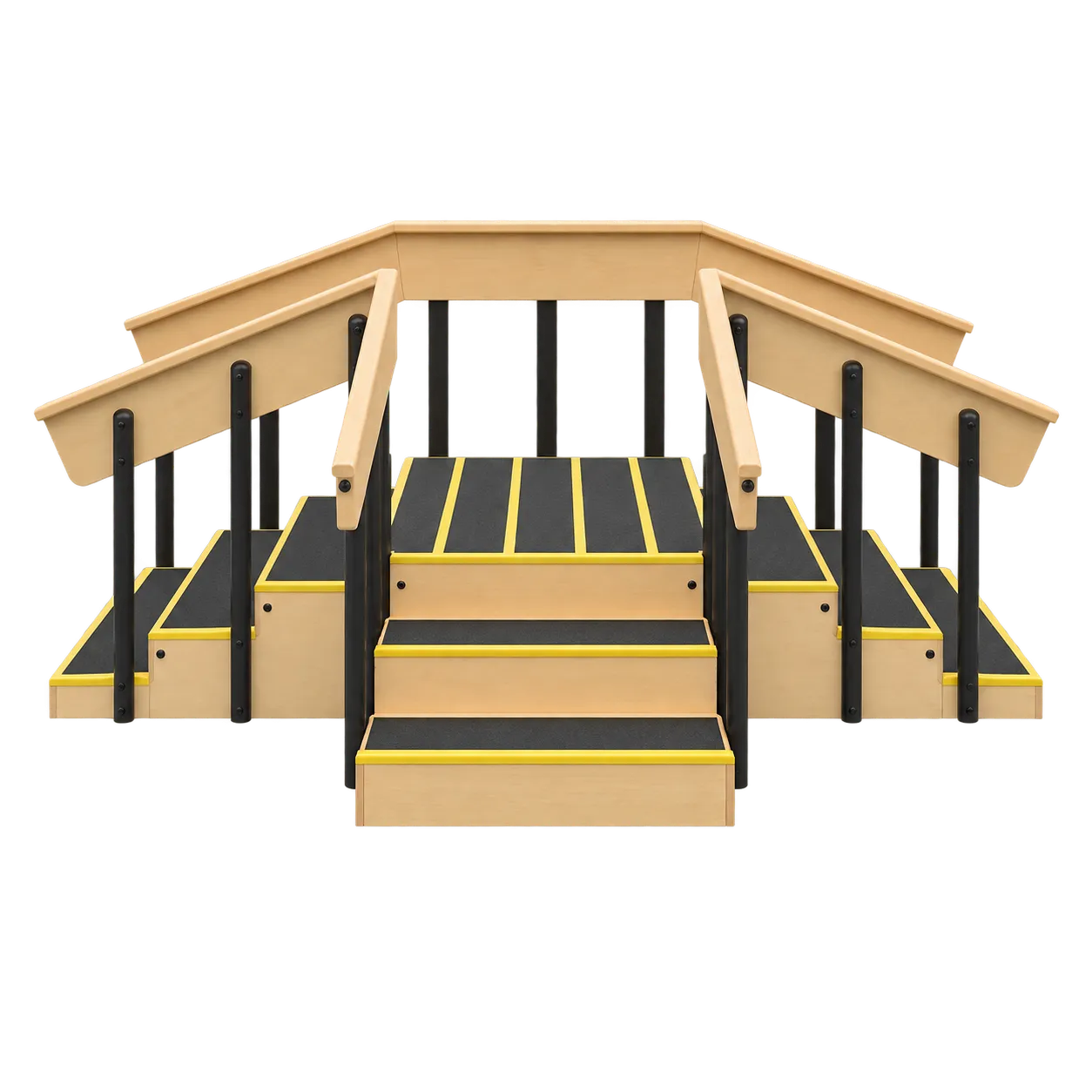
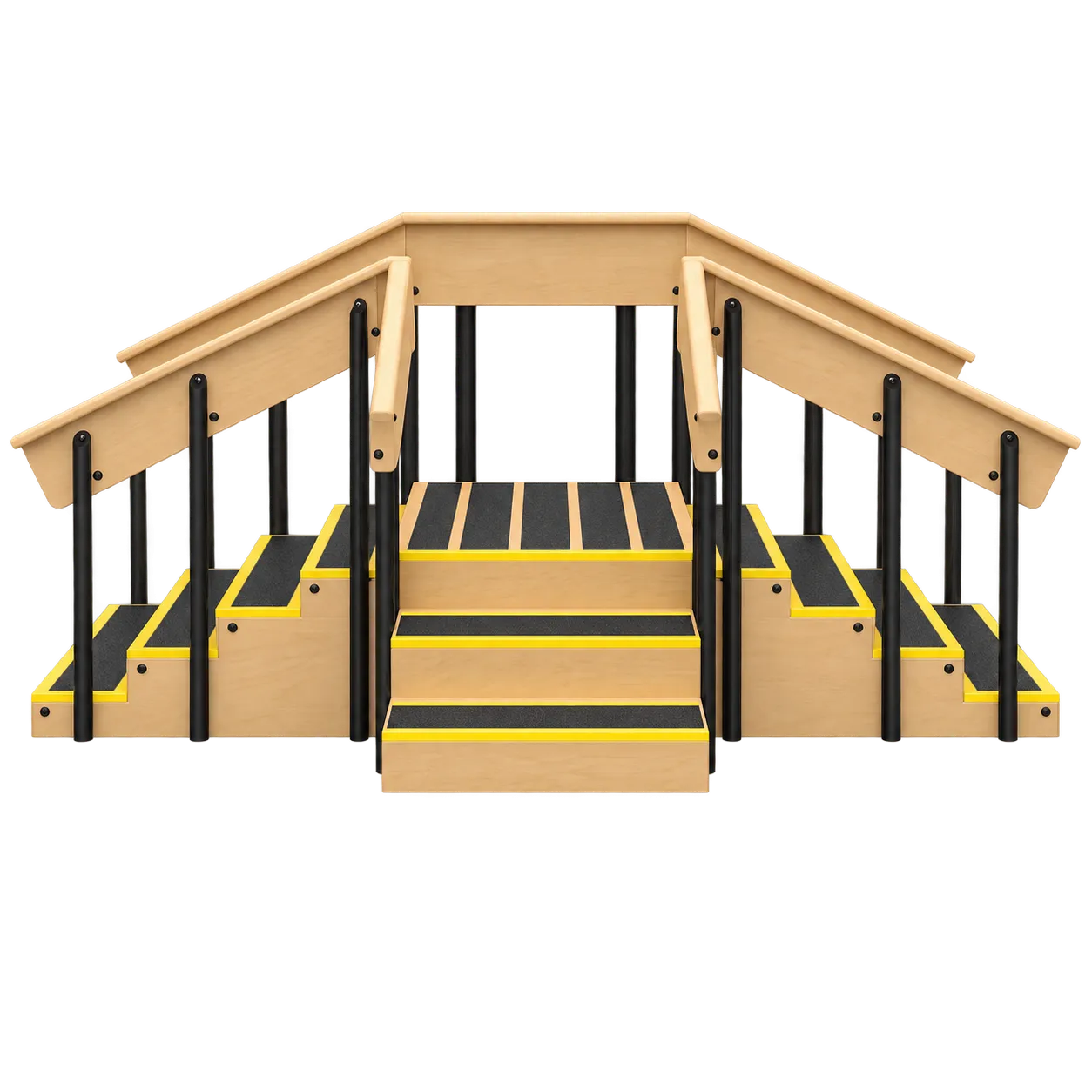
Hospital therapy gyms, orthopaedic and trauma services after hip or knee replacement, stroke and neurological rehabilitation, frailty and falls services, and community rehabilitation teams are where the 8313W belongs. Its strongest use is the stair assessment before discharge: a patient who manages the 200 mm flight has shown the therapist something close to the rise at home. The 100 mm flight covers kerb practice and first attempts, and the 150 mm flight bridges the two.
Laboratory work explains why rise height matters. A study of stair ascent found young and older adults alike working at about 90% of their maximum ankle moment. In descent, older adults used 42% of their capacity, compared with 30% in young adults, leaving less in reserve. Taller risers add to that load, as in grading from 100 to 200 mm. These are measurements on healthy volunteers, not trials of graded practice. A 2019 exercise study in older adults raised ankle strength and improved stair-descent mechanics, yet it did not change how fast the body dropped on the way down.
In the UK, the HCPC registers the physiotherapists who supervise this kind of practice. England's provider regulator is the CQC, and Scotland, Wales and Northern Ireland have their own. NHS procurement routes require conformity evidence and a declared maximum user weight before accepting rehabilitation equipment, and equivalent public procurement elsewhere asks for the same. The conformity documentation those procurement routes require is issued by the manufacturer and shared by the enquiry team.