
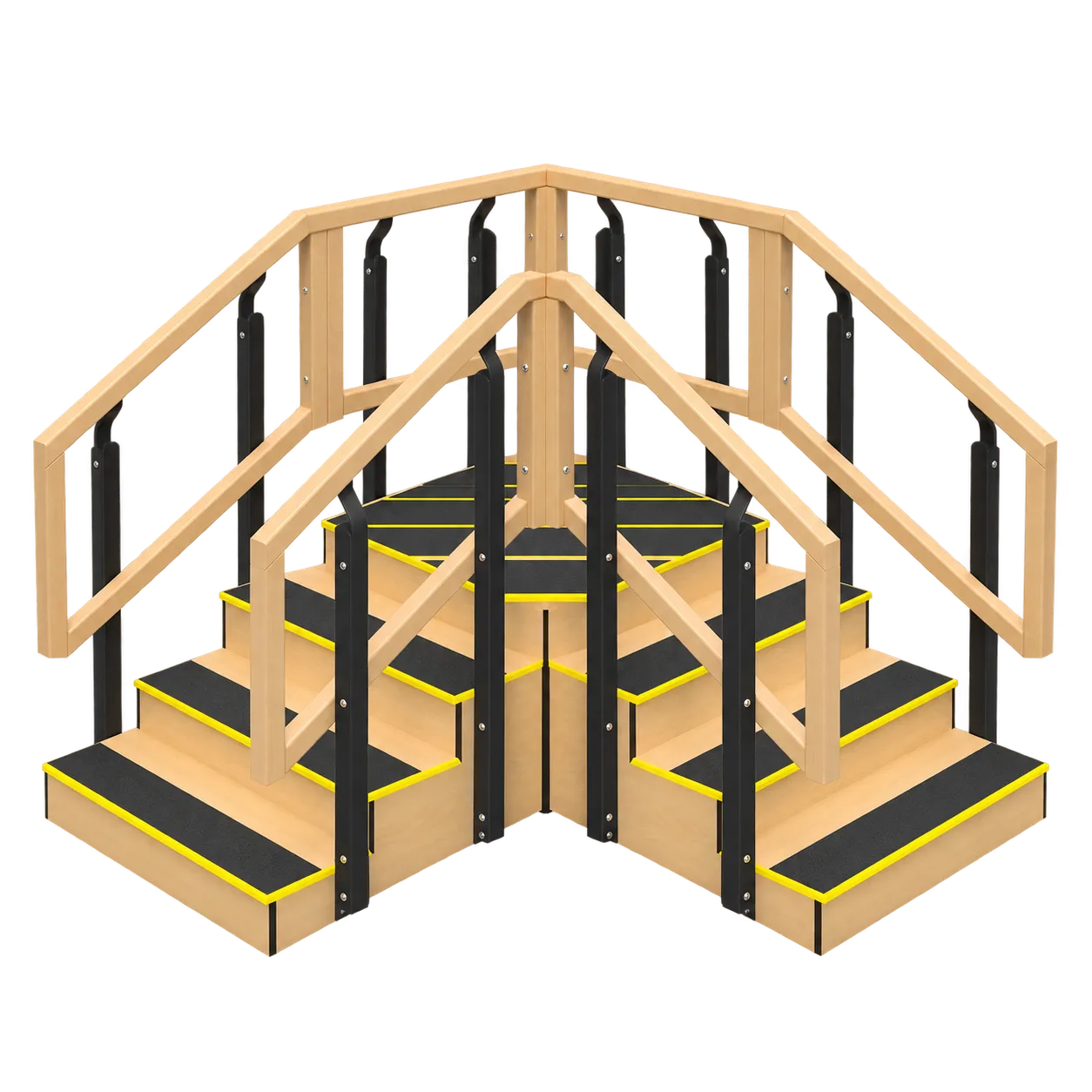
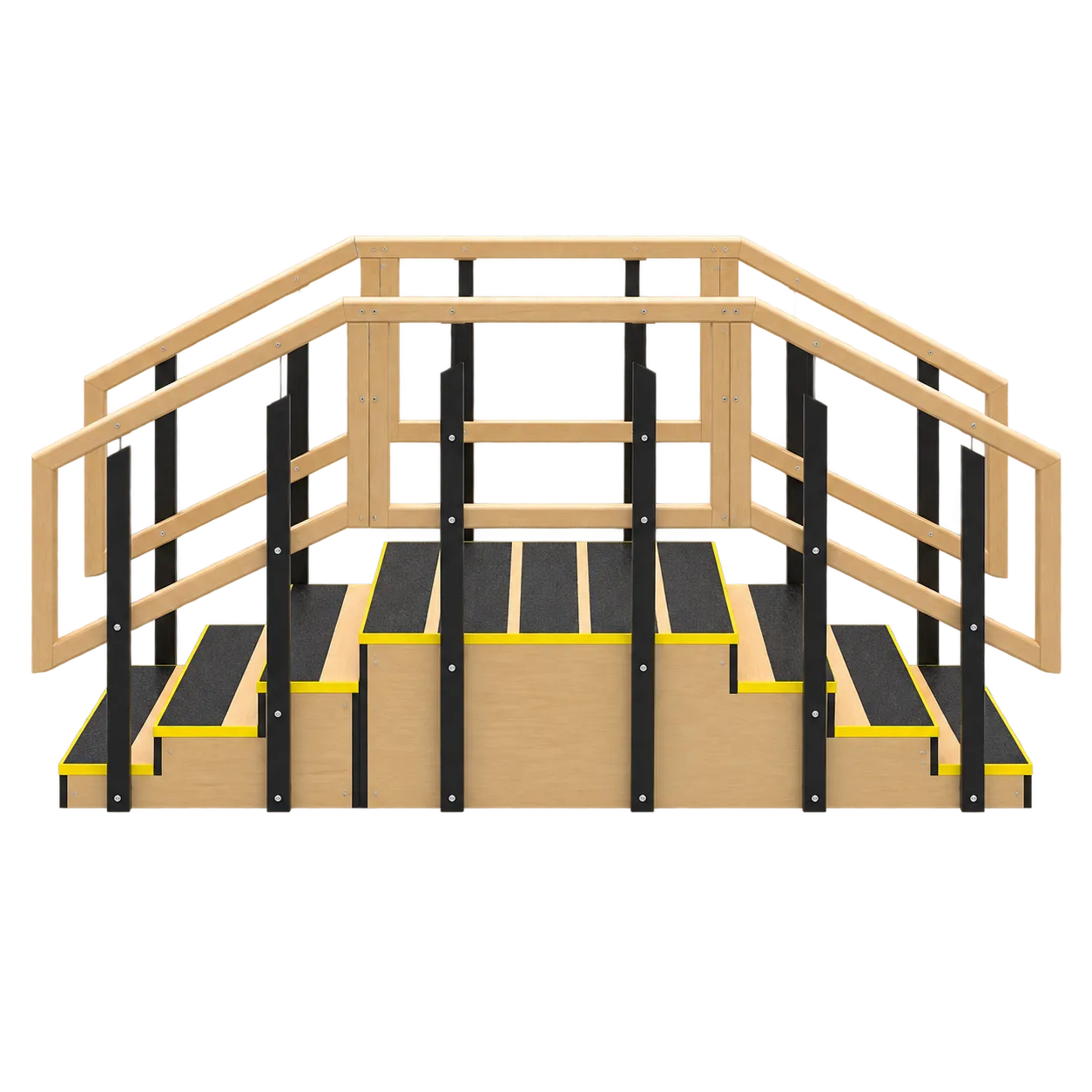
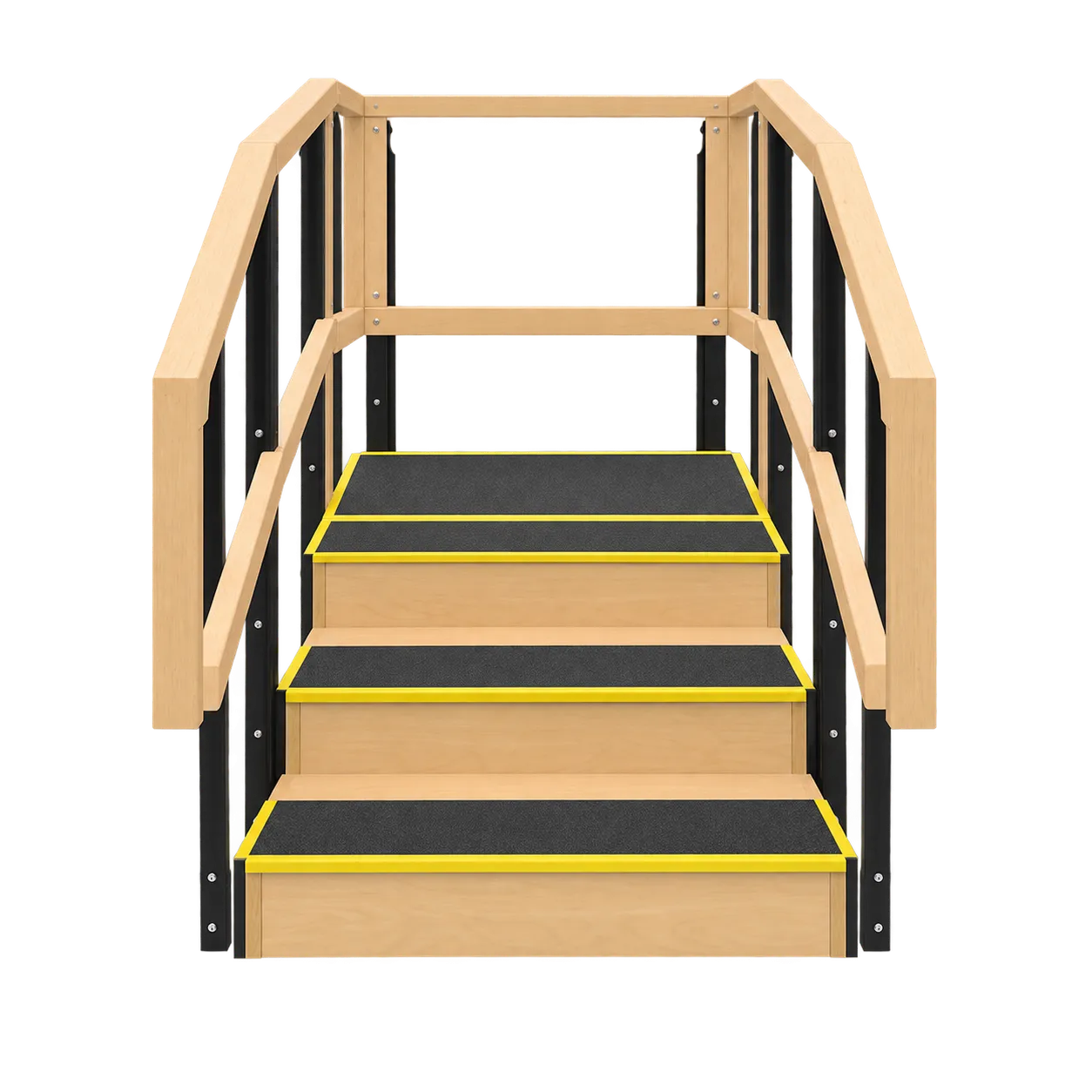
Hospital physiotherapy gyms, neurological and stroke rehabilitation units, orthopaedic and trauma services, falls clinics, community rehabilitation centres and paediatric therapy are where the 8207W-2 earns its place. Patients climb the 150 mm end, cross the platform and come down the shallower steps, or the therapist reverses the route as they improve. With the staircase set as a corner, the same session rehearses the turn at a landing that many homes have halfway up the stairs. Children's services can start on the shallower end with the lower rail in reach.
Turning carries real weight in falls work. A 1994 case-control study of 412 older people found that falls while turning were far more likely to end in a hip fracture than falls while walking in one direction, with an adjusted odds ratio of 7.9. The confidence interval ran from 1.4 to 43, so the size of that risk is uncertain even if its direction is not. Evidence that turn practice itself prevents falls is thinner, and a published trial protocol noted how few exercise studies had targeted turning at all. Hence, the corner layout belongs inside a wider balance programme.
In the UK, physiotherapists who run stair practice on it are registered with the HCPC. Treatment services in England sit under the CQC, while Scotland, Wales and Northern Ireland each regulate providers separately. NHS procurement routes ask rehabilitation suppliers for conformity documents and a stated user weight, and equivalent public procurement elsewhere asks the same. The conformity documentation those procurement routes require is issued by the manufacturer and shared by the enquiry team.