
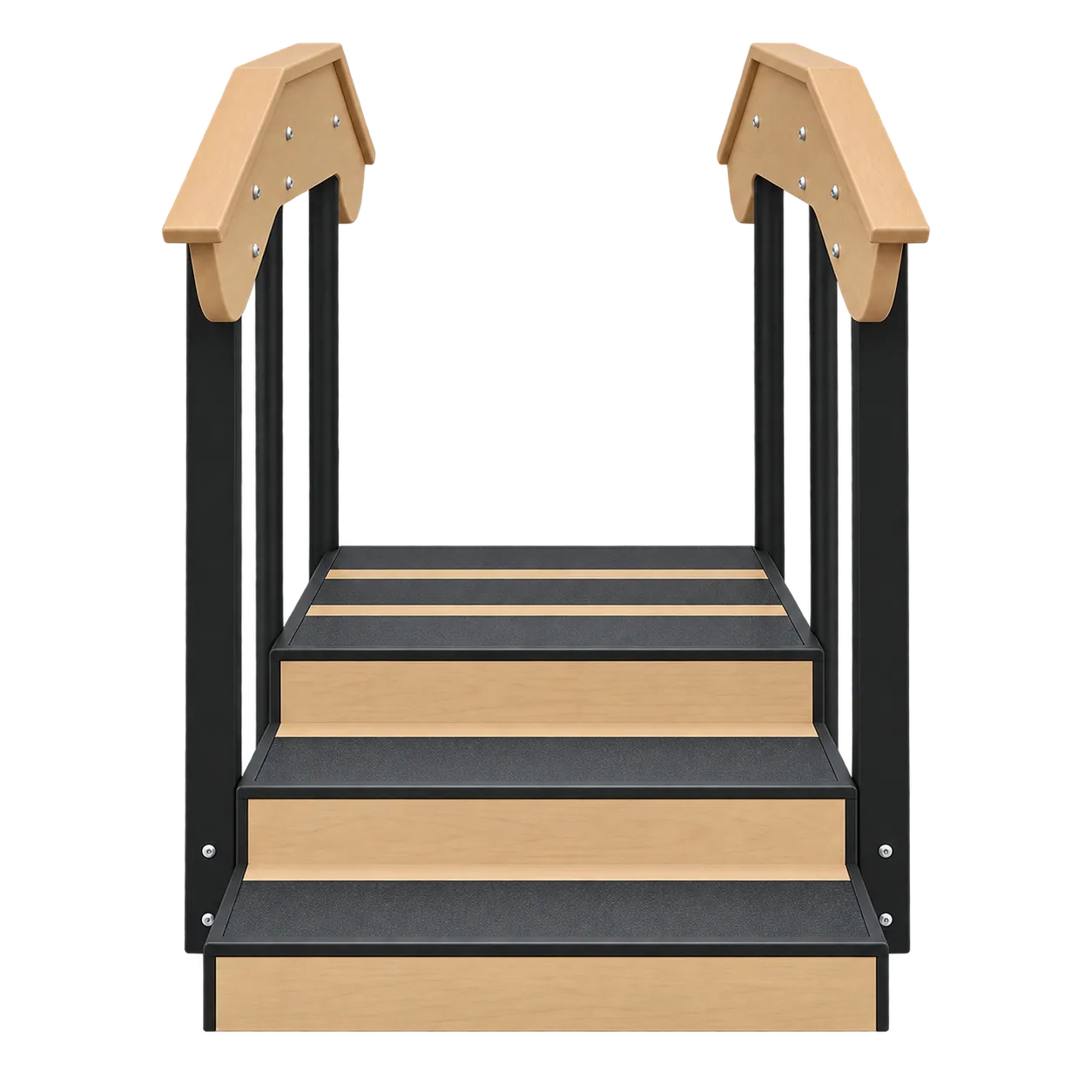
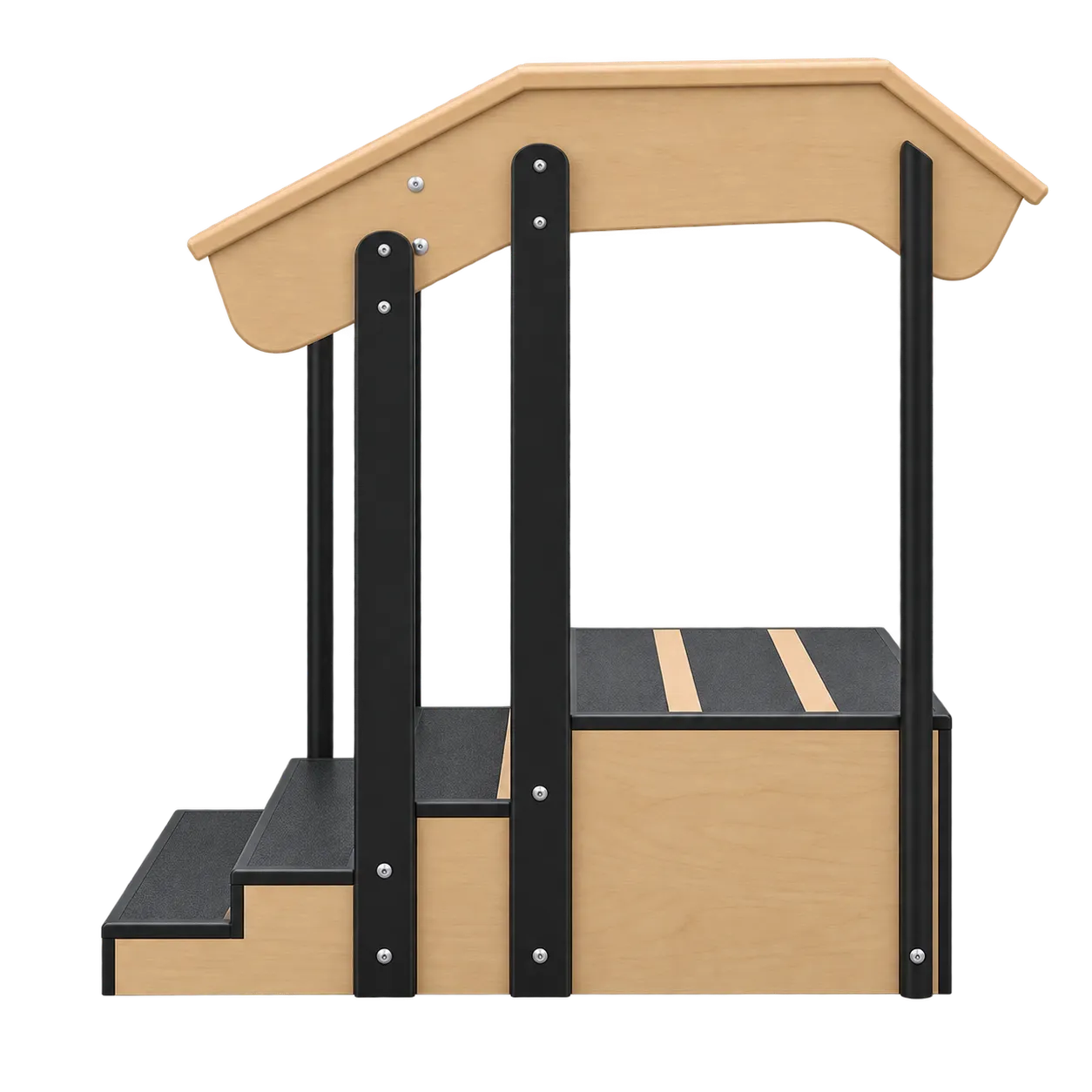
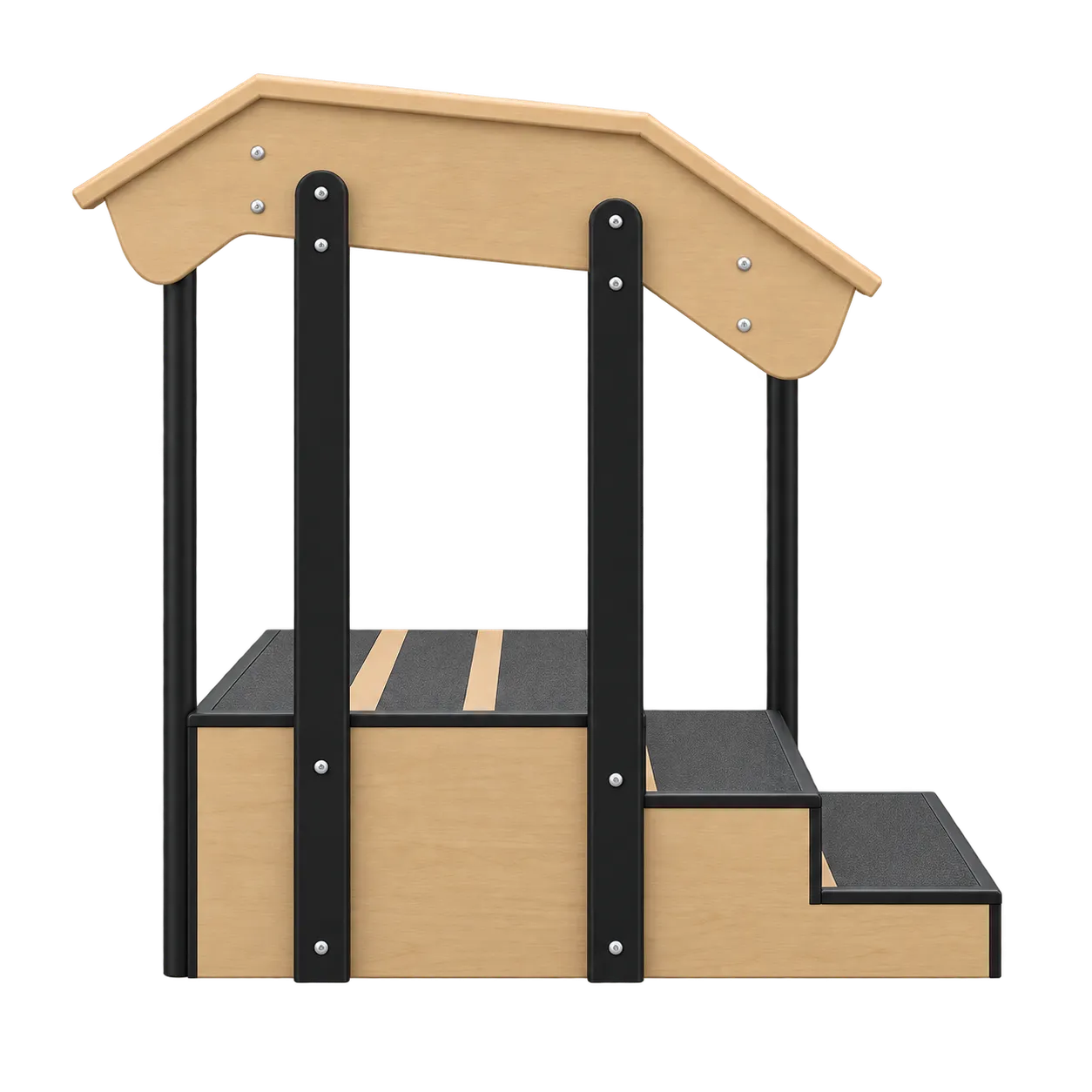
Falls services, older-adult rehabilitation, orthopaedic and trauma therapy, stroke units, community teams and paediatric physiotherapy are where the 8205W earns its place. The low end suits a first session after a knee or hip replacement, a frail patient rebuilding confidence or a child learning steps, and the high end takes over as strength returns. Because the two step heights bracket street kerbs, the same unit rehearses stepping on and off a pavement. Community teams can also rehearse the single steps found at front doors and shop entrances before a patient tackles them alone.
Descent deserves the extra care. A 2000 review of stair negotiation in older people described it as among the most hazardous activities of daily life, and other researchers report descent falls at least three times as often as falls on the way up. Riser height adds to the demand: a recent prospective study found that taller risers placed the greatest load on older people. That cuts both ways for a training staircase, because practice on 100 and 150 mm steps builds the movement pattern without rehearsing the taller steps some homes have.
In the UK, physiotherapists using the 8205W hold HCPC registration. Providers delivering treatment in England are regulated by the CQC, with separate regulators in Scotland, Wales and Northern Ireland. NHS procurement routes look for conformity documentation and a stated user weight on rehabilitation equipment, and equivalent public procurement elsewhere asks the same. The conformity documentation those procurement routes require is issued by the manufacturer and shared by the enquiry team.