
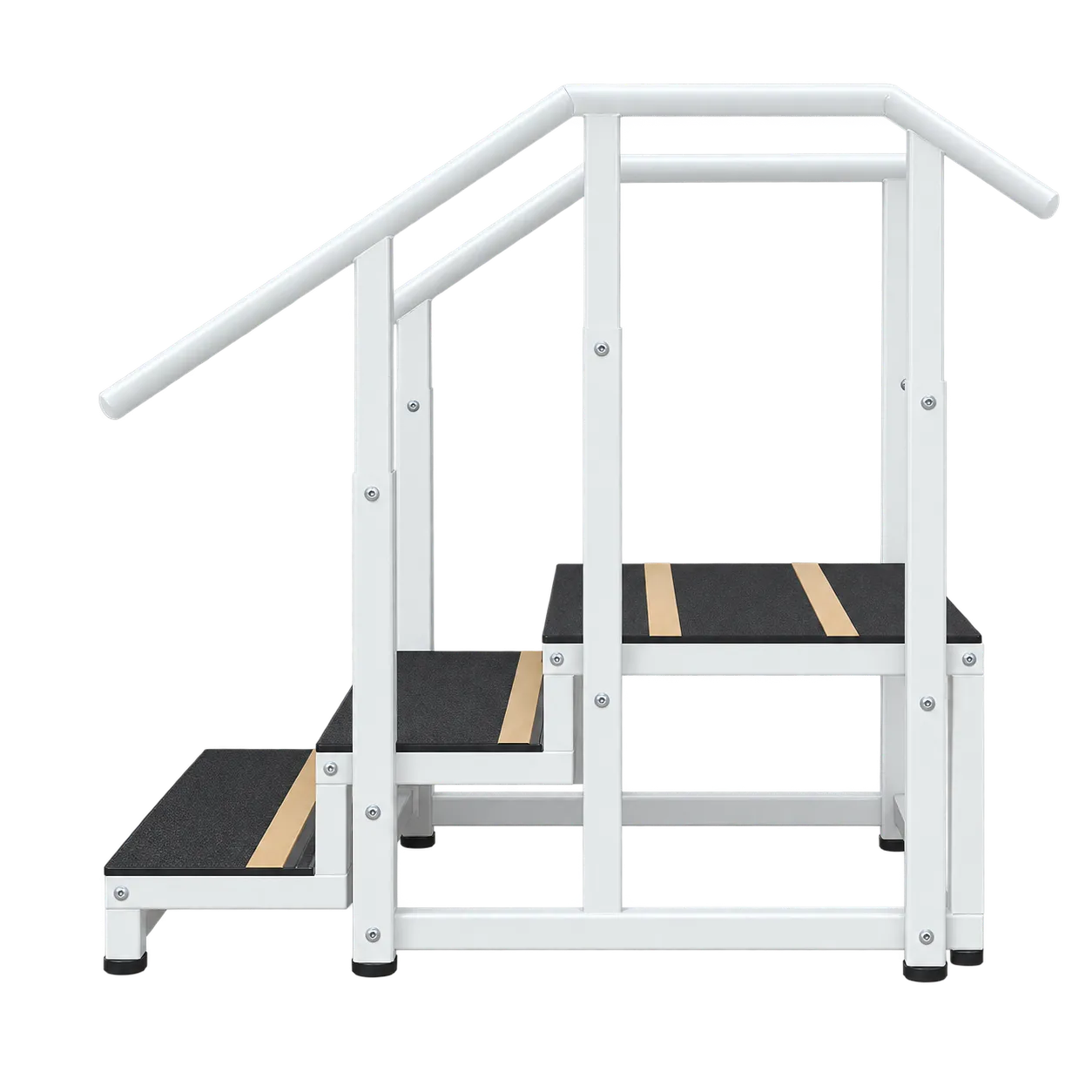
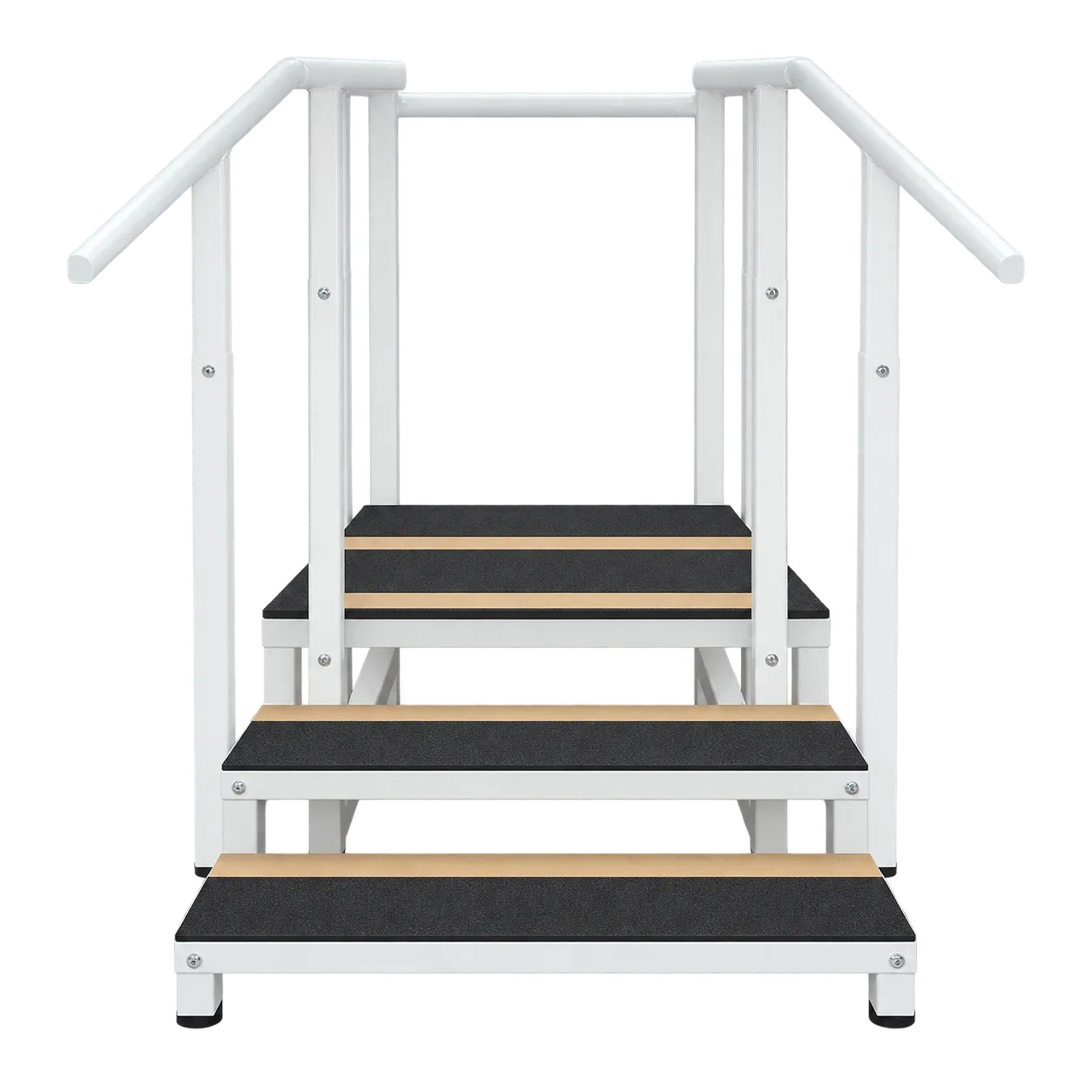
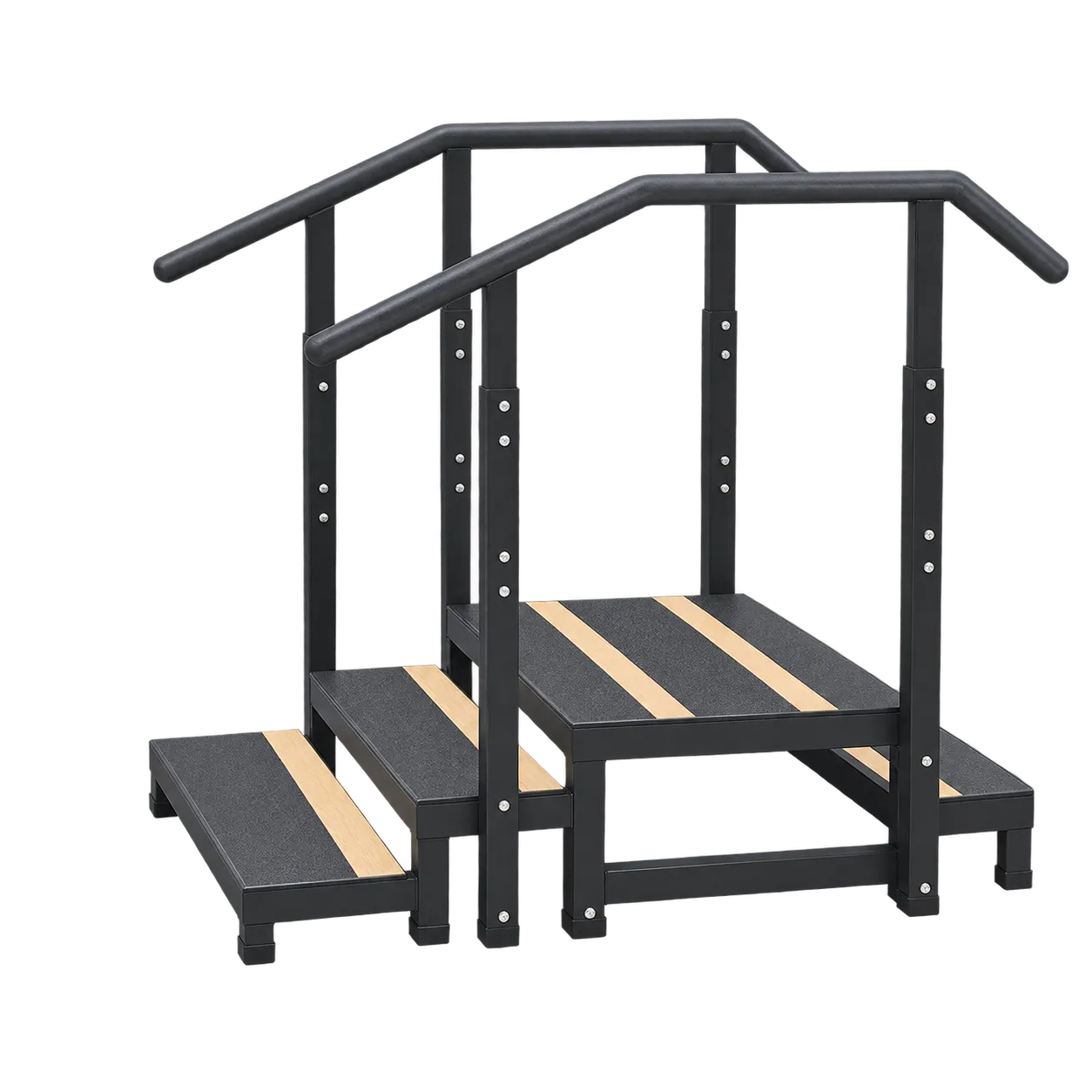
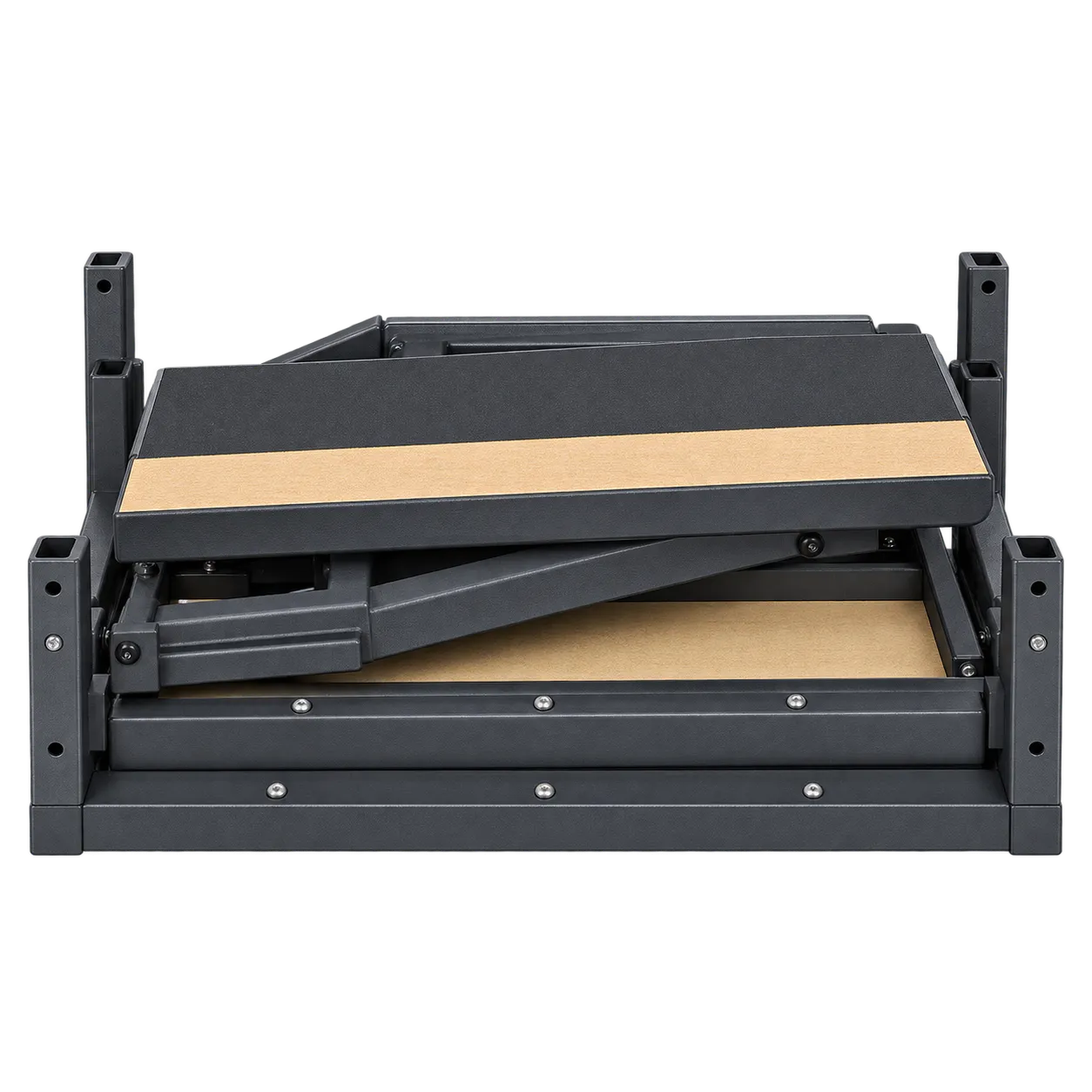
Two-step heights over a small platform give knee and hip replacement pathways, falls services and neurological rehabilitation a graded stair task. The knock-down build takes that task to rooms with awkward access, such as upper-floor therapy rooms, satellite clinics and community hubs, and its 1430 × 850 mm plan suits ward gyms that are short of space.
Stair descent is one of the tasks surgical patients find hardest to recover. Studies of knee replacement report moderate to extreme difficulty going downstairs in up to 60% of patients six months after the operation, so practice on a low step before a taller one has a clear purpose. Rail height has its own evidence. In a 2023 laboratory study, younger and older adults recovering from a stumble while walking kept better trunk control as handrails rose towards 107 cm. Earlier work placed the height for generating strong grip forces at about 0.9 to 1.0 m.
Both lines of evidence come from observation or healthy volunteers, and trials of stair practice itself remain small and of low quality. Adjustable rails mean staff must set the rail with care for each patient, and they do not promise fewer falls.
Physiotherapists will set the rails and choose the side for each session, and estates teams will want the assembly instructions before the parts arrive. NHS procurement routes generally ask for the declared workload and conformity evidence, and equivalent public procurement elsewhere asks the same. The conformity documentation those procurement routes require is issued by the manufacturer and shared by the enquiry team.