
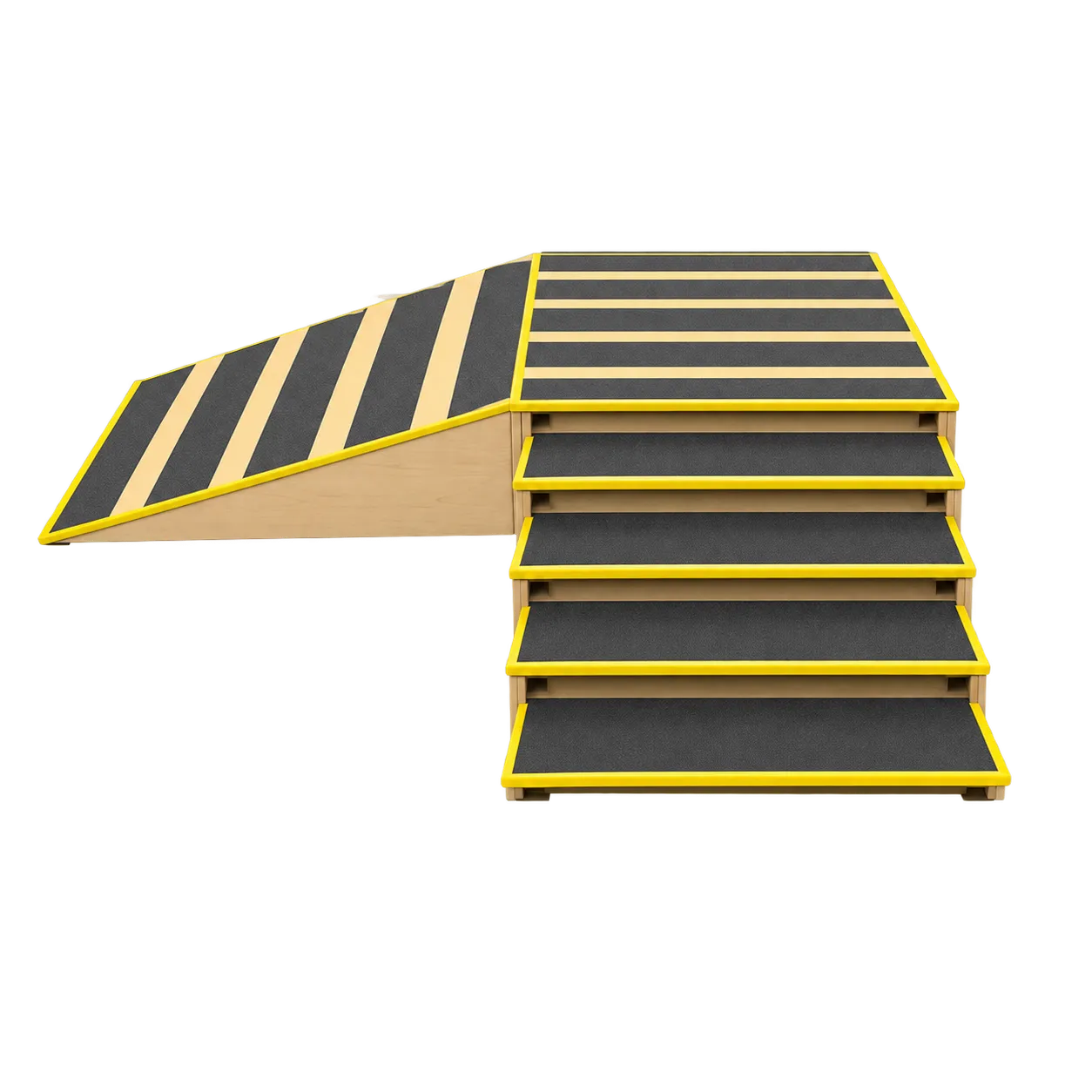
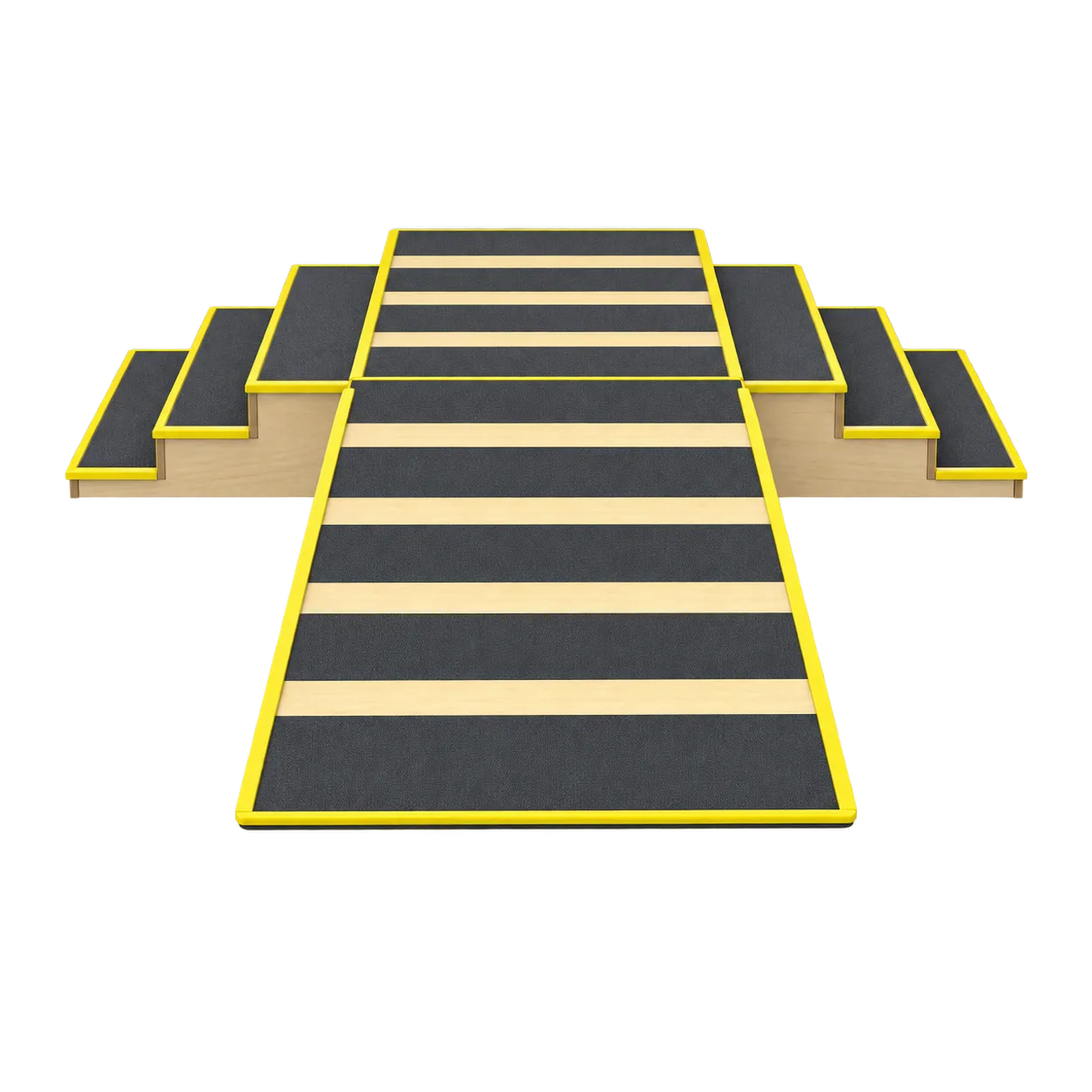
Spinal cord injury centres, wheelchair services, amputee and stroke rehabilitation, community therapy teams and paediatric wheelchair training are where the 8204N earns its place. Wheelchair users practise mounting and descending kerbs, propelling up slopes and controlling descents, while walking patients practise stepping up and down with sticks or crutches before facing real pavement. Because the kerbs move between layouts, a session can mimic a crossing approached from either side. Children learning to use a wheelchair can start the same skills on the lowest kerb.
The training this set supports has a firmer evidence base than most mobility equipment. A 2019 meta-analysis of 13 randomised trials with 581 participants found that structured wheelchair skills training raised scores on the Wheelchair Skills Test by about 21% relative to baseline. Gains were largest in new wheelchair users, with no safety concerns. The evidence was rated moderate quality, and a national research summary noted that the gains were measured on the skills test itself. Hence, the link to everyday participation rests on other studies. The set gives that training its kerbs and its slope; the programme around it does the teaching.
In the UK, physiotherapists and occupational therapists running these sessions hold HCPC registration. In England, the CQC regulates treatment providers, with separate bodies in Scotland, Wales and Northern Ireland. NHS procurement routes ask for conformity paperwork and a declared load limit on mobility training equipment, and equivalent public procurement elsewhere asks the same. The conformity documentation those procurement routes require is issued by the manufacturer and shared by the enquiry team.