
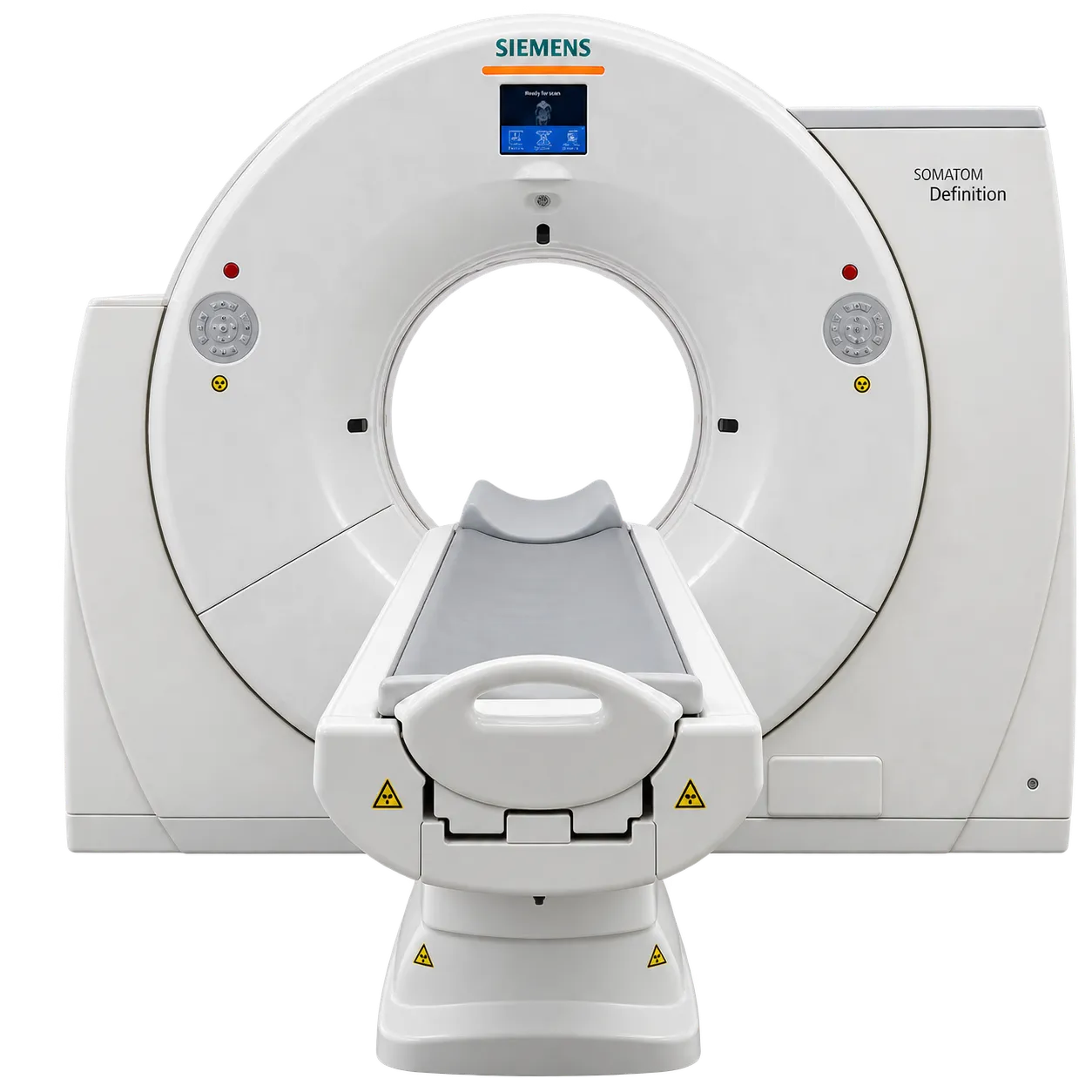
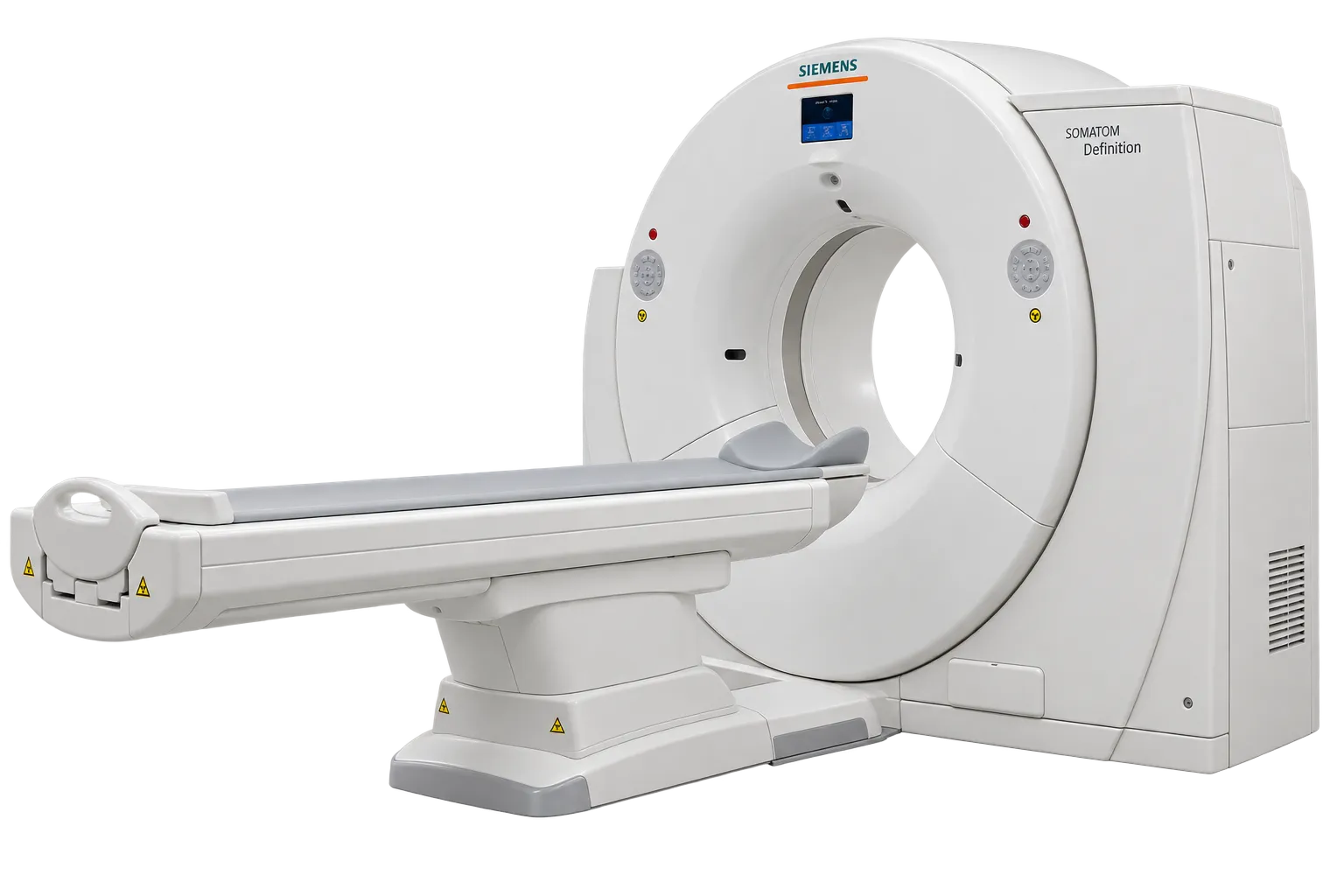
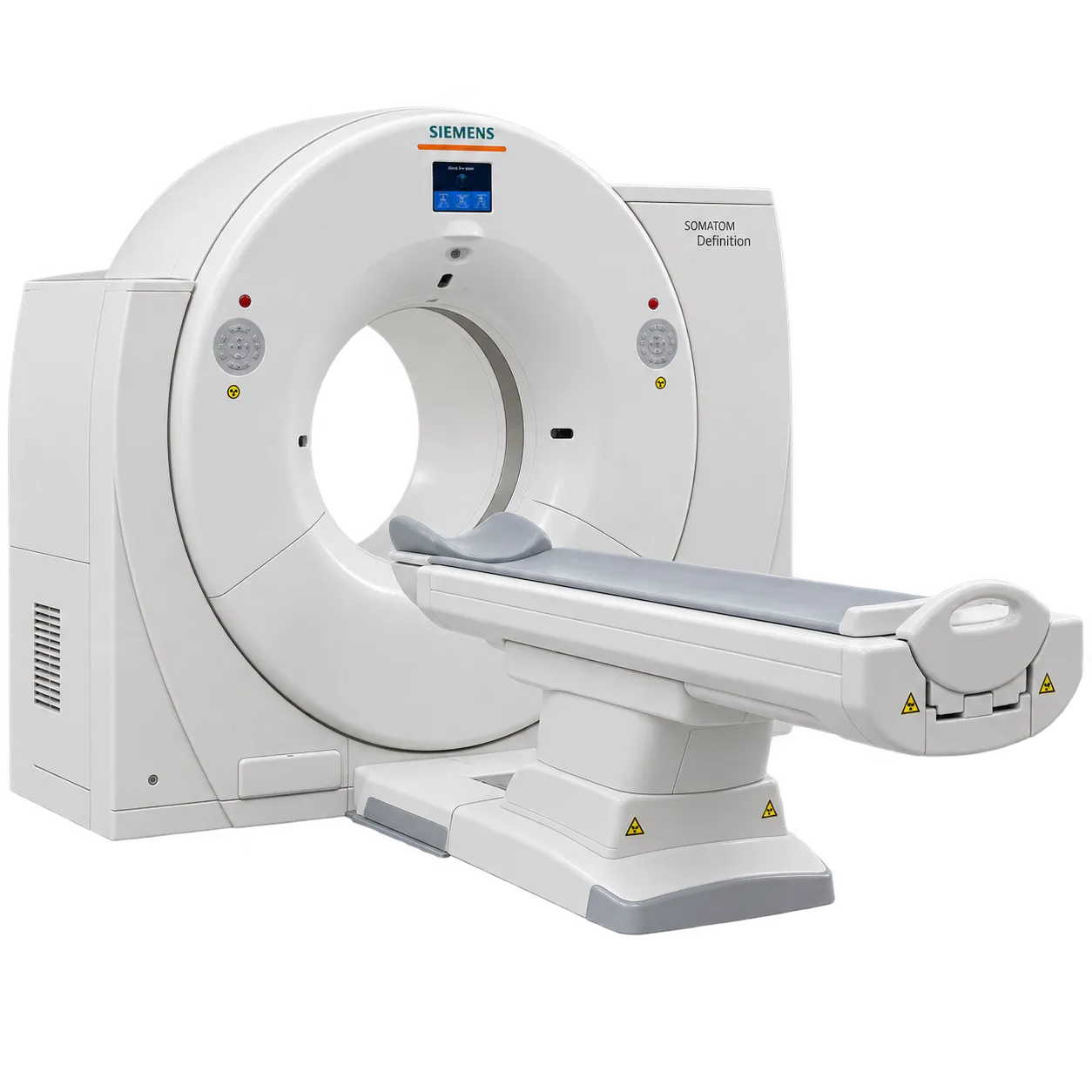
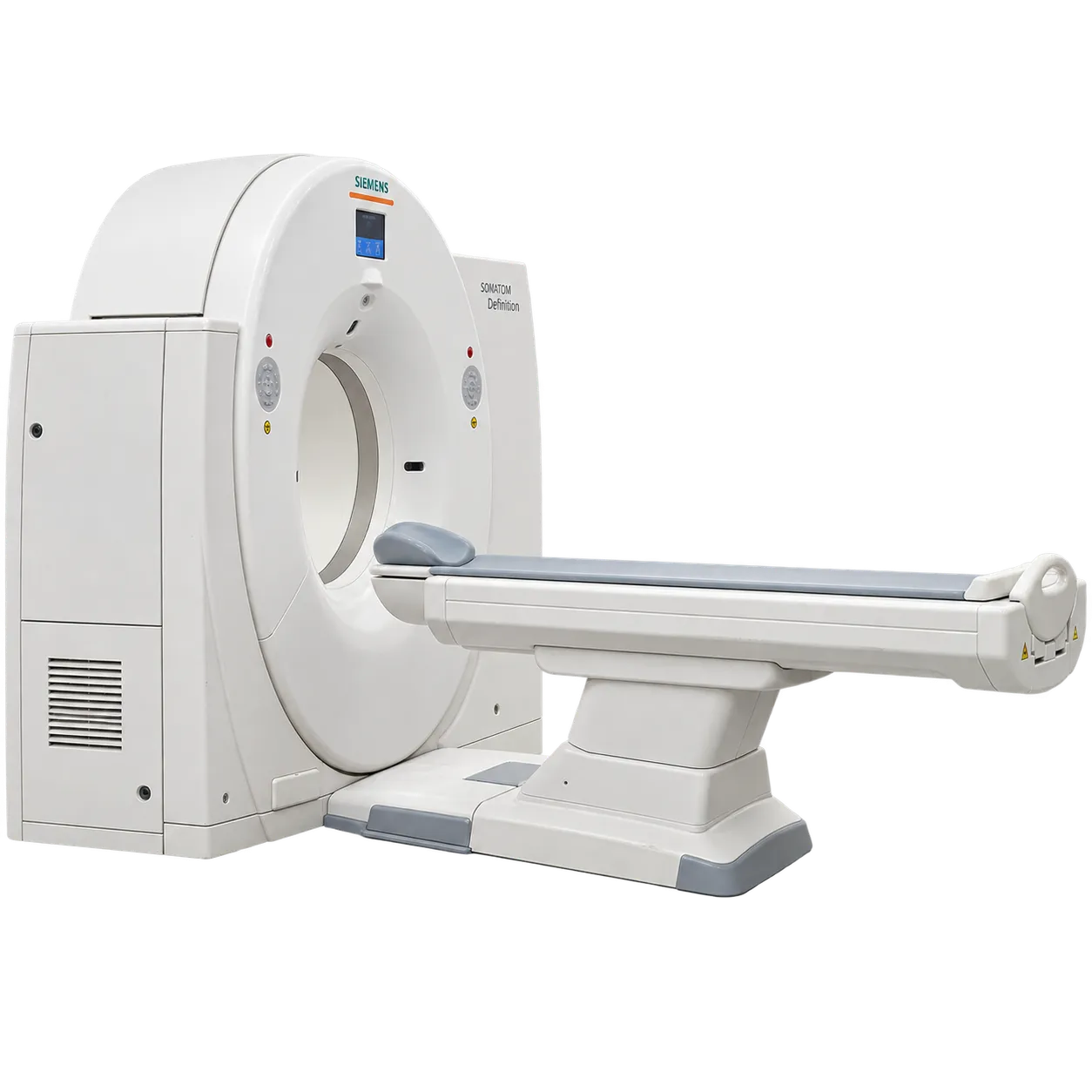
Emergency department imaging is what Siemens designed the Edge around, citing the proportion of CT examinations performed in that setting. A 0.28 second rotation acquiring up to 23 cm per second supports a thorax-abdomen study in roughly two seconds, which can reduce or remove breath-hold requirements on patients least able to comply. All clinical judgement, including whether an examination is justified, remains with the referring and reporting clinicians, and Medigear.uk supplies configuration and condition detail rather than clinical guidance.
Low dose work benefits from the Stellar detector directly. Lower tube voltage reduces dose but weakens signal, and weak signal is precisely where electronic noise dominates, so a detector suppressing that noise is what makes low kV protocols practical. The platform offers kV steps down to 70 for that reason, with paediatric and obese patients both cited by Siemens as groups the approach serves. Medigear.uk confirms which dose options are licensed, since they vary between units.
Fine detail work including stenosis and stent assessment is supported by 0.30 mm spatial resolution, which Siemens attributes to the ultra-thin slices the Stellar detector permits. That figure is a property of the detector and is unaffected by the tube's condition.
Any buyer should approach this unit as a platform purchase with a tube liability attached. The detector, gantry, generator, console and licences are unaffected by tube wear, and Medigear.uk prices the retube into the discussion rather than leaving it to surface later. Judged that way the unit is a straightforward proposition rather than a difficult one, since what is worn is the one component designed to be replaced.