
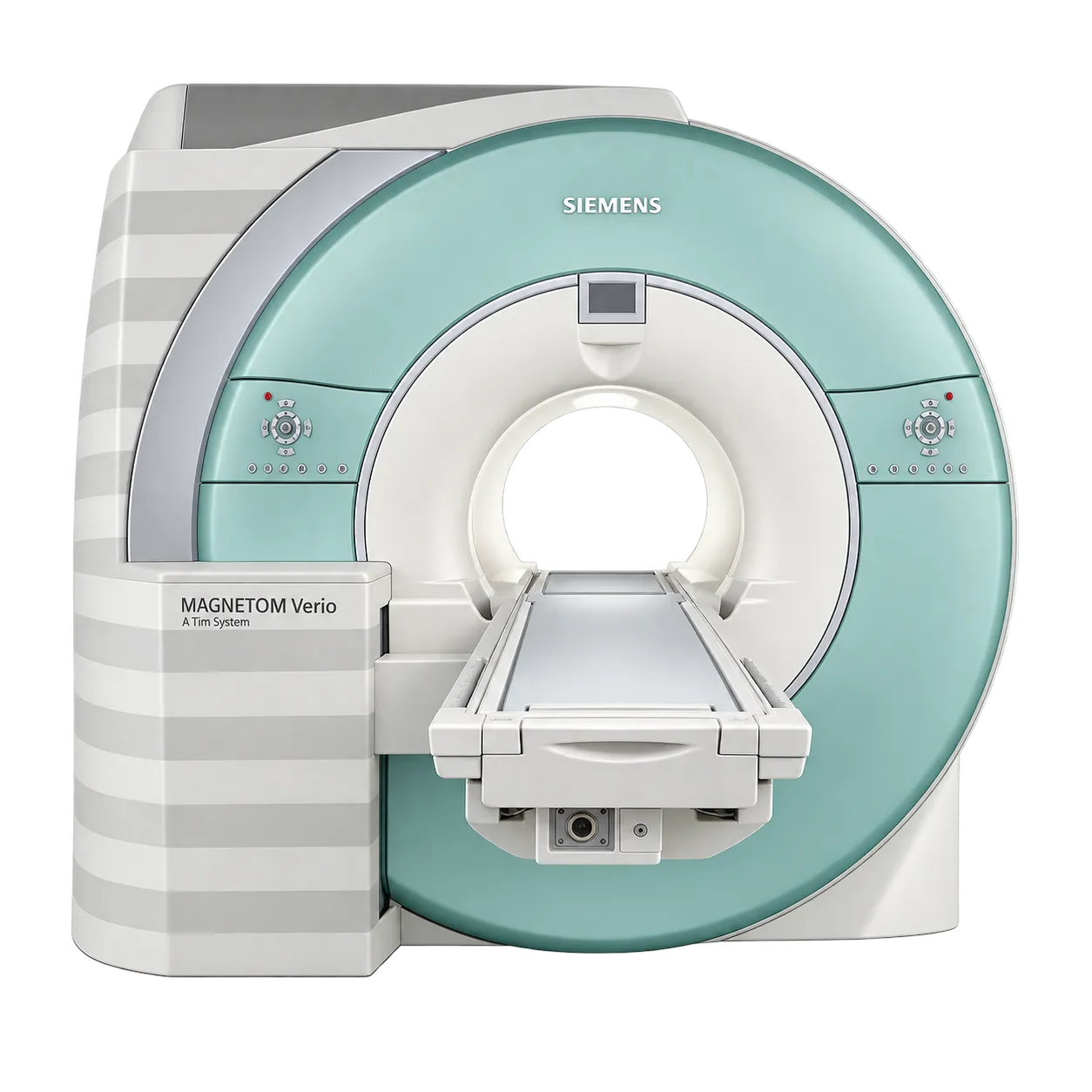
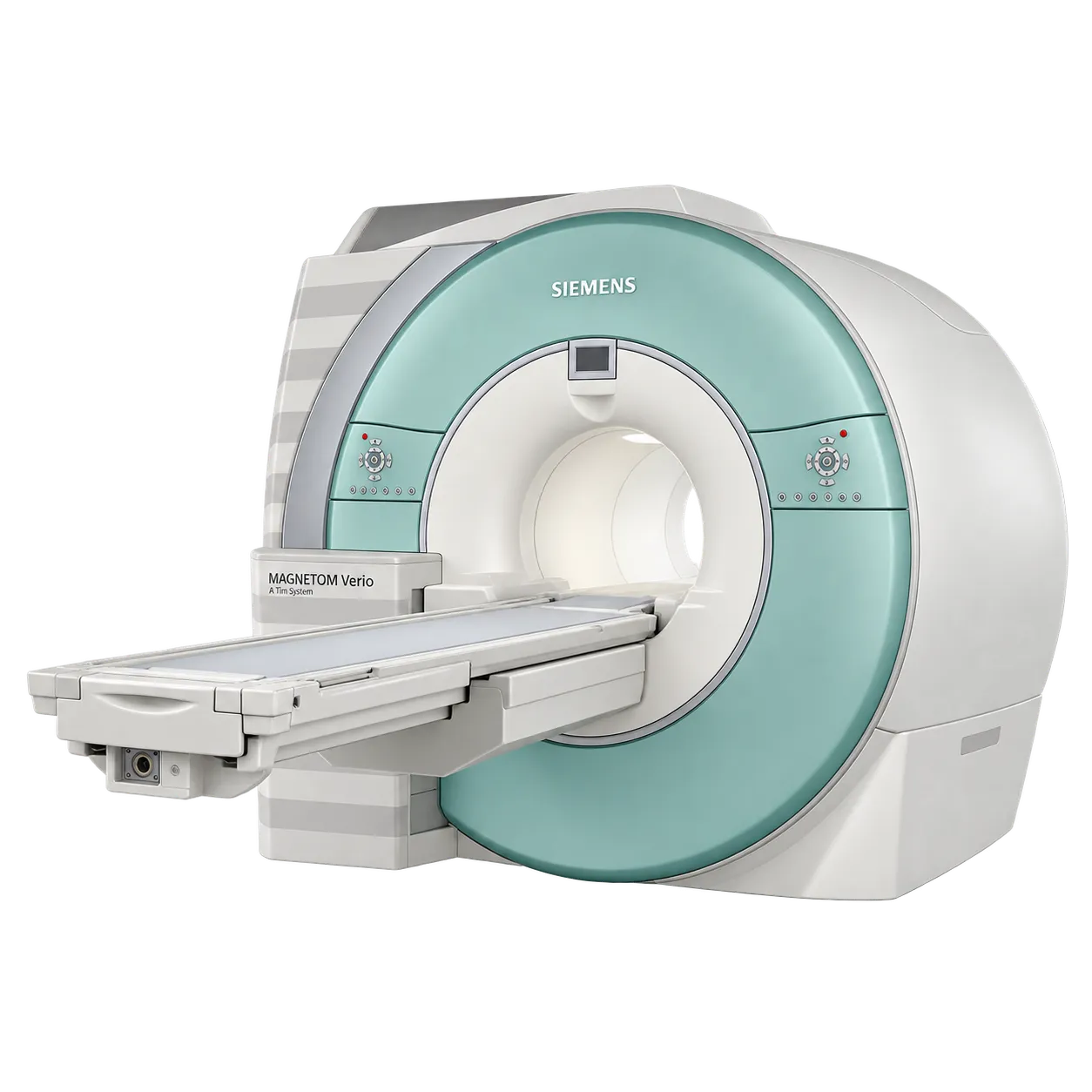
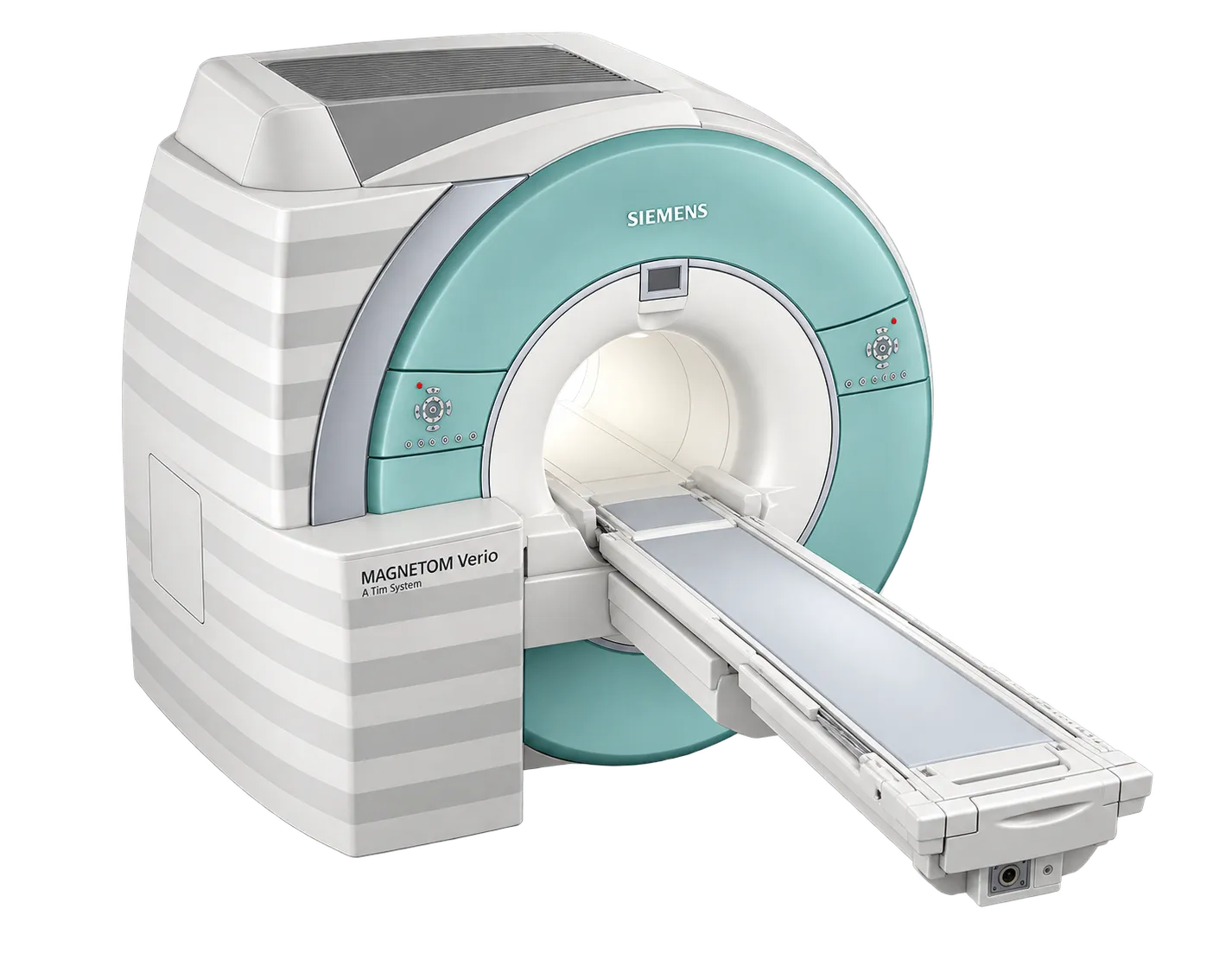
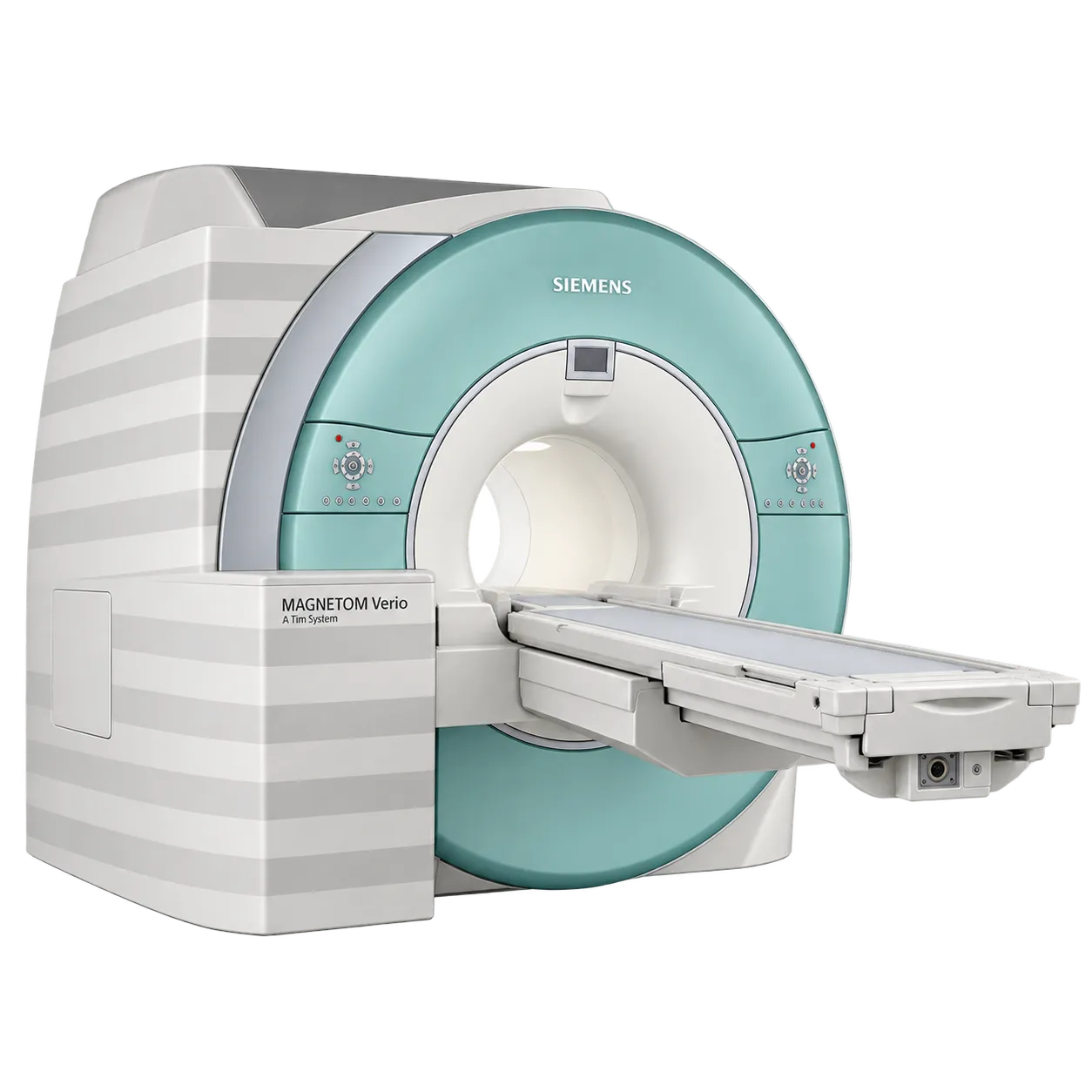
Anxious and claustrophobic patients are the group the in-bore features speak to most directly, with light, ventilation, voice contact and a sightline out available throughout the examination.
Paediatric imaging is supported by continuous voice contact and supervision, which bears on how many studies can be completed without sedation.
Elderly and frail patients benefit from a short bore length at the minimum opening and from a table taking up to 200 kg.
Neurological imaging runs on head and neck coil elements combined into the imaging matrix, with parallel acquisition shortening the sequences a routine brain study relies on.
Spine imaging draws on integrated matrix elements with coverage extending between regions without repositioning.
Body and abdominal imaging is supported within the 45 by 45 by 30 cm homogeneity volume with patient-specific shimming applied per study.
Musculoskeletal imaging uses dedicated joint and extremity coils according to the set supplied with this system.