
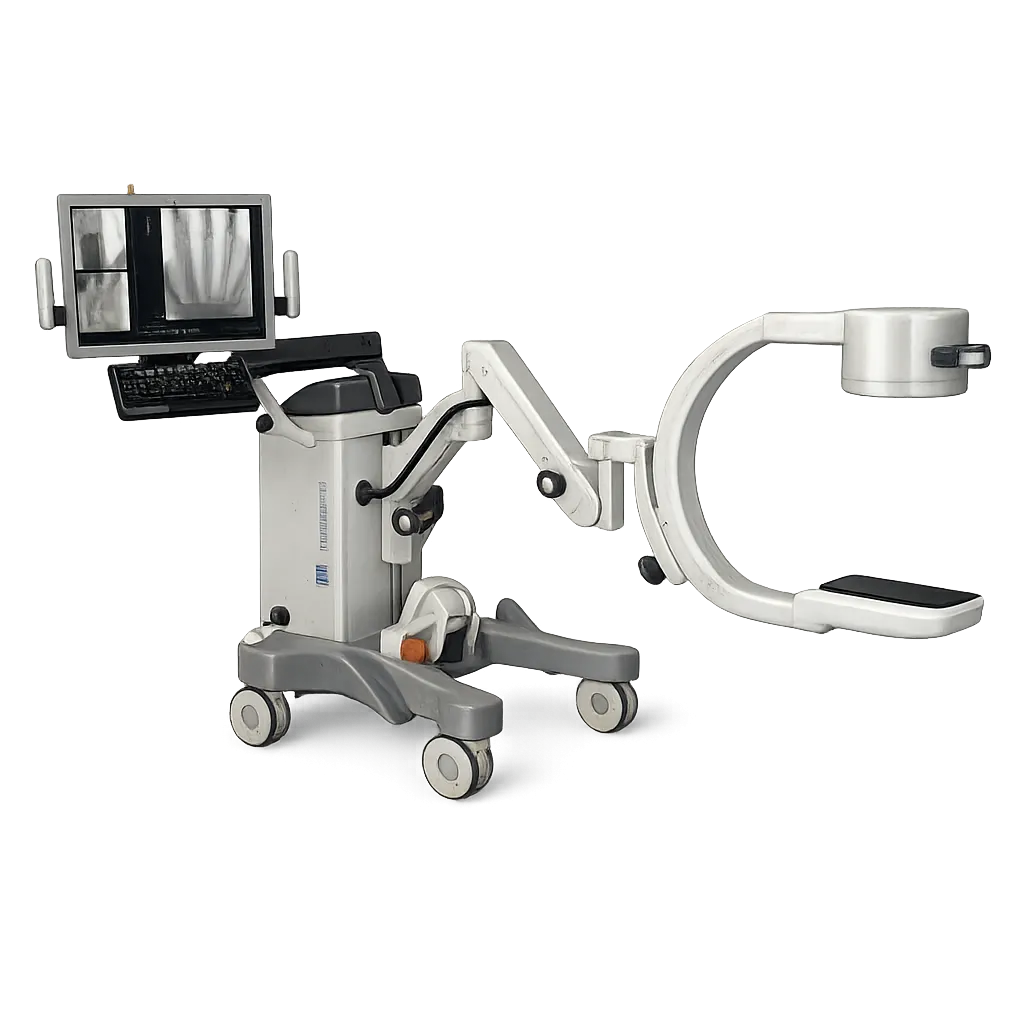


This unit has none in its present condition, and that statement belongs at the top of this section rather than buried within it. A damaged flat detector means no diagnostic imaging, so the system cannot be used on a patient and must not enter clinical service until the detector is replaced and the whole system tested and recommissioned. Medigear.uk will not supply it against any clinical expectation.
The platform, when functional, images extremities. OrthoScan built the FD as the first mini C-arm with flat detector technology, using a 6 by 5 inch detector at 2k by 1.5k resolution with 150 degrees of orbital rotation, surgical lights beneath the X-ray source and automatic adjustment to metal, motion and varying anatomy. Hands, wrists, ankles, feet and elbows in ambulatory surgery centres and outpatient clinics are its usual setting. That description is provided so a buyer understands what a repaired unit would become, not what this one currently is.
Services already operating an OrthoScan FD are the most likely buyers. A donor unit supplying a generator, tube, stand mechanics, monitors or smaller assemblies can keep a working machine in service for considerably less than those parts would cost individually, and without the lead times that ordering them separately brings.
Anyone considering repair should price a replacement detector first, since it represents a substantial proportion of a working system's value. Medigear.uk provides component condition in writing so the sum can be done honestly rather than optimistically, and will say plainly where buying a working machine is the better answer.