
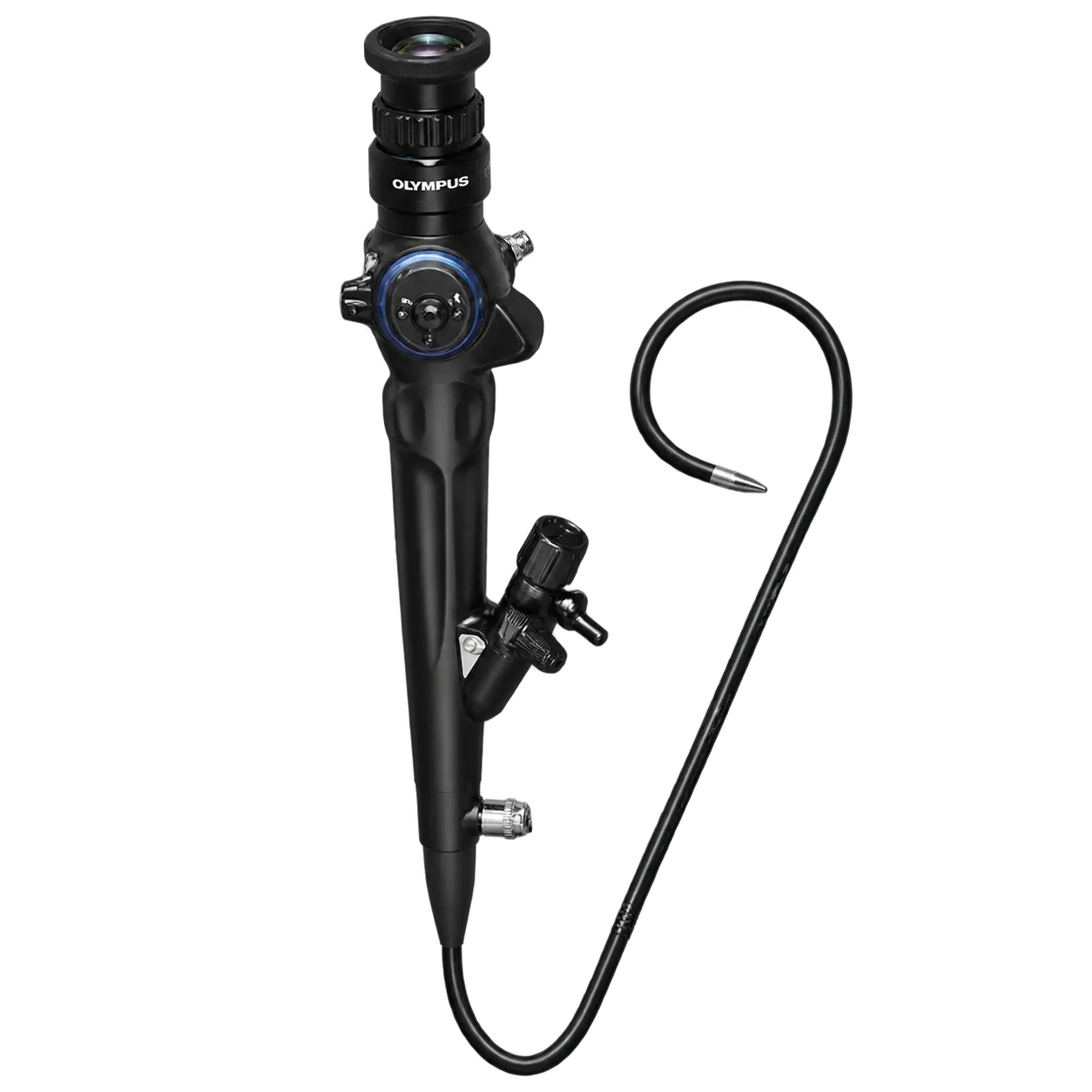
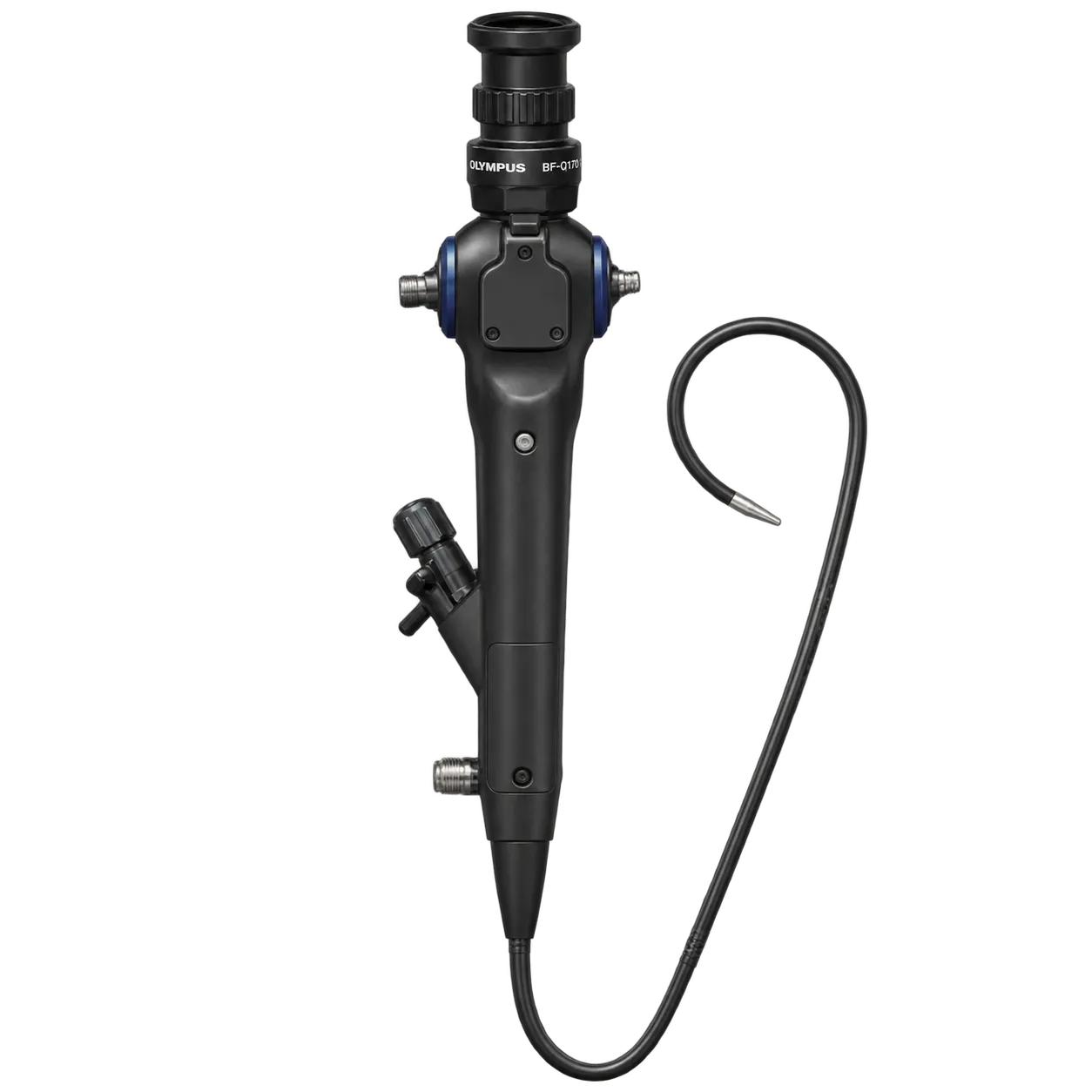
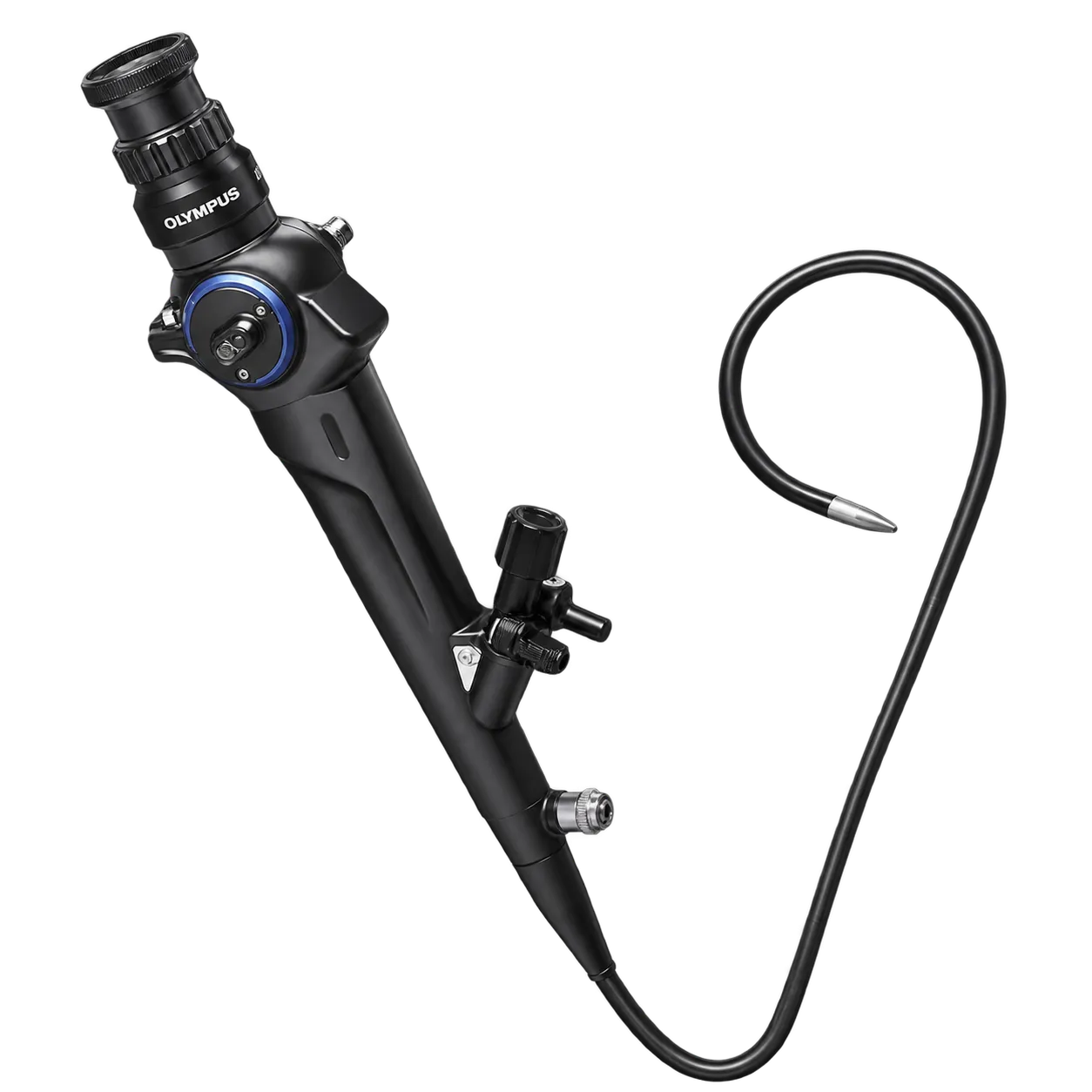
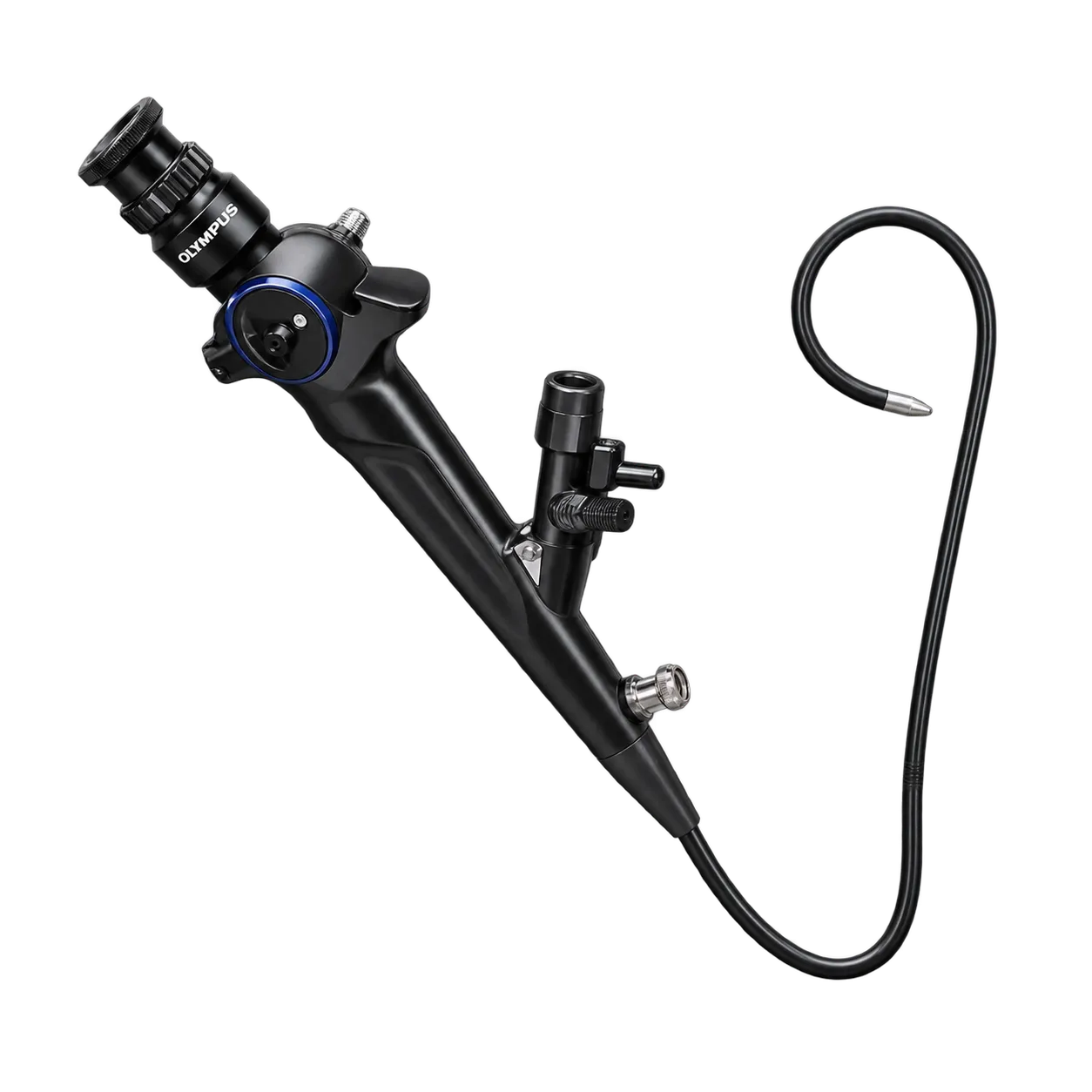
The URF-P7 is used wherever the ureter and kidney are examined with a superslim flexible fibre instrument. It belongs in the urology department, where operators and their theatre teams examine the upper urinary tract and, with accessories, perform diagnostic and therapeutic procedures. Operating theatres and day-case surgery units use the instrument the same way: the shaft passes through the urethra and bladder, often via an access sheath, to the ureter.
A kidney examination asks for a path that reaches the renal pelvis and a tip that turns to meet each calyx. The URF-P7 answers with a 7.95 Fr shaft and a tip that bends 275° up or down. Its forward view of 90° follows the tip, and its 2 to 50 mm depth of field frames what lies ahead. Each of the upper, middle and lower calyxes comes into view as the tip turns.
Two roles share the work. The operator steers the tip with the deflection control and a light turn of the wrist, and watches the picture at the eyepiece. A nurse or assistant prepares the instrument with the biopsy valve, forceps, irrigation plug, and sterilisation cap, and passes accessories through the 3.6 Fr channel when the procedure calls for them. After each case, the cleaning brush supports the channel.
Stone procedures depend on careful tip placement placement. The bullet-shaped 4.9 Fr tip leads the shaft in, and the 275° bend lets the operator turn toward each target.
A department that repeats this work values an instrument whose parts are named and counted. The URF-P7 keeps the shaft,