
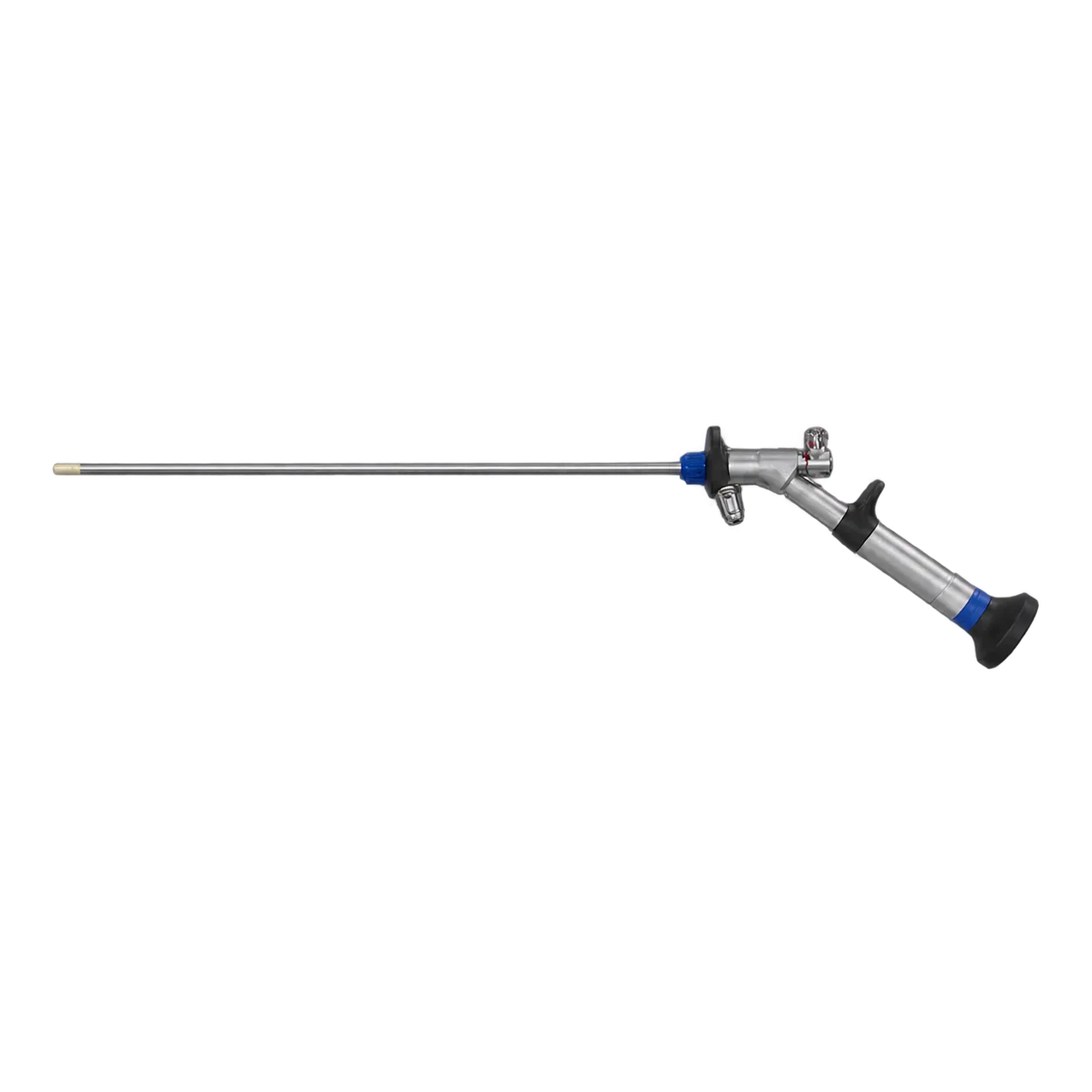
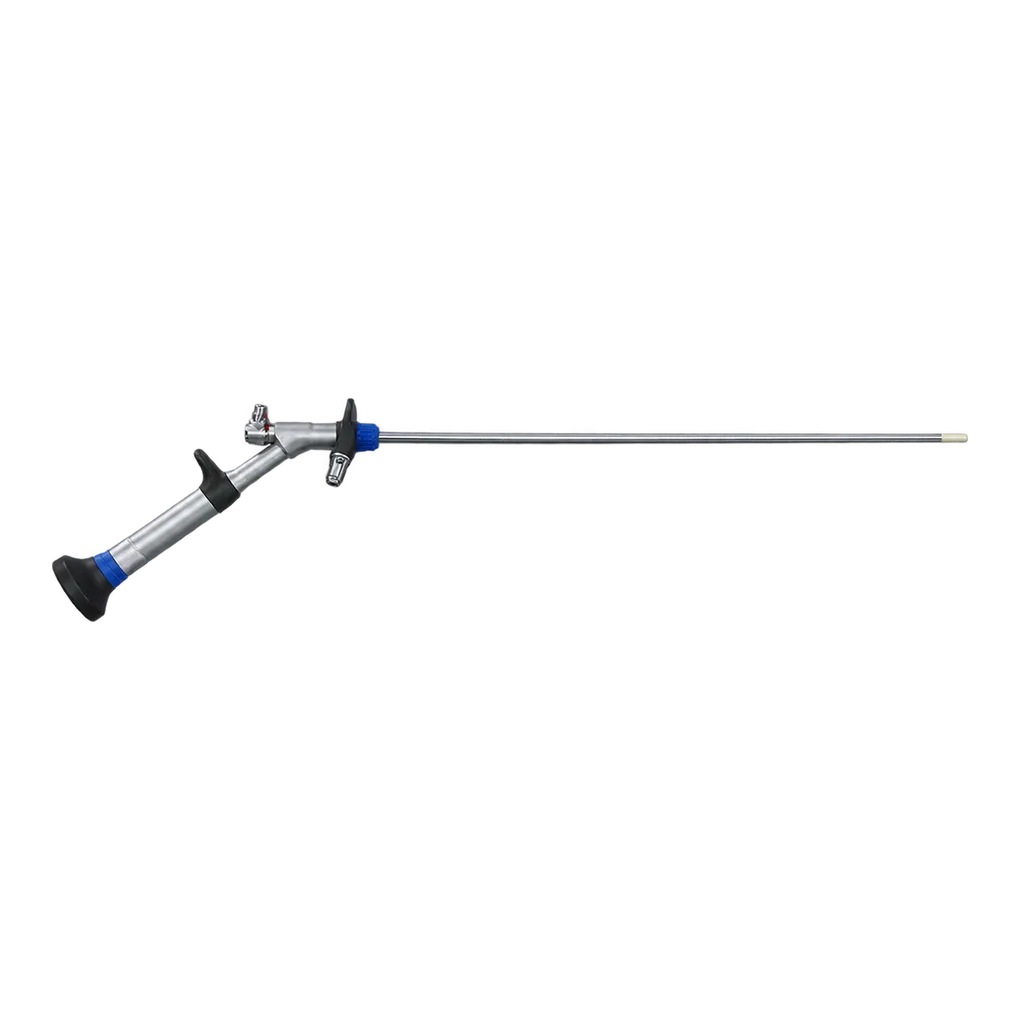
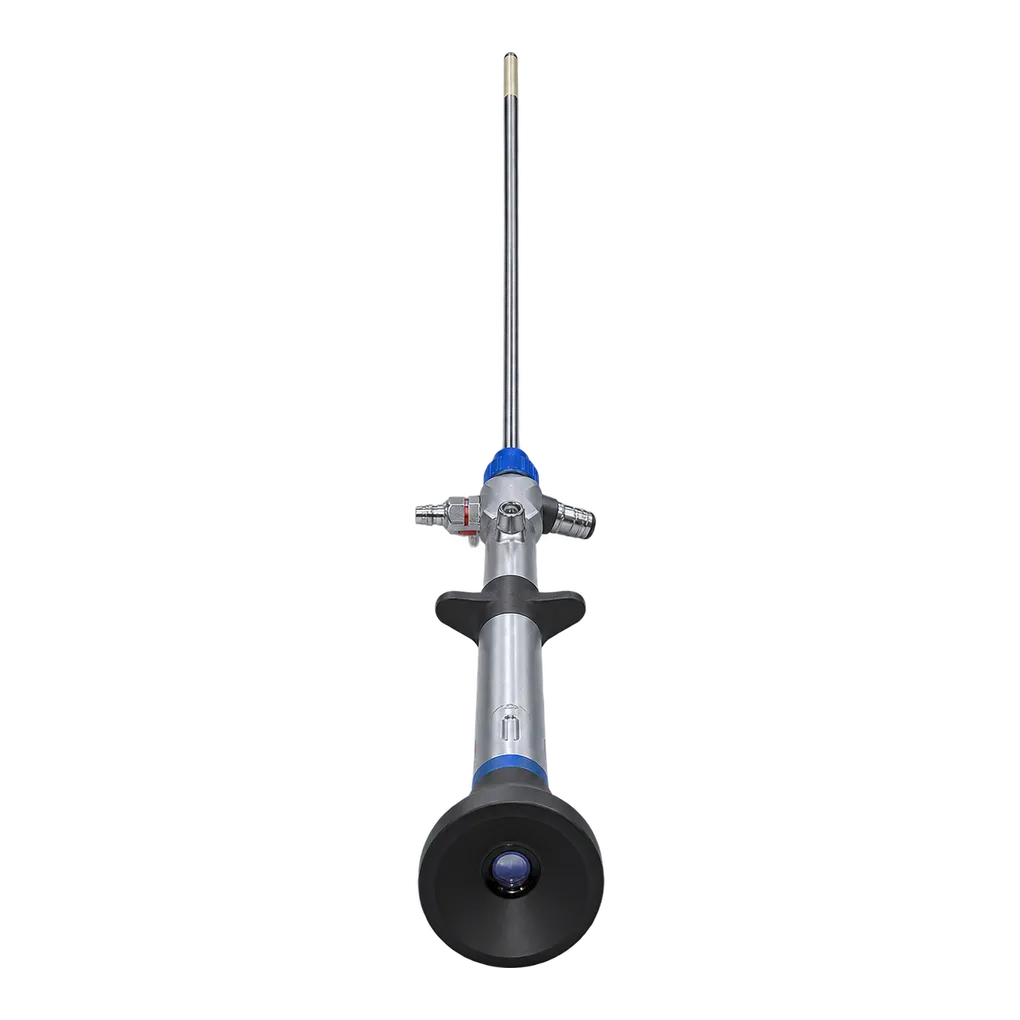
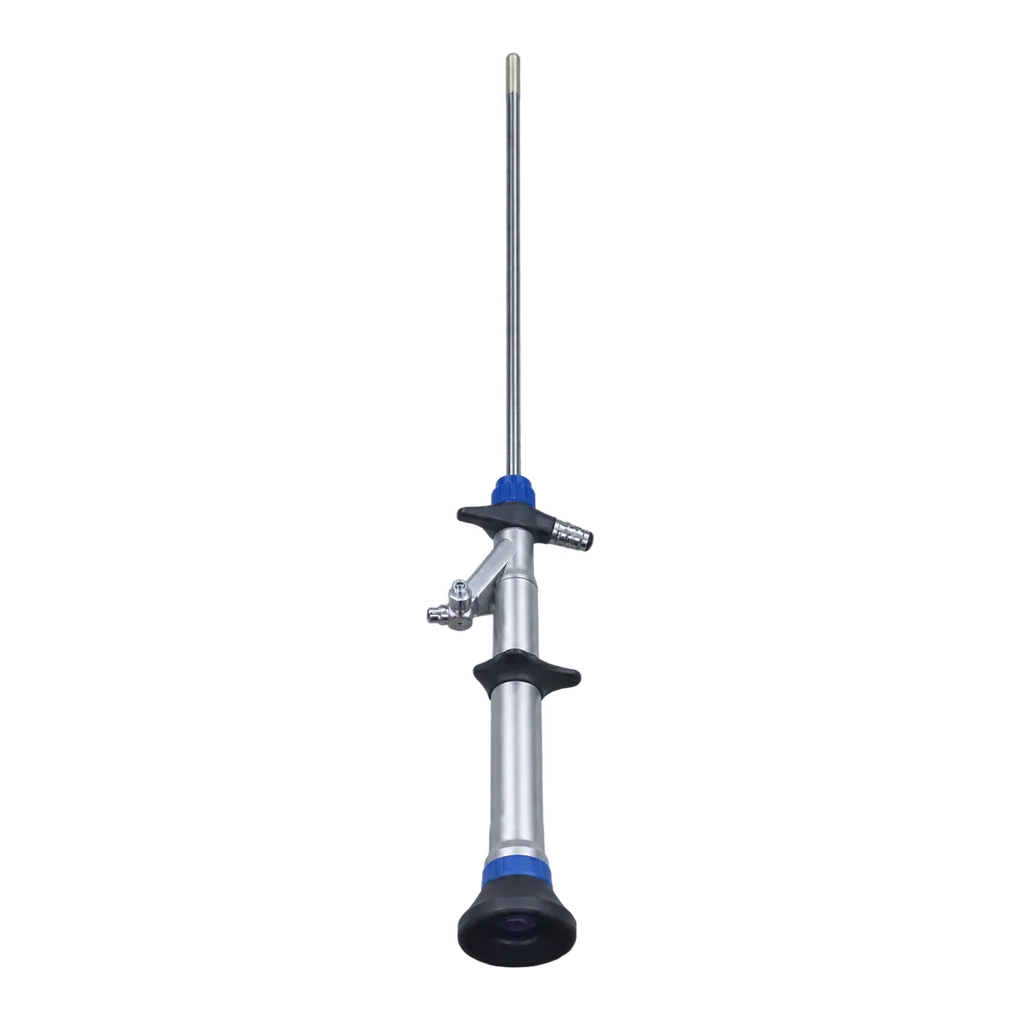
The A2942A is applied wherever the ureter is examined through a straight, semi-rigid instrument. Its natural home is the urology department, where operators and their theatre teams examine the ureter and carry out stone procedures. Operating theatres and day-case surgery units use the same instrument in the same way: the shaft goes in, the eyepiece stays outside, and the observer reads the view at the eyecup.
An examination of the ureter requires four things in order: a shaft that reaches the passage, light on that passage, control of flow, and a clear view. The A2942A answers each with one part. The shaft holds its line toward the ureter, the light post provides illumination, the stopcock lever controls flow at its connector, and the angled eyepiece carries the view to the eyecup.
Two roles share the instrument. The operator holds the body, guides the shaft and watches through the eyepiece. The nurse or assistant prepares the instrument, connects light at the post and works the lever. Because the instrument has so few parts, both roles learn the layout once and encounter it unchanged every time.
Stone procedures call for a shaft that holds its line. The operator reads where the tip points from where the body sits, and the hands stay on the body throughout. The dark eyecup gives the eye a steady place to rest while the hands work.
A department that examines the ureter regularly values an instrument with a short list of parts and a fixed order: shaft, body, stopcock, eyepiece. The A2942A keeps that order from one use to the next.