
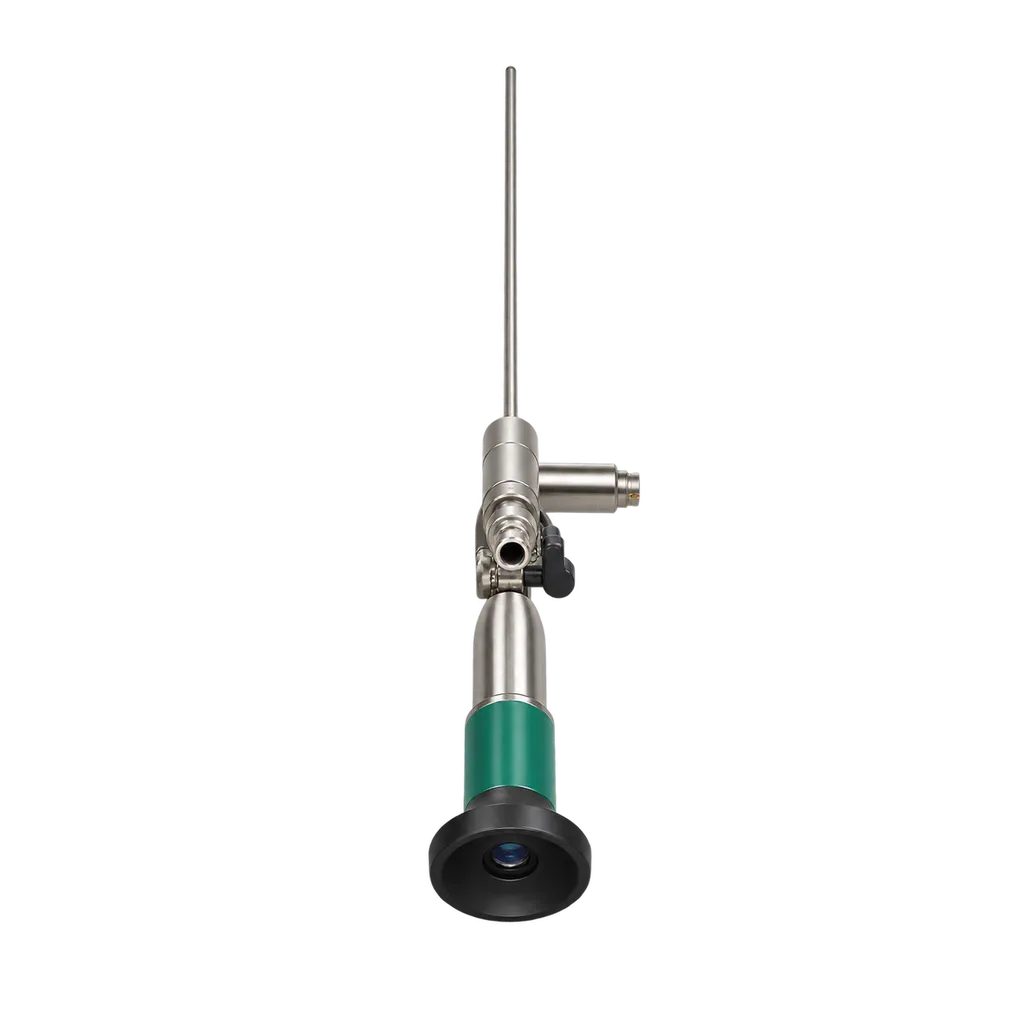
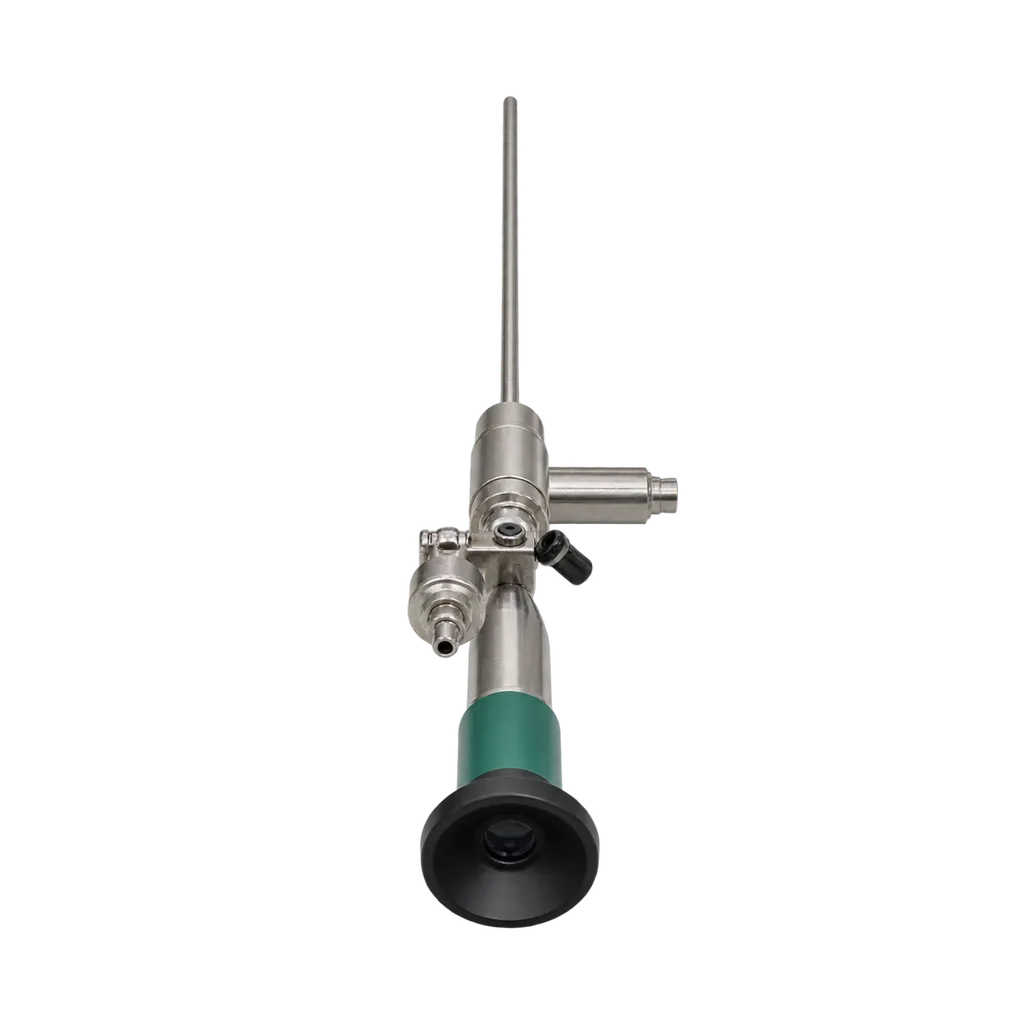
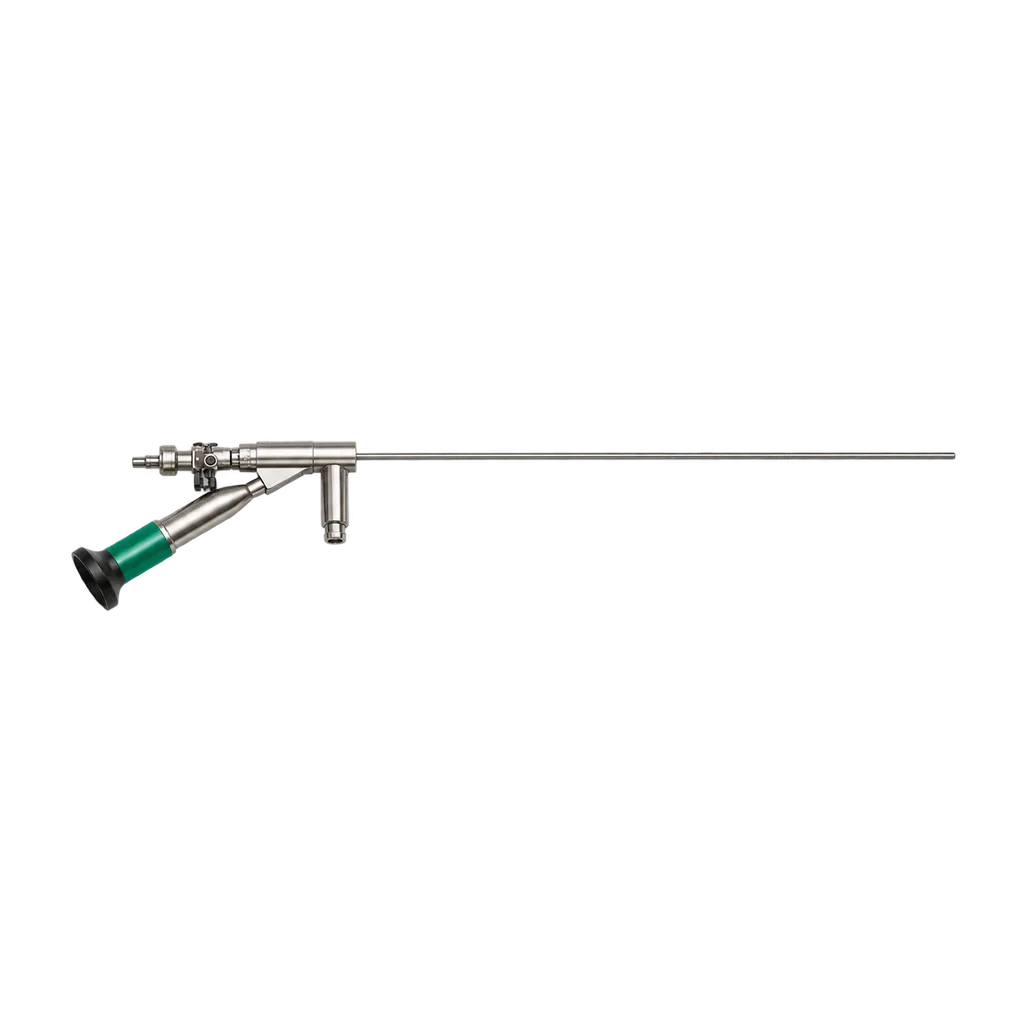
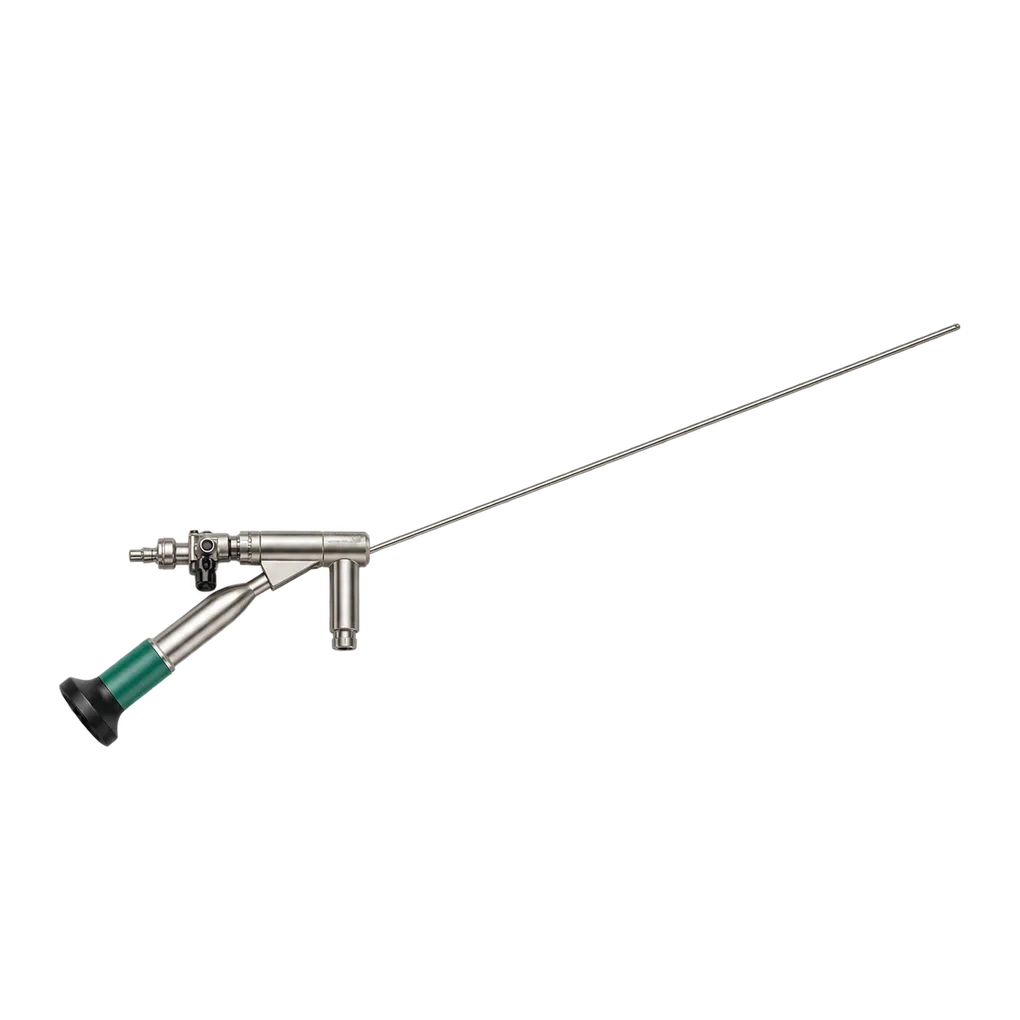
The A2940A is used wherever the ureter is examined directly with a straight instrument. Its natural home is the urology department, where surgeons and their theatre teams examine the ureter and the surrounding urinary tract. Operating theatres and day-case surgery units use the same instrument in the same way: the shaft goes in, the eyepiece stays outside, and the observer reads the view from the eyecup.
Users fall into two groups. The surgeon holds the body, guides the shaft and watches through the eyepiece. The theatre nurse or assistant prepares the instrument, connects light at the post and works the lever on the stopcock. Because each part has a fixed place on the body, both roles meet the same layout every time.
Examining the ureter calls for three things at once: light on the passage, control of flow, and a clear view. The A2940A answers with one fitting for each. The light post takes in illumination at the side, the stopcock lever governs flow at its connector, and the angled eyepiece carries the view to the eyecup—none of the three crowds the others.
The long, straight shaft completes the arrangement. It holds one line from the body to the tip, so the operator knows where the tip points based on the body's position in the hand. The dark eyecup holds the eye steady while the hands stay free for the fittings.
A department that examines the ureter regularly values an instrument with a predictable layout. The A2940A offers that predictability through a small number of clearly placed parts: shaft,