

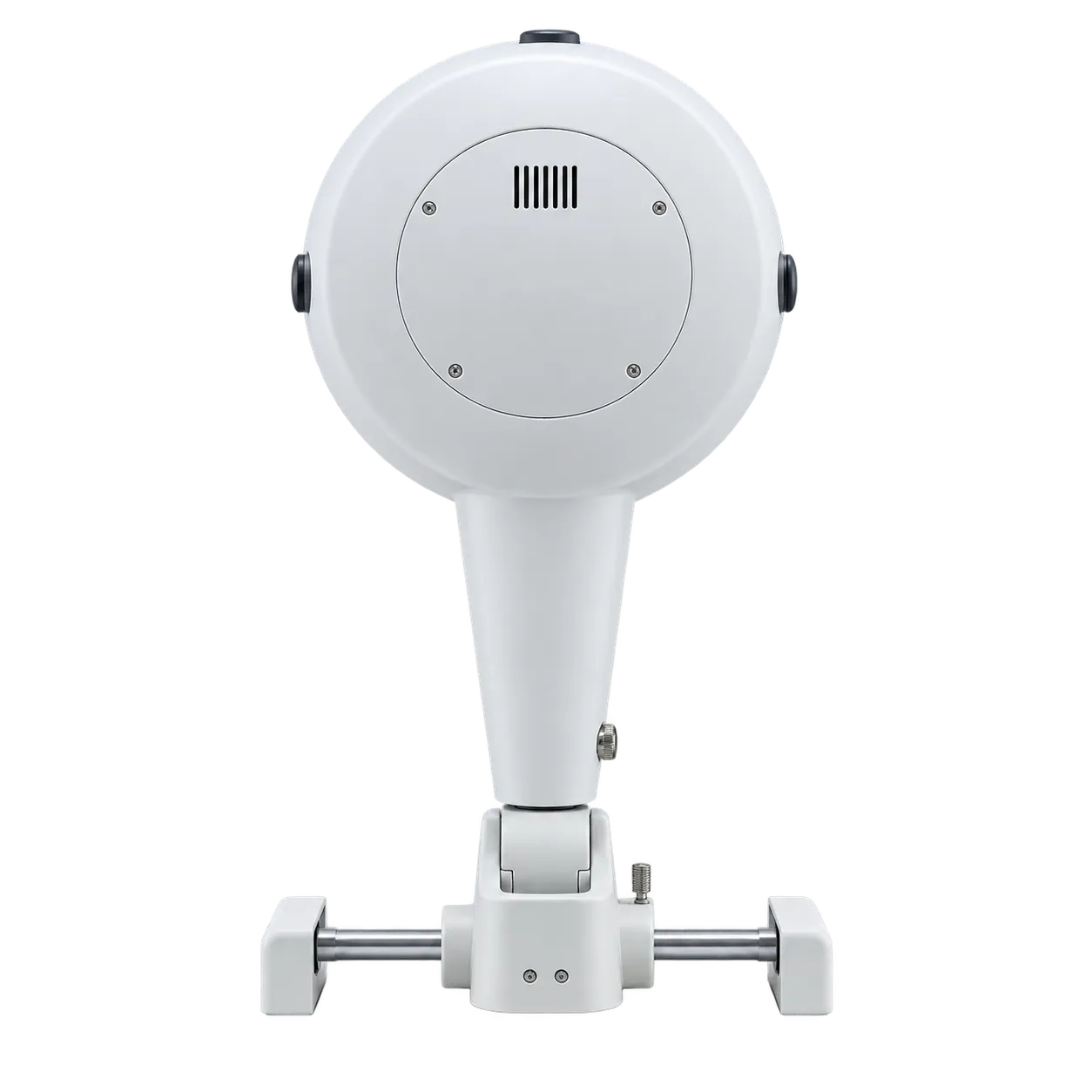
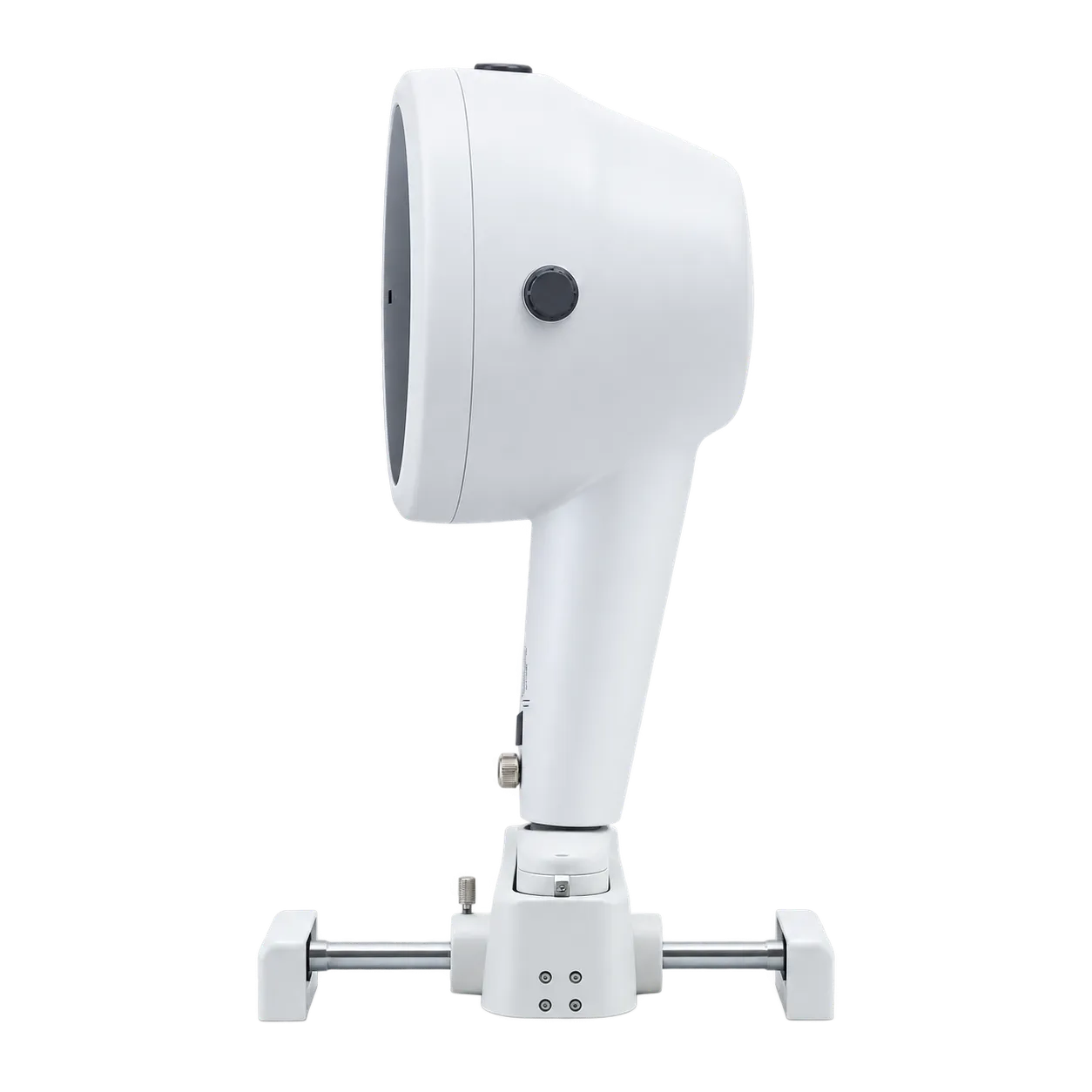

Ophthalmology clinics, refractive surgery centres, cataract and day-surgery units, corneal clinics and contact lens practices use the Pentacam to examine the anterior segment. Ophthalmologists, opticians and trained staff operate it, and the results inform screening, surgical planning and lens fitting.
The single rotation shapes the routine. One turn of the camera records 50 Scheimpflug images in two seconds, so the patient fixates on the target for a moment while the software builds a 3D model. Eye movements are corrected during the scan, auto-release triggers the measurement, and the built-in quality test assesses it. Every map in the examination then comes from the same model.
In screening, the Fast Screening Report summarises key data against normative and pathological databases, and Belin ABCD staging grades keratoconus on the Topometric display. Ectasia detection and monitoring, corneal pathologies and angle-closure glaucoma sit within the screening application. Refractive teams plan corneal refractive surgery, refractive lens exchange and phakic IOLs from topography, elevation and thickness data. Cataract teams use the pre-operative displays for screening and IOL selection, and contact lens practitioners fit RGP, ortho-k and scleral lenses with the optional fitting software.
At 7.2 kg and 35 W, the measuring head sits on a consulting-room table beside a computer running Windows 11. Disinfection of the forehead rest between examinations and chin rest paper for each patient keep the routine short, and a maintenance indicator shows when service is due. Software options are added as a practice takes on more applications, so the same camera serves several services over time.