
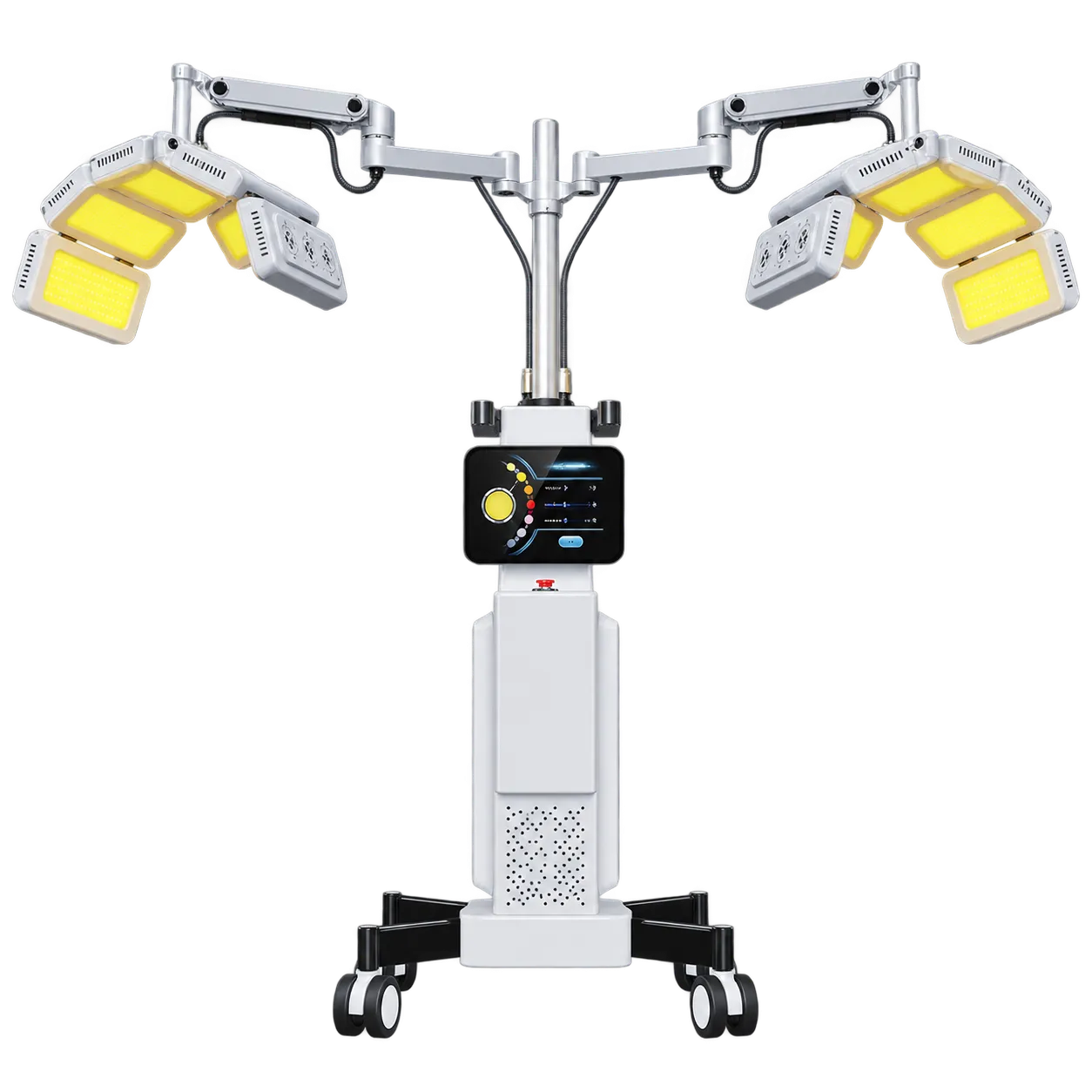
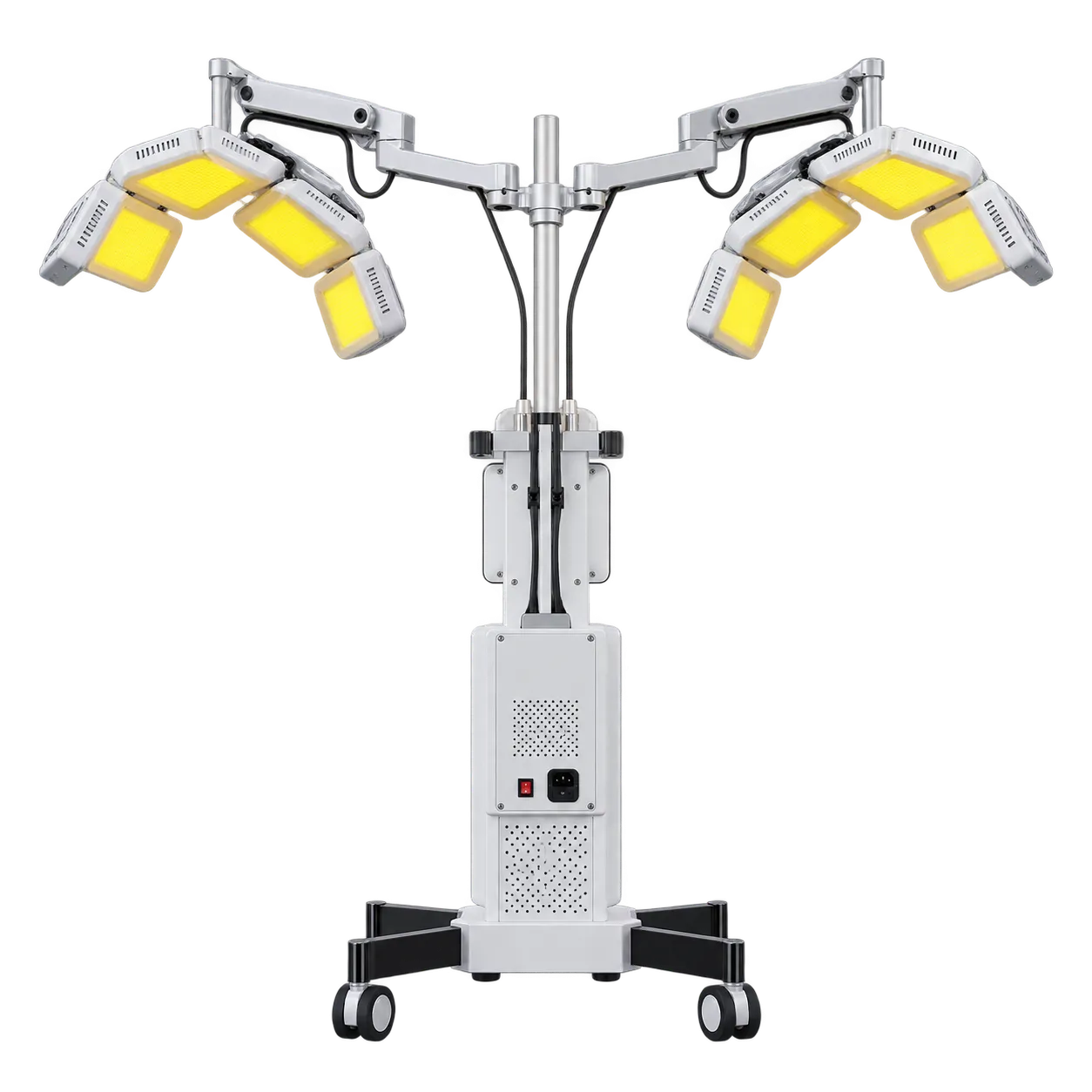
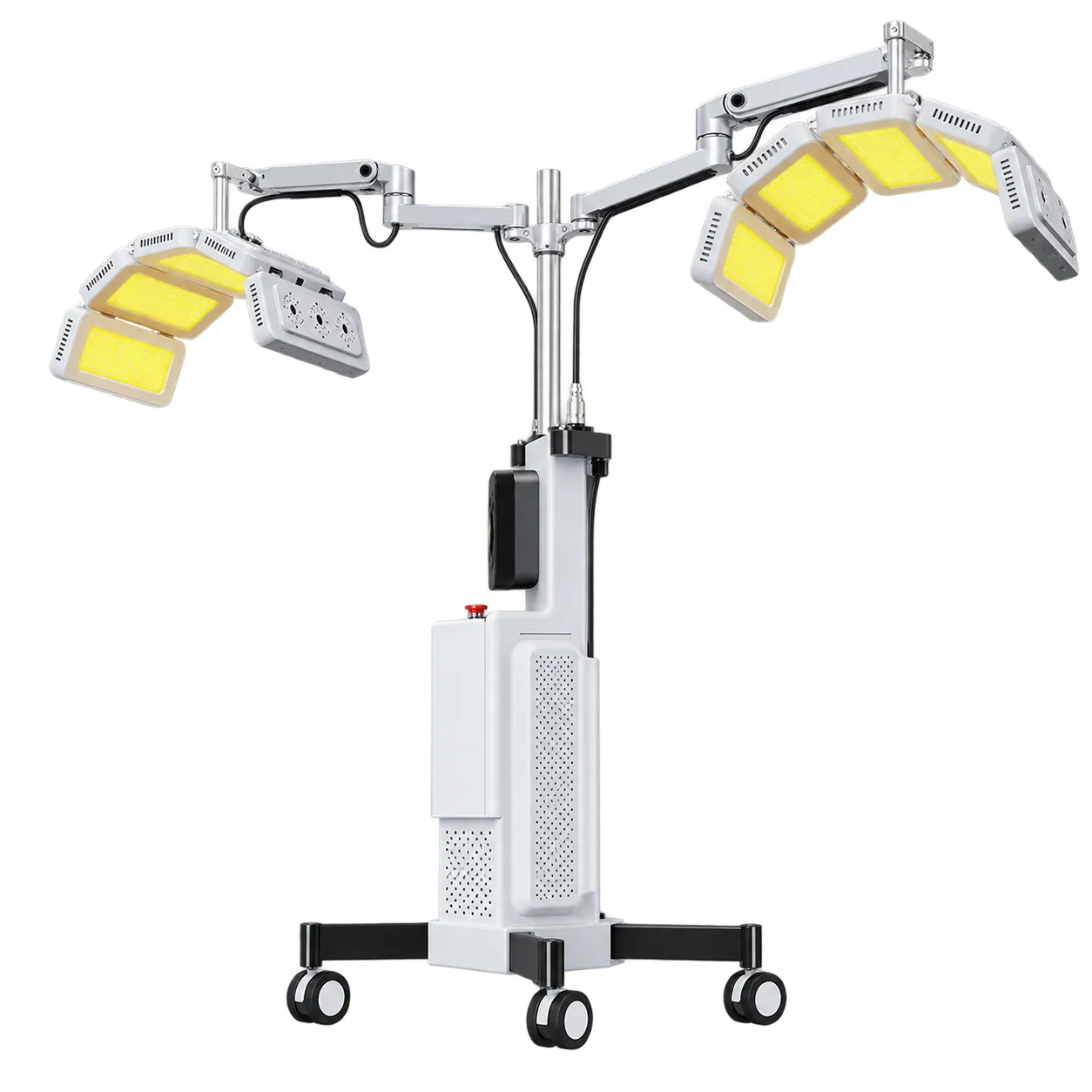
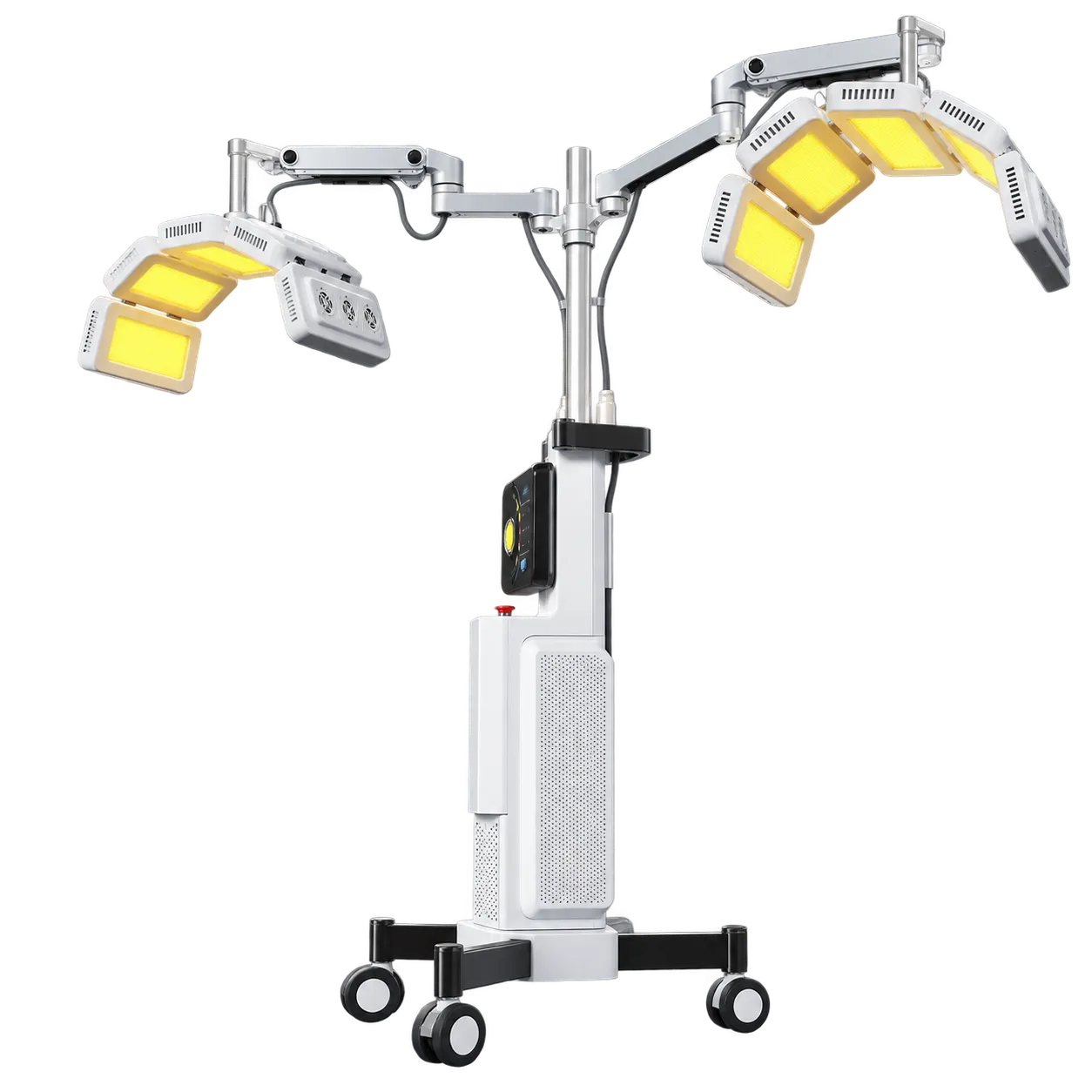
The LP300 earns its second arm on body work. Back and chest breakouts, décolletage redness, and post-waxing or post-peel calming all need wide coverage, and two heads let the therapist treat those areas alongside the face. Aftercare is the second major use: clients finishing peels, microneedling or laser sessions often book a soothing LED add-on, and the LP300 can cover the face and neck together in one sitting. Regular glow sessions for skin tone and texture round out the menu, often sold as memberships or bundled into longer facials. Because the second head can stay parked while the first works alone, the same tower also handles quick face-only sessions on busy days.
The research base calls for honest positioning. In the 2016 Cochrane review of light therapies for acne, the 71 included trials were mostly small, with a median of 31 participants. The reviewers found high-quality evidence lacking and rated certainty for blue light as low. Work on red light for skin texture is similarly small and inconsistent in dose and wavelength, so LED belongs in a practice's menu as gentle, supportive care with realistic expectations.
Day spas, beauty salons, aesthetic clinics and dermatology practices that offer body treatments are the likeliest buyers, and spas with full-body menus gain the most from the second arm. Clinics working under a prescriber may also use suitable LED wavelengths in photodynamic protocols. Groups buying through formal procurement routes will expect documentation before installation. The conformity documentation those procurement routes require is issued by the manufacturer and shared by the enquiry team.