
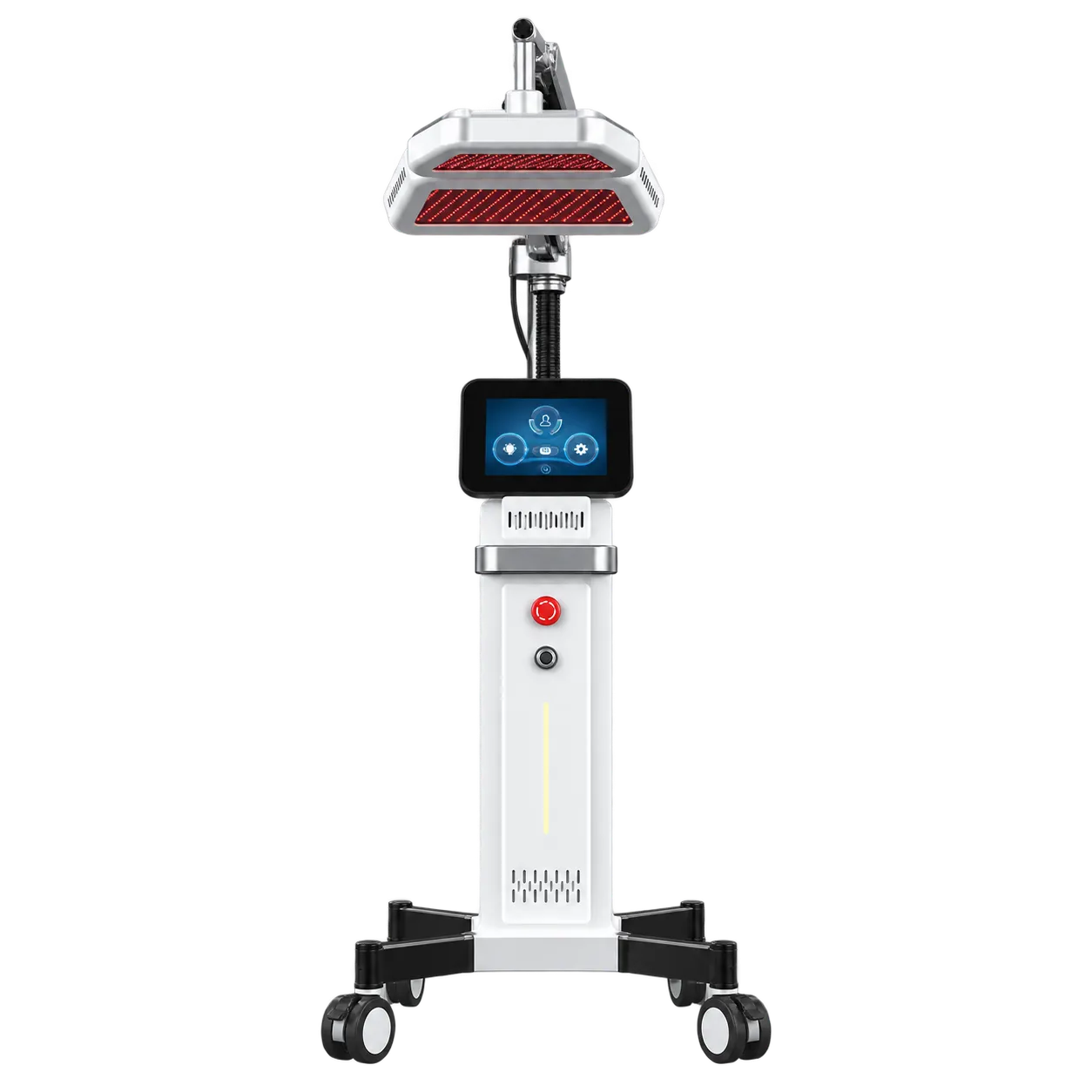
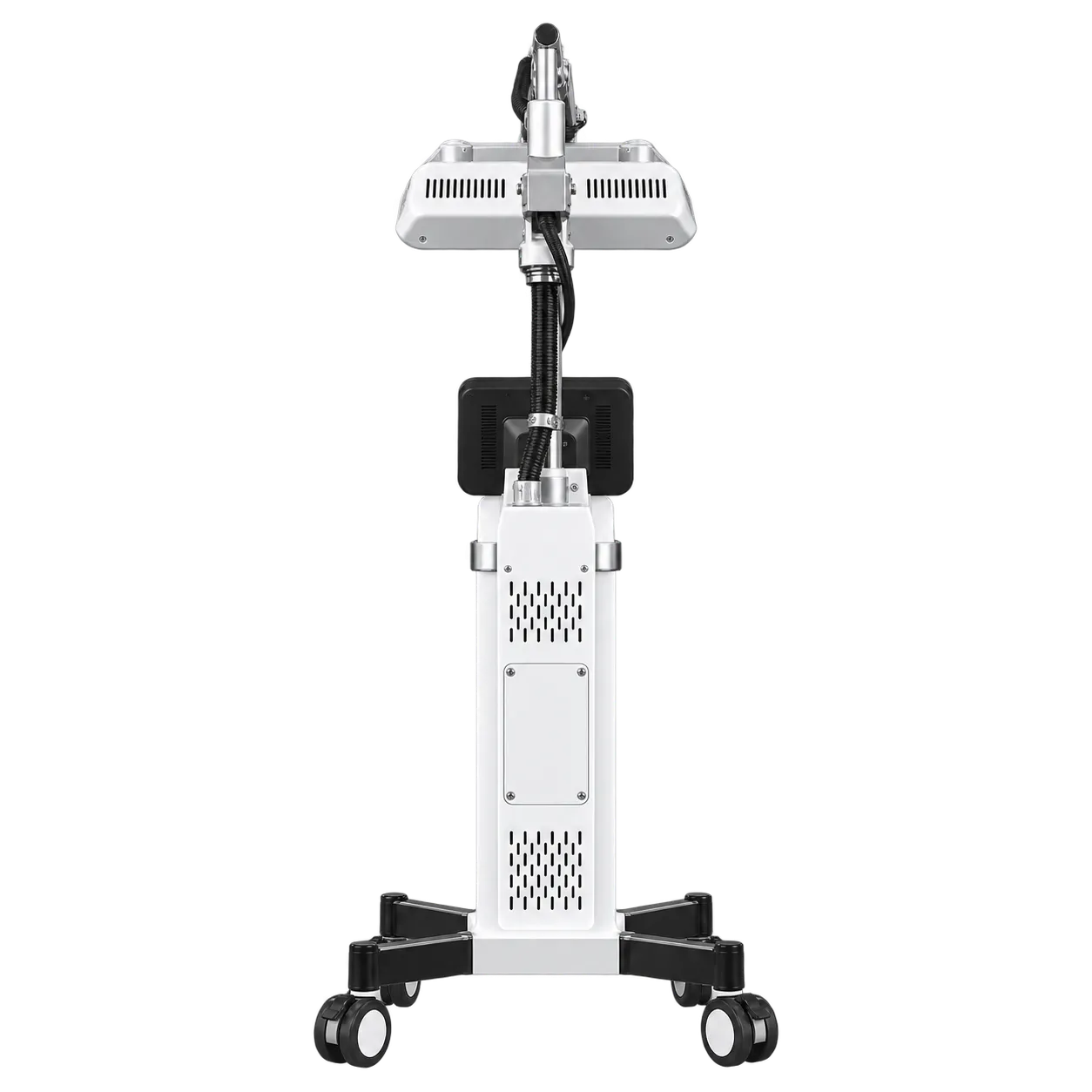
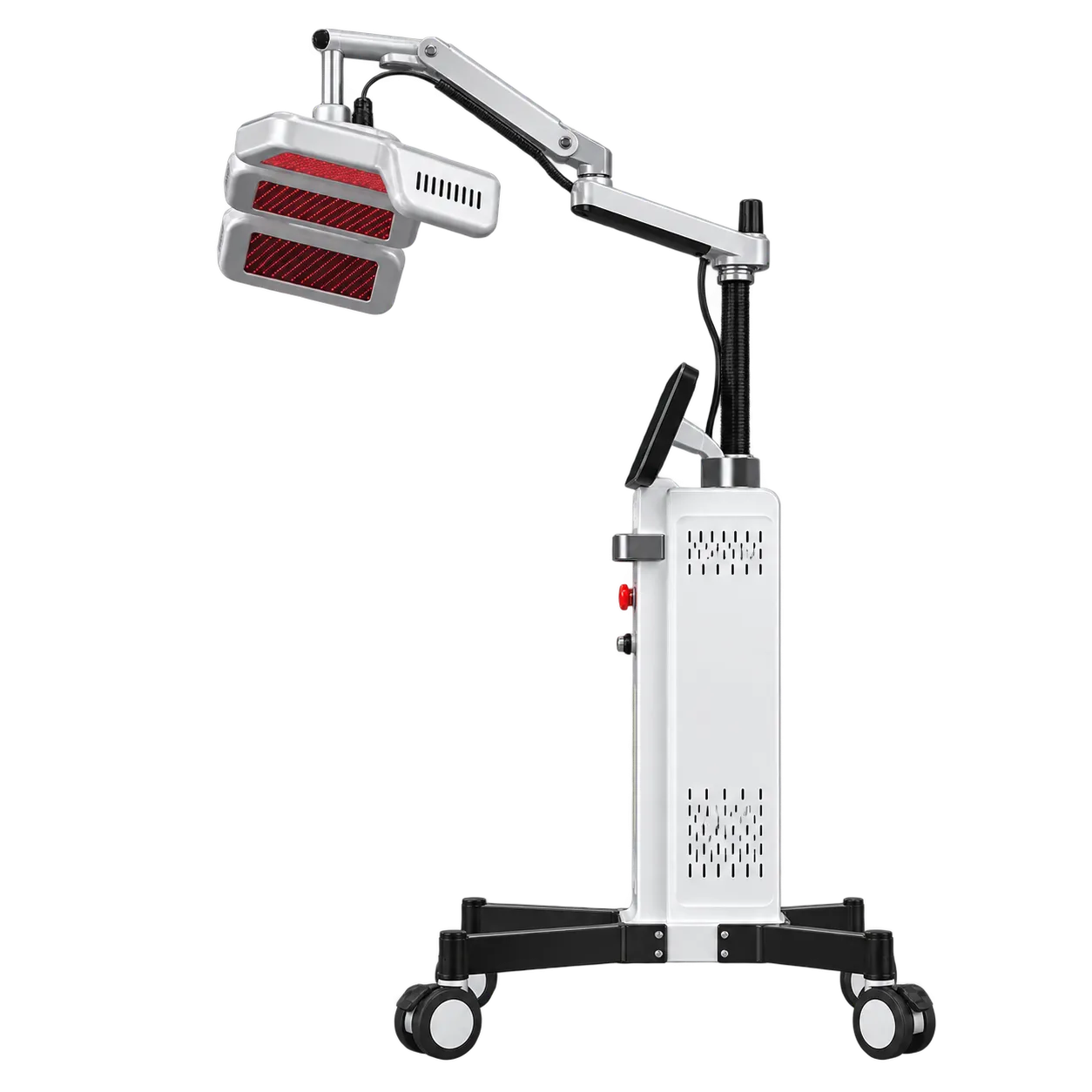
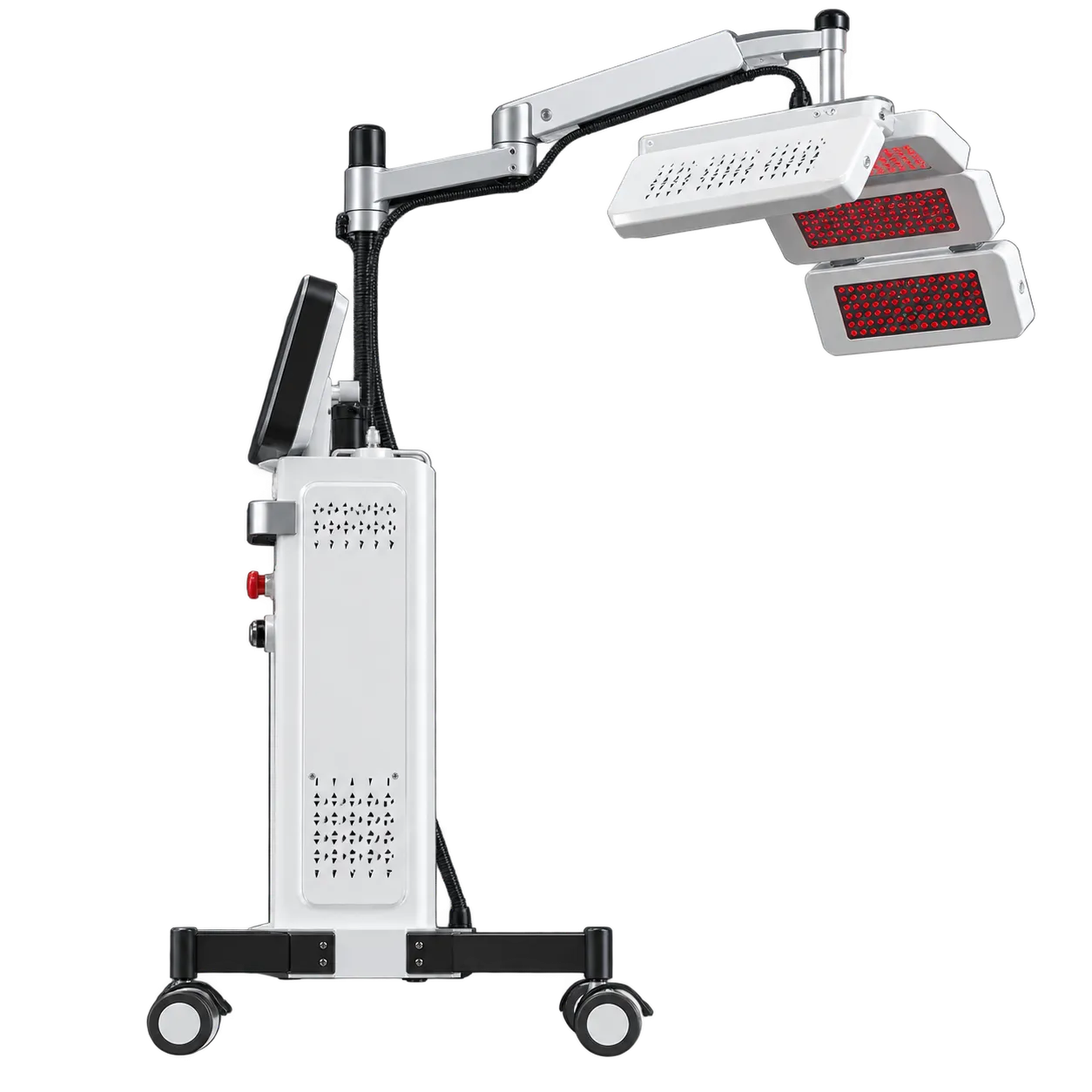
The LP100 serves three main jobs in an aesthetic practice. First is calming: yellow, orange, and red settings are widely used to calm redness and sensitivity, including after peels, microneedling, or laser treatments when clients want comfort during recovery. Acne-prone skin comes second, with blue settings used alongside extraction facials and home care. General skin quality is the third, with red light sessions sold as a regular glow or maintenance treatment. Because the three panels open flat, the same tower also treats the back, chest and shoulders. Back acne sessions and post-waxing calming are common body uses, and both can run while the therapist prepares the next room, so the tower earns its floor space across a full working day.
The evidence calls for measured claims. The 2016 Cochrane review of light therapies for acne included 71 randomised trials, mostly small, with a median of 31 participants each. It concluded that high-quality evidence was lacking and that certainty for blue light was low. Studies of red light for skin texture are similarly small and vary widely in wavelength and dose, so a practice should present LED as supportive care. Results depend on the delivered dose, so it's important to obtain the LP100's irradiance figure.
Beauty salons, day spas, aesthetic clinics and dermatology practices are the likeliest buyers, with clinics able to extend use to prescriber-led photodynamic therapy. Groups purchasing through formal procurement routes will want documentation in hand before installation. The conformity documentation those procurement routes require is issued by the manufacturer and shared by the enquiry team.