
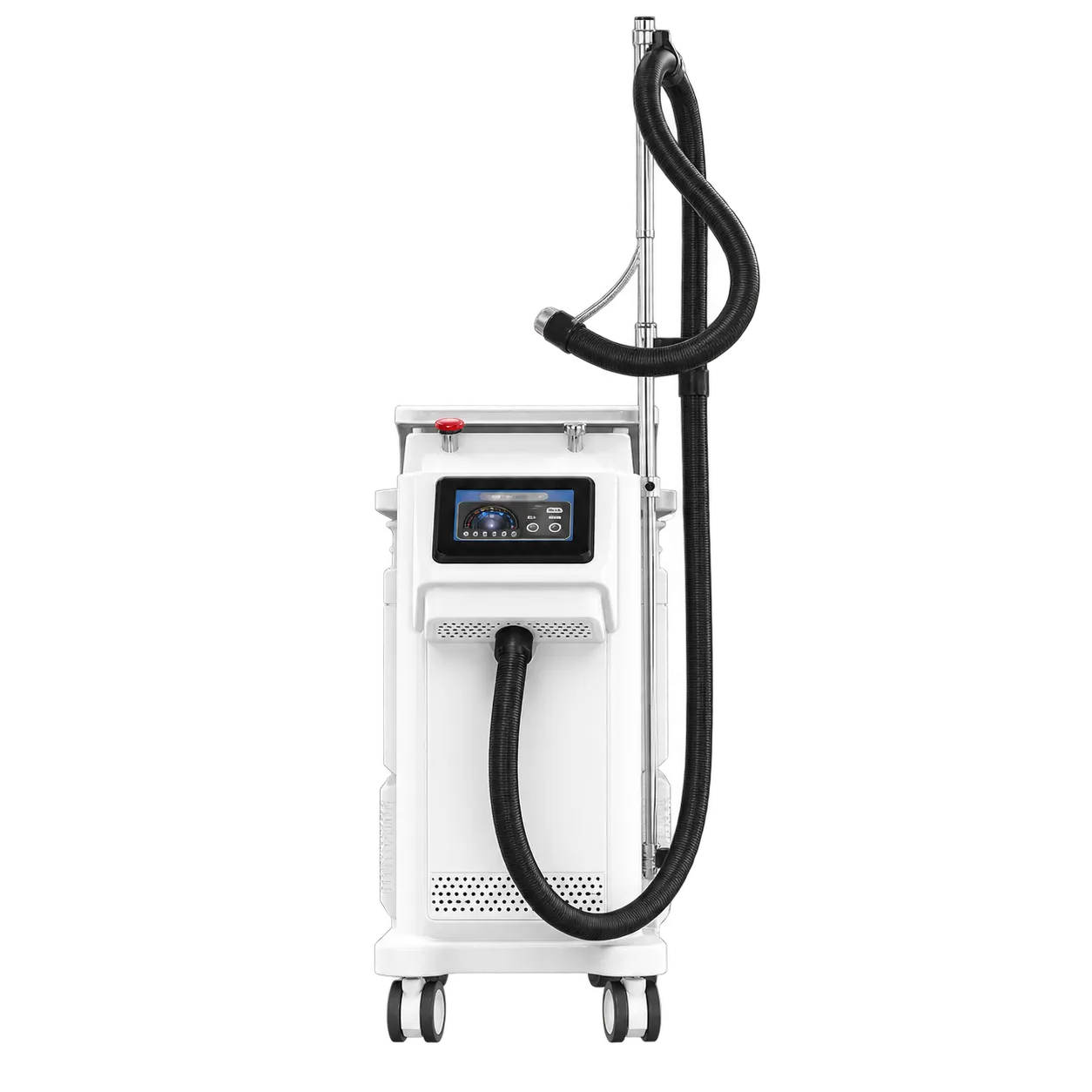
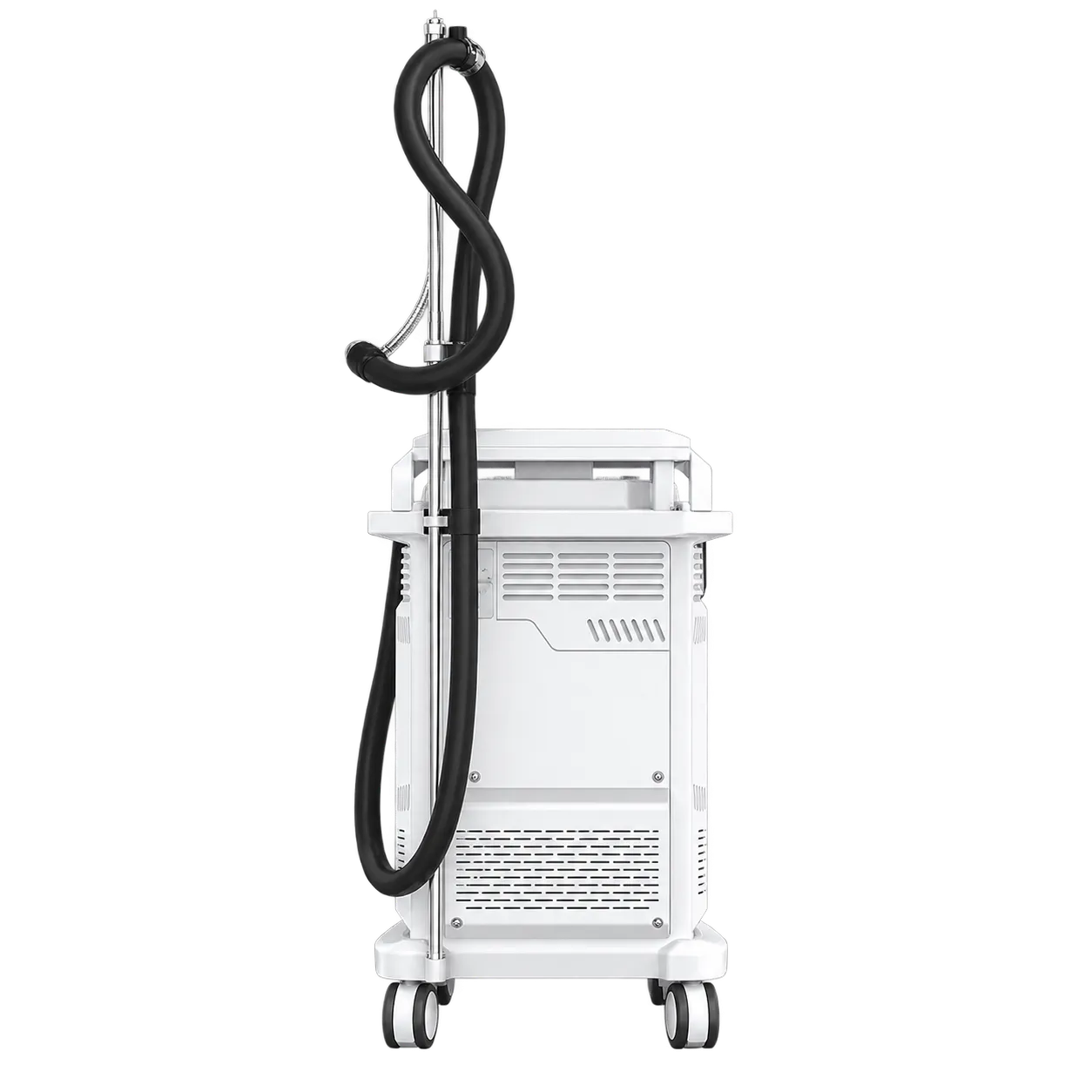
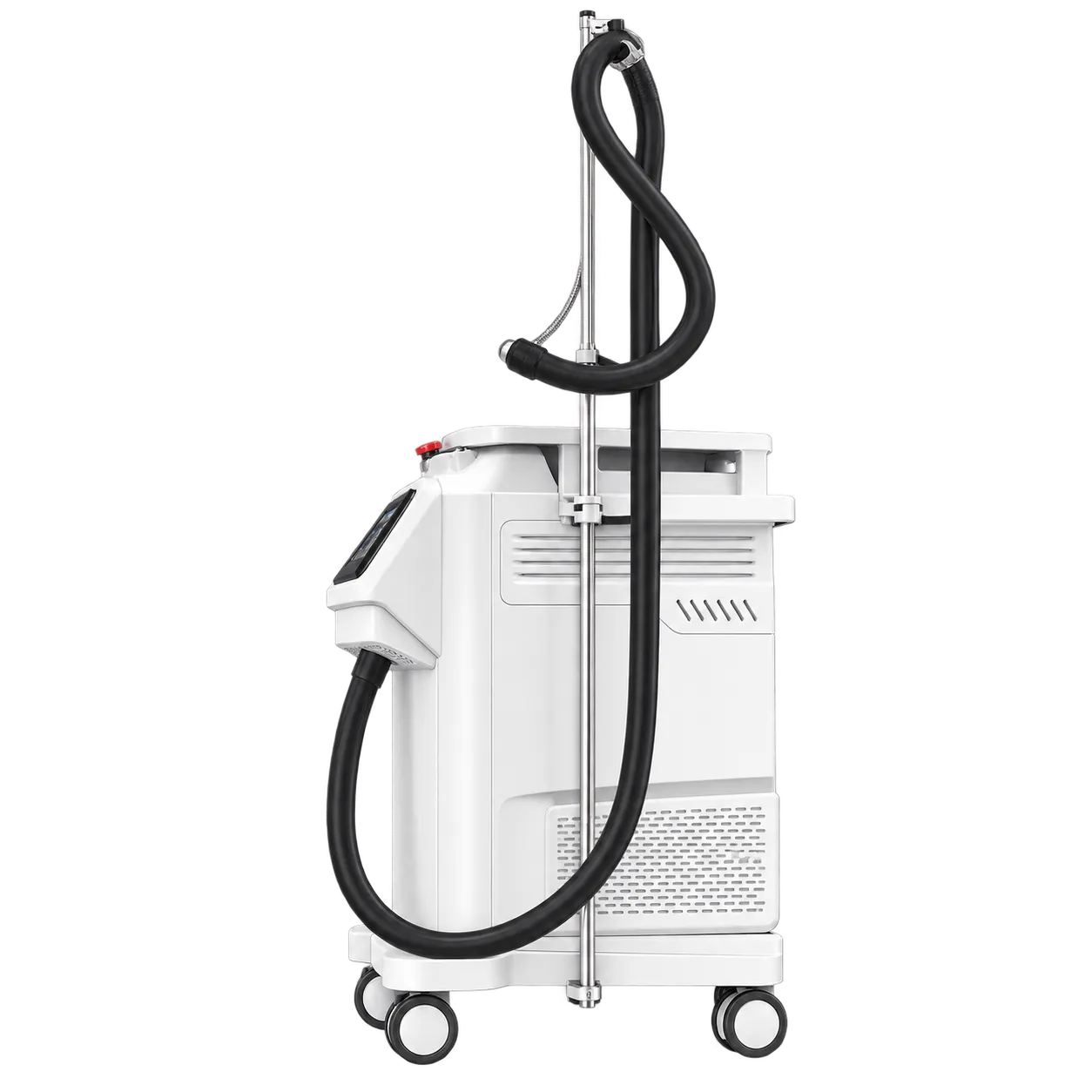
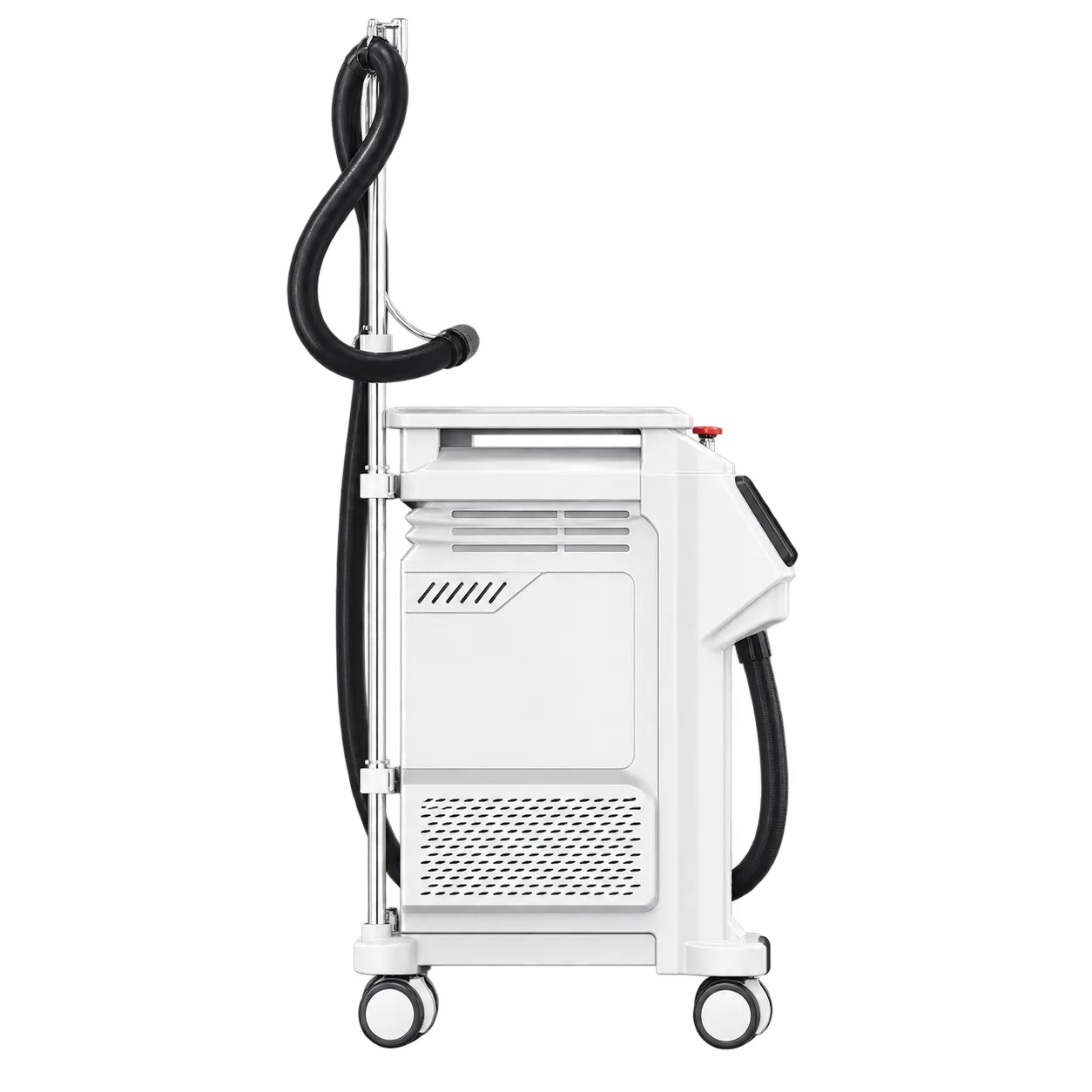
The AC1 supports almost every heat-generating treatment in an aesthetic or dermatology clinic. Tattoo removal with Q-switched or picosecond lasers is a classic use; repeated pulses over a dense design can be uncomfortable, and cold air keeps sessions tolerable. Fractional resurfacing, both ablative and non-ablative, benefits from pre-cooling and continuous cooling. Hair removal with diode lasers or IPL, vascular work on facial veins, and radiofrequency microneedling also run more comfortably with a cold air stream. After treatment, a few minutes of cooling helps settle heat, redness and swelling. Because the chiller is portable between rooms, a clinic can share one unit across several treatment rooms on lighter days and dedicate it to the busiest laser room when demand peaks.
The published evidence for forced cold air focuses on comfort. In a prospective split-face study of fractional CO2 resurfacing, adding cold air to topical anaesthetic cut patient-reported pain from 7.47 to 4.27 out of 10, and three of 15 patients withdrew from the uncooled side. Earlier side-by-side work on CO2 resurfacing reported a significant pain reduction with cooling, and a review of pulsed dye laser treatment found fewer thermal side effects. These studies used other chillers, so they describe the method and not the AC1 itself.
Laser clinics, dermatology practices, tattoo removal studios and multi-device aesthetic clinics are the likeliest buyers. Group operators buying through formal procurement routes will expect documentation before installation, including refrigerant details for F-gas records. The conformity documentation those procurement routes require comes from the manufacturer and is shared by the enquiry team.