

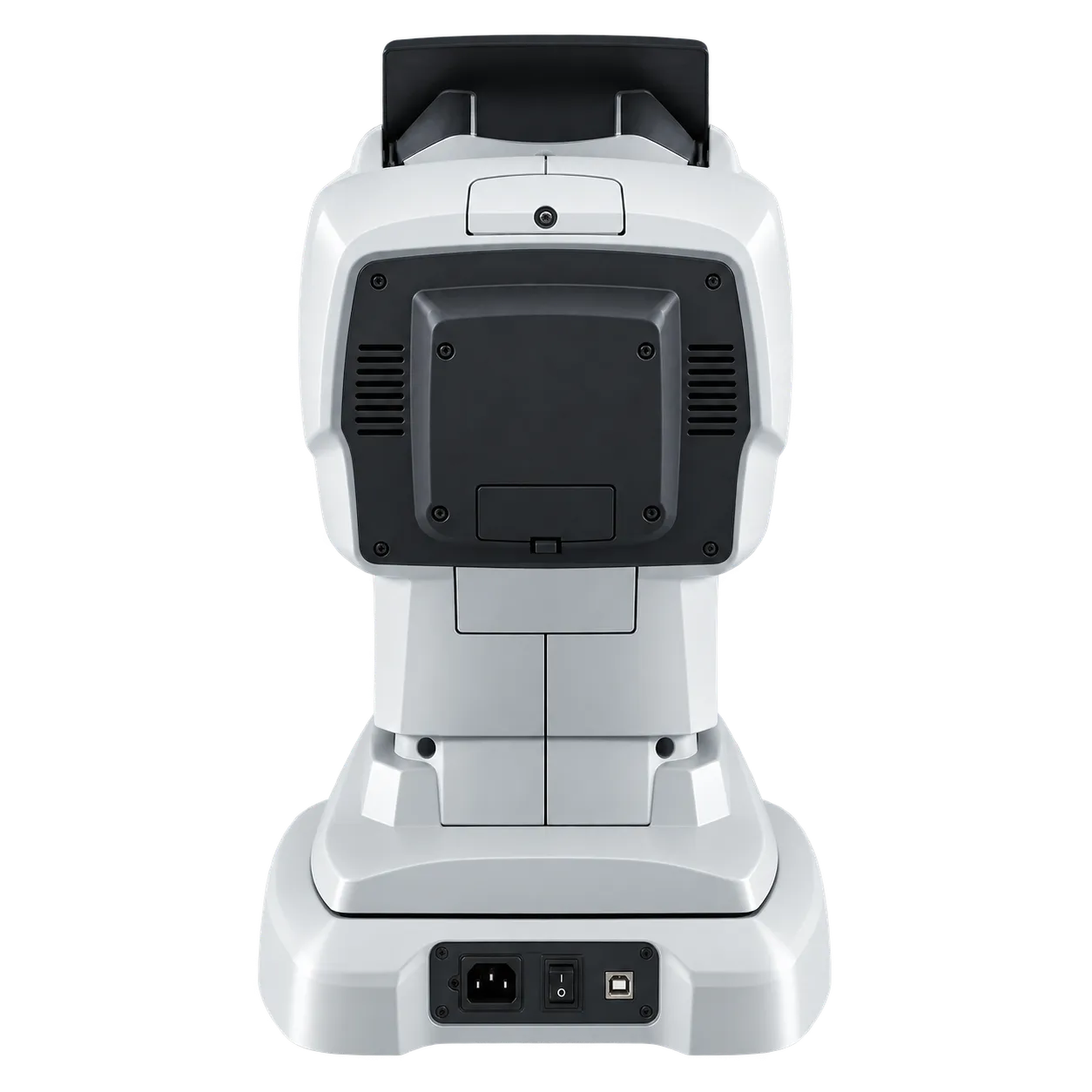
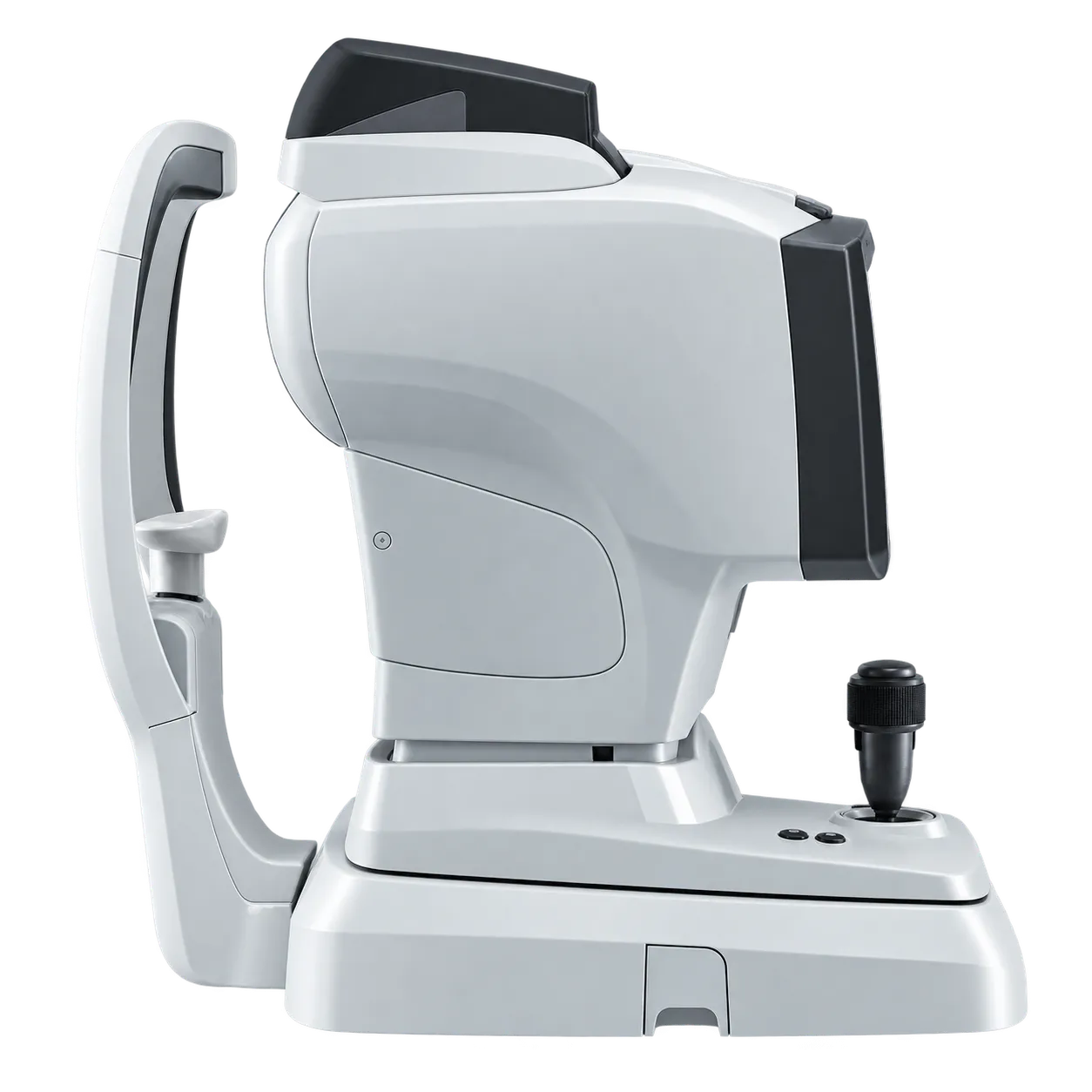
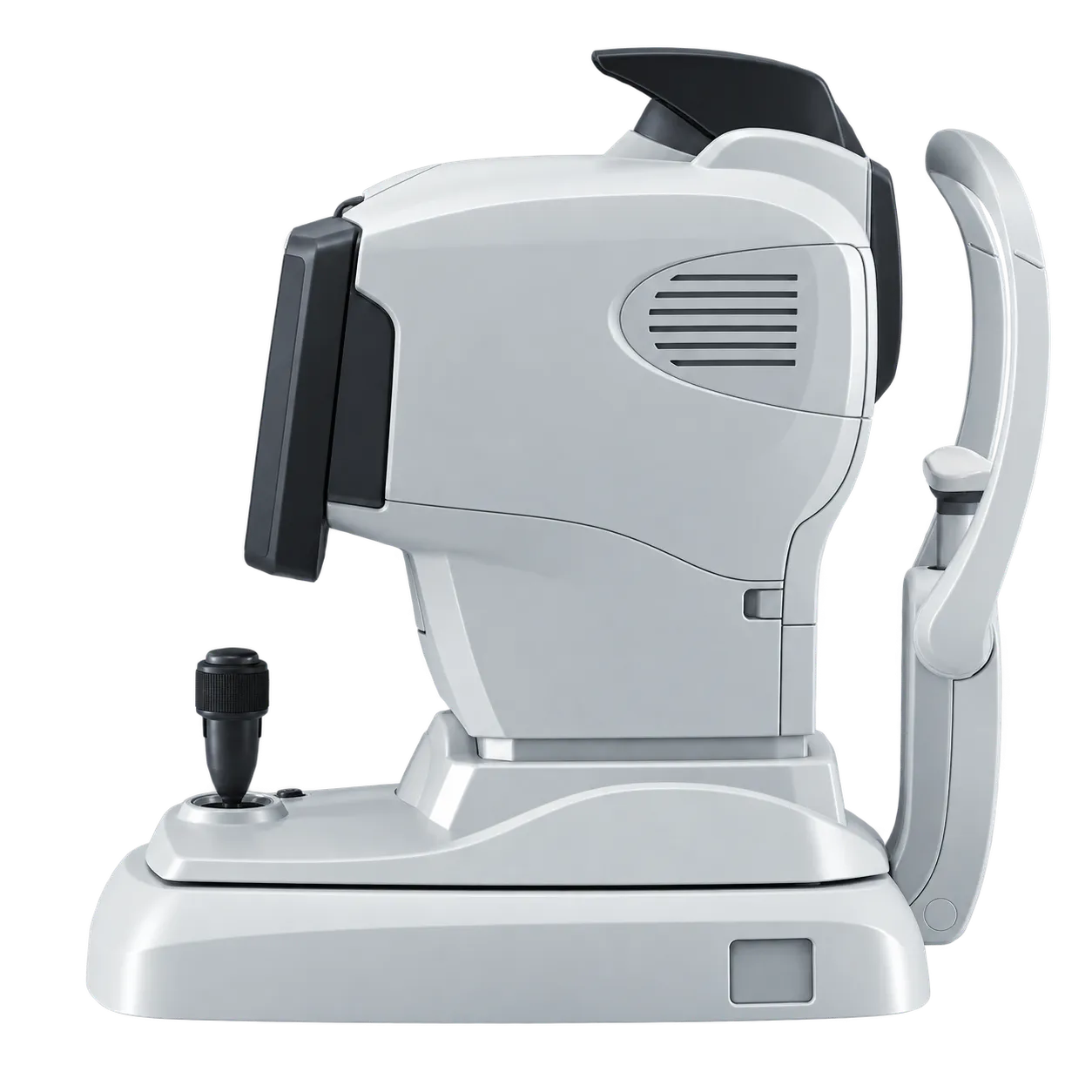
Ophthalmology clinics, eye hospitals, cataract and refractive surgery centres, and pre-operative assessment clinics use the AL-Scan to prepare patients for cataract surgery. Ophthalmic technicians, optometrists, and nurses usually take the measurements, and surgeons use the results to choose the intraocular lens. The quick sequence suits pre-assessment lists where many patients are measured in one session.
The value lies in how smoothly the assessment runs. 3D auto tracking and auto shot capture six parameters within 10 seconds, and the IOL power appears as soon as the measurement ends. Surgeons who register their lenses and results benefit from constants optimised for their own outcomes, with room for 100 IOLs and 50 surgeons. For toric cases, the clearest of several assist images carries a digitally marked astigmatic axis to guide alignment in theatre.
Difficult eyes stay within the same routine. Patients who have had refractive surgery can be calculated with Camellin-Calossi or Shammas-PL on the instrument, or with Barrett True-K through the optional AL-Scan Viewer for NAVIS-EX. Where a cataract is extremely dense, the optional built-in ultrasound biometer measures axial length and corneal thickness without a separate ultrasound unit. Scheimpflug imaging of the lens and the double mire ring keratometry image give the surgeon a view of the anterior segment before deciding.
Results can be printed on the built-in thermal printer or transferred over LAN and USB, and practices that also monitor myopia can add the MV-1 Myopia Viewer to follow axial length over time. With a tilting 8.4-inch touchscreen and a 100–240 V mains supply, the instrument fits in a pre-operative assessment room or a consulting room.