
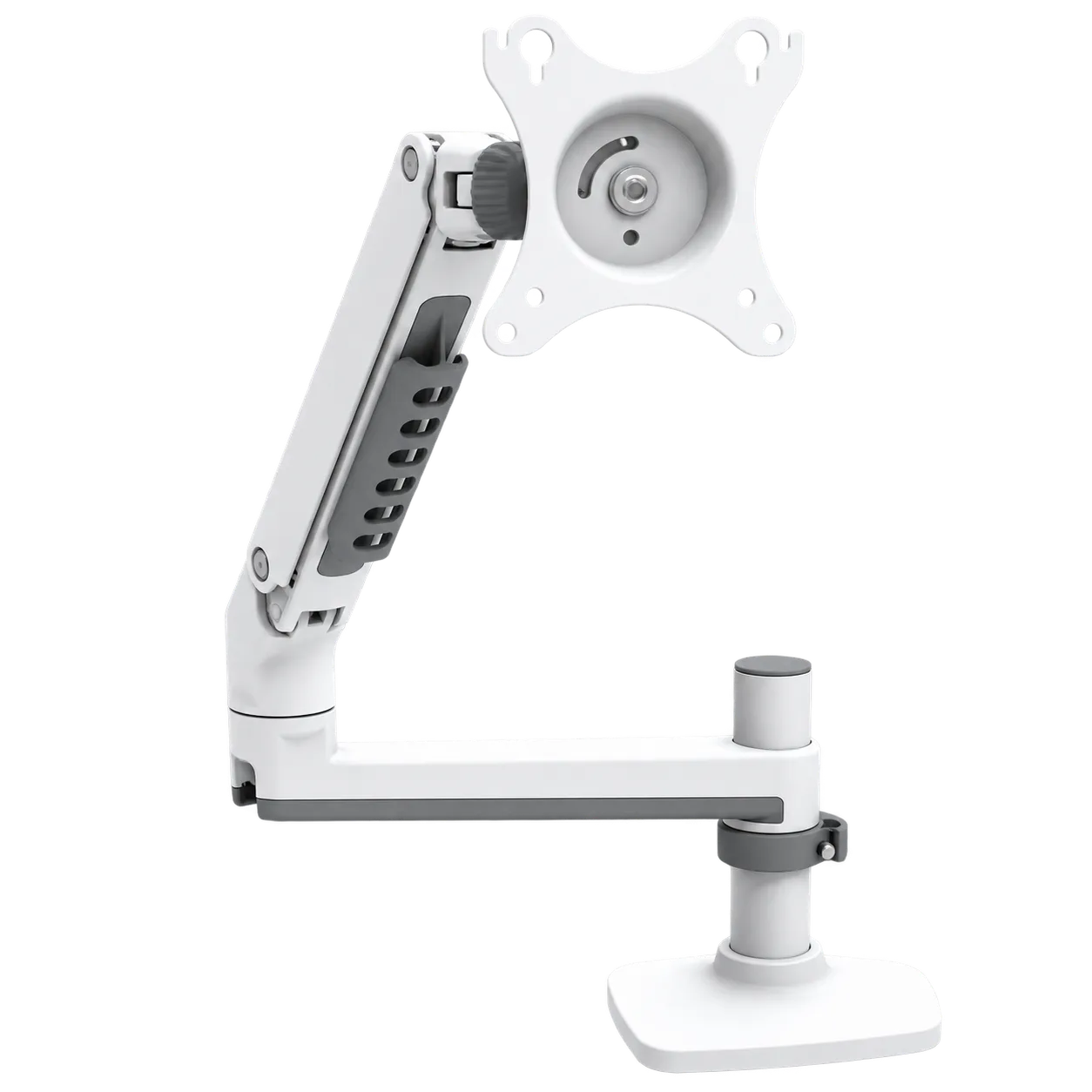
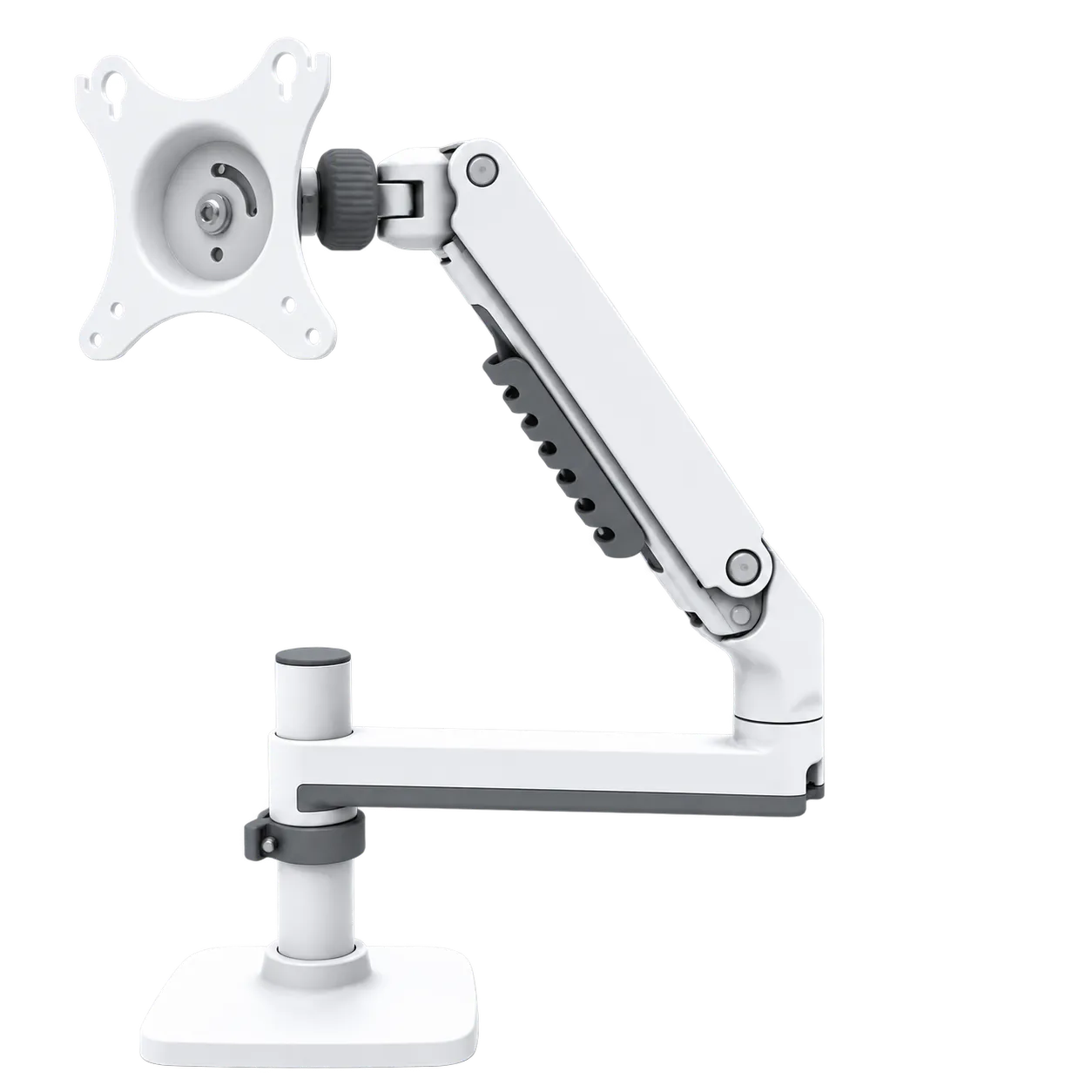
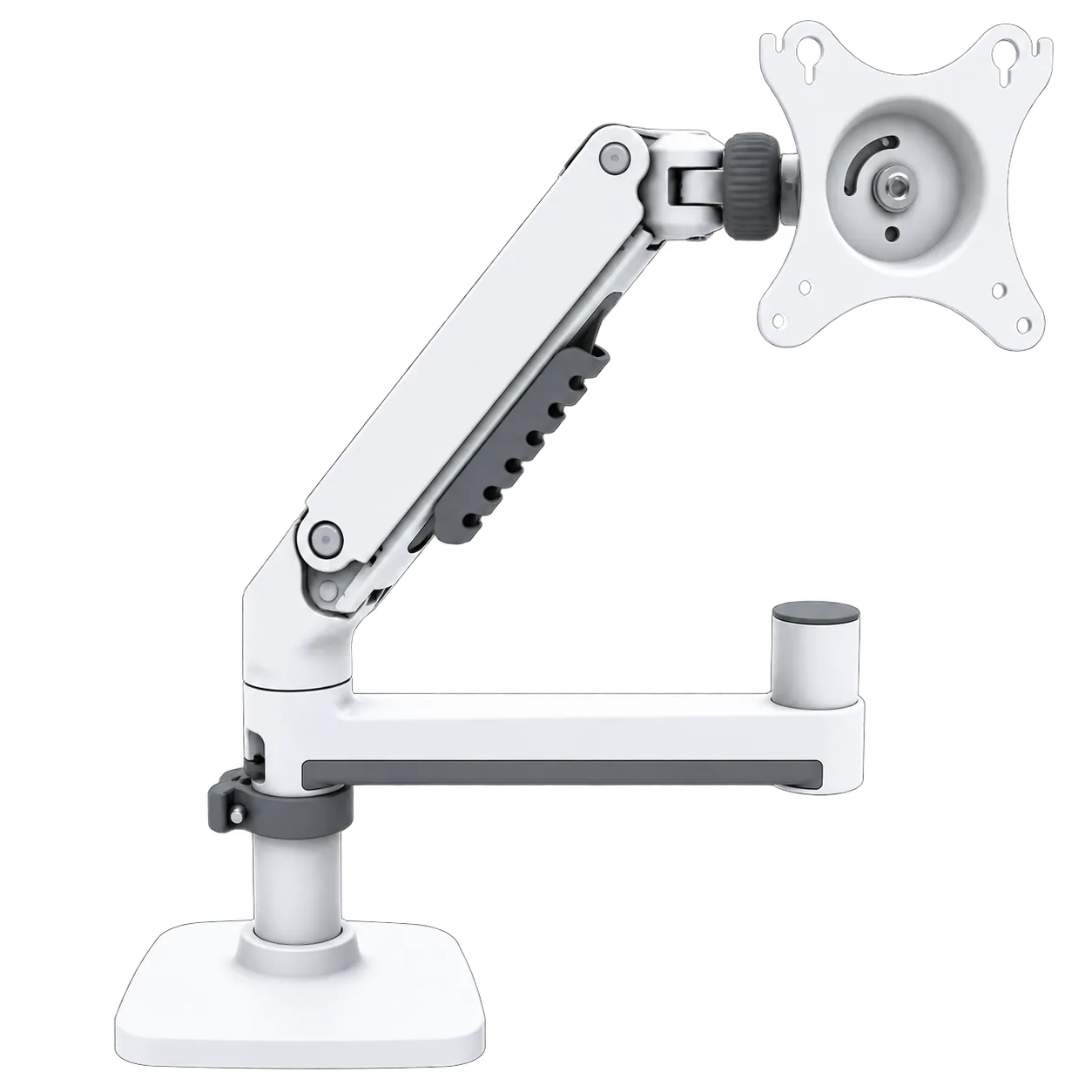
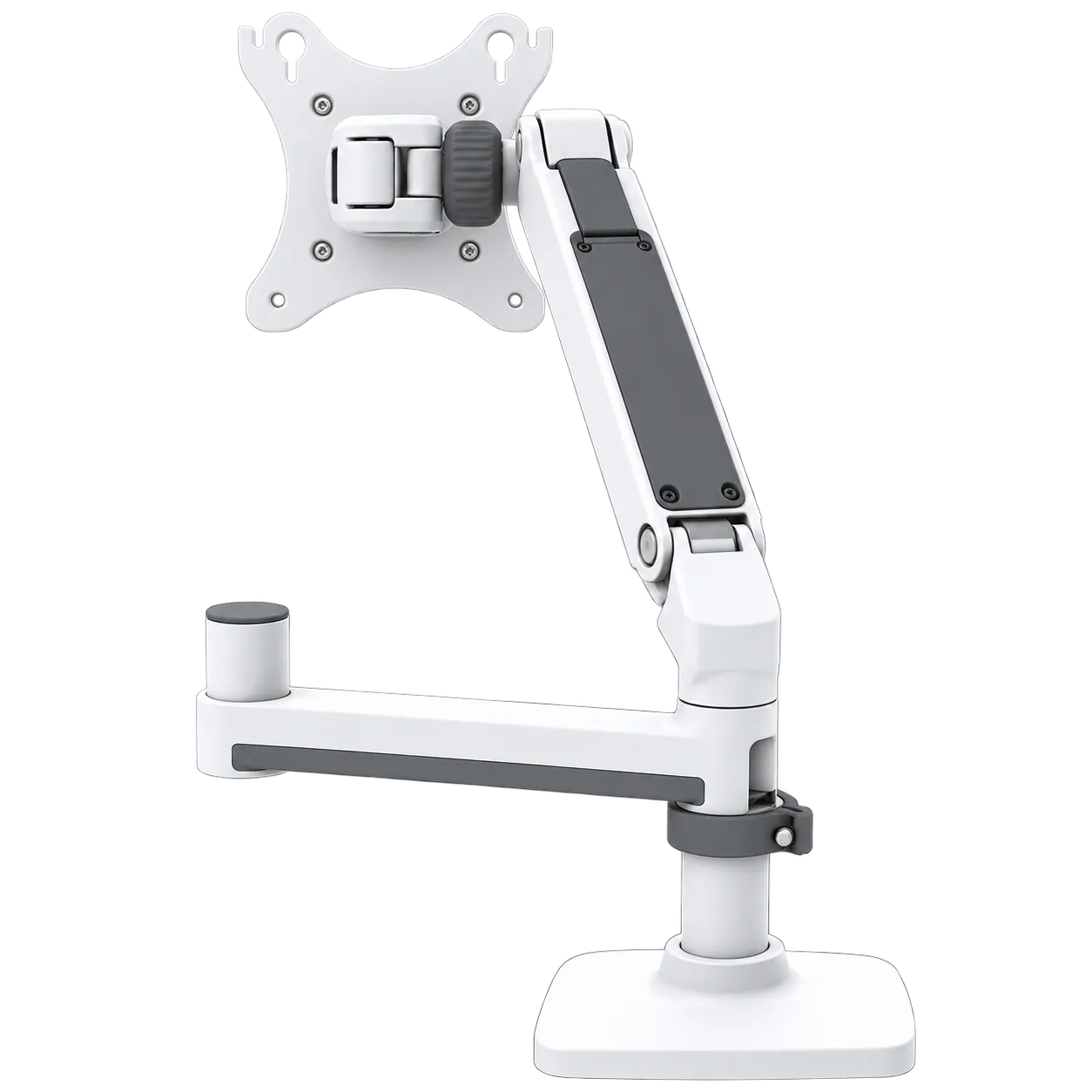
The SH-8012 belongs in a position that several people use. Nurse stations, ward terminals, clinic room desks, reception and booking points, prescribing terminals, and reporting workstations are all shared across a shift by staff of different heights who will not adjust furniture to get comfortable. They will move a screen, and a published movement envelope makes that worth doing rather than a struggle.
The regulatory backdrop is unusually direct here. The Schedule to the Display Screen Equipment Regulations requires that a screen swivel and tilt easily and freely to suit the operator, and allows for a separate base or an adjustable table to achieve it. HSE guidance adds that height adjustment devices are not essential but are a useful way to set the screen correctly for the worker, especially where different people use the same workstation. That is the case for this product, as stated by the regulator rather than by a manufacturer.
Freeing the surface is the second reason departments buy arms, and it is the one this sheet cannot support. In a clinic room, the desk does double duty as a writing surface and an examination bench for notes and forms, and an arm's value is that the screen swings away when the surface is needed. Without a published reach, nobody can tell in advance how much surface comes back.
Buying runs through the usual routes. NHS Supply Chain, trust framework agreements, Integrated Care Boards, private hospitals and clinics each apply their own standing financial instructions, and workstation equipment is normally cleared by health and safety or occupational health rather than infection prevention. The manufacturer issues documentation for the load-bearing and finish supplier, and the seller provides it.