
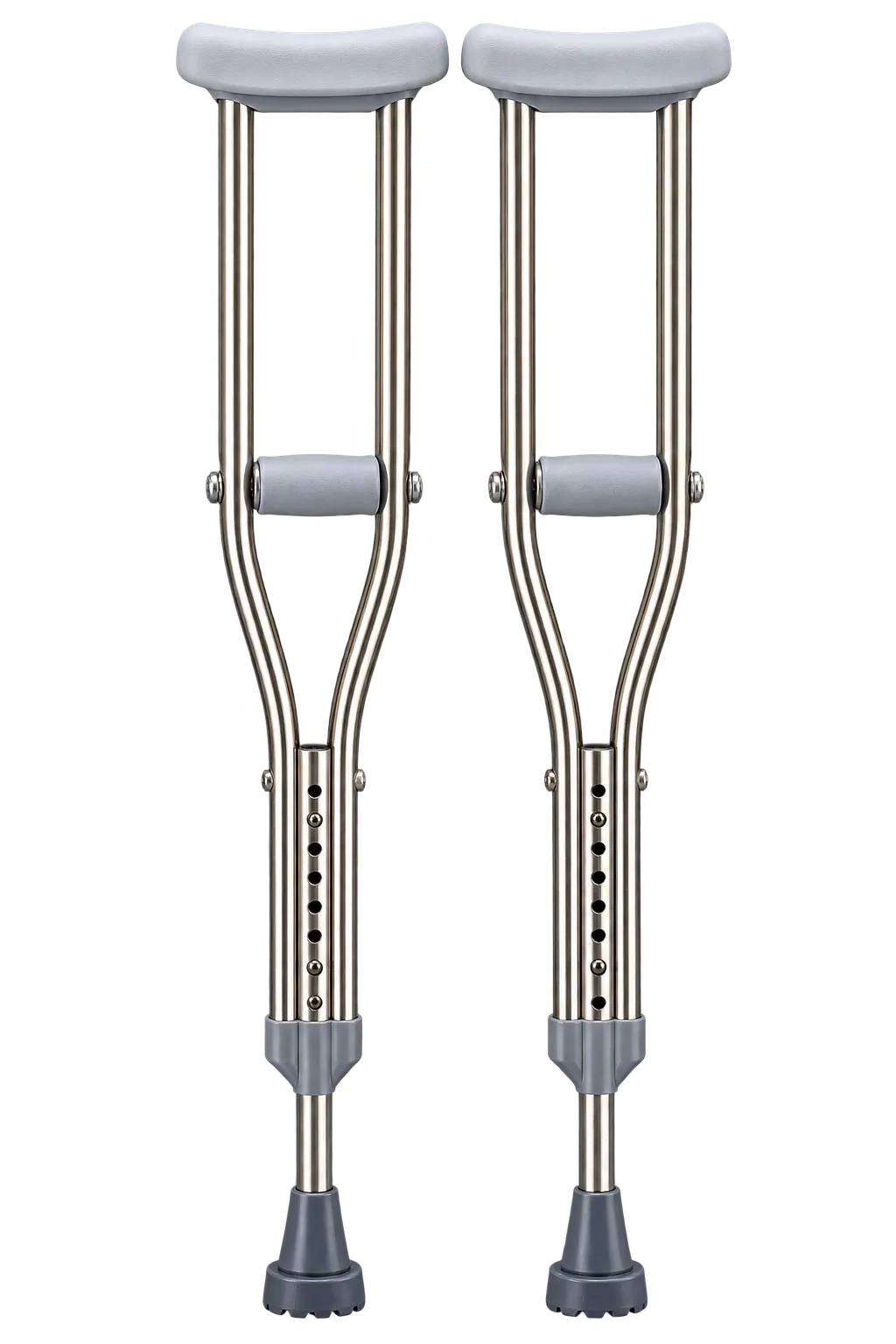
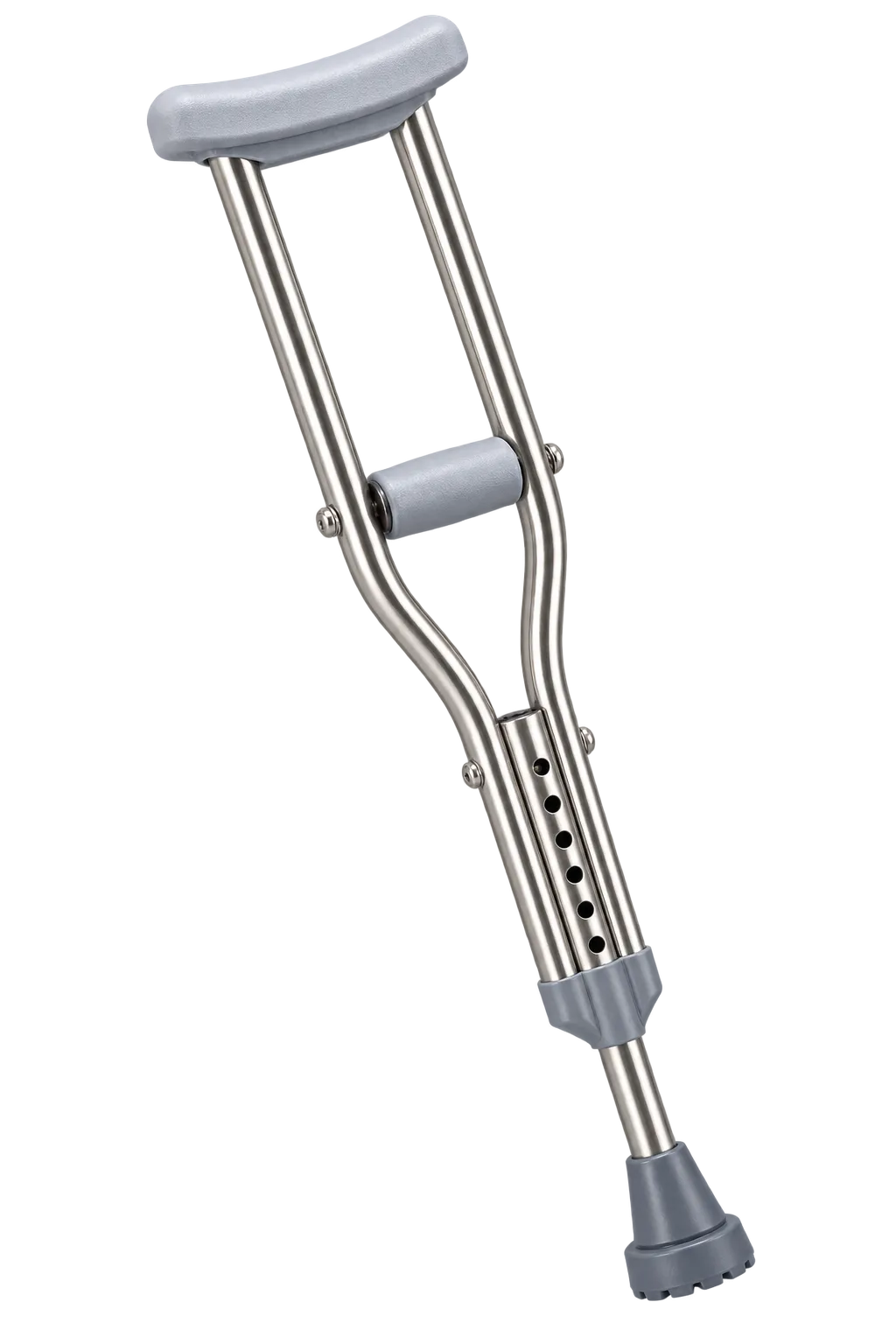
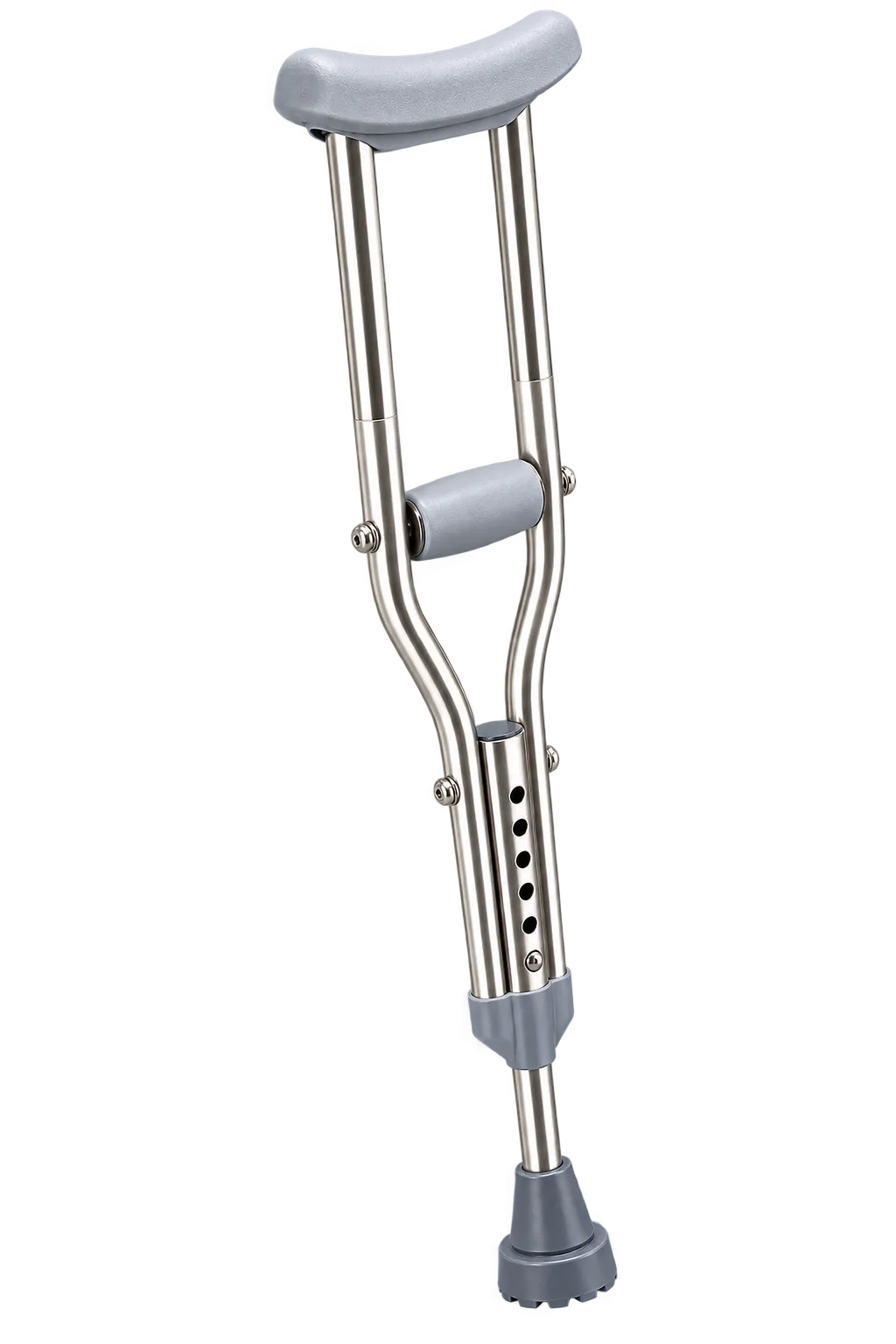
Falls prevention should look at the tips rather than the frames. Everything a crutch does passes through two small patches of rubber, and on smooth wet surfaces the compound and contact area decide the outcome more than anything else about the product.
Community and outpatient services should ask which surfaces the tips are intended for. A trip from a bedroom to a car park crosses carpet, a doormat, vinyl, a threshold strip, a wet ramp and pavement, and a tip that grips on one may not on another.
Equipment stores need a wear limit and a checking routine. Tread disappears gradually, which is exactly why it goes unnoticed, and the smooth hardened face left behind is the condition most likely to slip.
Whoever issues the pair should still arrange clinical fitting, since the tips are only the interface — the height determines where the load goes. Routes across NHS trusts, local authority equipment services and independent providers each ask for their own evidence. The conformity documentation those procurement routes require is issued by the manufacturer and provided by the seller.