
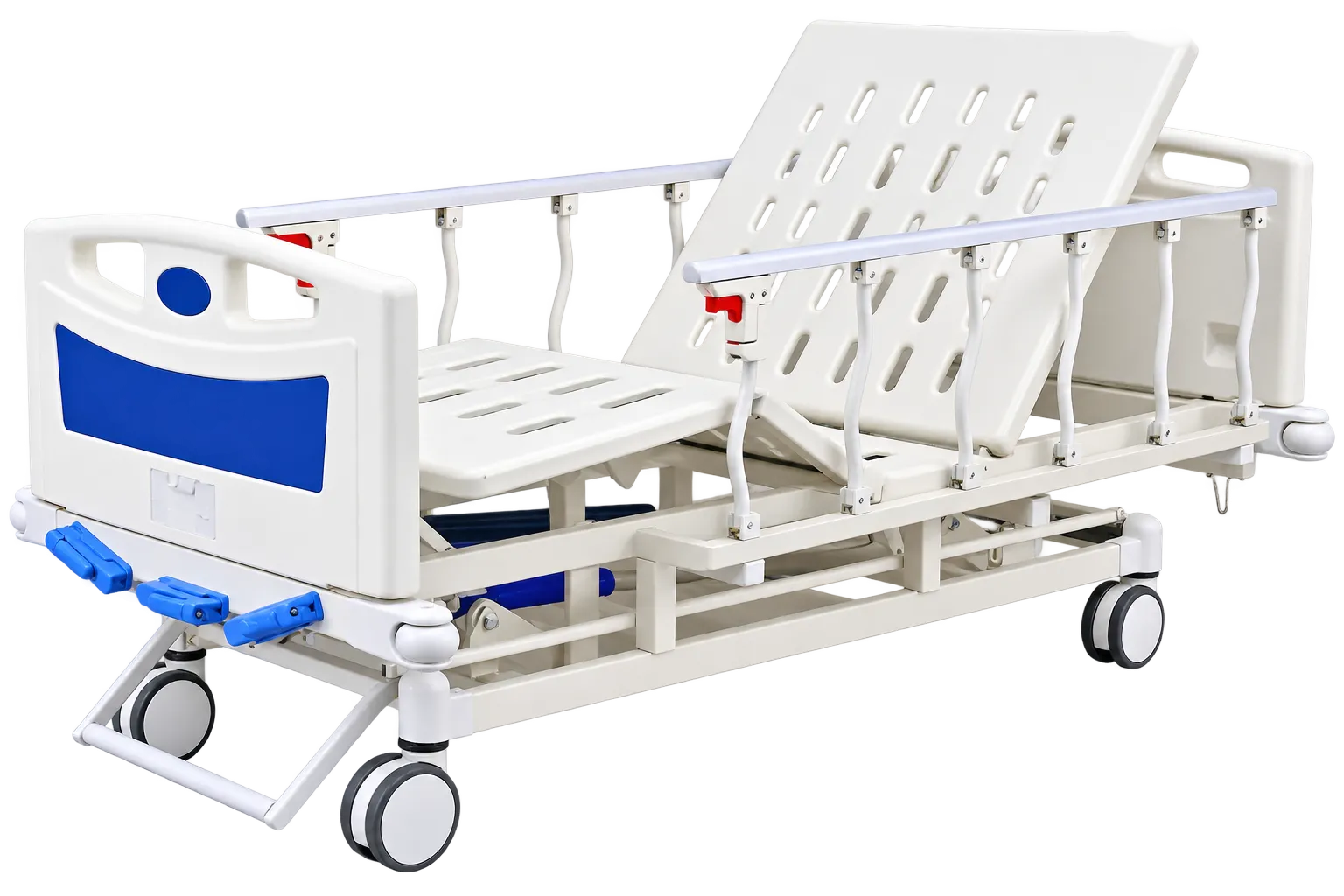
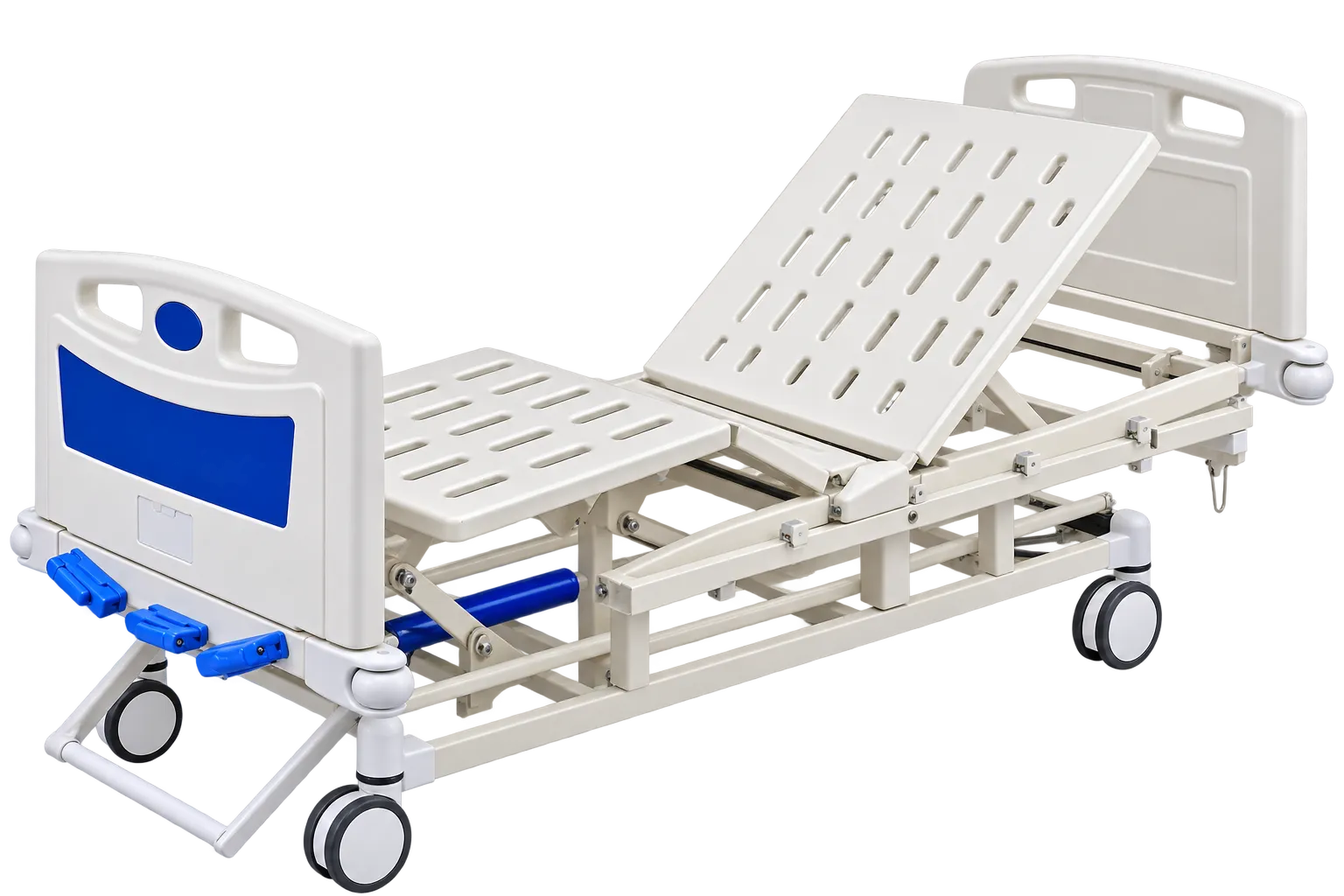


Care homes and nursing homes are the natural setting for this bed. Residents in these rooms are usually assisted rather than independent, movements are made by a carer standing at the frame, and the room is a bedroom before it is a clinical space. Three hand-driven movements cover the daily pattern: backrest up for meals and conversation, leg section adjusted for comfort and oedema, deck height set for the transfer and then lowered again for the night.
Community and domiciliary placements suit it for the same reasons. There is no mains lead across the floor, no transformer under the frame and no charging routine for a district nursing team or a family carer to manage. In a room where sockets are already committed to a pressure-relieving pump or a nebuliser, a frame that asks for none of them is easier to place.
Step-down, rehabilitation and convalescent wards use beds of this type where the patient no longer needs powered profiling but still needs assisted positioning. The 0–75° backrest covers sitting upright for physiotherapy assessment, eating and respiratory positioning. The 0–40° leg section covers elevation. What it does not cover is tilt in either direction, so any pathway relying on head-down positioning or powered turning needs a different specification.
Surge and contingency stock is the other reliable use. A frame with no electronics can be stored for long periods, brought out for winter escalation or an outbreak bay, and returned to store without a battery conditioning regime or an electrical test before redeployment. Procurement routes covering NHS trusts, local authority equipment services and independent providers each ask for their own documentation. The conformity documentation those procurement routes require is issued by the manufacturer and provided by the seller.