
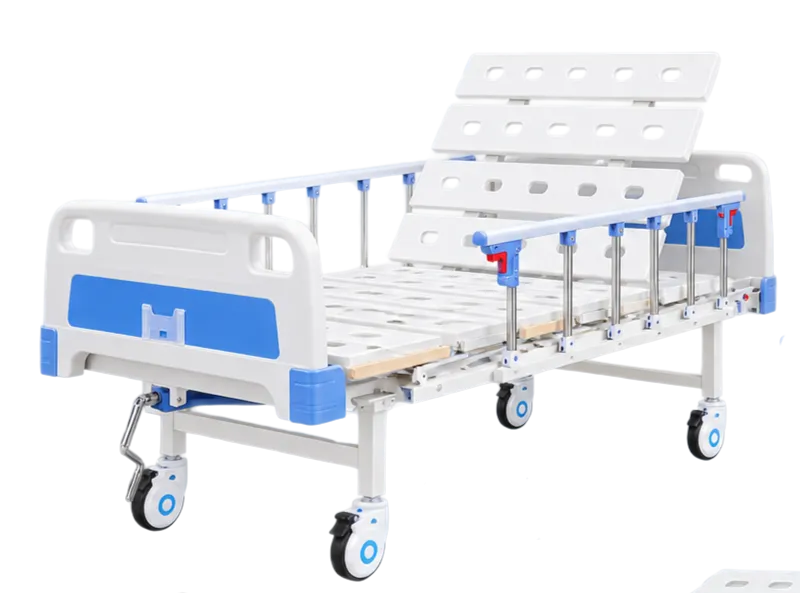
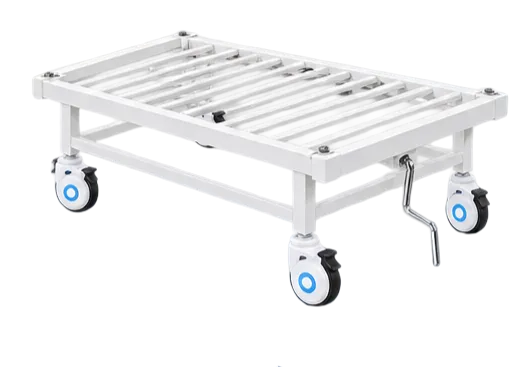
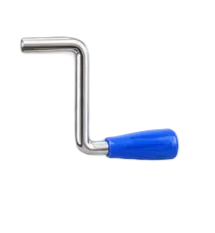
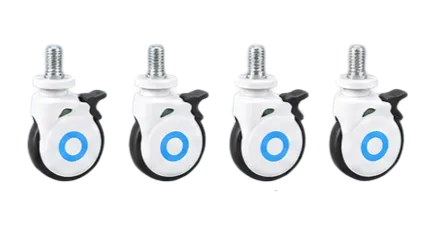
Admission and assessment areas suit a bed that moves easily and adjusts simply. A patient waiting for a decision needs the head raised and little else, while the bed itself may be repositioned several times in a shift as a bay fills and empties. Establish the braking arrangement before the first placement, because in a busy area the brake is applied and released far more often than the crank is turned.
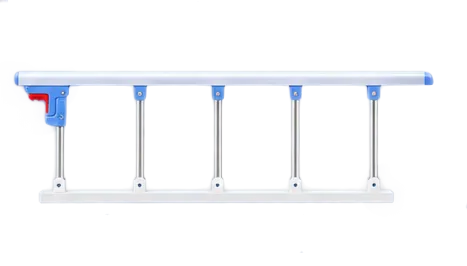
Ward bays and step-down areas use the same combination where positioning needs are modest and bed moves are routine. Four castors let one person reposition the frame without a lifting aid, and folding rails clear a doorway. Confirm the castor diameter and tyre material if the route includes threshold strips or a change of floor covering.
Care and nursing homes with occasional room changes get a frame that can be moved between rooms without an engineer, a socket or a charging routine. A single adjustment is quick to teach and works as well for a family carer as a professional one. Record the driven section and the deck height once, at purchase, so subsequent allocation is a lookup.
Across all three, the pre-use check is the document that matters, and it cannot be written until the braking arrangement is known. Procurement routes across NHS trusts, local authority equipment services and independent providers each ask for their own evidence. The conformity documentation those procurement routes require is issued by the manufacturer and provided by the seller.