
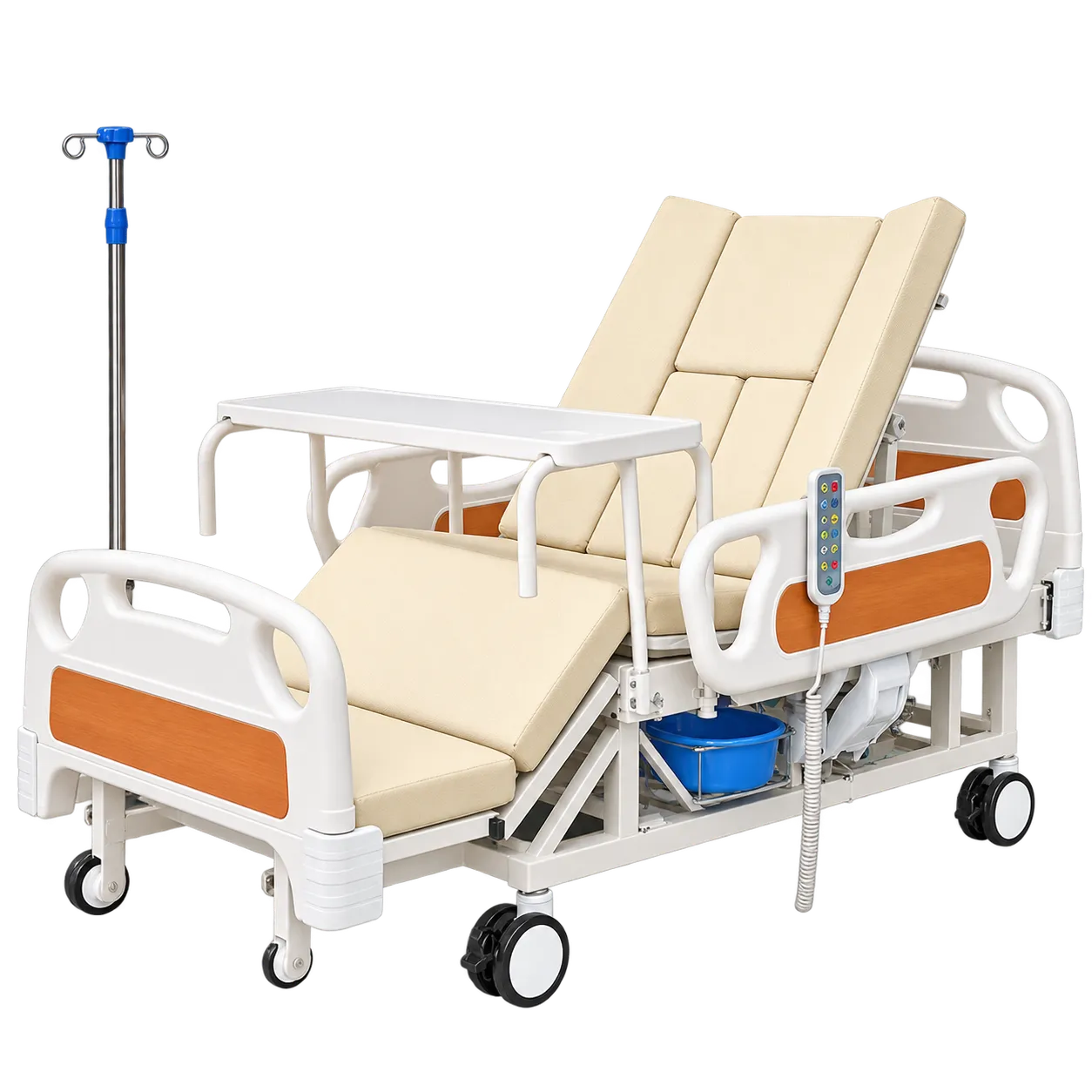


Equipment services and maintenance functions carry the weight of this one. A powered bed cannot be brought into a planned maintenance regime without knowing how many drives it has, what each does and how a failure presents. Obtain the actuator schedule at quotation and register it against the asset before the bed reaches a room.
Care homes and continuing care wards should ask the in-situ replacement question specifically. Whether a failed drive means a short technician visit or a returned bed determines whether a resident stays in their room, and that answer needs to exist before the first fault rather than during it.
Clinical teams need the failure behaviour rather than the failure rate. If a drive stops part-way through a movement, somebody has to know whether a manual override exists and how to bring the occupant back to a safe position. That instruction belongs at the bedside, not in a manual in an office.
Procurement should treat the actuator schedule as a deliverable alongside the quotation, since spares holding, service contract and downtime planning all follow from it. Routes across NHS trusts, local authority equipment services and independent providers each ask for their own evidence. The conformity documentation those procurement routes require is issued by the manufacturer and provided by the seller.