
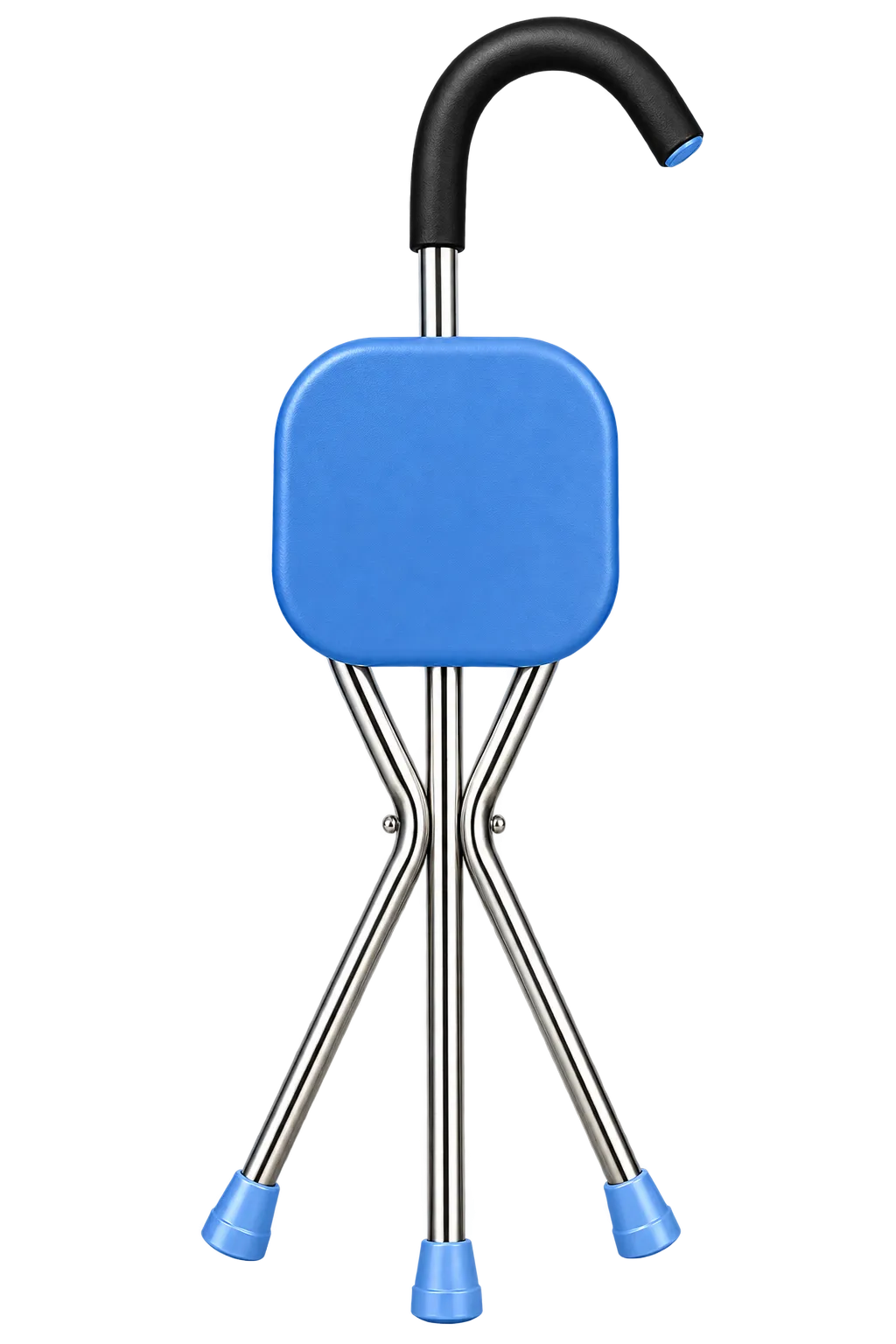
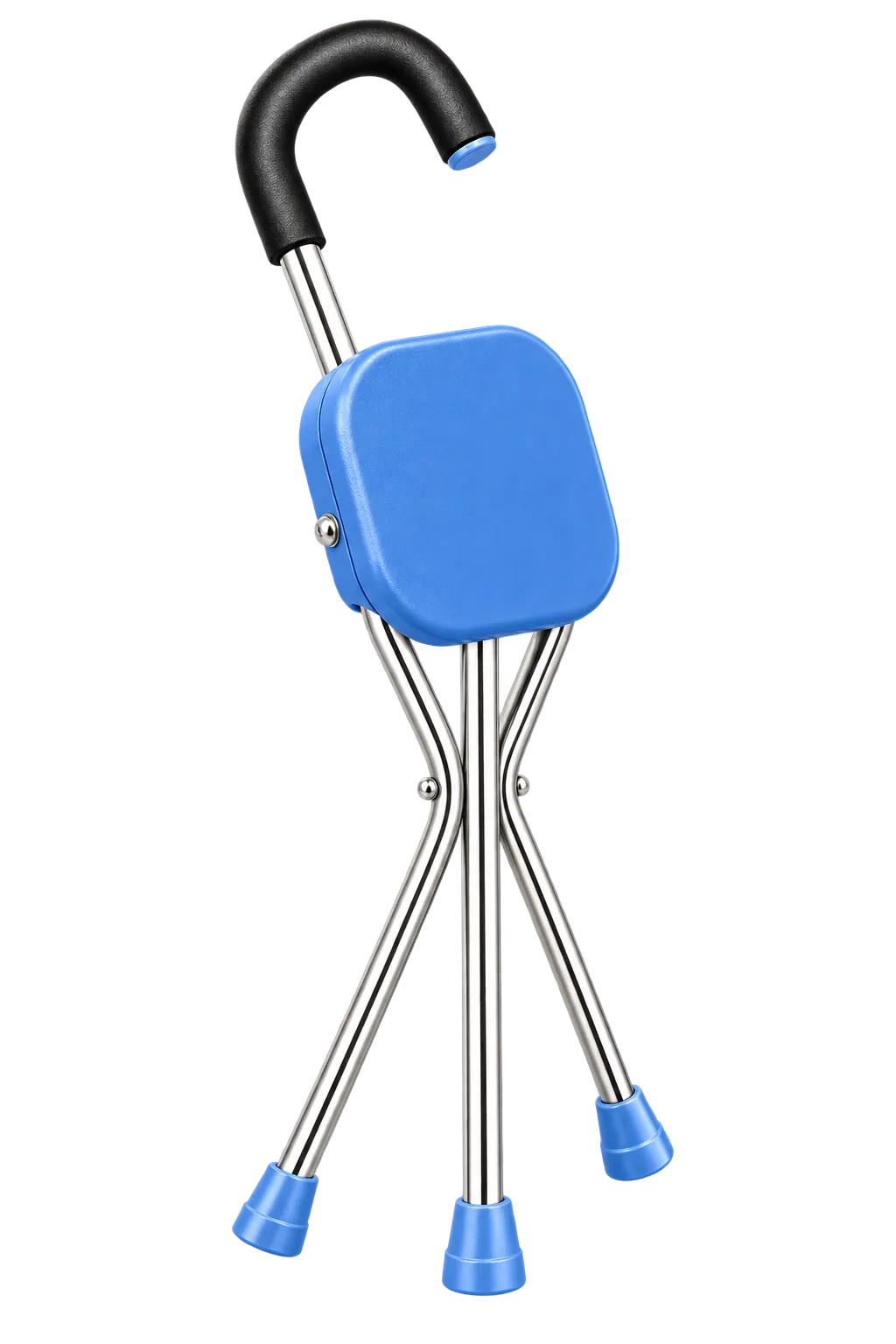
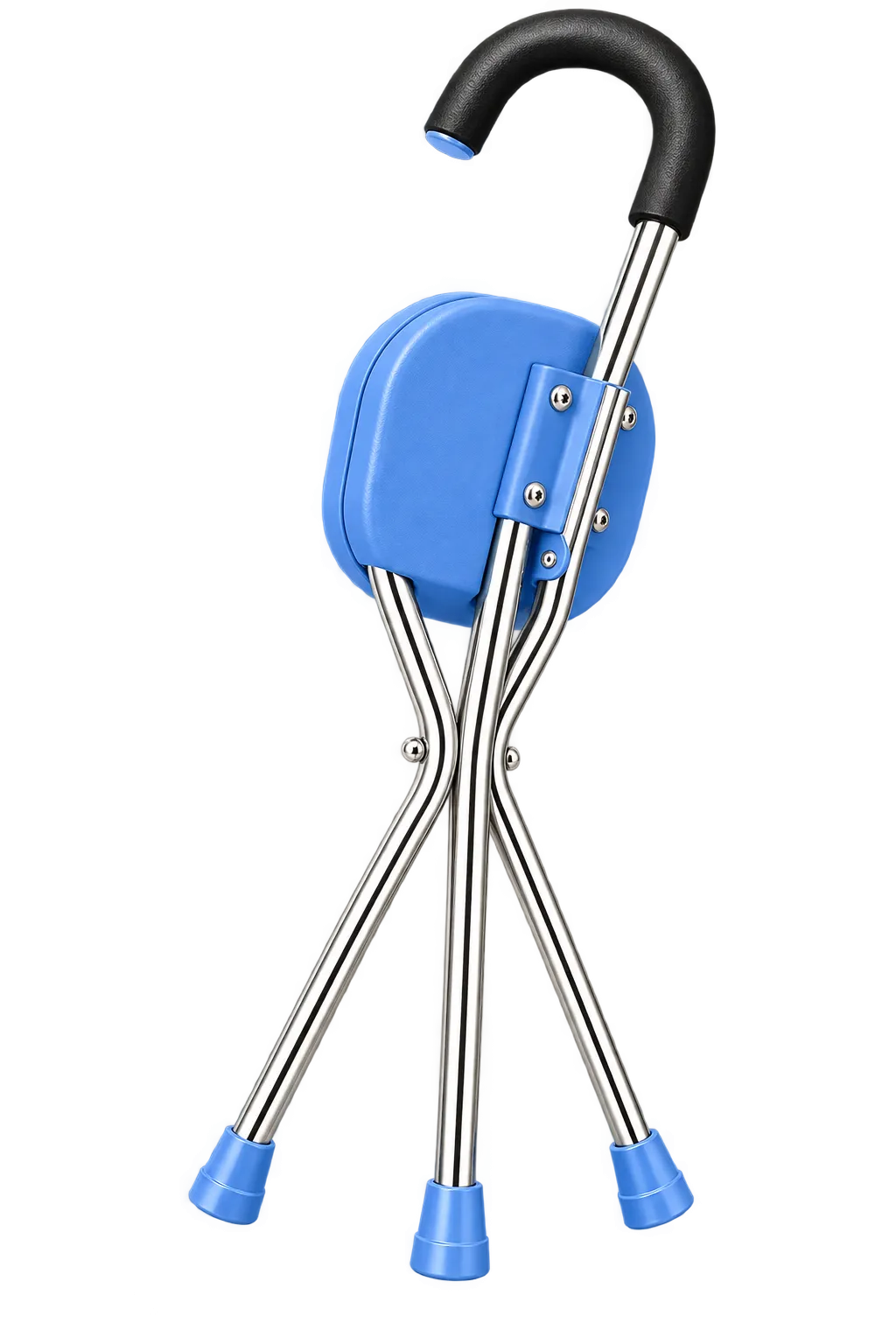
Whoever assesses this should sit on it first and note which way the seat faces. The shape somebody meets when they lower onto it blind is determined by an assembly decision nobody has documented, and it is easier to check than to explain afterwards.
Equipment stores should record the orientation alongside the issue, and check it if the product comes back and goes out again. If the seat is not positively located, orientation is something that drifts rather than something that stays.
Falls prevention should ask the footprint between outermost ferrules rather than assuming the splay looks wide enough. That triangle is the stability envelope, and weight travelling outside it is the failure mode.
Occupational therapy gets the useful part of the square shape: more support under the thighs for a given overall width, on a perch where every centimetre counts. Routes across NHS trusts, local authority equipment services and independent providers each ask for their own evidence. The conformity documentation those procurement routes require is issued by the manufacturer and provided by the seller.