
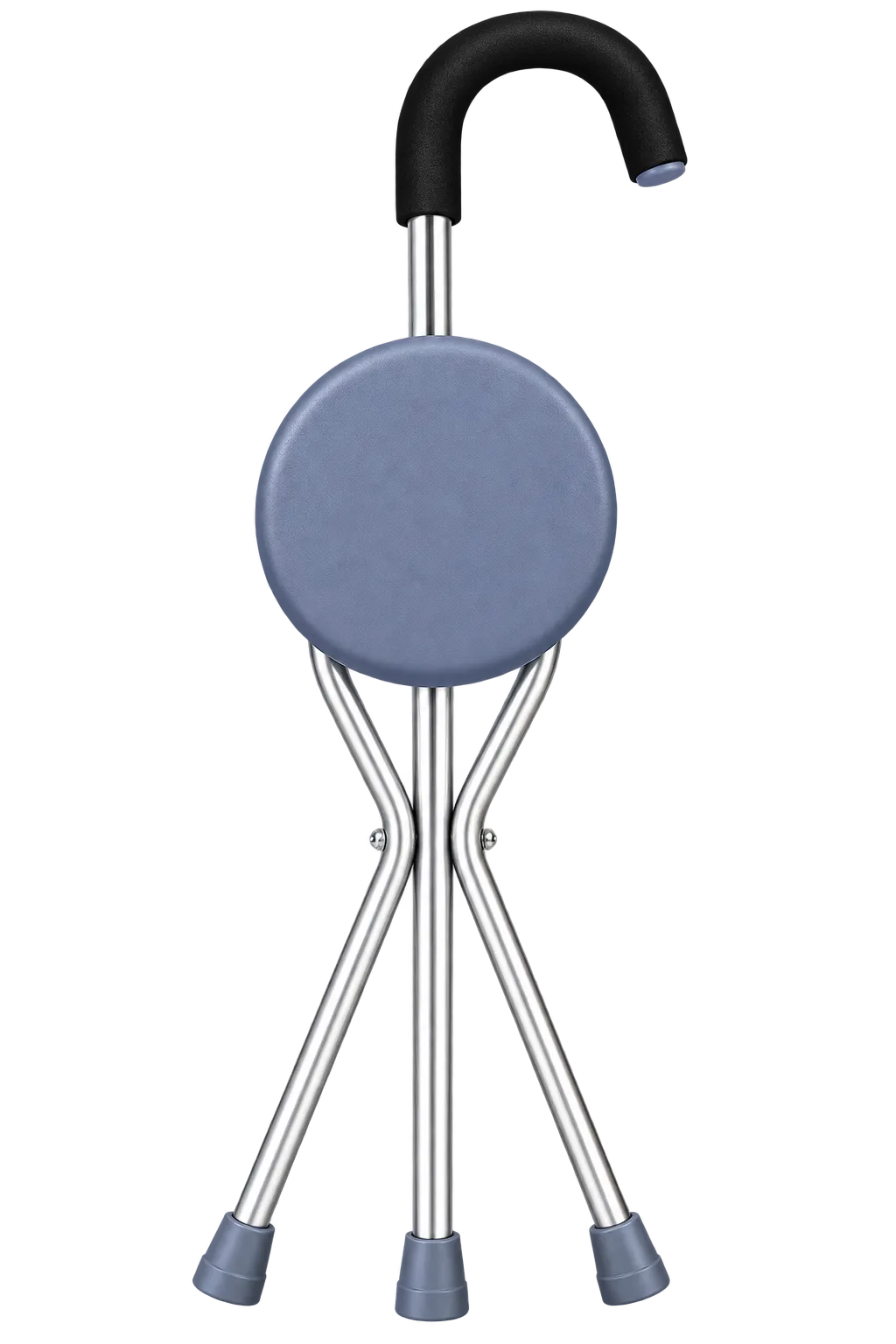
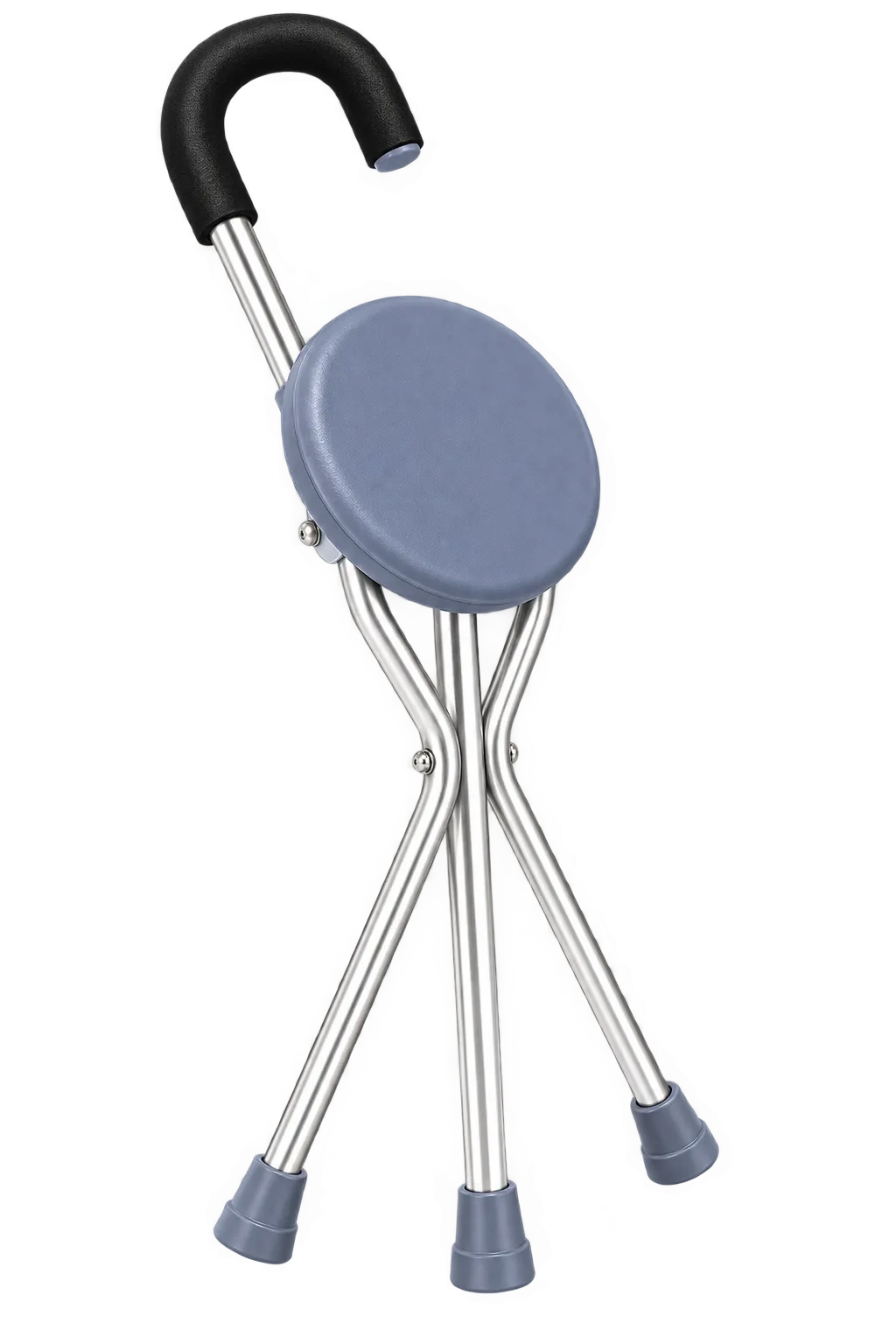
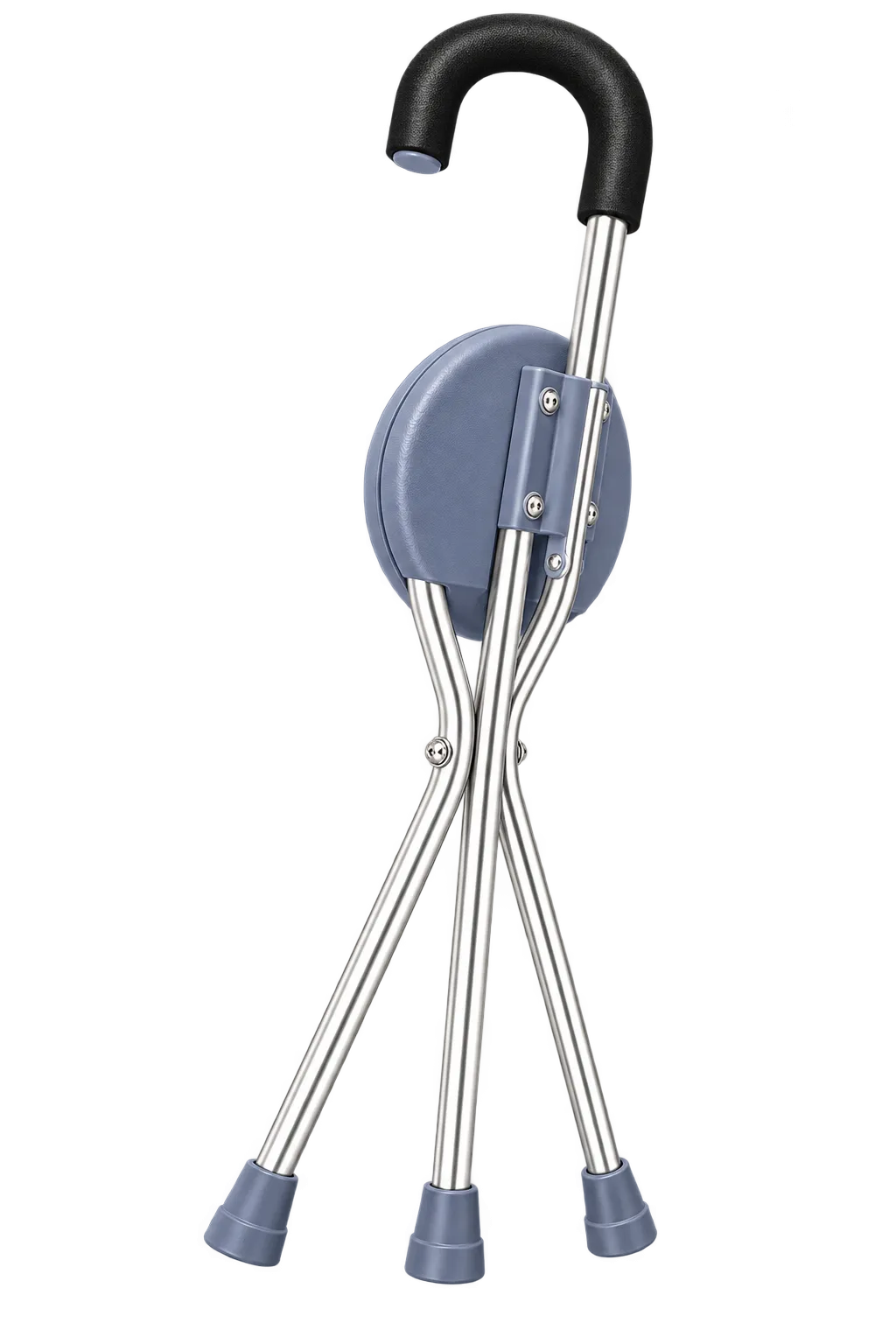
Occupational therapy and physiotherapy should assess the two functions separately. The walking assessment is routine; the sitting one is the addition, and it should happen on the kind of ground the person will actually be on rather than a clinic floor.
The rising task is the one to observe. There is no backrest and no armrests, so standing up depends on leg strength and on finding somewhere to push — and the obvious candidate is the stick, which is also the seat. Watch it happen before issuing.
Falls prevention should consider where it will be used. Grass, gravel, cambered pavements and shallow slopes are exactly where a rest is most welcome and where a three-legged seat is least predictable.
Community services should record whether the seat function is approved for the individual or whether the product is issued as a stick only. Routes across NHS trusts, local authority equipment services and independent providers each ask for their own evidence. The conformity documentation those procurement routes require is issued by the manufacturer and provided by the seller.