
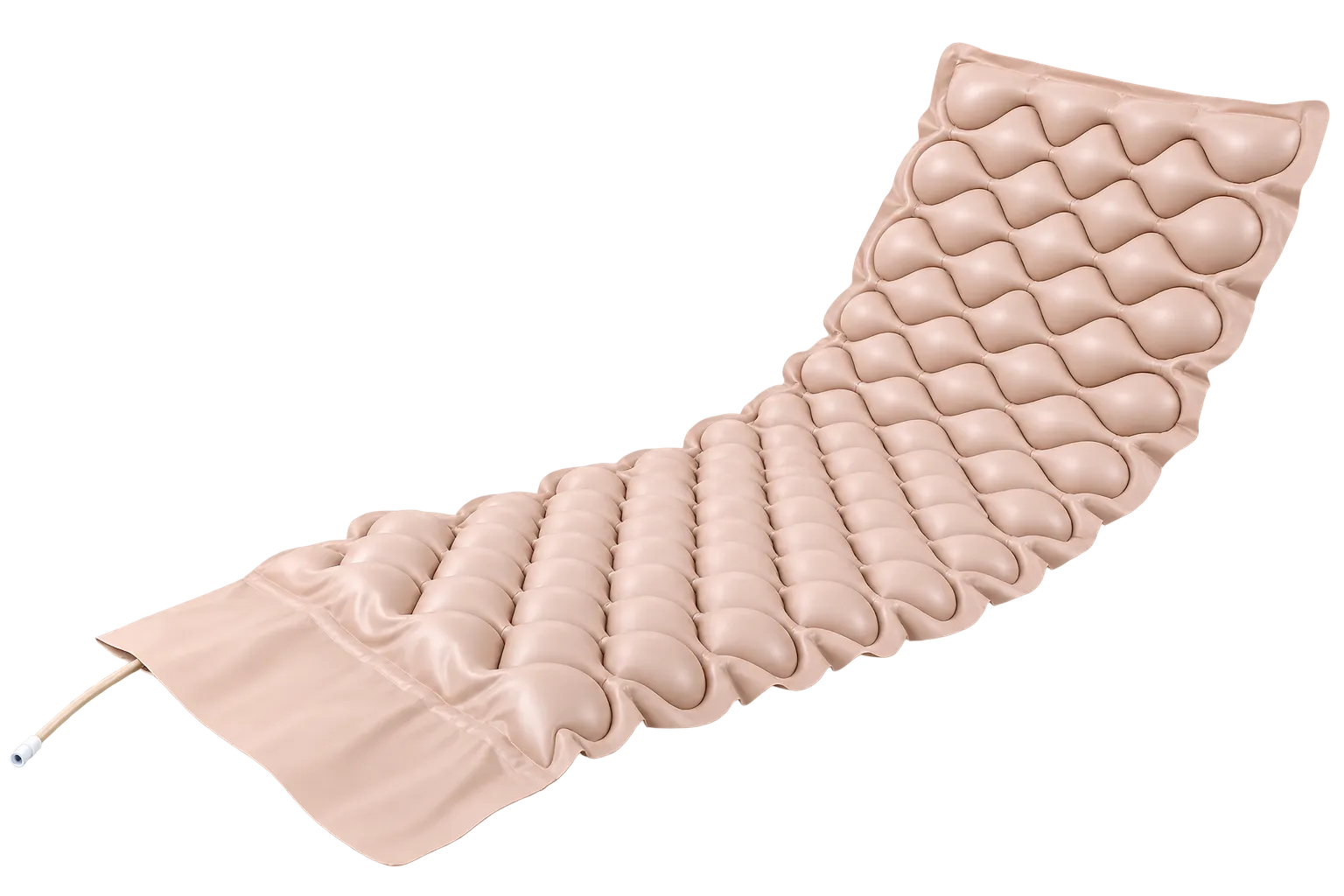
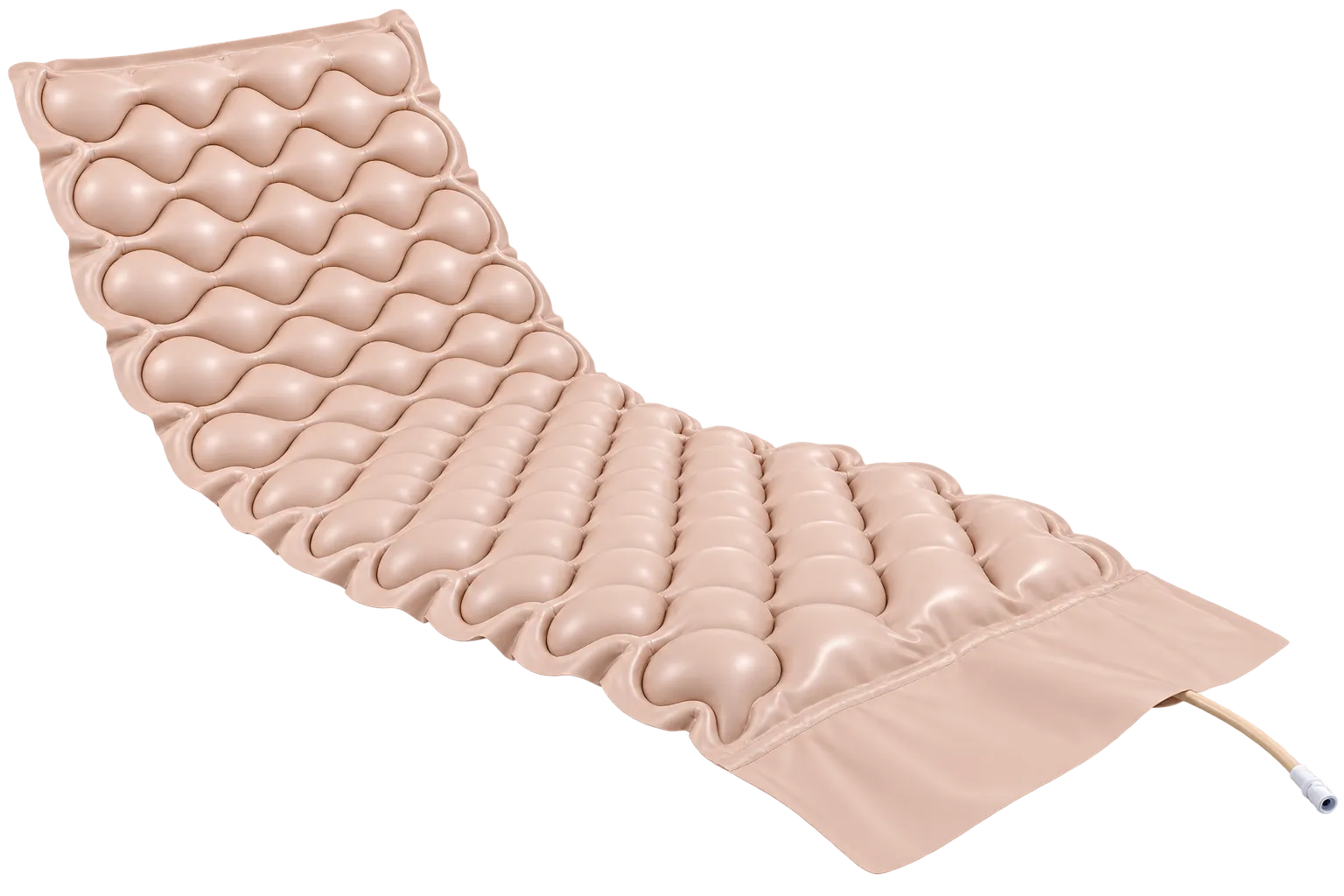
Long periods in bed are the common factor across every setting this overlay suits. Someone recovering at home after surgery, a resident who sleeps through the night without shifting, a person in a respite bed for a fortnight: in each case the body rests on the same points for hours, and a surface that changes which cells carry the load gives those points a break. That is the function the manufacturer claims, and it is a reasonable one.
Homecare is the most natural fit. An overlay goes onto the divan or foam mattress already in the bedroom, needs no bed change and no delivery of a full replacement surface, and can be taken away again when the episode ends. Families managing care themselves find that easier to accept than a change of bed. The practical checks are the width of the existing mattress, whether the extra height leaves side rails at a safe working height, and whether there is a socket at the bedside for the pump.
Care and nursing homes use overlays of this class for residents at the lower end of the risk scale, and for comfort where a clinical surface is not indicated. The decision belongs to the nursing team working from a documented risk assessment, reviewed as the resident's condition changes, and an overlay allocated on comfort grounds is stepped up promptly if skin changes appear. Fire performance, cover cleanability and maximum user weight are the three specifications a home will check before anything enters a bedroom.
Procurement through NHS framework routes, local authority equipment services and private provider groups will each ask for conformity evidence, fire test reports and an intended use statement. The conformity documentation those procurement routes require is issued by the manufacturer and provided by the seller.