
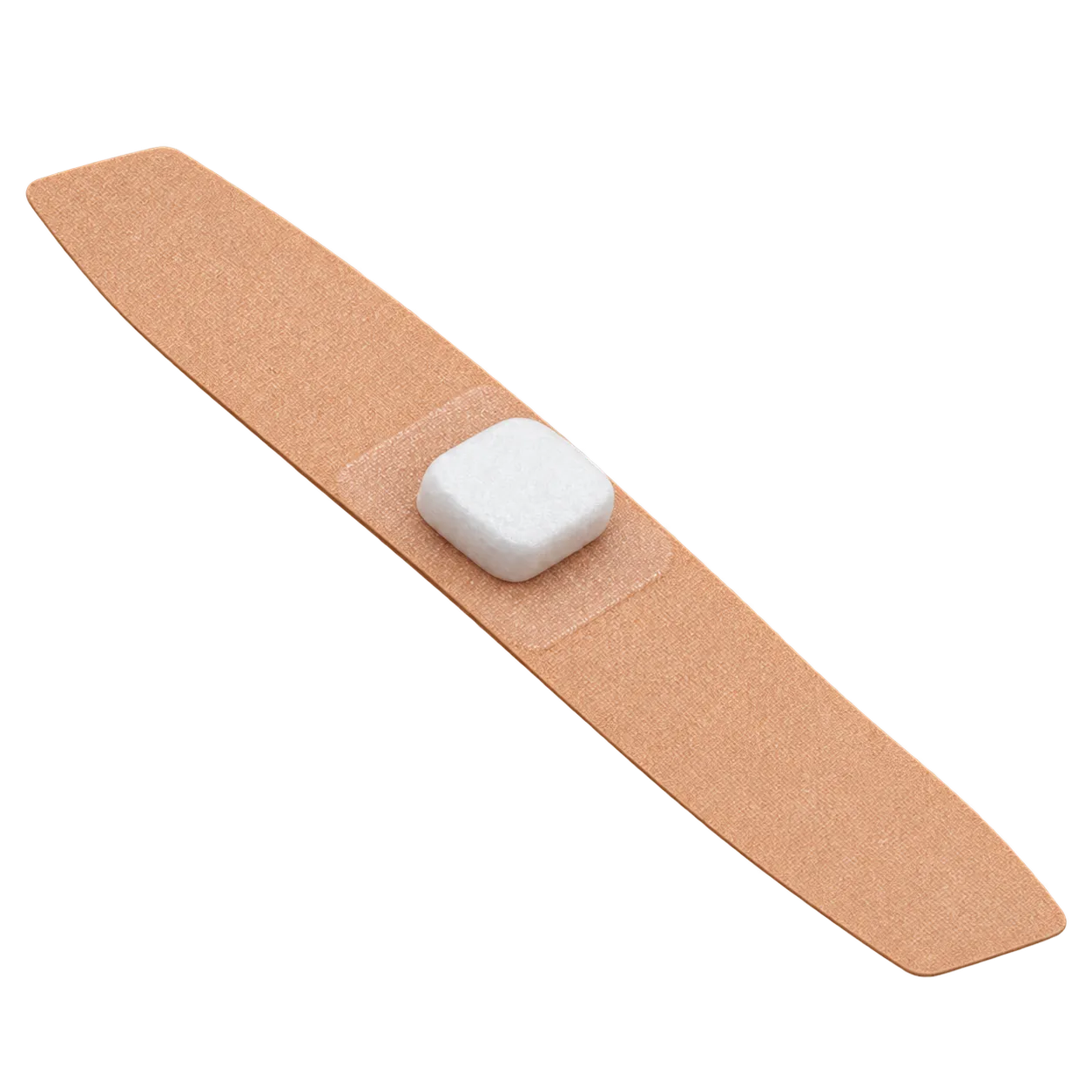
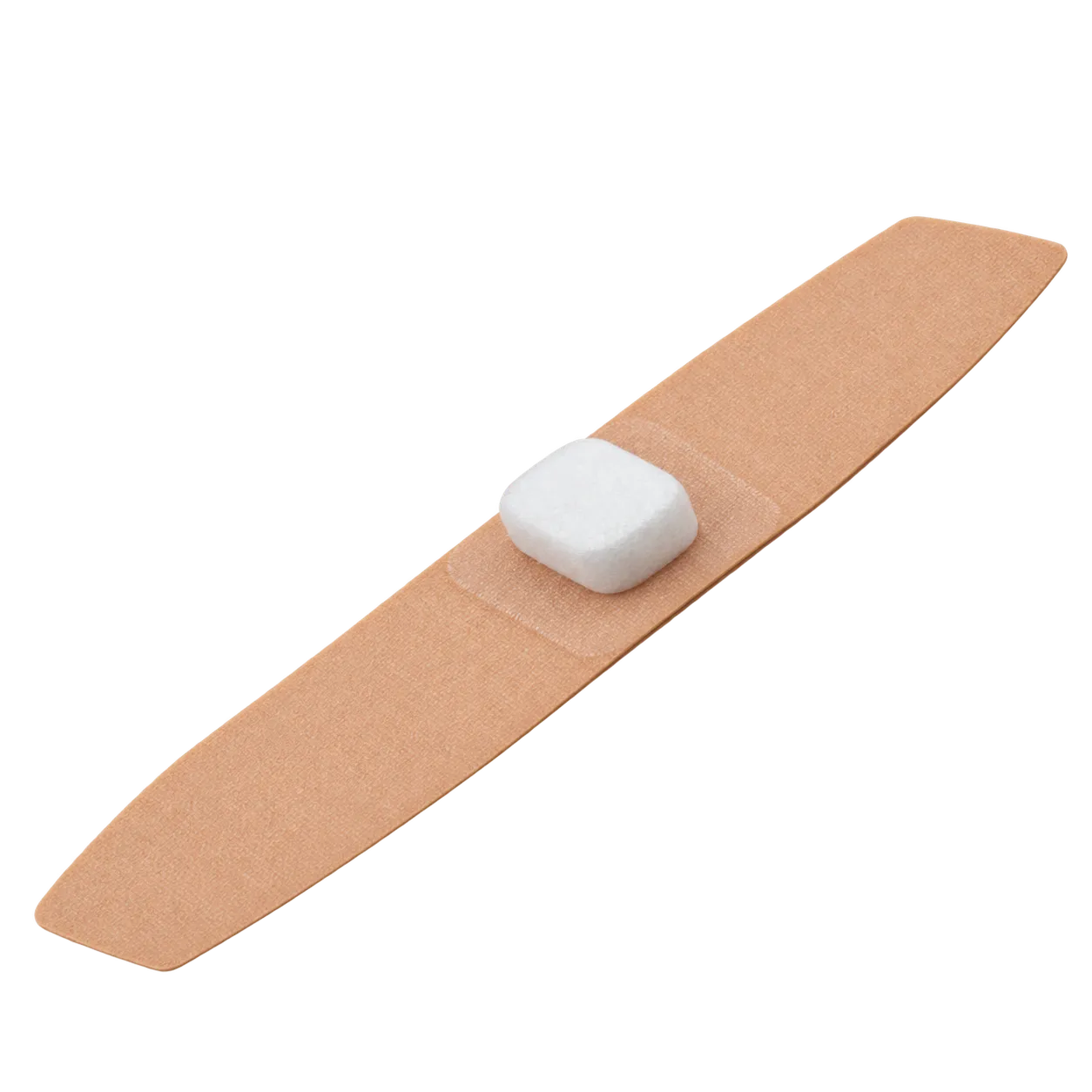
The TQ-02 belongs to the second half of the access conversation. Dorsal pedal and brachial punctures are not first choices, and the services that perform them regularly work with patients whose upper-limb veins have been used up: long-term haemodialysis, oncology day units running repeated cannulation, vascular services, and critical care where several lines are already in place. Renal and vascular teams meet those patients more often than a general ward does, and they are the natural buyers here.
Anatomy is what the length answers. An instep is a curved, bony surface with tendons running across it, and an upper arm is a soft cylinder attached to a moving joint. Neither holds a short flat dressing the way a forearm does. A 240 mm band passes right around the part and brings its ends onto skin away from the puncture, so the pad stays seated when the limb does not stay still.
The same anatomy raises the questions the sheet leaves open. An encircling band can compress a whole limb rather than a single point if it is applied under tension, and the sheet gives no tension, no pressure and no instruction to check circulation beyond the site. Any local protocol built around this reference will need a check interval and a distal observation instruction written into it before first use.
Buying runs through the usual routes. NHS Supply Chain, trust framework agreements, Integrated Care Boards and independent providers each apply their own standing financial instructions. Pack quantities of 100 and 800 pieces suit a specialist unit rather than a hospital-wide stock line, which matches where these sites are actually used.
The manufacturer issues the conformity documentation required for those procurement routes, and the seller provides it.