
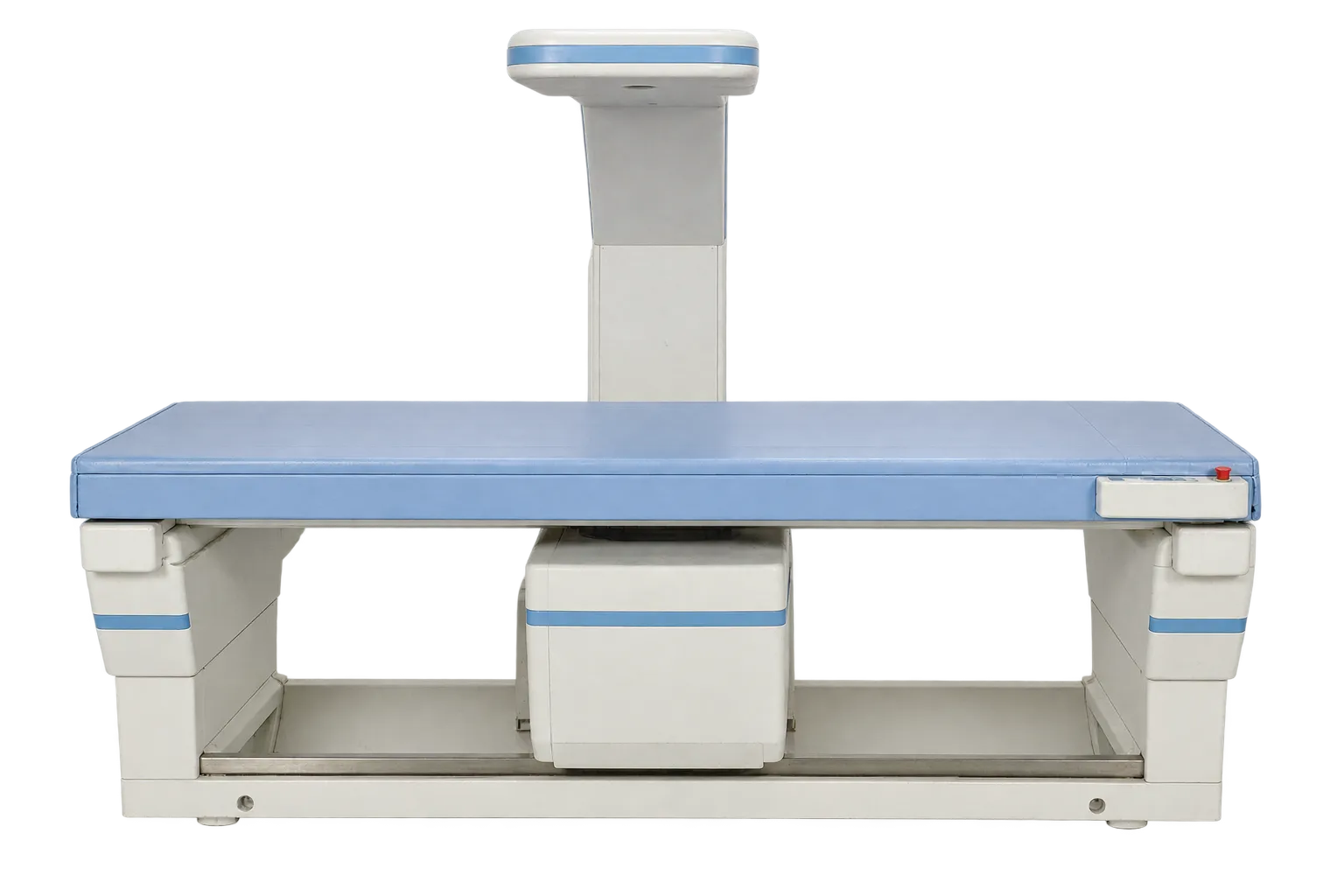
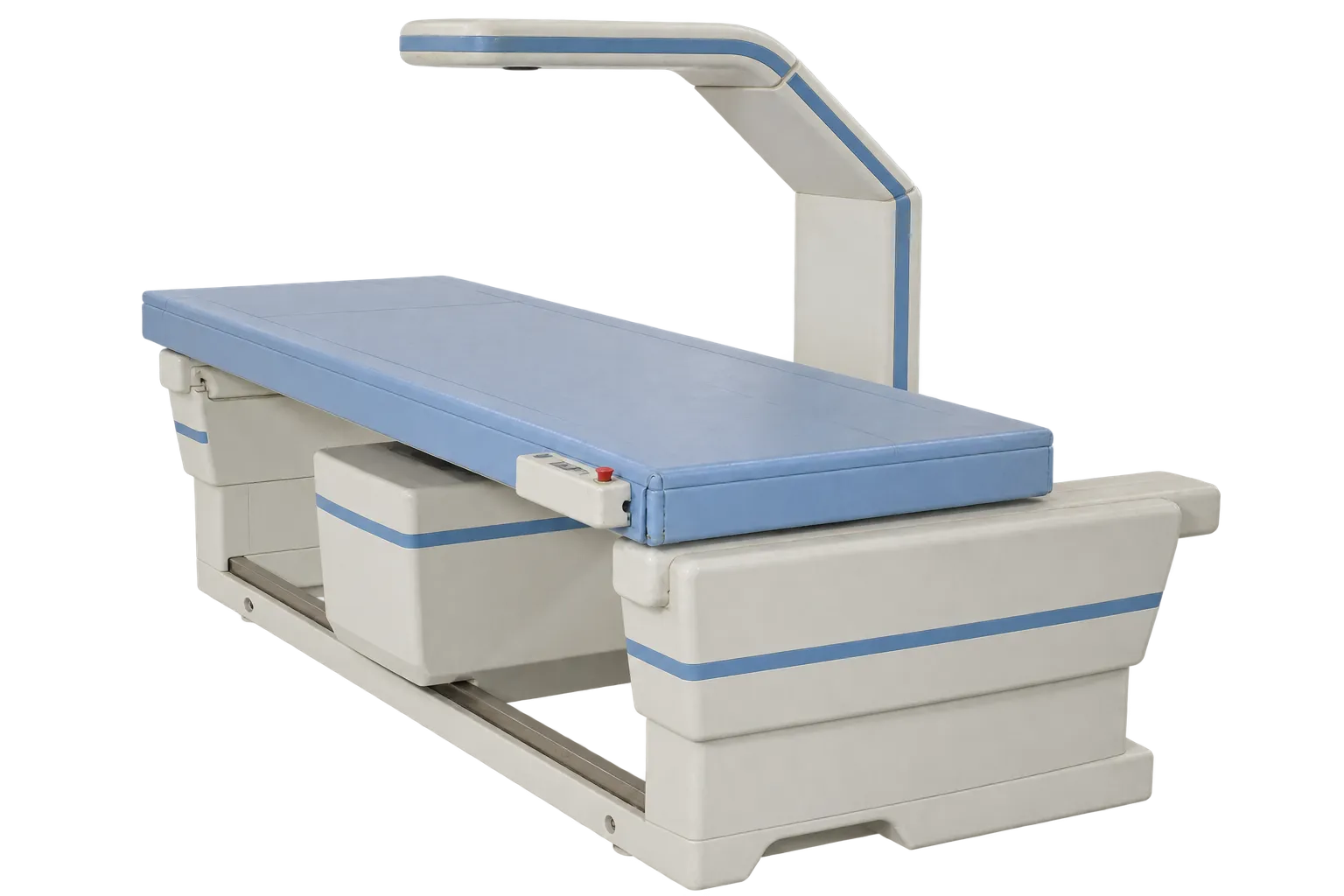
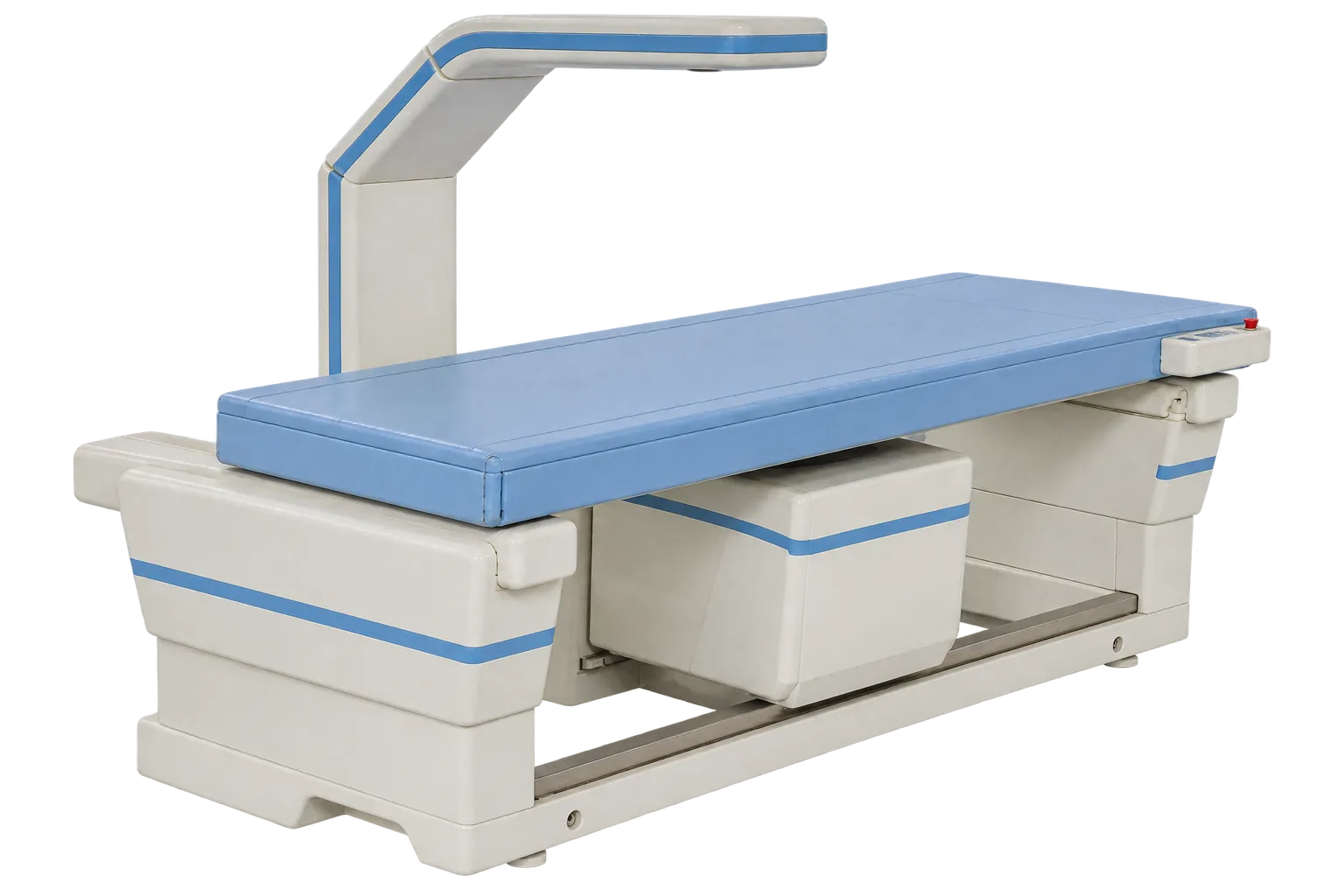
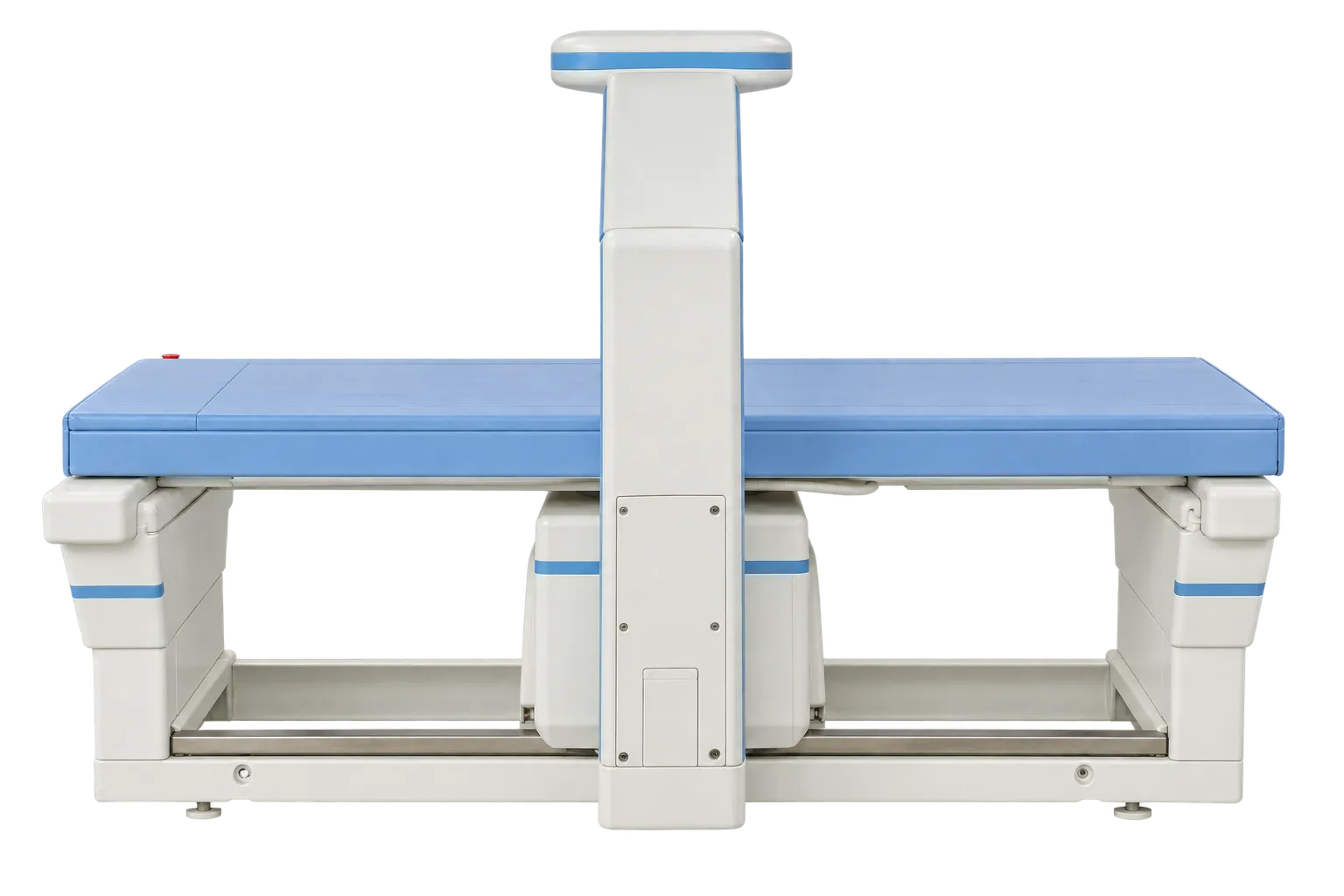
Osteoporosis diagnosis and monitoring is what this platform serves, at volumes typical of a district general hospital fracture liaison service, a rheumatology or endocrinology clinic or a dedicated bone health centre. AP spine and proximal femur acquisition are the core work, with forearm scanning where hip or spine sites are unmeasurable. All clinical judgement, including whether an examination is justified and how a result is interpreted, remains with the referring and reporting clinicians, and Medigear.uk supplies configuration and condition detail rather than clinical guidance.
Fracture risk assessment draws on the densitometry result alongside clinical risk factors, and integration with established risk calculation tools is a software matter rather than a hardware one. Medigear.uk confirms what is enabled on the unit rather than assuming the presence of a feature the model is capable of supporting.
Vertebral assessment through lateral spine imaging identifies existing vertebral deformity that a patient may be unaware of, which changes risk categorisation independently of the density figure. Whether the licence is enabled on this unit is confirmed rather than assumed, since it is among the options most often absent on used systems.
Body composition work, including whole body lean and fat distribution and visceral adipose assessment, extends the platform beyond bone into metabolic and sports medicine settings. It is separately licensed, and a scanner physically capable of the acquisition cannot take the referral unlicensed.
Services planning capital cycles should treat build year and measurement continuity as separate inputs. An earlier production unit carries a lower purchase price against an earlier software and support position, while the calibration and cross-calibration question determines whether existing patient records remain usable after changeover. Medigear.uk supplies both so each can be weighed properly rather than being conflated into a single impression of the machine's age.