
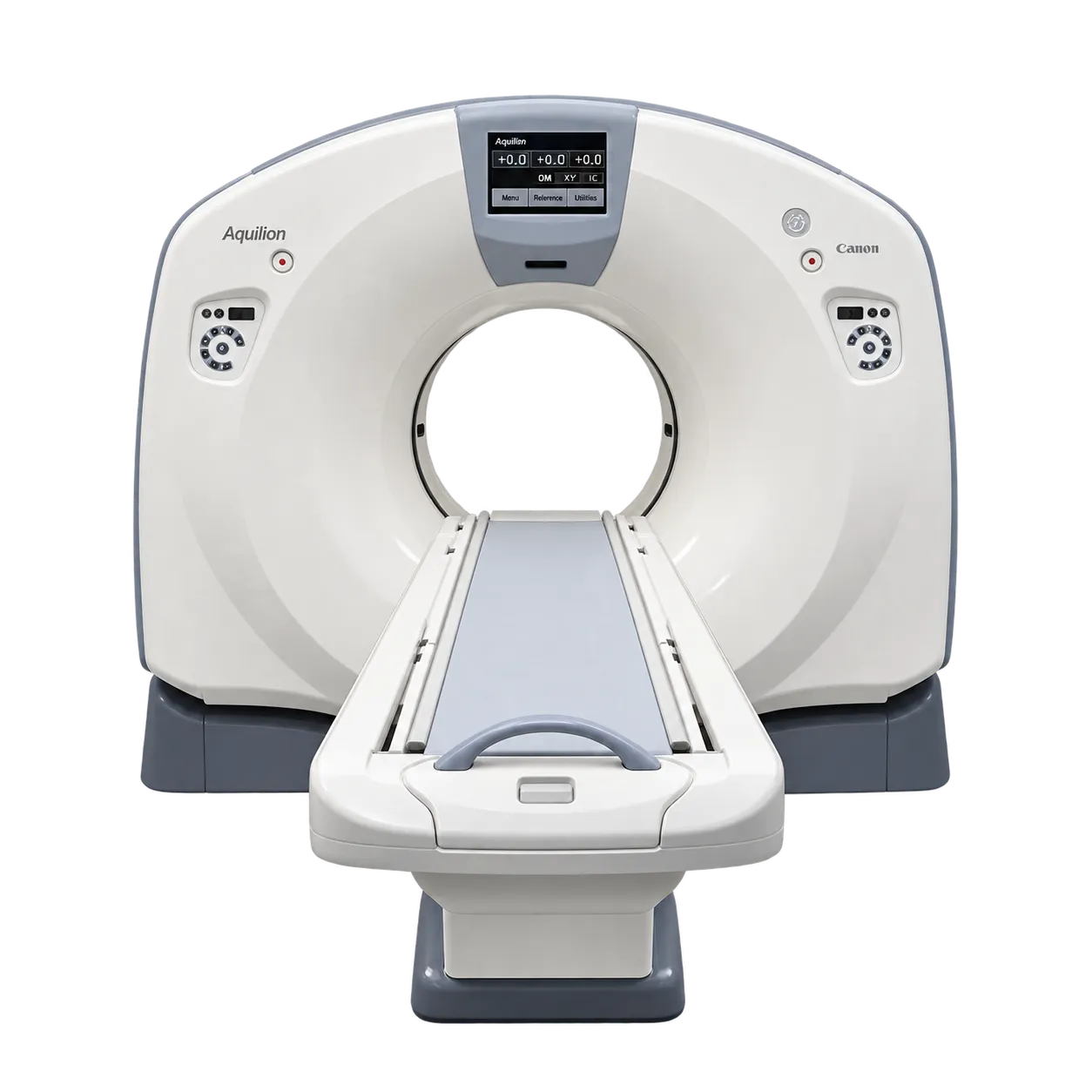
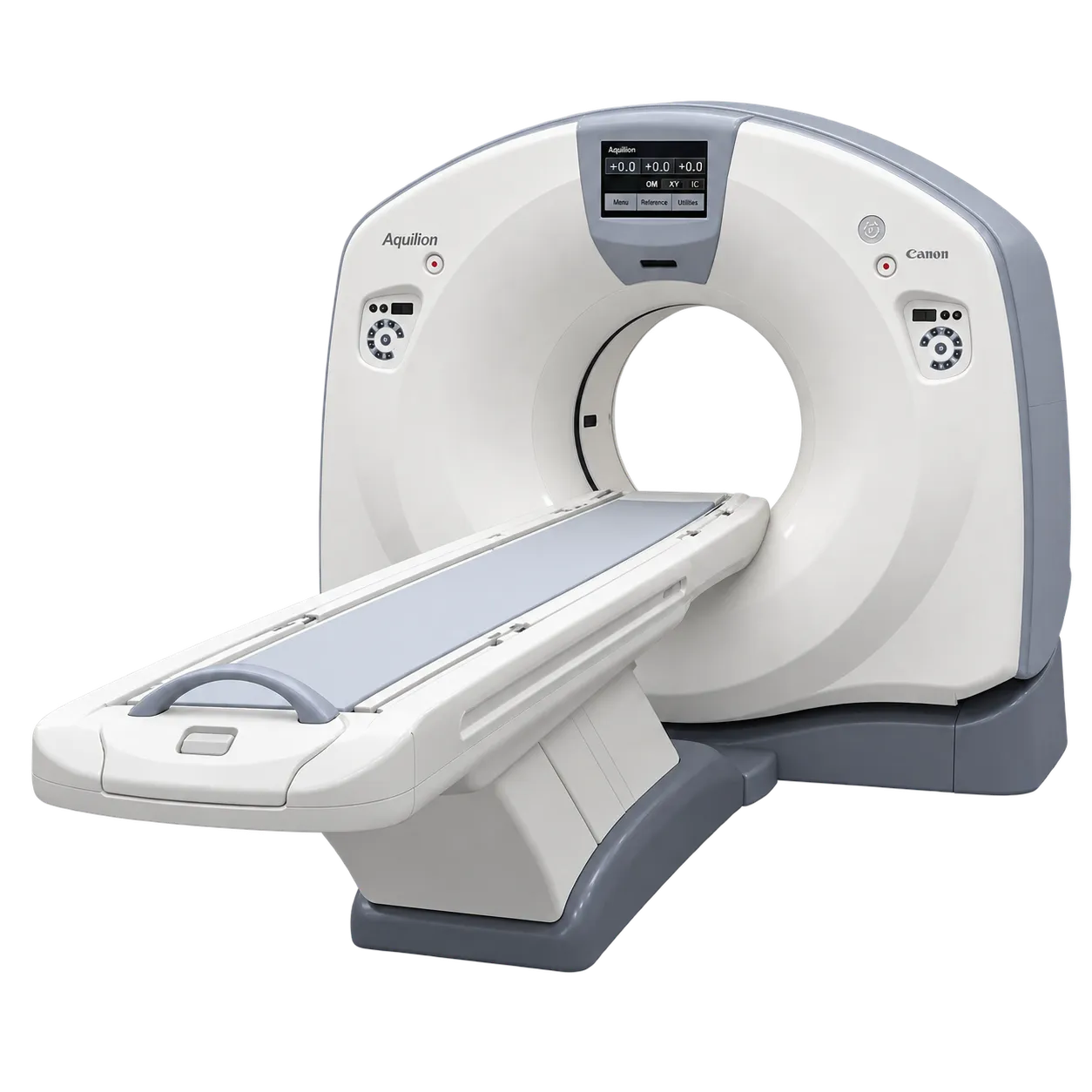
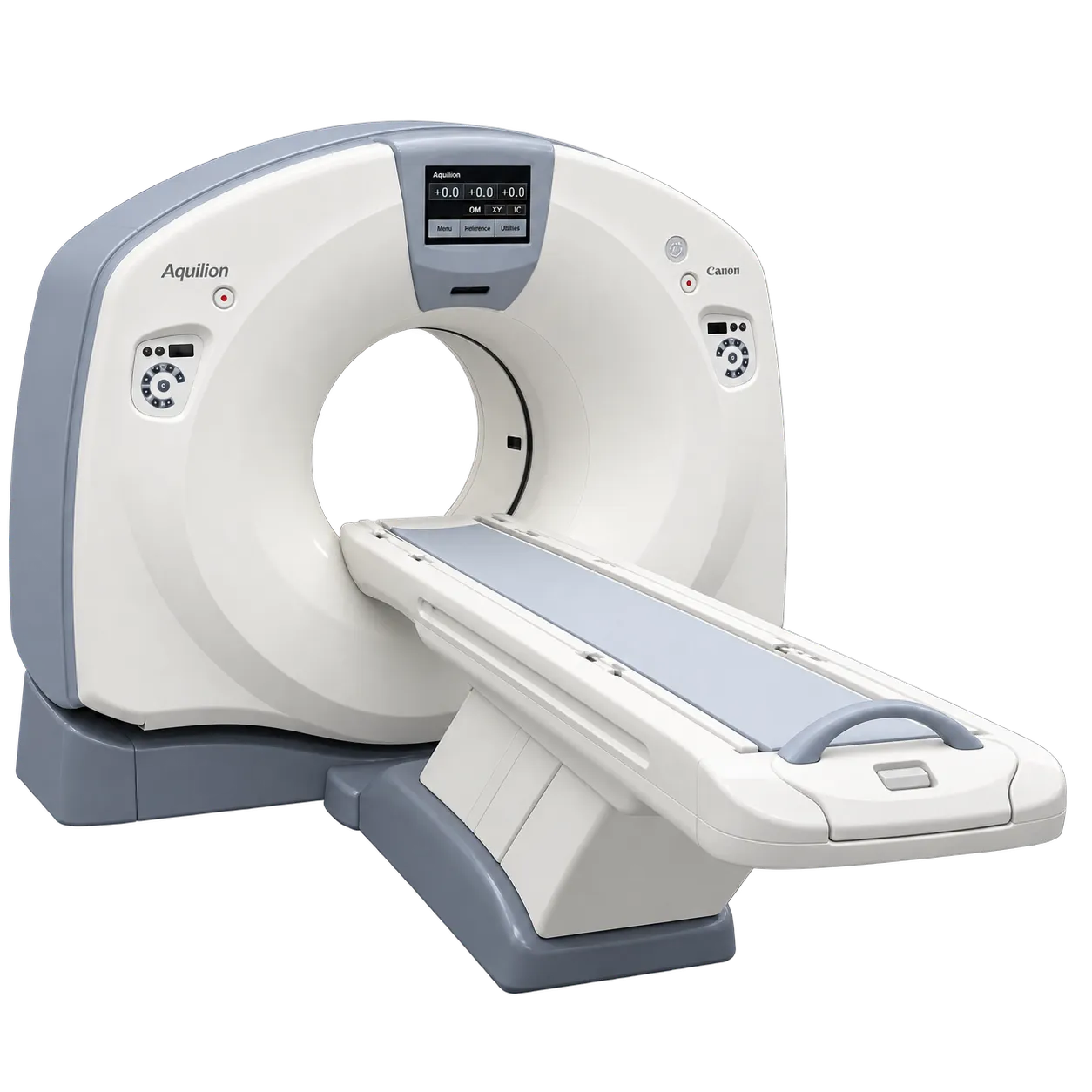
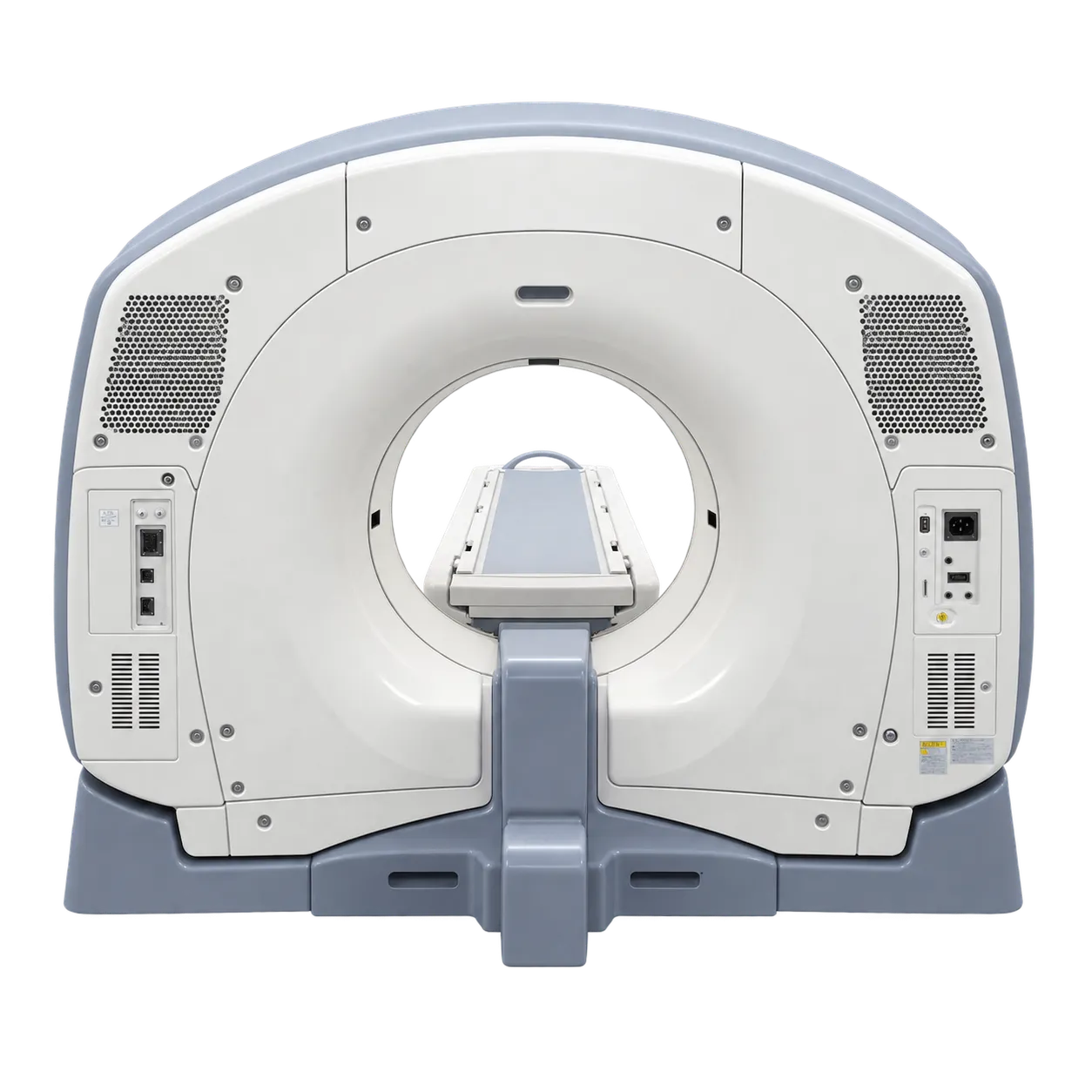
Paediatric imaging is where a reconstruction supporting lower acquisition dose carries most weight, since radiosensitivity is highest and cumulative exposure begins early.
Oncology surveillance involves repeated studies over years, so a dose reduction applied to each acquisition accumulates across the pathway.
Inflammatory bowel disease and other conditions requiring repeat cross-sectional imaging benefit in the same way, particularly in younger patients.
Routine head, chest and abdominal computed tomography runs across the acquired channels with isotropic voxels available for reformatting in any plane.
Emergency and trauma imaging depends on coverage per rotation and table speed, both of which are established for the individual scanner.
Cardiac work depends on rotation time for temporal resolution, with the figure for this unit confirmed at quotation.
Services operating under a formal dose framework are supported by automatic exposure control, axial and rotational modulation and dose checking aligned with NEMA XR-25.