
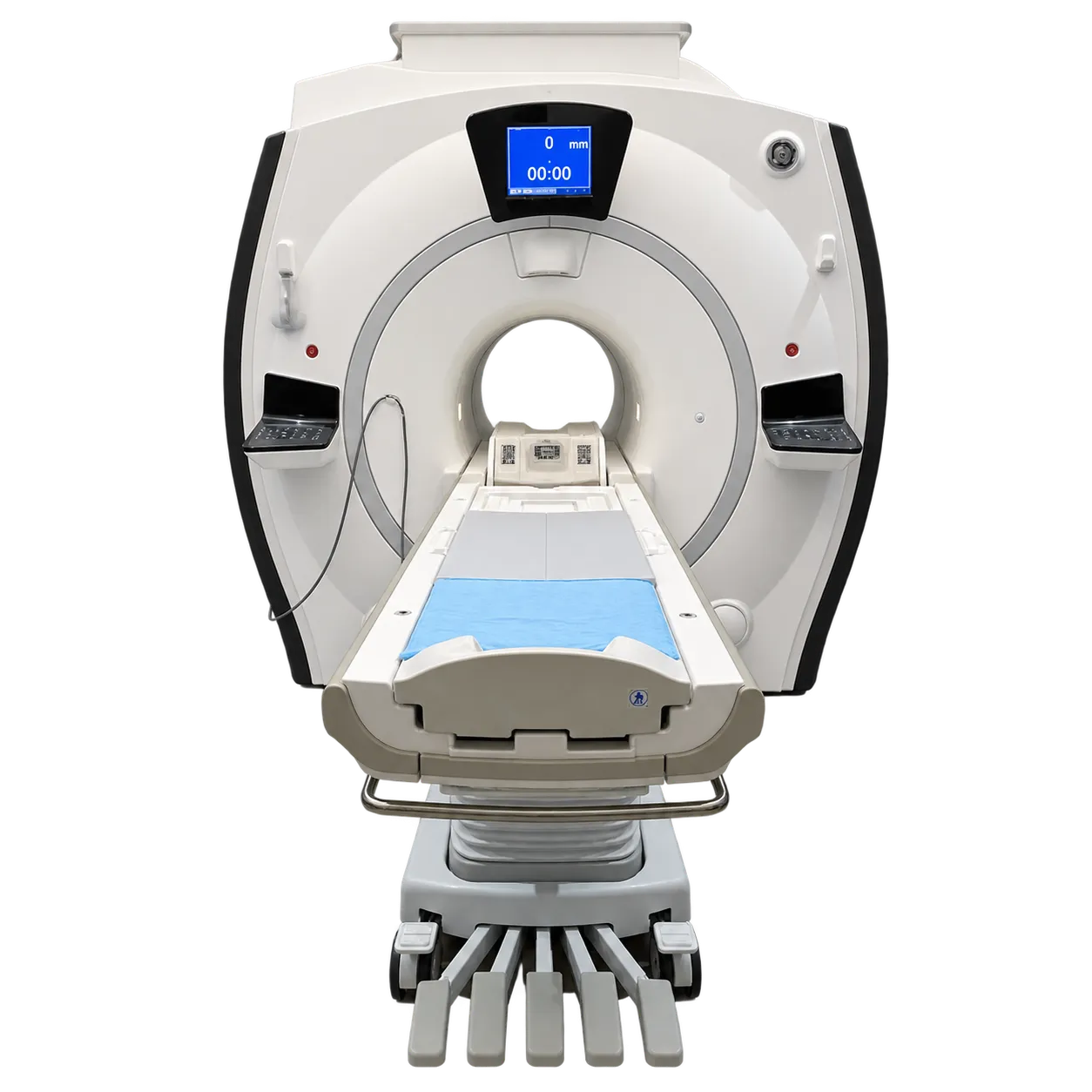
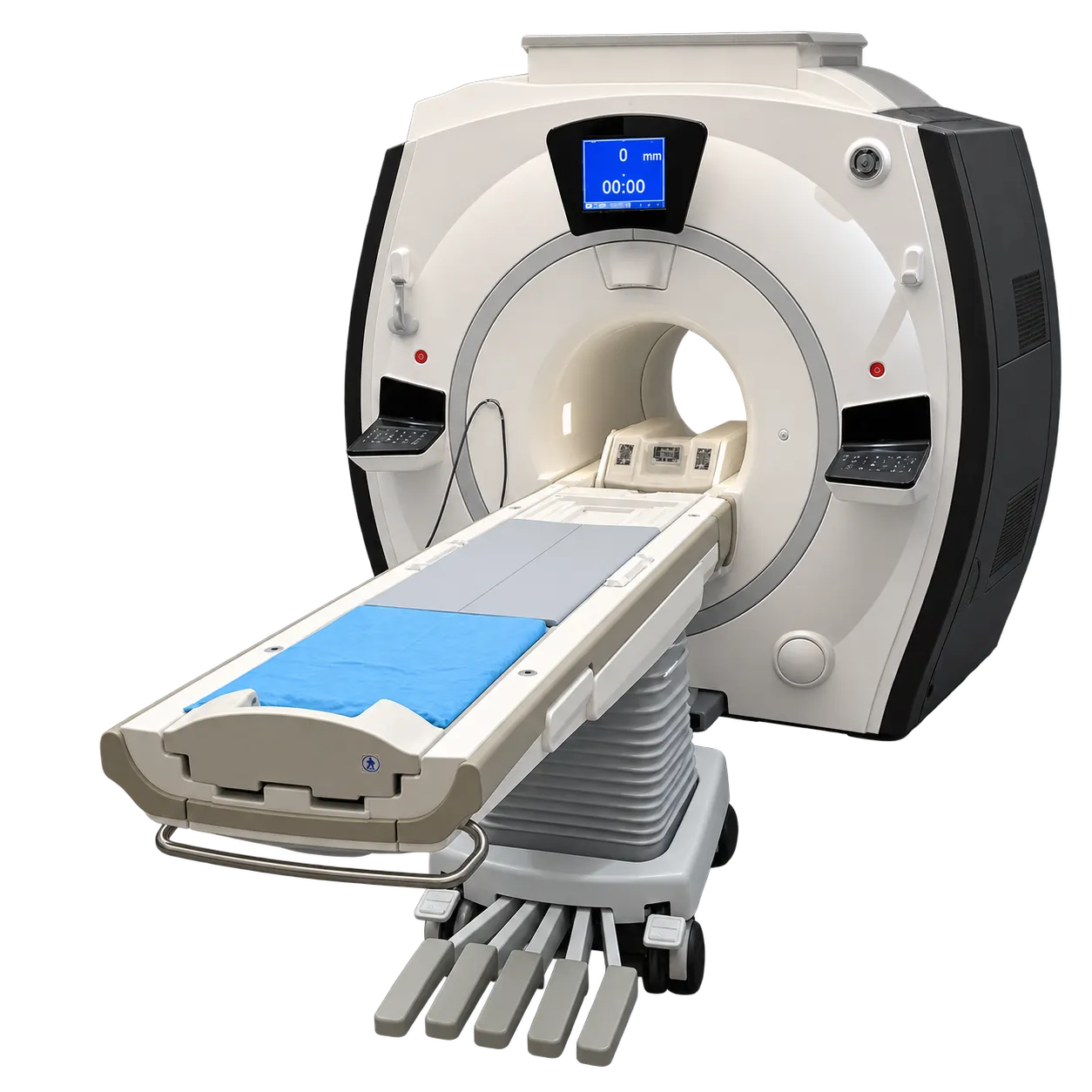
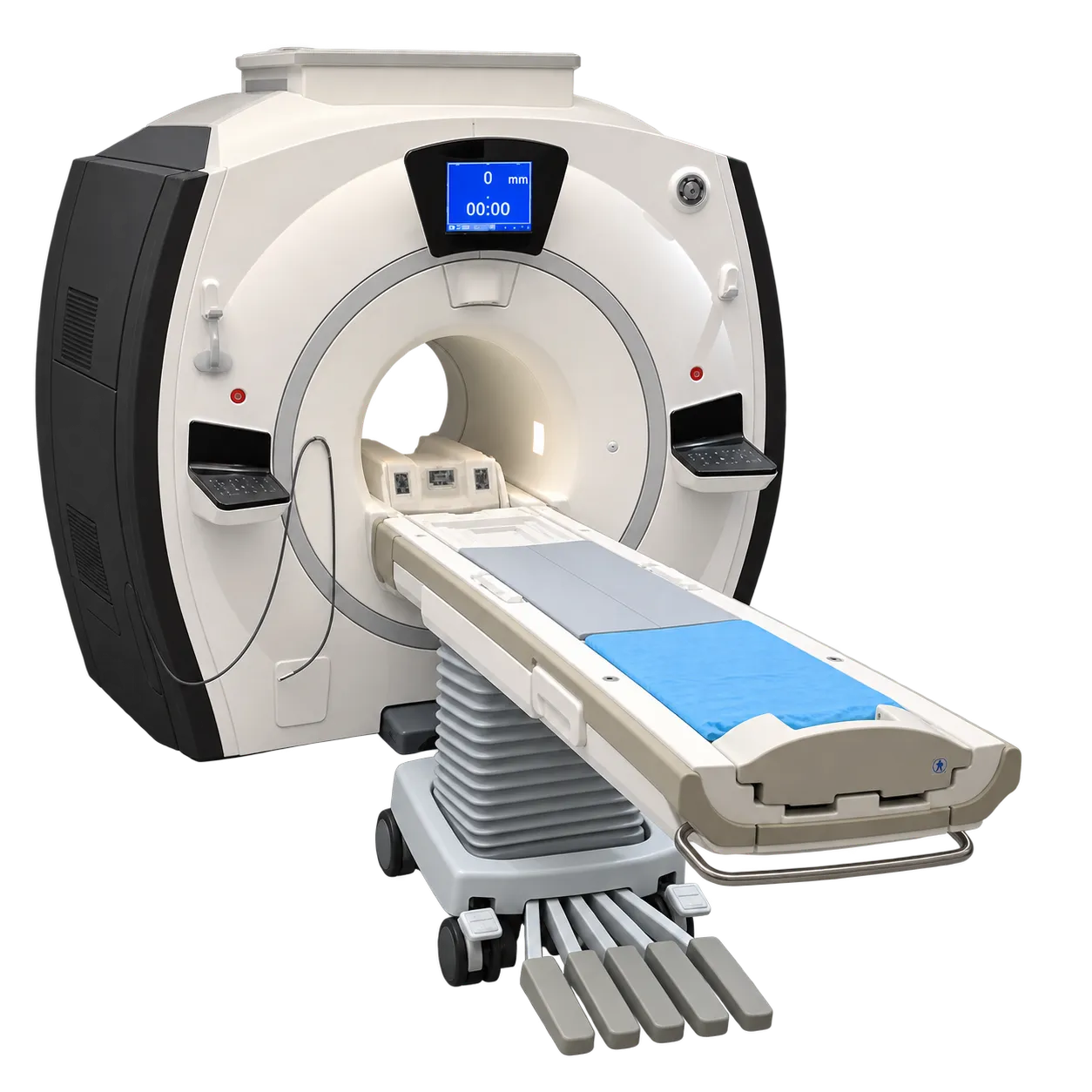
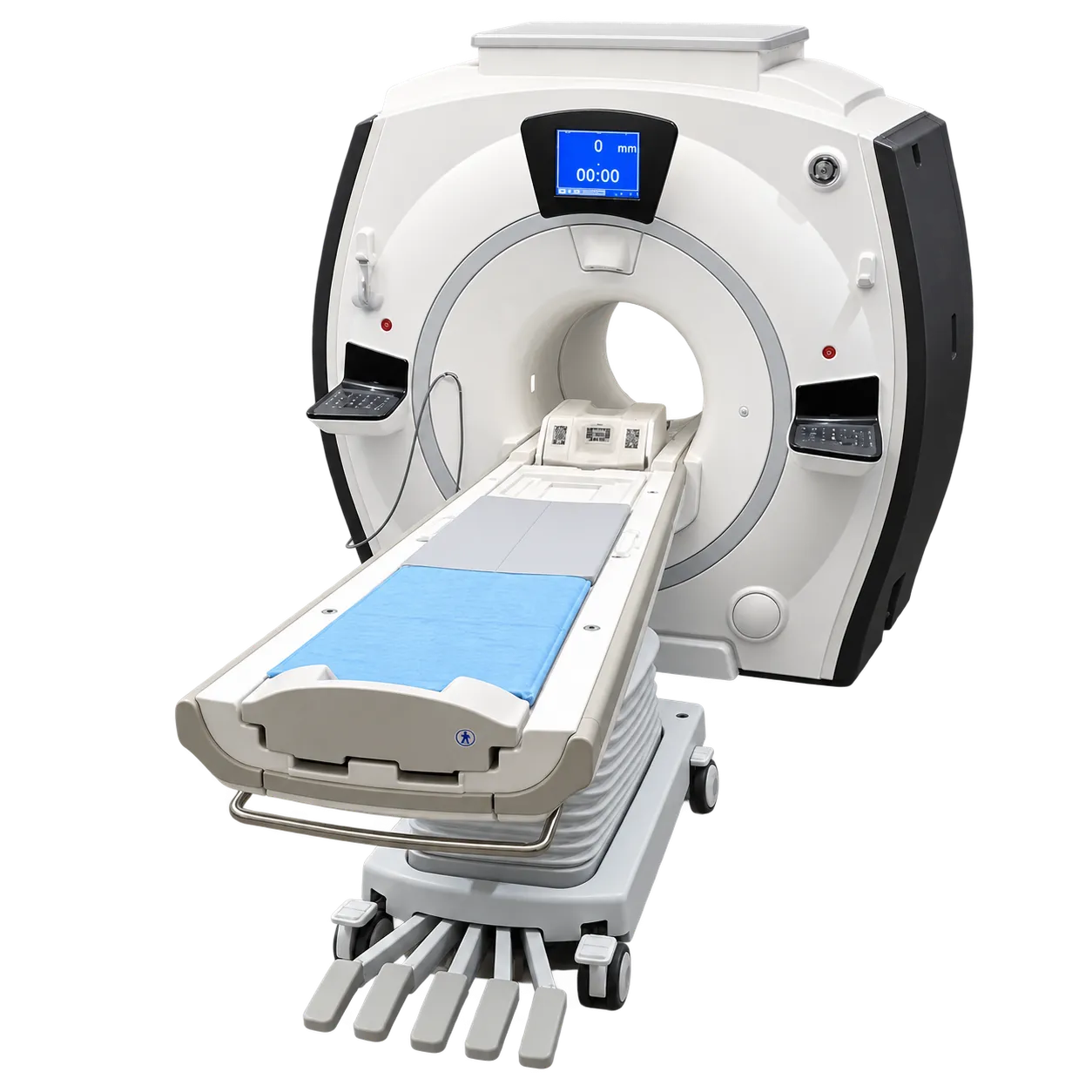
Body and abdominal imaging at 3 tesla is where SAR constrains protocols most, so a model personalised to the patient bears directly on what can be run.
Functional brain imaging depends on gradient stability across long acquisitions, supported by water and air cooling with thermo-electric panels for sustained duty cycle.
Neurological imaging draws on homogeneity from 18 higher-order shim coils, supporting fat saturation away from isocentre across a 48 cm field of view.
Musculoskeletal imaging uses high-density array coils across the receive architecture according to the coil set supplied.
Breast imaging is supported by VIBRANT Flex, which combines multiple series into a single acquisition where that application is licensed.
Angiographic work is available without contrast injection through time-of-flight imaging, alongside time-resolved techniques that rely on gradient reproducibility.
Research programmes are served by gradient accuracy and reproducibility across spectroscopy and advanced diffusion work, subject to the licences on the system.