
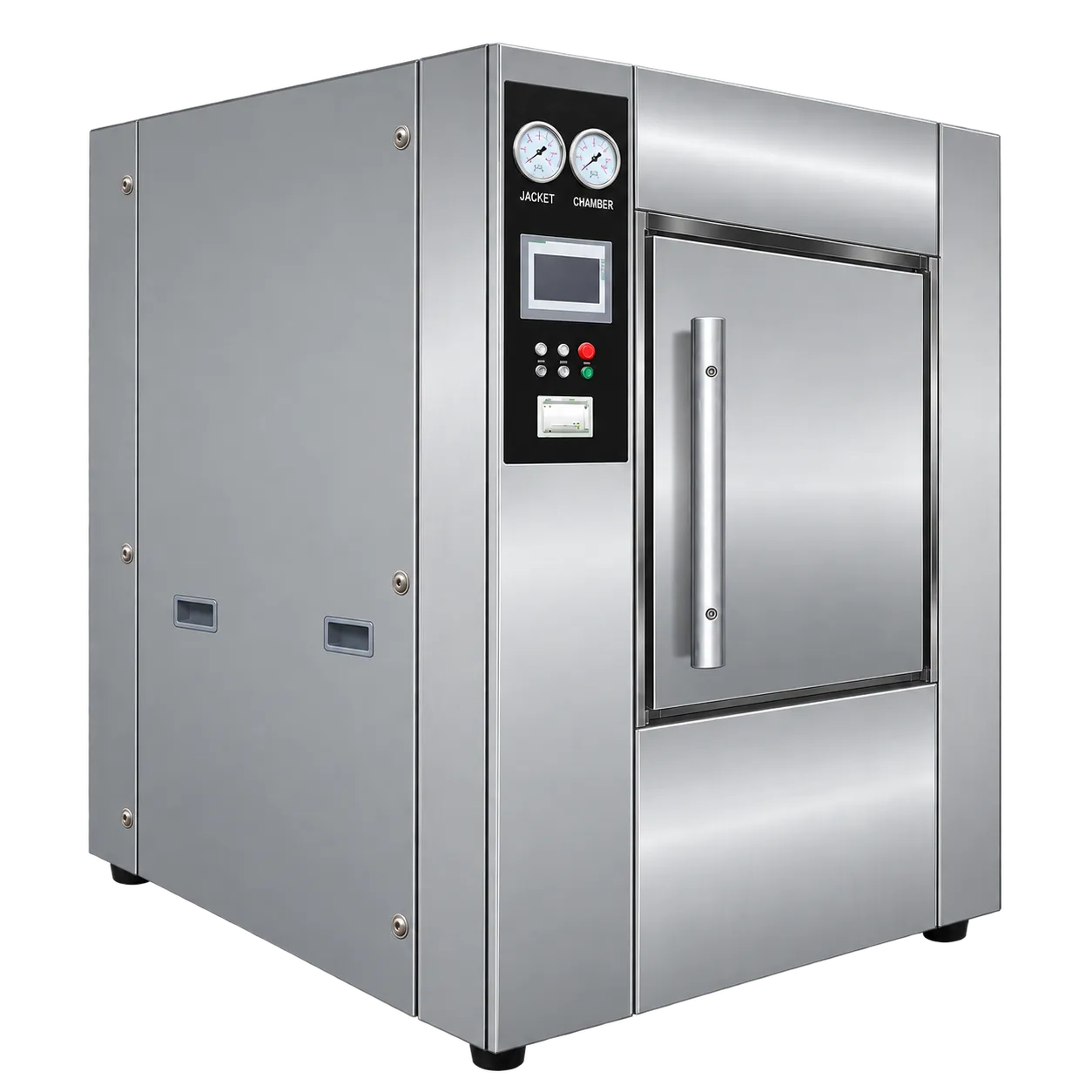
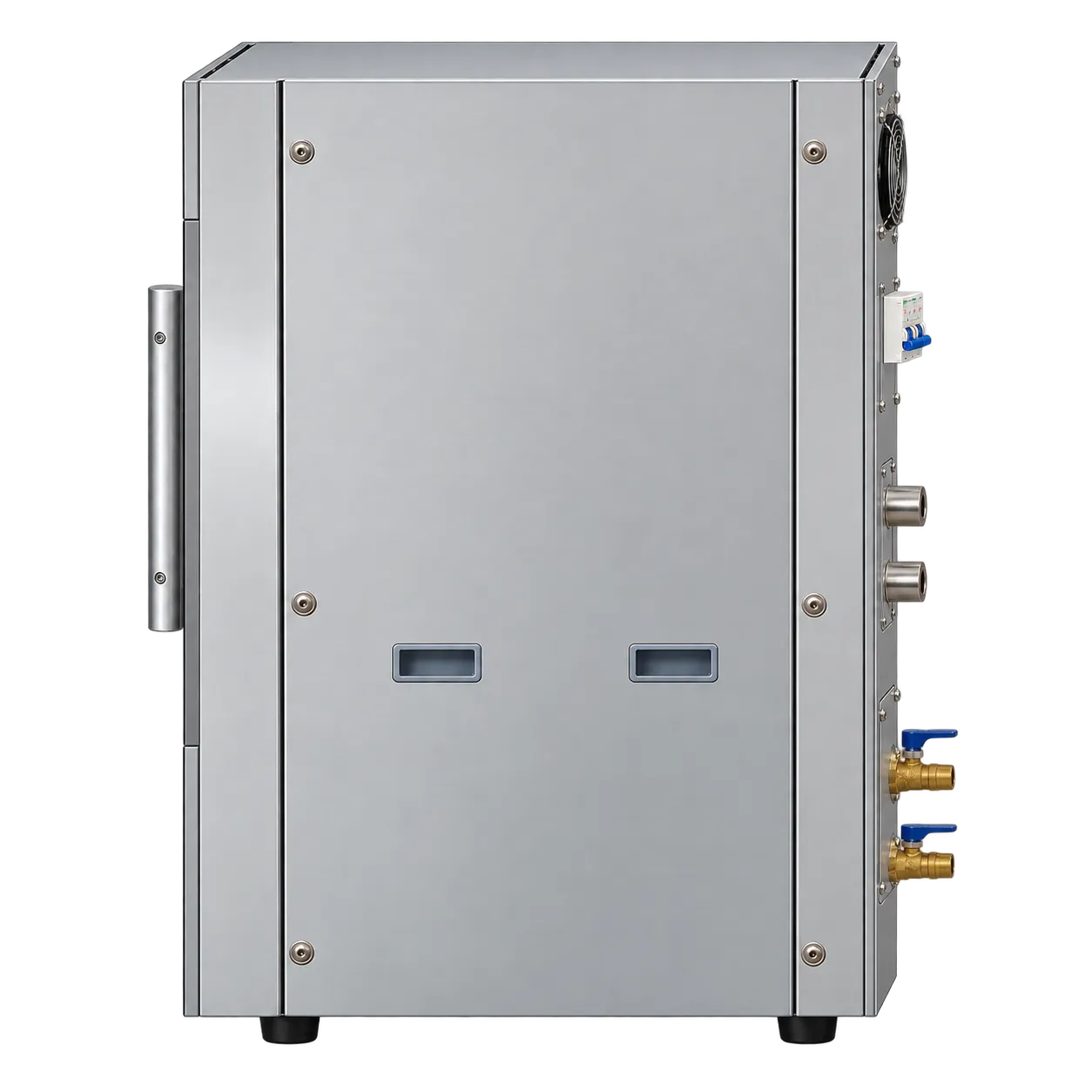
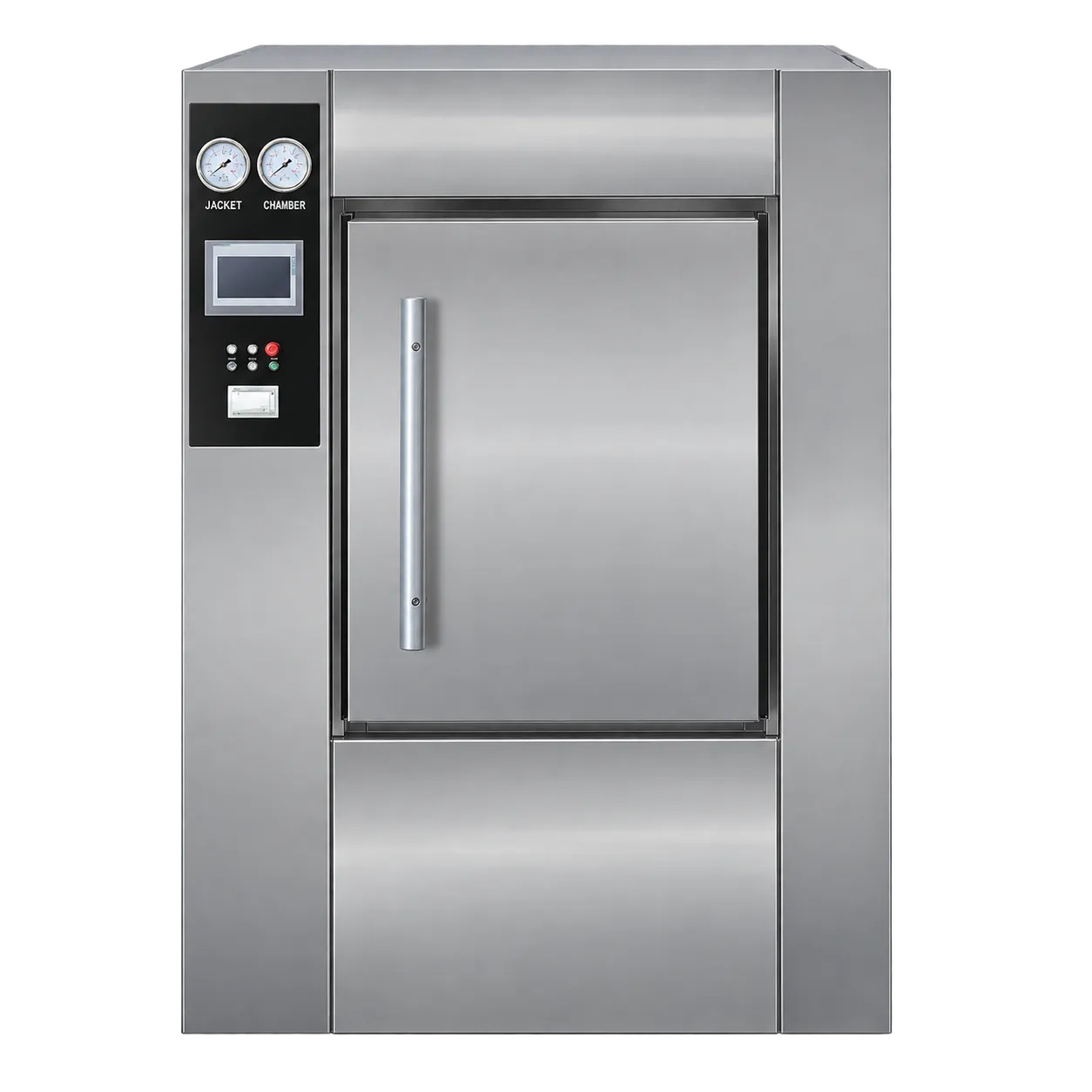
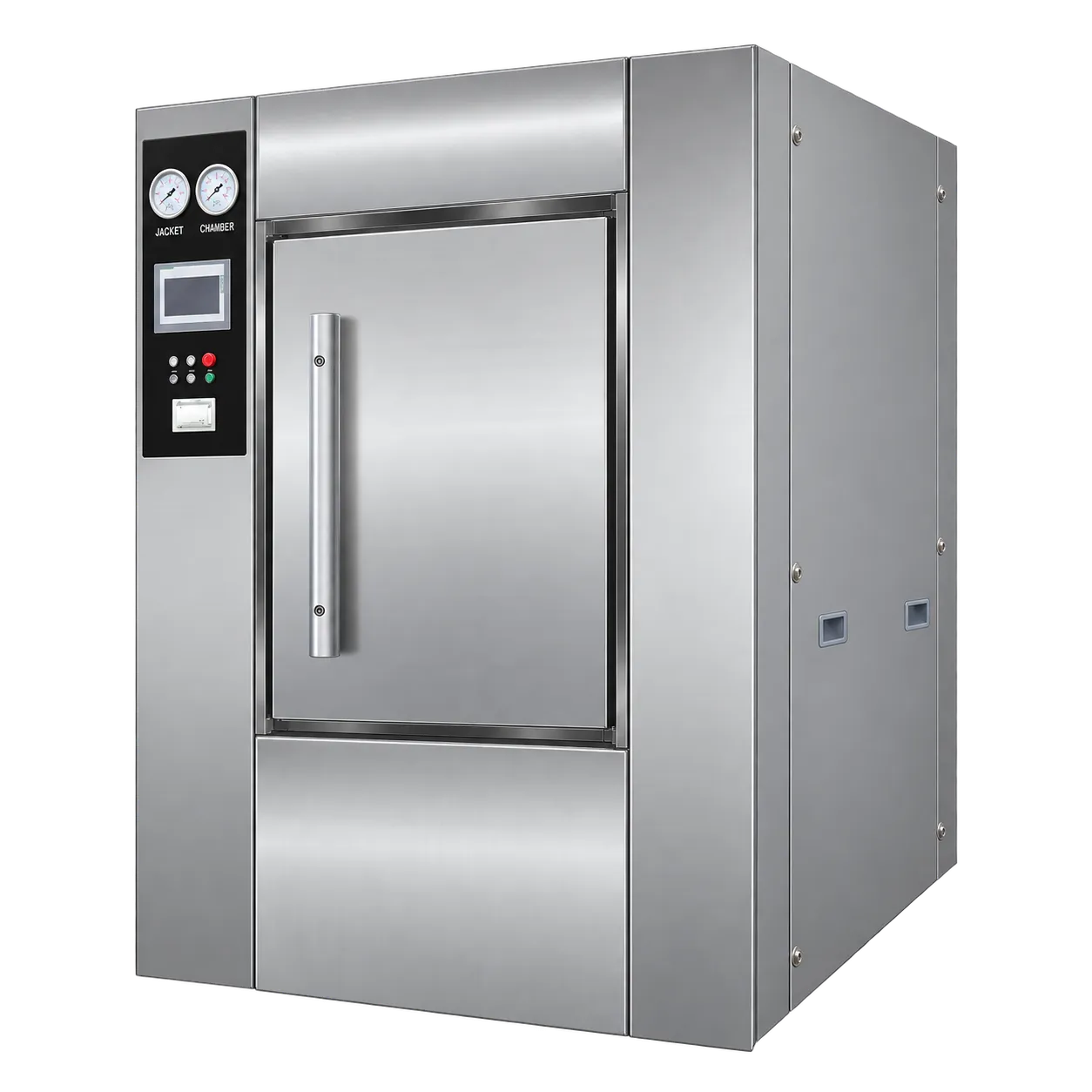
Sterile services departments that serve operating theatres, dental hospital decontamination units and busy day surgery suites are where a 250-litre single-door chamber earns its place. Theatre trays, rigid containers, bulky orthopaedic and general sets, surgical textiles and hollow instruments all fit its pulsed-vacuum scope, and the 600 mm square cross-section takes wide loads whole. Its single door suits a decontamination room run with a managed dirty-to-clean flow.
Running a machine of this size is as much an estates question as a clinical one. A year of five-minute metering on an Australian hospital steriliser found electricity and water per kilogram sterilised fell from 3 kWh and 200 litres for 5 kg loads to 0.5 kWh and 20 litres for 40 kg loads. Standby also accounted for considerable use. Switching four idle sterilisers off at the same hospital was estimated to cut electricity use by 26% and water by 13%. In a separate test of a liquid ring vacuum pump, supply water at 50 °C raised water use to 94.2 litres per cycle, against 33.3 litres at 10 °C, and lengthened cycles.
Those findings shape how a department plans for the WF-250DM: full loads, a switch-off routine and a cool water feed matter as much as the steriliser itself.
Public buyers purchasing equipment on this scale, including the NHS, expect EN 285 evidence and a validation route, and procurement bodies elsewhere ask for much the same. The conformity documentation those procurement routes require is issued by the manufacturer and shared by the