
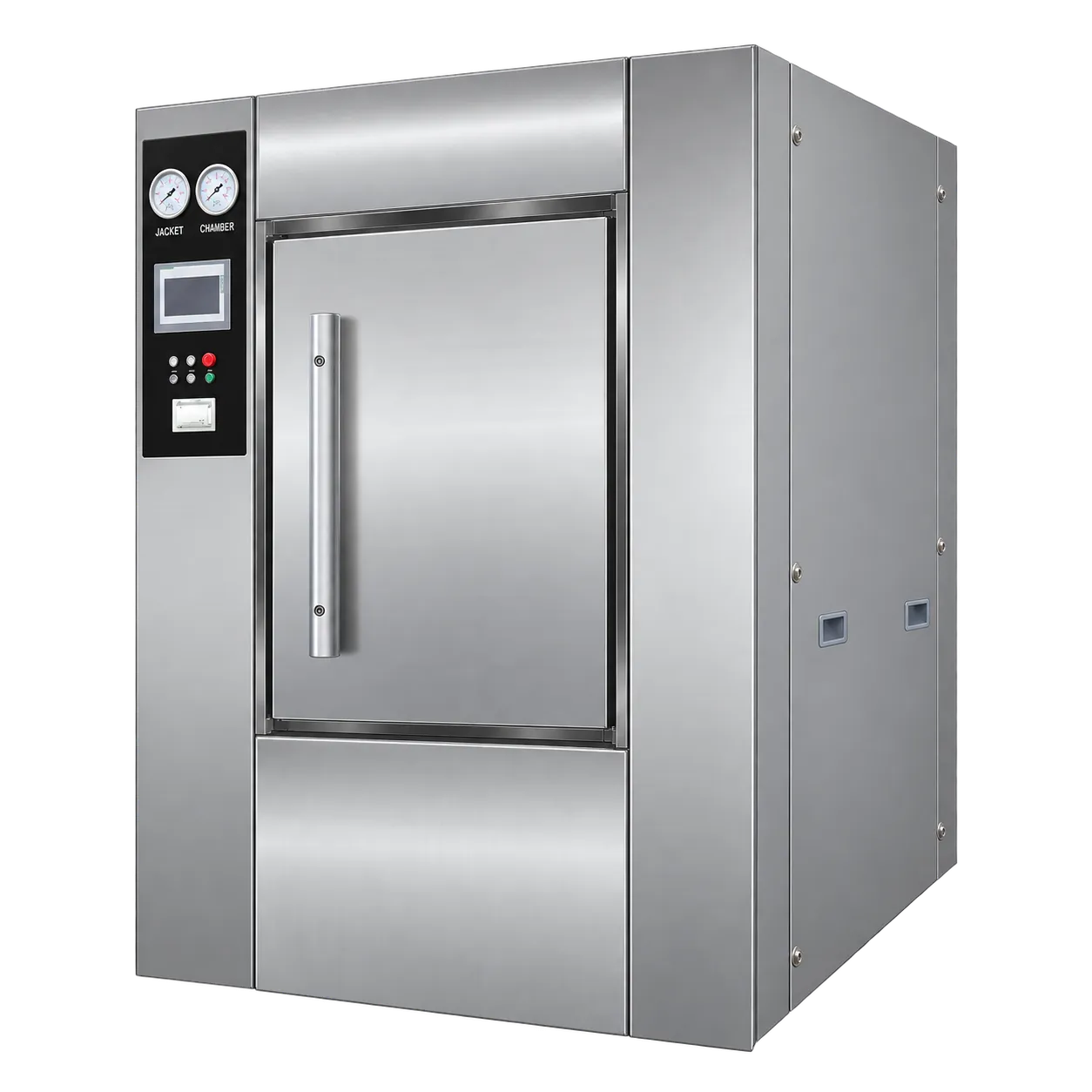
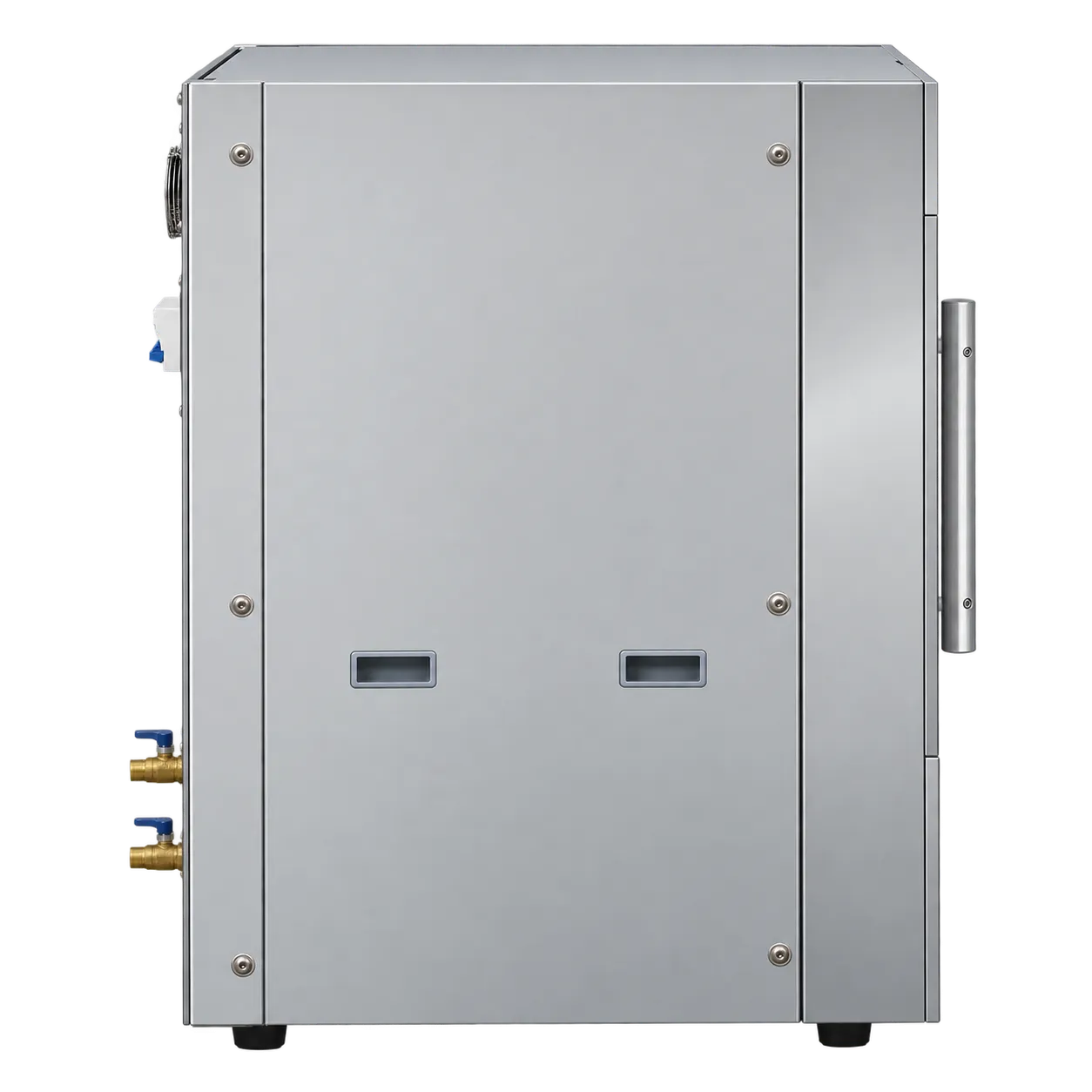
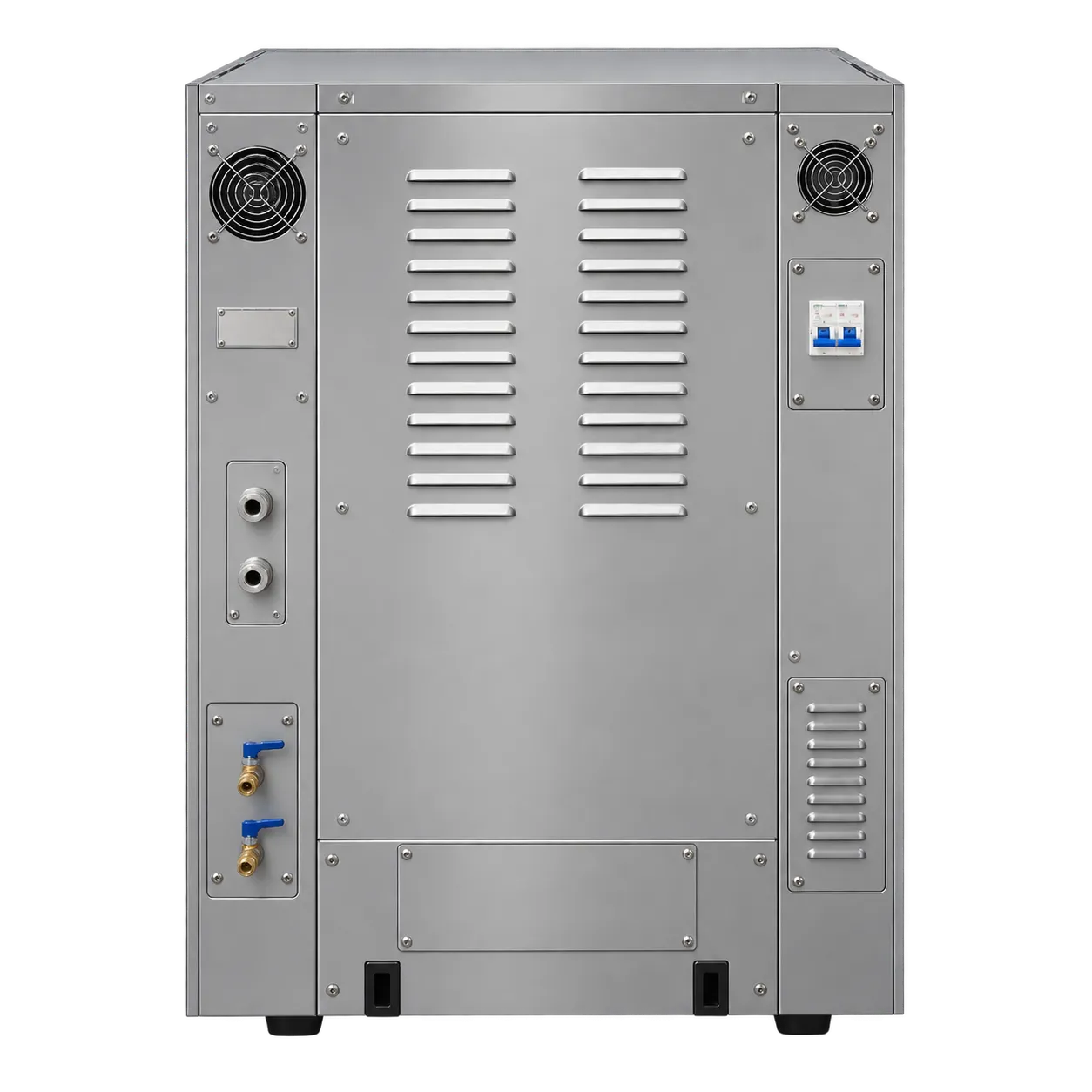
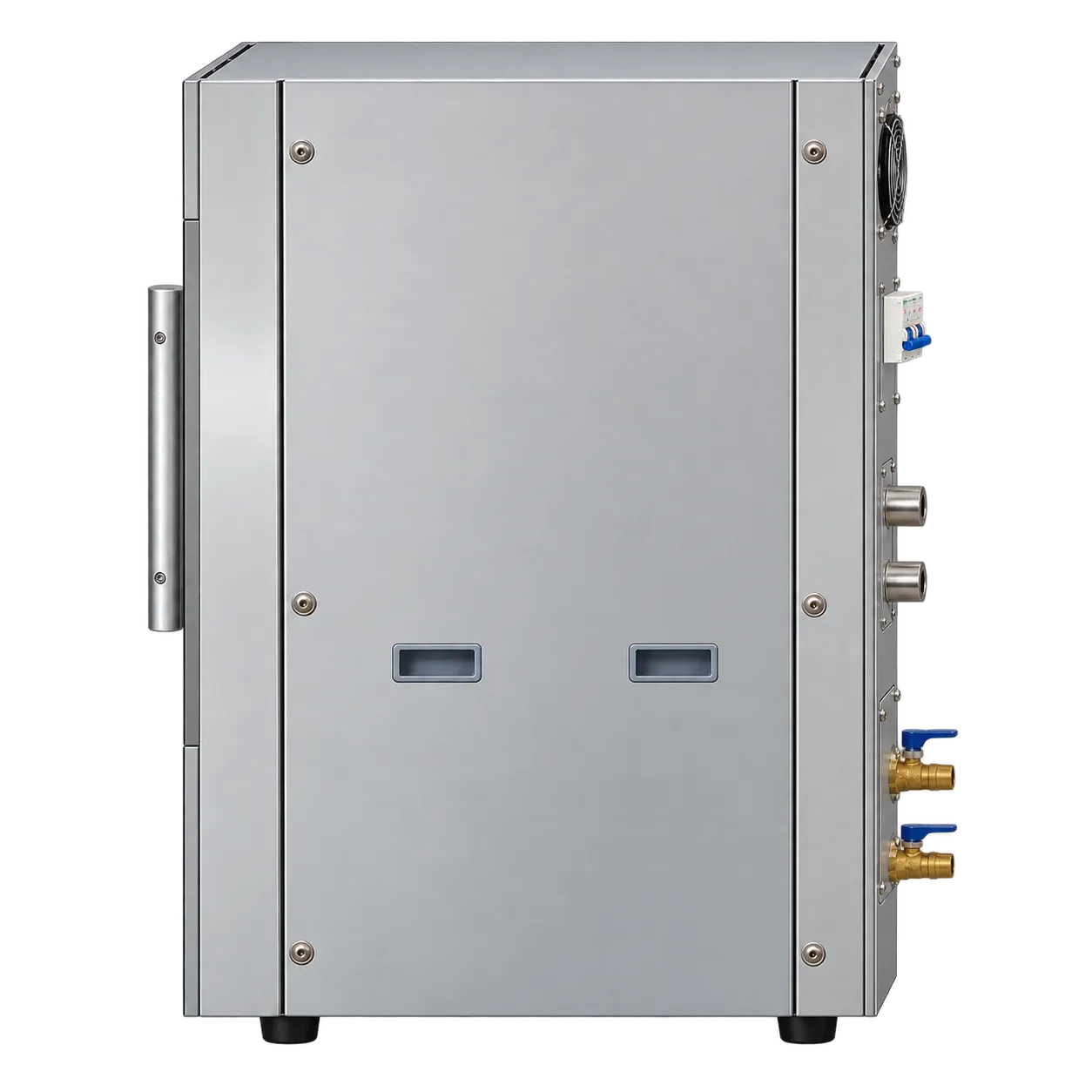
Sterile services departments with a segregated packing room and sterile store are the natural home for the WF-200SM, along with dental hospital decontamination units and day surgery suites laid out the same way. Its pulsating vacuum handles the loads those departments reprocess, from wrapped instrument trays and surgical textiles to hollow instruments and cannulated devices.
The workflow decides how much the second door is worth. Packing staff load sets on the non-sterile side and start cycles there, while sterile-store staff unload, cool and release processed loads on the other side without entering the packing area. Each team stays in its own room, which simplifies gowning, cleaning regimes, and tracking every load from packing bench to shelf. Cooling space on the sterile side matters too, because loads leave the chamber hot.
Steam supply is the common weak point in installations of this size. Across 170 non-condensable gas tests run during steriliser qualification in Brazil between 2016 and 2021, 61 exceeded the EN 285 limit of 3.5%, and the water used to raise the steam affected the results. A hospital there that added steam quality testing to its validation programme recorded out-of-limit steam for several years until maintenance work corrected it, after which wet packs fell. Site steam therefore deserves the same scrutiny as the steriliser.
Health services that buy through formal tenders, including the NHS, look for EN 285 evidence and a validation plan, as public buyers elsewhere typically do. The conformity documentation those procurement routes require is issued by the manufacturer and shared by the enquiry team.