
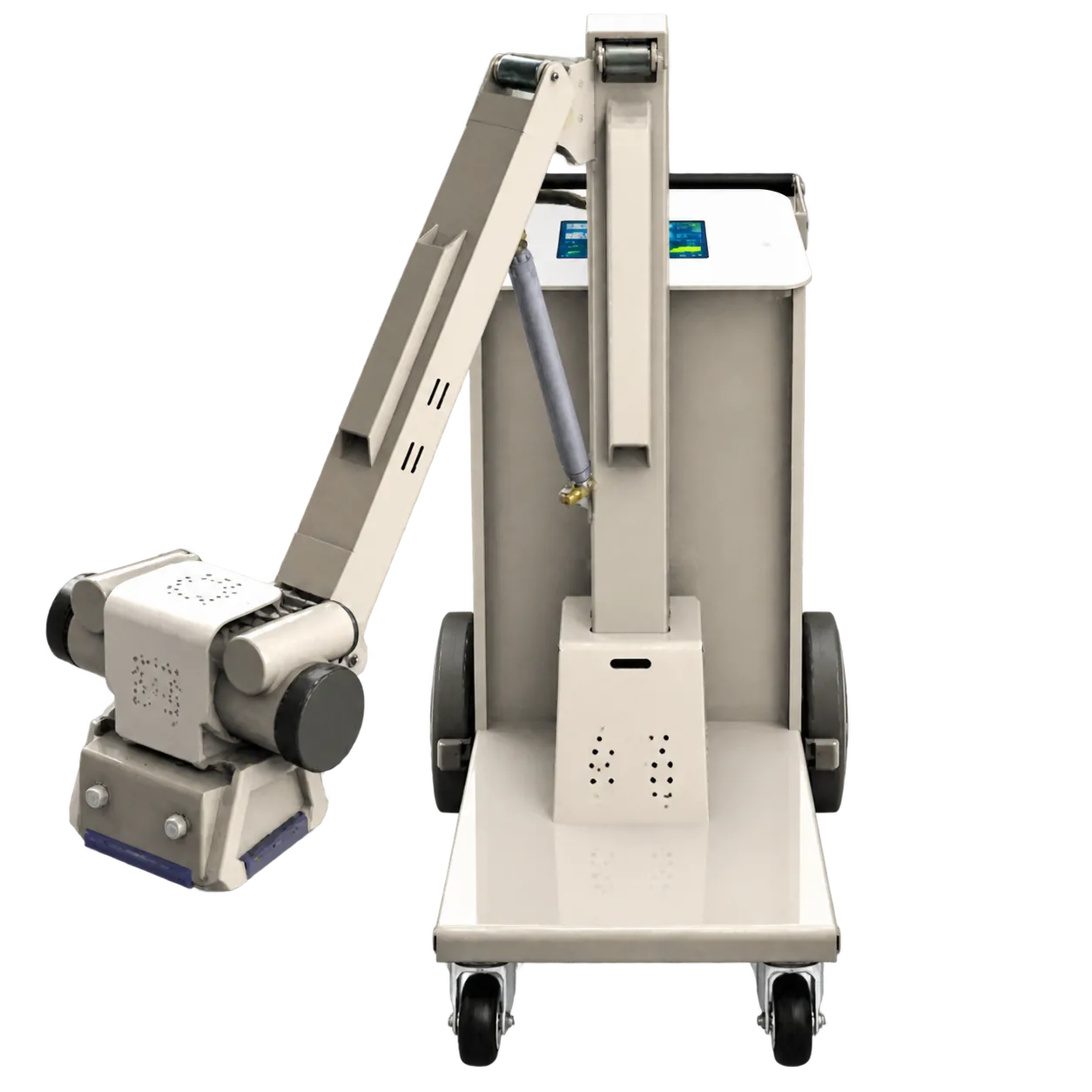
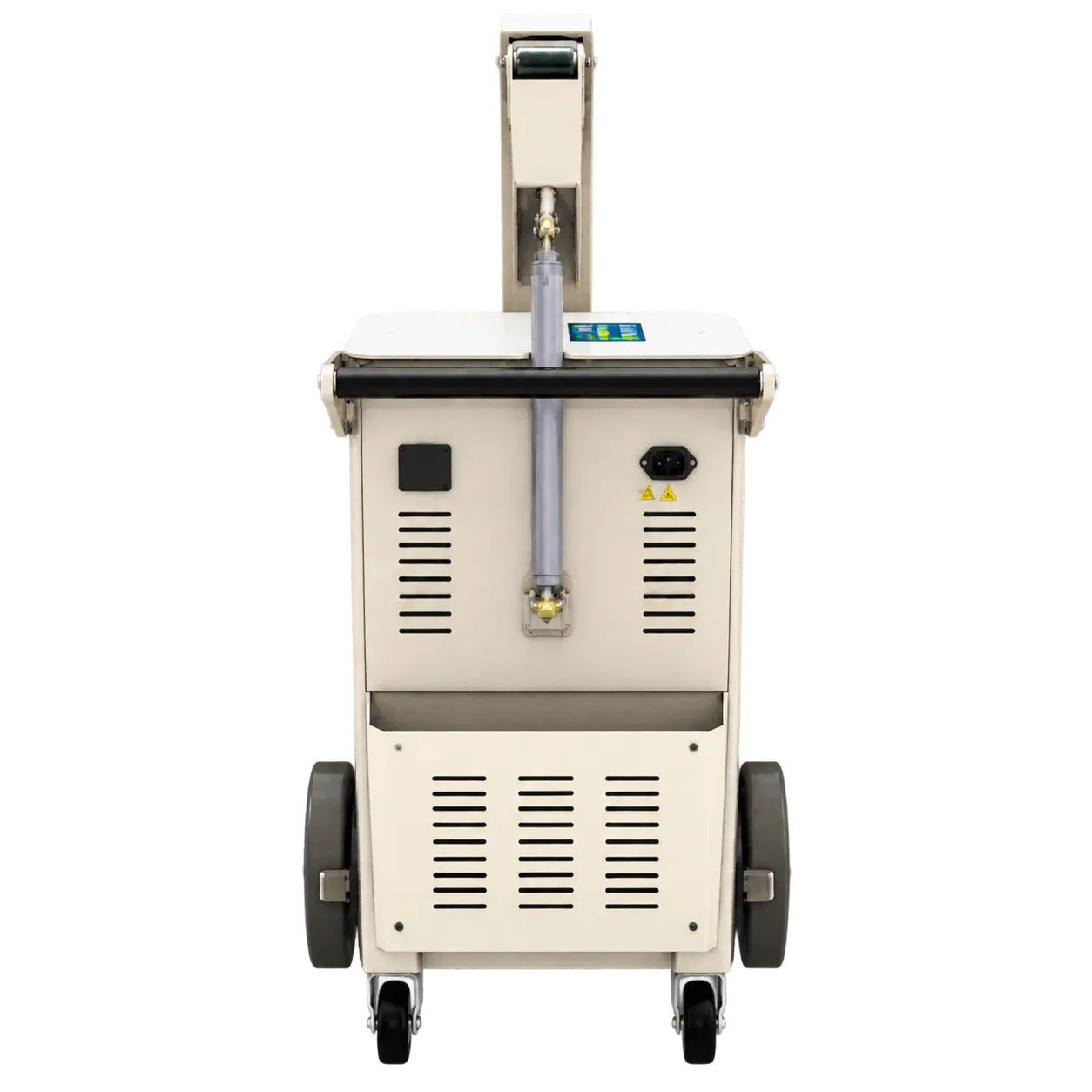
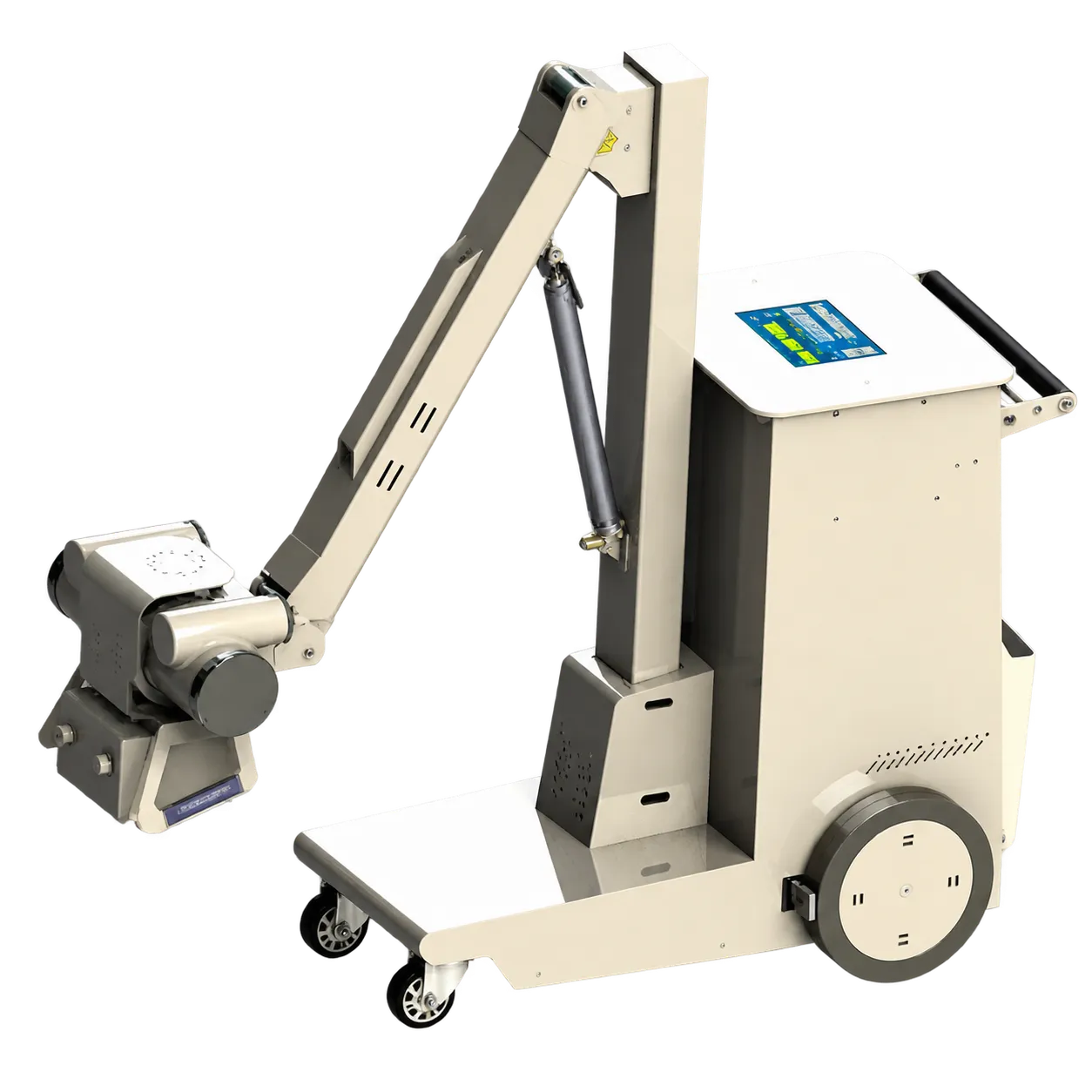
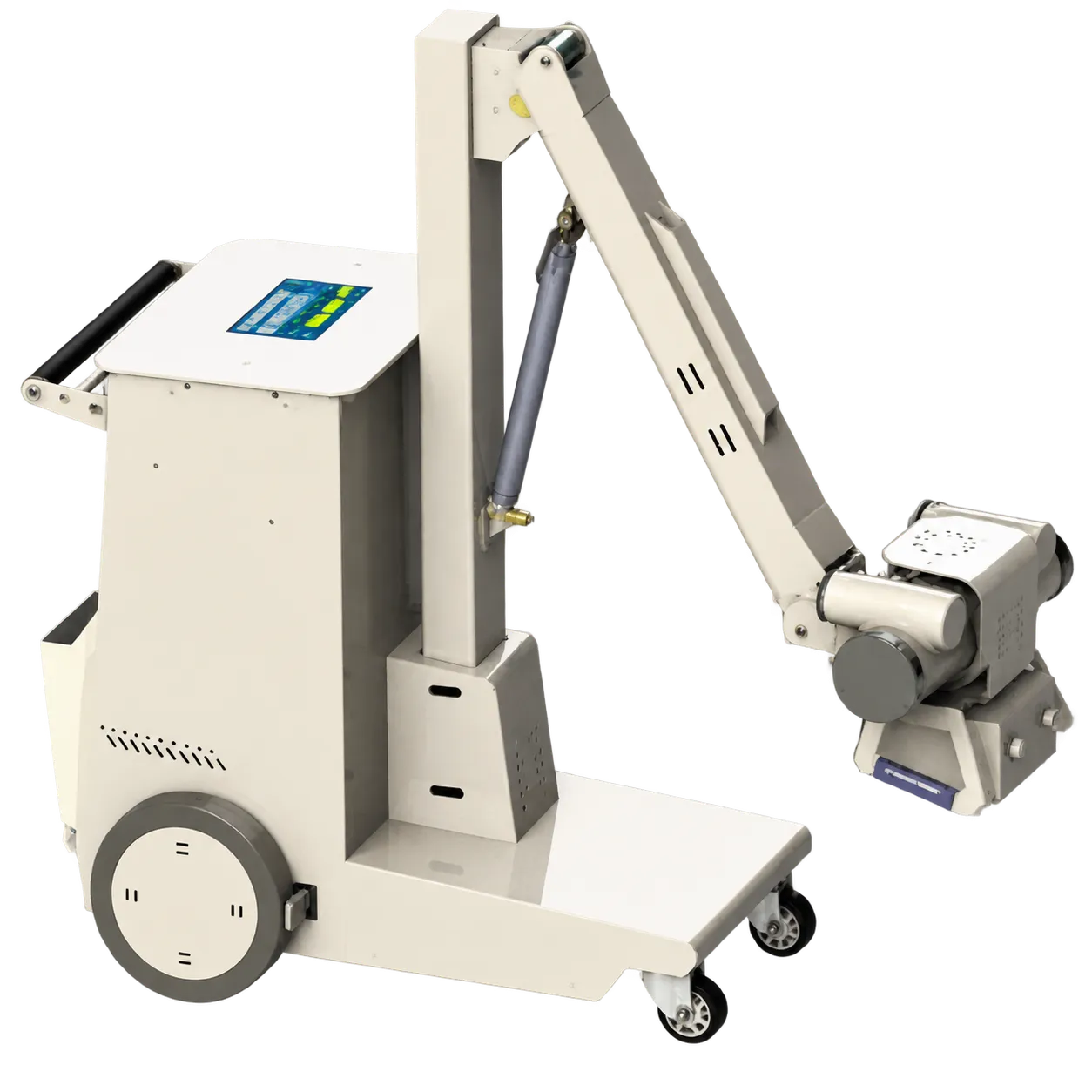
A mobile digital X-ray unit with this output handles almost all ward and emergency radiography. Chest films in intensive care and abdomens after surgery are within its range, as are pelvic and lateral spine views for patients confined to bed. Images appear within seconds rather than after processing. The radiographer can therefore check positioning at the bedside and repeat an exposure only when it is genuinely needed, which saves both time and dose. Fewer repeats also mean shorter rounds for busy radiography teams.
The square 43 cm panel suits large adult chests, which can overflow a 35 by 43 cm detector. Caesium iodide's efficiency helps keep patient dose low on daily films. Its 139 µm pixels give useful detail for bones, tubes, and lines. The 17-inch console makes on-the-spot review easier than a small screen does. That matters most in intensive care, where a chest film is often taken to confirm the position of a tube or line before treatment continues. Staff should also confirm how the panel is cleaned between patients.
UK purchase brings the usual duties for mobile radiography under the 2017 Ionising Radiations Regulations, with IR(ME)R governing each patient exposure. Local rules for ward work and a critical examination after installation are part of that. The radio remote should only be used with the patient and the controlled area in sight.
Medigear.uk obtains the detector connection, software, supply, leakage, and physical data from Blackstone. The imaging manager and radiation protection adviser can then assess the complete system before it reaches a ward.